Step 1 decision
Build a clean poaching stock
The stock is pale gold, clearly chicken-forward, and free of loose grey foam.
Open step 1SG · Singapore / Hainanese diaspora
Singapore's poached-chicken rice evolved from Hainanese Wenchang chicken through local and Cantonese influence. The complete plate is chicken, fat-polished stock rice, clear broth, cucumber, chilli, and ginger-scallion sauce.
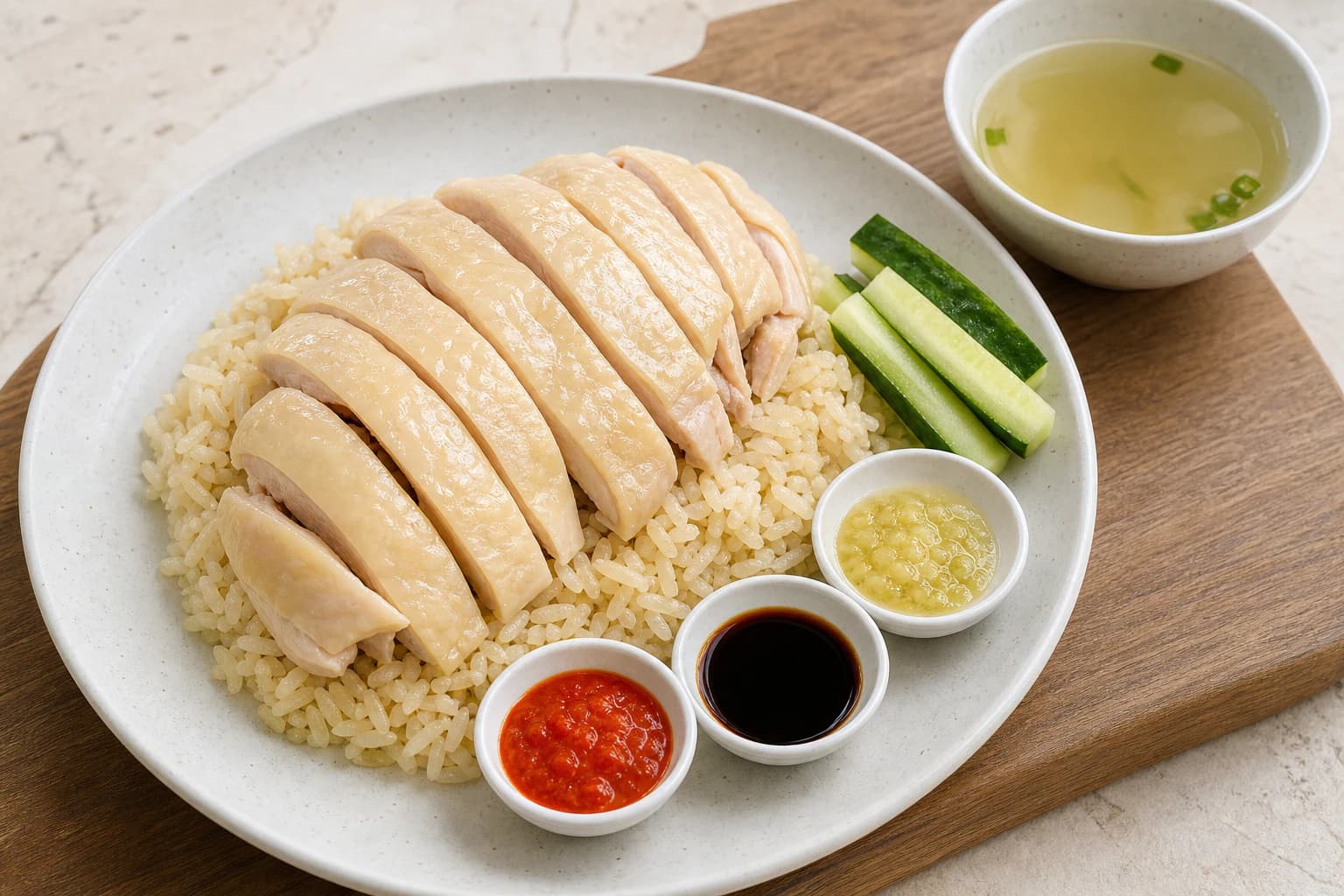
Decision-point map
Scan the decision points now. Each full-size cooking frame appears once, beside the step where you need it.
The stock is pale gold, clearly chicken-forward, and free of loose grey foam.
Open step 1The skin is smooth, taut, and dry with a fine gelatinous layer instead of chalky waterlogged patches.
Open step 3Chicken slices retain skin, rice grains are separate, cucumber stays crisp, and every sauce remains visually distinct.
Check the final stepIngredients
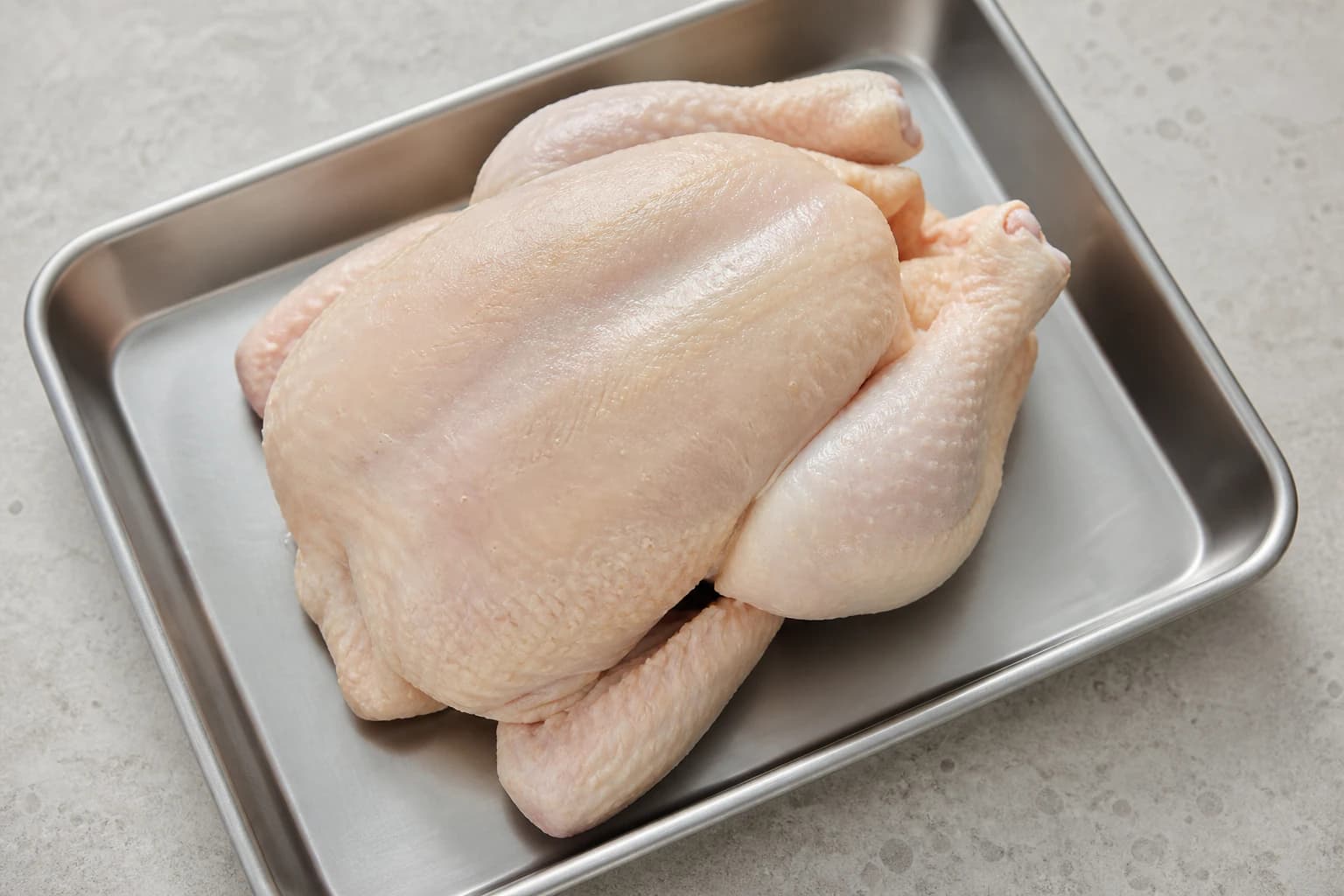
silky poached centrepiece and source of useful cavity fat
Note: Keep below 5°C, do not wash raw chicken, and cook both thickest breast and innermost thigh to at least 75°C.
Melbourne
 Nearby butchers
 Search Coles
 Search WoolworthsFind an ALDIFind an IGASearch TozerbaSearch Asian PantryToko Nusantara
These links open searches, catalogues, or store locators. Check the exact form and local availability there.
Jakarta
Nearby butchers and marketsPasar Jaya networkSuper Indo locationsRanch Market outletsHypermart online Search Sayurbox
 Search Tokopedia
 Search ShopeeOpen GrabMart
These links open searches, catalogues, or store locators. Check the exact form and local availability there.
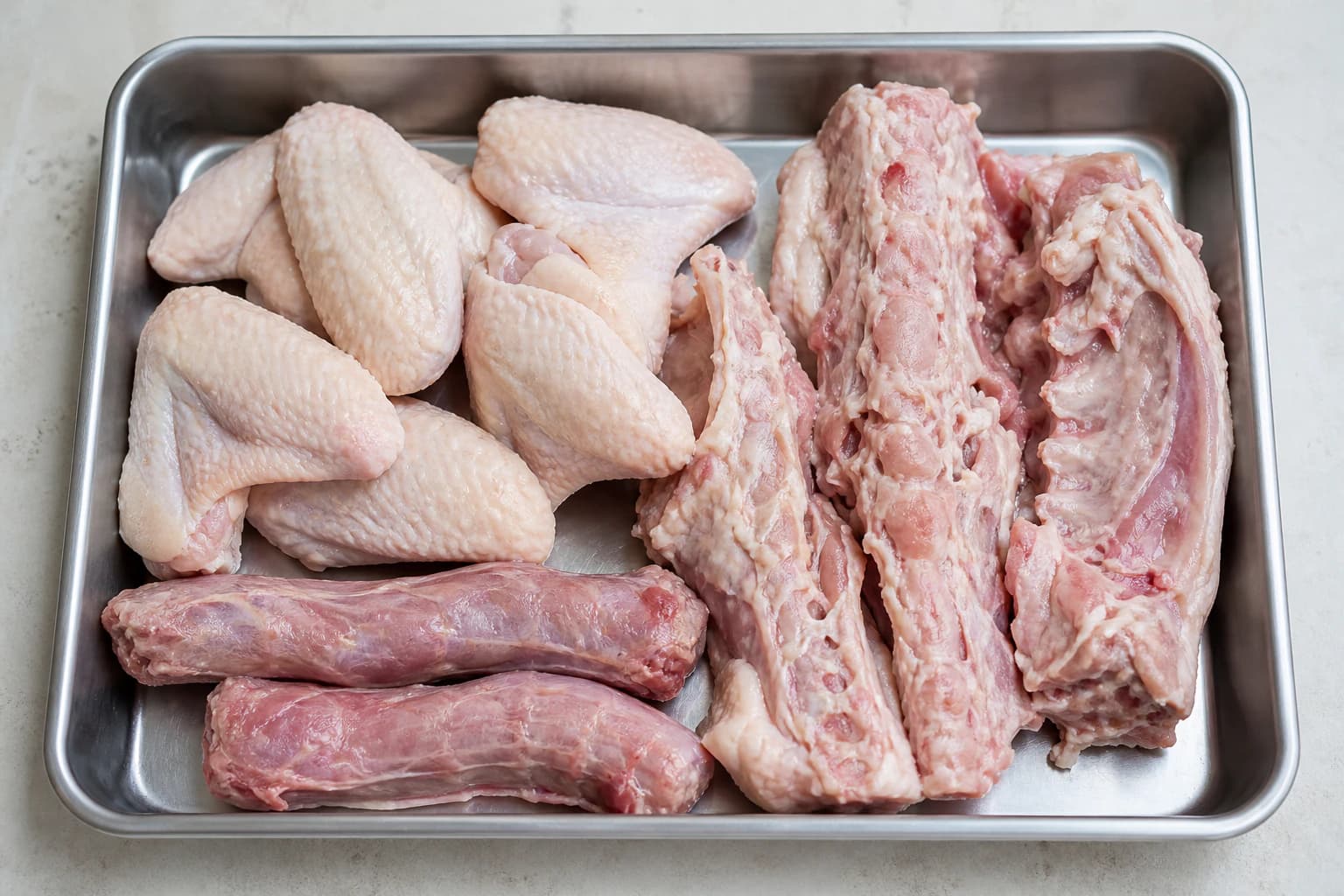
strengthens the poaching liquid so it can season rice and table broth
Note: Handle as raw poultry and keep separate from cucumber and finished sauces.
Swap: 400 g extra wings when carcasses are unavailable
Melbourne
Nearby butchersSearch ColesSearch WoolworthsFind an ALDIFind an IGASearch TozerbaSearch Asian PantryToko NusantaraThese links open searches, catalogues, or store locators. Check the exact form and local availability there.
Jakarta
Nearby butchers and marketsPasar Jaya networkSuper Indo locationsRanch Market outletsHypermart onlineSearch SayurboxSearch TokopediaSearch ShopeeOpen GrabMartThese links open searches, catalogues, or store locators. Check the exact form and local availability there.
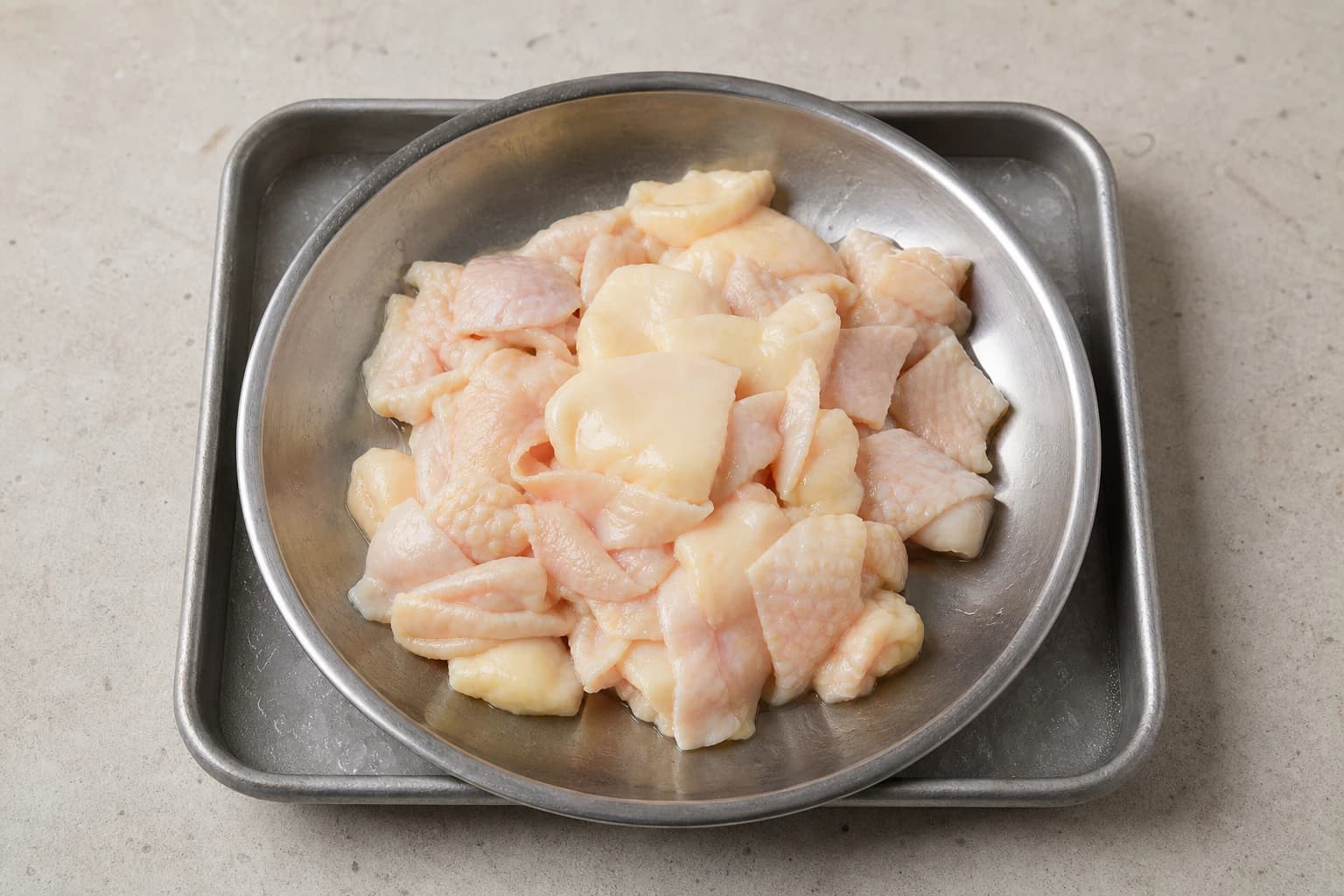
renders the defining poultry aroma that coats the uncooked rice
Swap: 30 ml neutral oil for a lighter but less chicken-forward rice
Melbourne
Nearby butchersSearch ColesSearch WoolworthsFind an ALDIFind an IGASearch TozerbaSearch Asian PantryToko NusantaraThese links open searches, catalogues, or store locators. Check the exact form and local availability there.
Jakarta
Nearby butchers and marketsPasar Jaya networkSuper Indo locationsRanch Market outletsHypermart onlineSearch SayurboxSearch TokopediaSearch ShopeeOpen GrabMartThese links open searches, catalogues, or store locators. Check the exact form and local availability there.
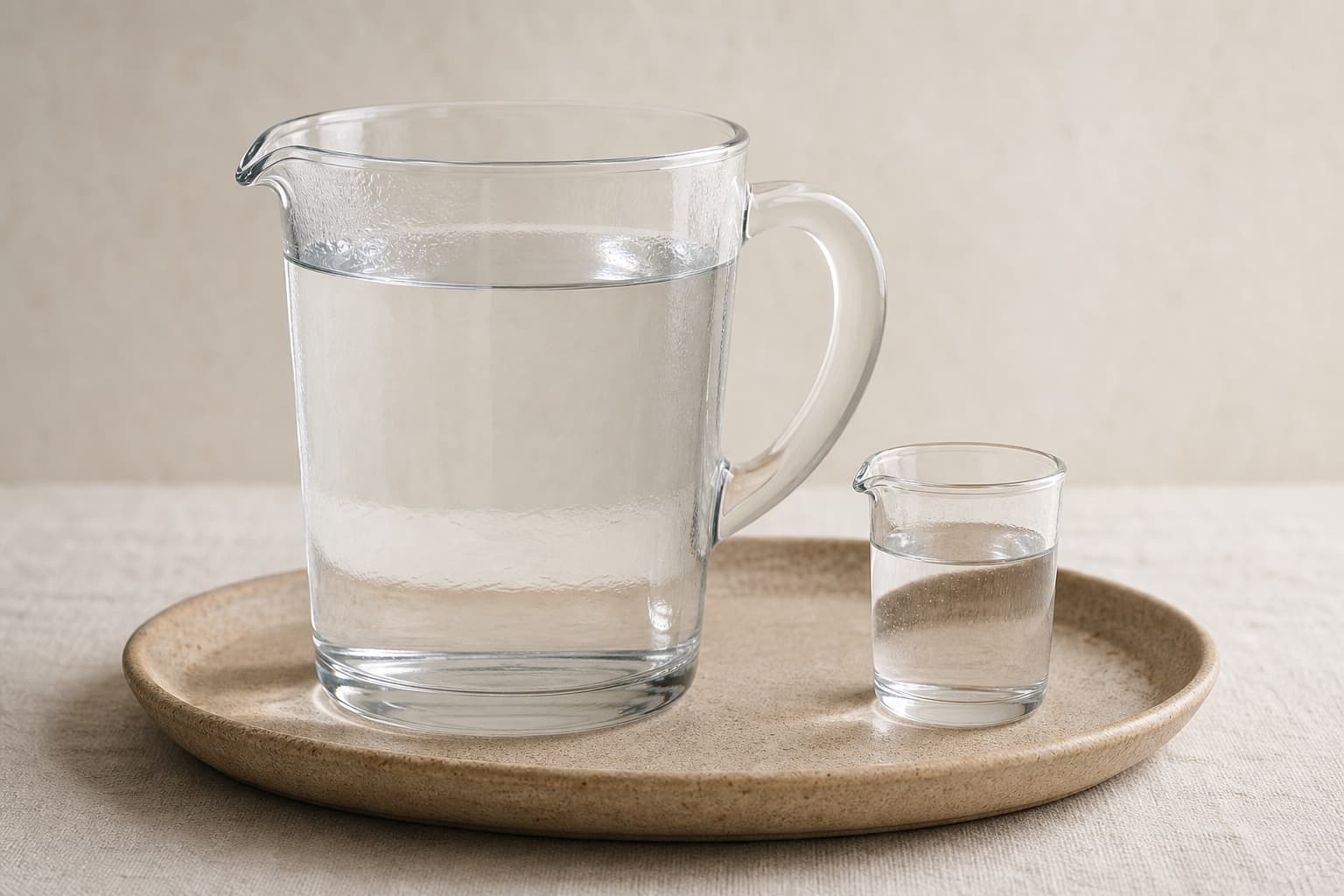
measured poaching stock and clear soup
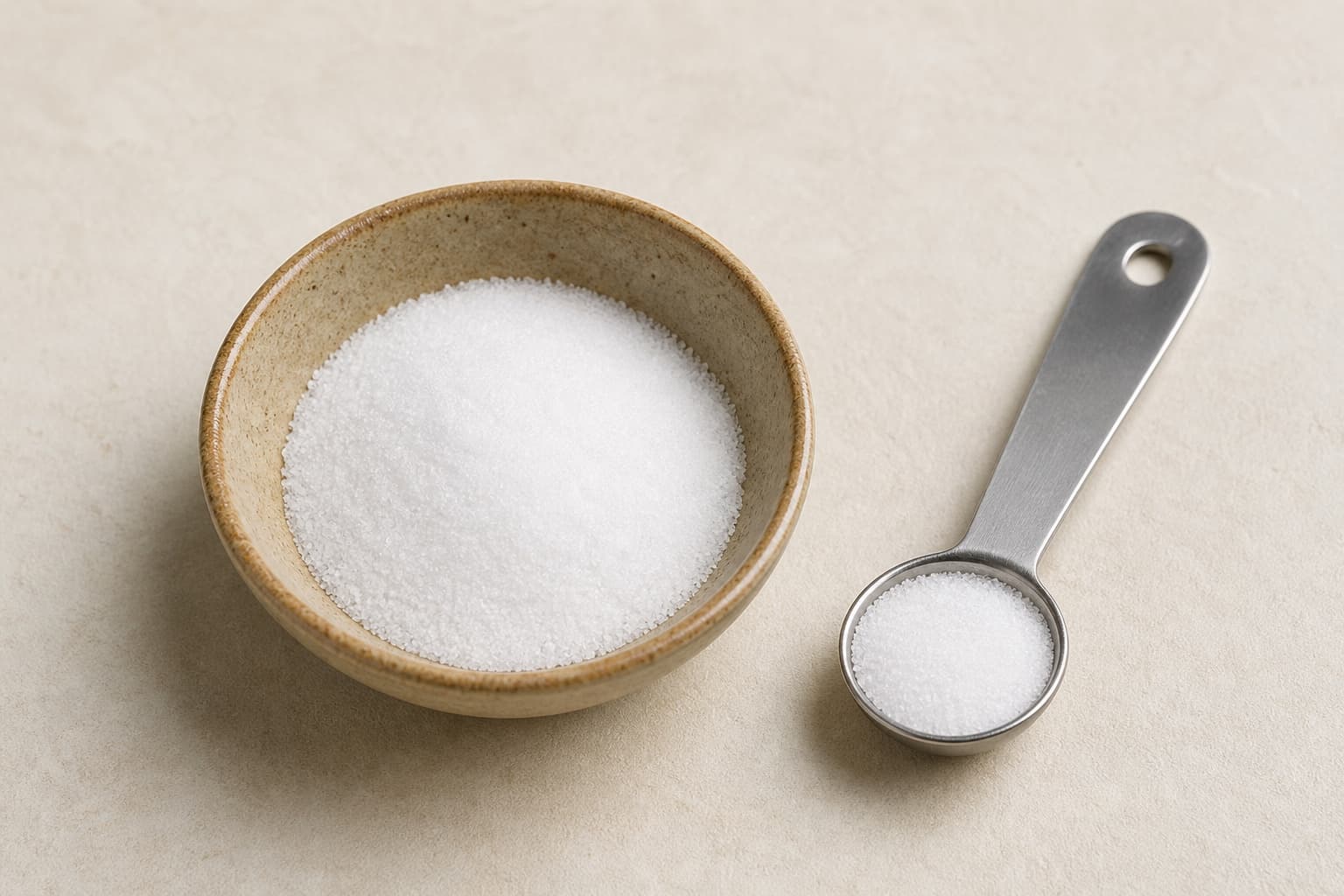
seasons stock, sauces, and chicken surface in measured stages
Melbourne
Nearby supermarketsSearch ColesSearch WoolworthsFind an ALDIFind an IGASearch TozerbaSearch Asian PantryToko NusantaraThese links open searches, catalogues, or store locators. Check the exact form and local availability there.
Jakarta
Nearby supermarketsSuper Indo locationsRanch Market outletsHypermart onlinePasar Jaya networkSearch SayurboxSearch TokopediaSearch ShopeeOpen GrabMartThese links open searches, catalogues, or store locators. Check the exact form and local availability there.
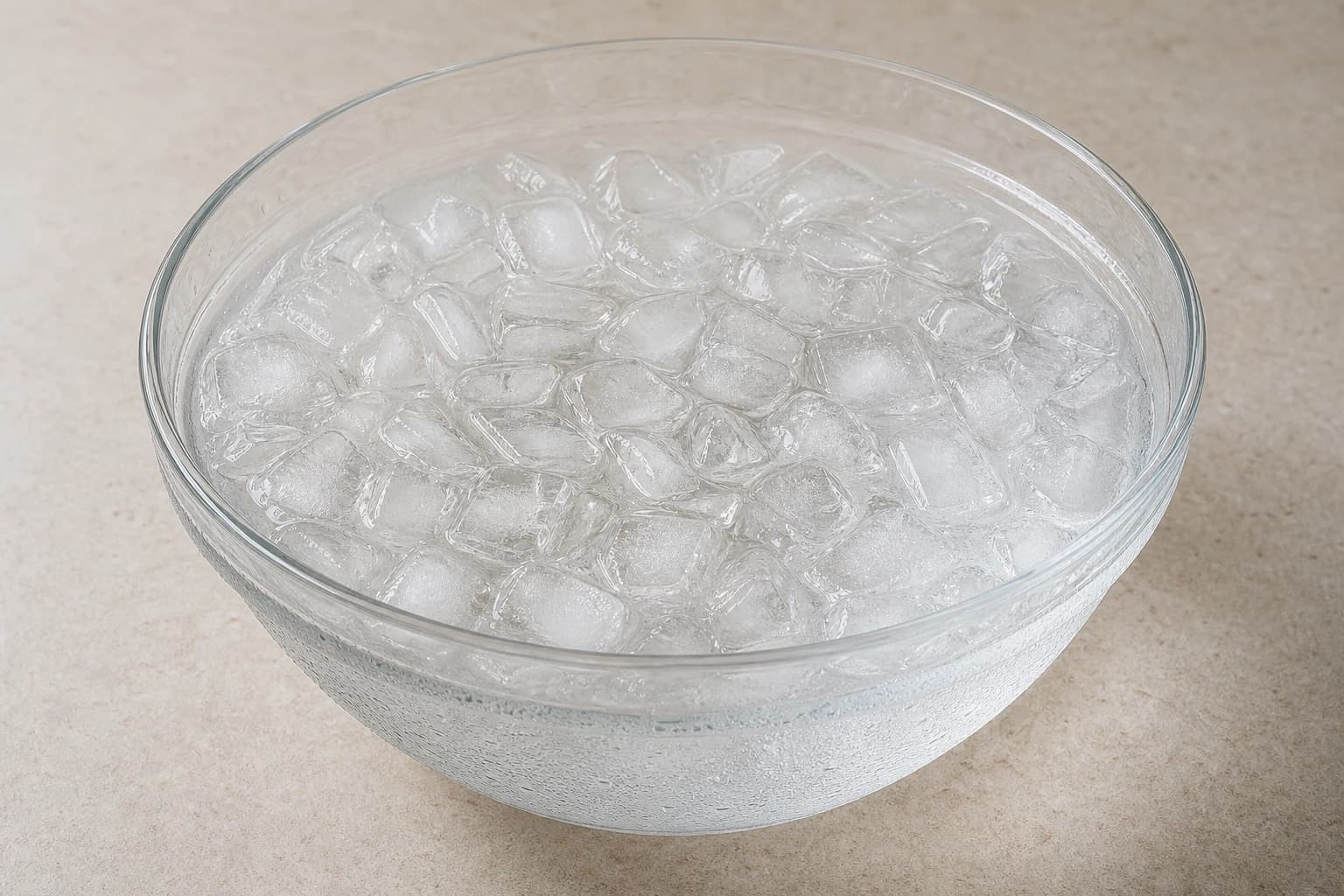
short controlled chill that stops carryover and sets the silky skin
Note: Use a clean vessel and a short 10-minute chill; do not leave cooked poultry in lukewarm water.
Melbourne
Nearby supermarketsSearch ColesSearch WoolworthsFind an ALDIFind an IGASearch TozerbaSearch Asian PantryToko NusantaraThese links open searches, catalogues, or store locators. Check the exact form and local availability there.
Jakarta
Nearby supermarketsSuper Indo locationsRanch Market outletsHypermart onlinePasar Jaya networkSearch SayurboxSearch TokopediaSearch ShopeeOpen GrabMartThese links open searches, catalogues, or store locators. Check the exact form and local availability there.
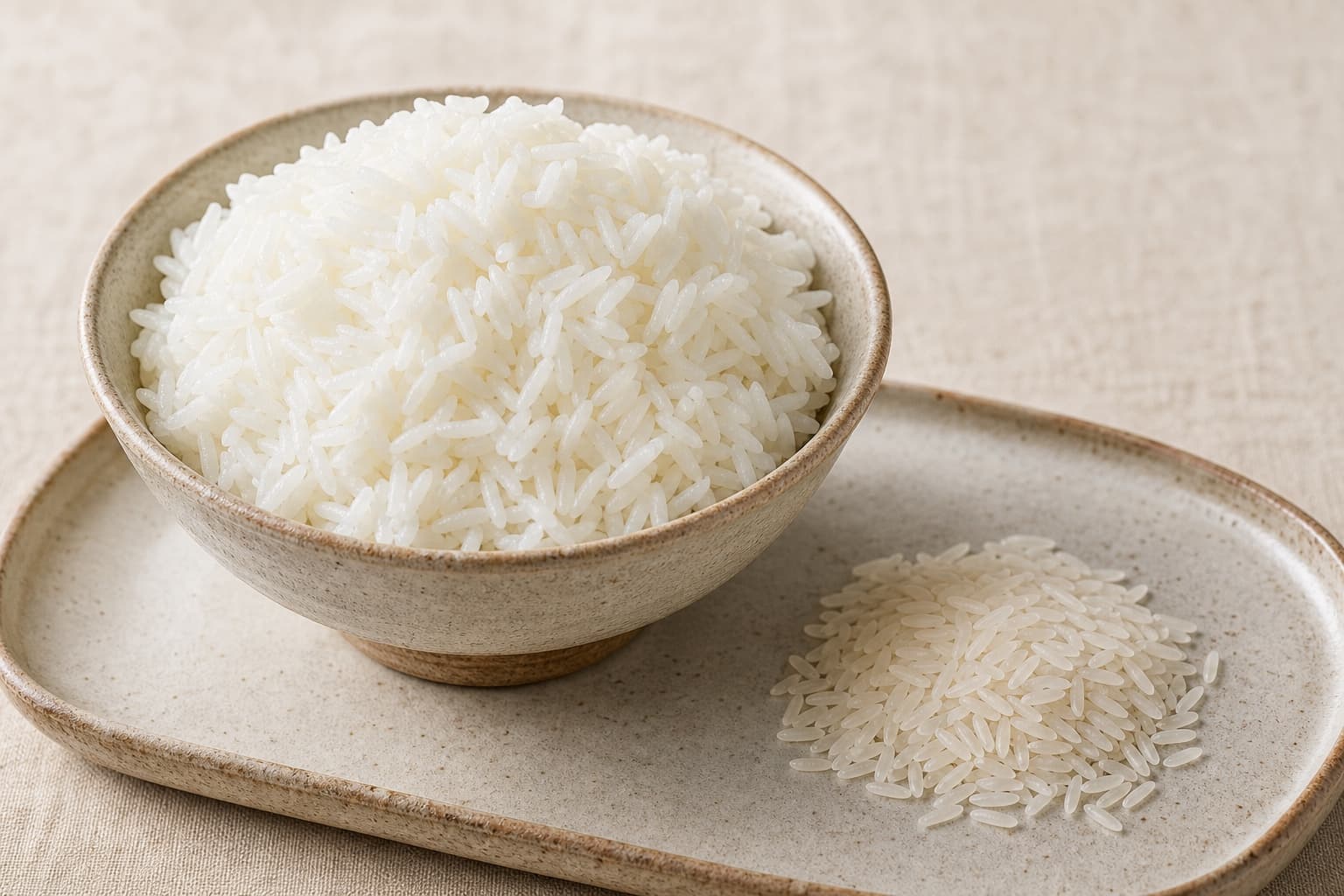
fragrant rice that stays separate after coating with chicken fat
Swap: another long-grain fragrant rice; adjust stock to the package and cooker
Melbourne
Nearby specialist grocersMr Dad CBD guideGuideSolAsia QV guideGuideSearch TozerbaSearch Asian PantryToko NusantaraSearch ColesSearch WoolworthsFind an ALDIFind an IGAThese links open searches, catalogues, or store locators. Check the exact form and local availability there.
Jakarta
Nearby specialist shopsSearch SayurboxSearch TokopediaSearch ShopeeOpen GrabMartSuper Indo locationsRanch Market outletsHypermart onlinePasar Jaya networkThese links open searches, catalogues, or store locators. Check the exact form and local availability there.
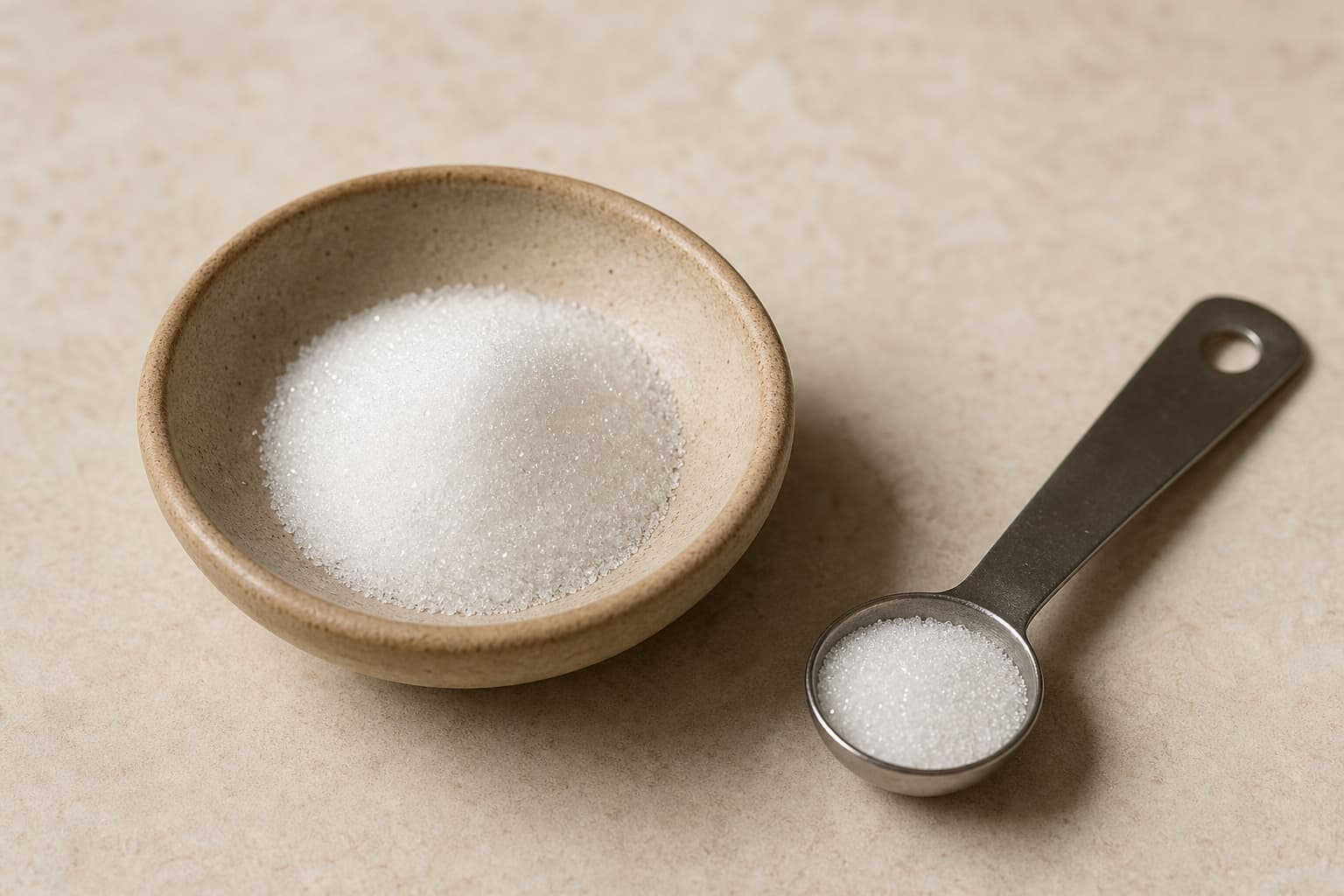
rounds the chilli-lime sauce without making it jammy
Melbourne
Nearby supermarketsSearch ColesSearch WoolworthsFind an ALDIFind an IGASearch TozerbaSearch Asian PantryToko NusantaraThese links open searches, catalogues, or store locators. Check the exact form and local availability there.
Jakarta
Nearby supermarketsSuper Indo locationsRanch Market outletsHypermart onlinePasar Jaya networkSearch SayurboxSearch TokopediaSearch ShopeeOpen GrabMartThese links open searches, catalogues, or store locators. Check the exact form and local availability there.
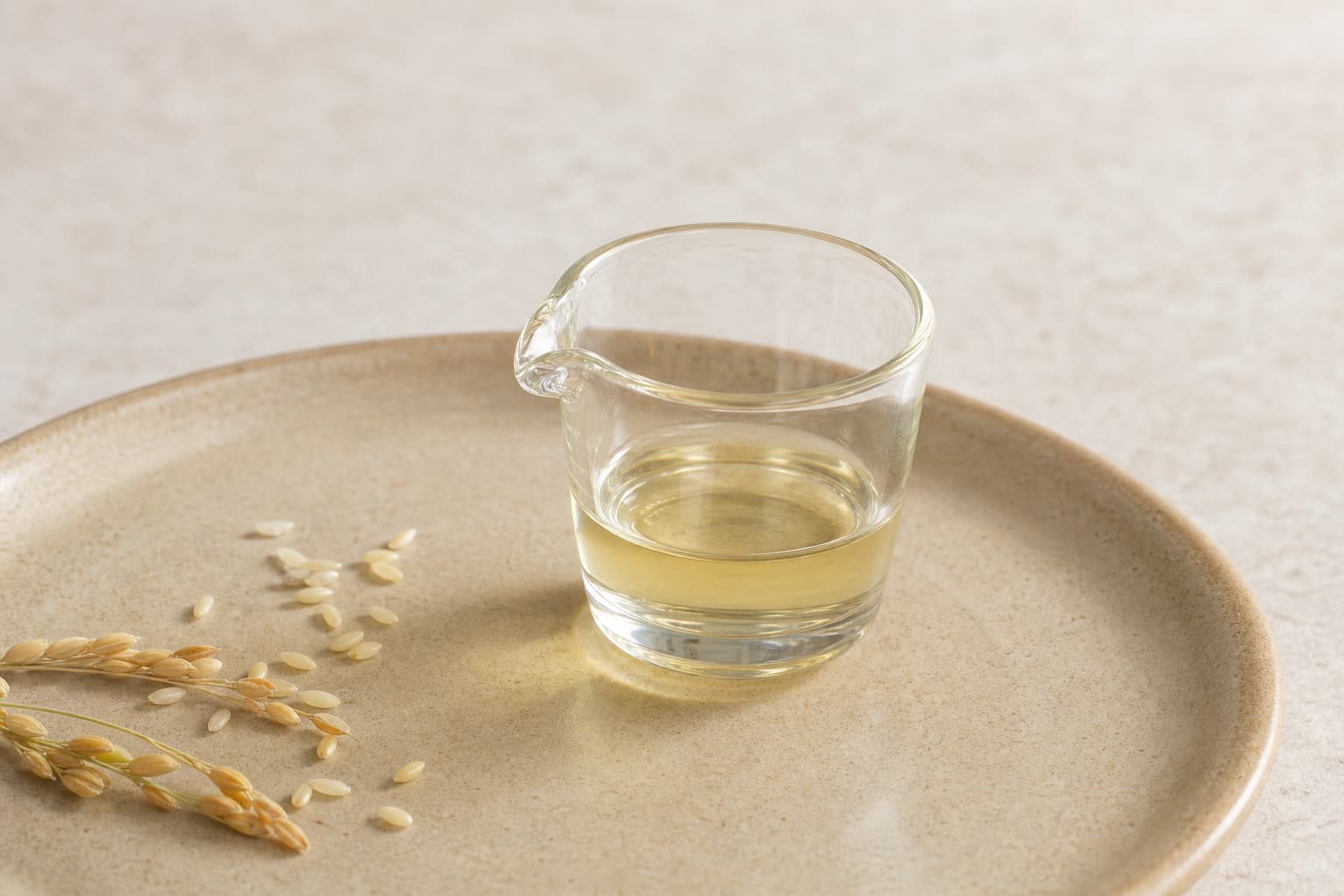
hot carrier that blooms the ginger-scallion sauce
Melbourne
Nearby supermarketsSearch ColesSearch WoolworthsFind an ALDIFind an IGASearch TozerbaSearch Asian PantryToko NusantaraThese links open searches, catalogues, or store locators. Check the exact form and local availability there.
Jakarta
Nearby supermarketsSuper Indo locationsRanch Market outletsHypermart onlinePasar Jaya networkSearch SayurboxSearch TokopediaSearch ShopeeOpen GrabMartThese links open searches, catalogues, or store locators. Check the exact form and local availability there.
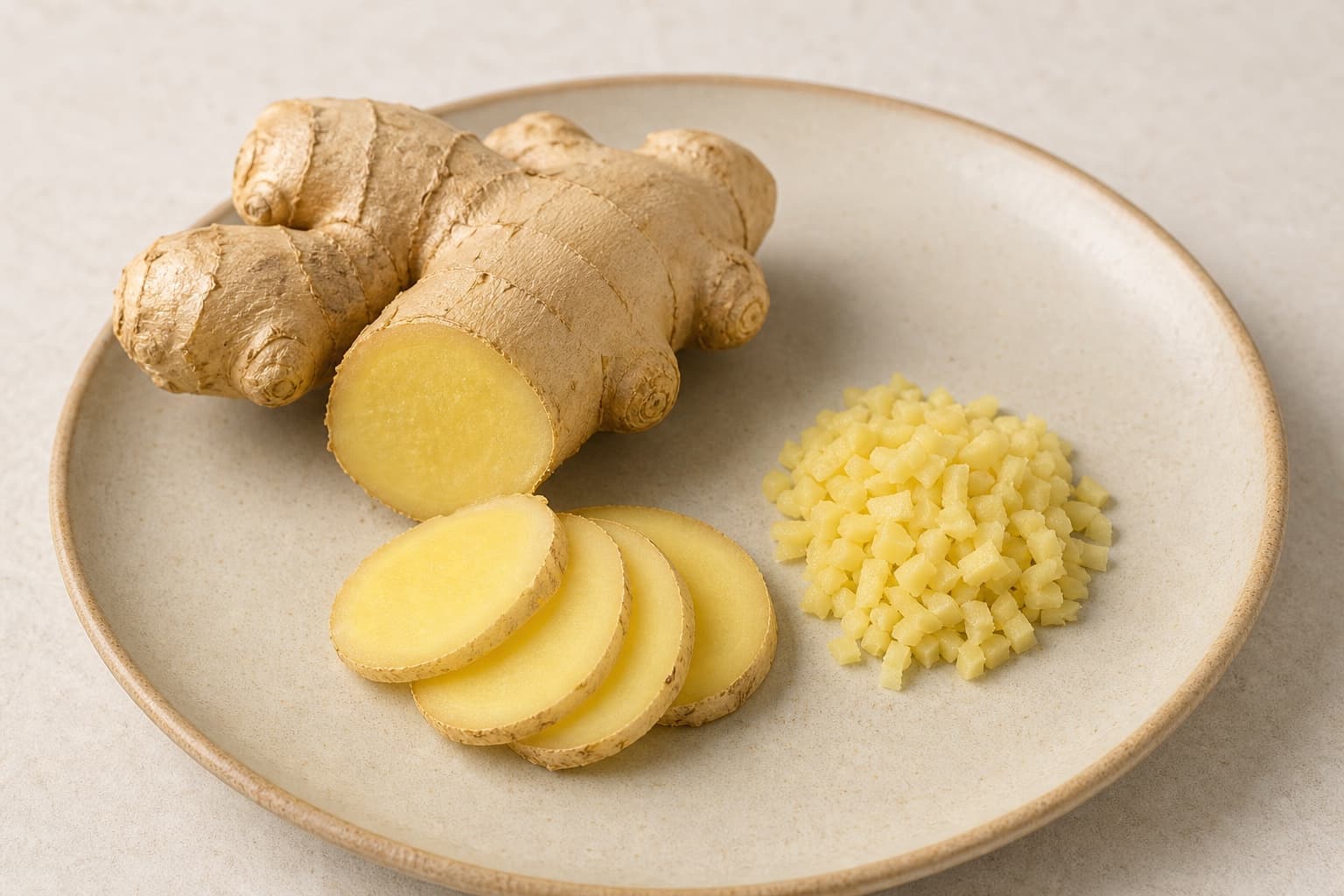
perfumes stock and rice, then forms the fresh ginger-scallion sauce
Melbourne
Nearby produce marketsSearch ColesSearch WoolworthsFind an ALDIFind an IGASearch TozerbaSearch Asian PantryToko NusantaraThese links open searches, catalogues, or store locators. Check the exact form and local availability there.
Jakarta
Nearby produce marketsPasar Jaya networkSuper Indo locationsRanch Market outletsHypermart onlineSearch SayurboxSearch TokopediaSearch ShopeeOpen GrabMartThese links open searches, catalogues, or store locators. Check the exact form and local availability there.
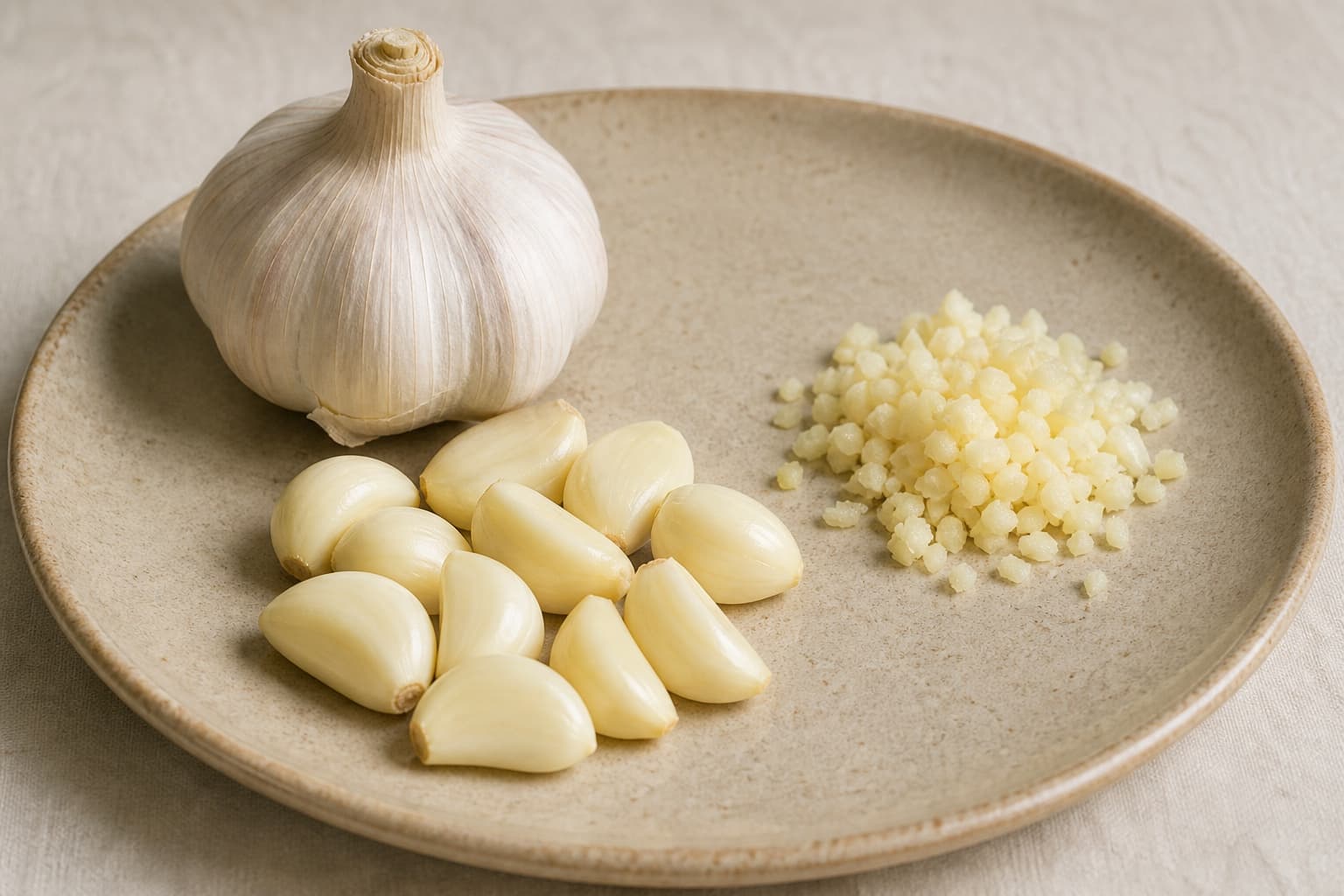
savoury stock, rice, and chilli-sauce aromatic
Melbourne
Nearby produce marketsSearch ColesSearch WoolworthsFind an ALDIFind an IGASearch TozerbaSearch Asian PantryToko NusantaraThese links open searches, catalogues, or store locators. Check the exact form and local availability there.
Jakarta
Nearby produce marketsPasar Jaya networkSuper Indo locationsRanch Market outletsHypermart onlineSearch SayurboxSearch TokopediaSearch ShopeeOpen GrabMartThese links open searches, catalogues, or store locators. Check the exact form and local availability there.
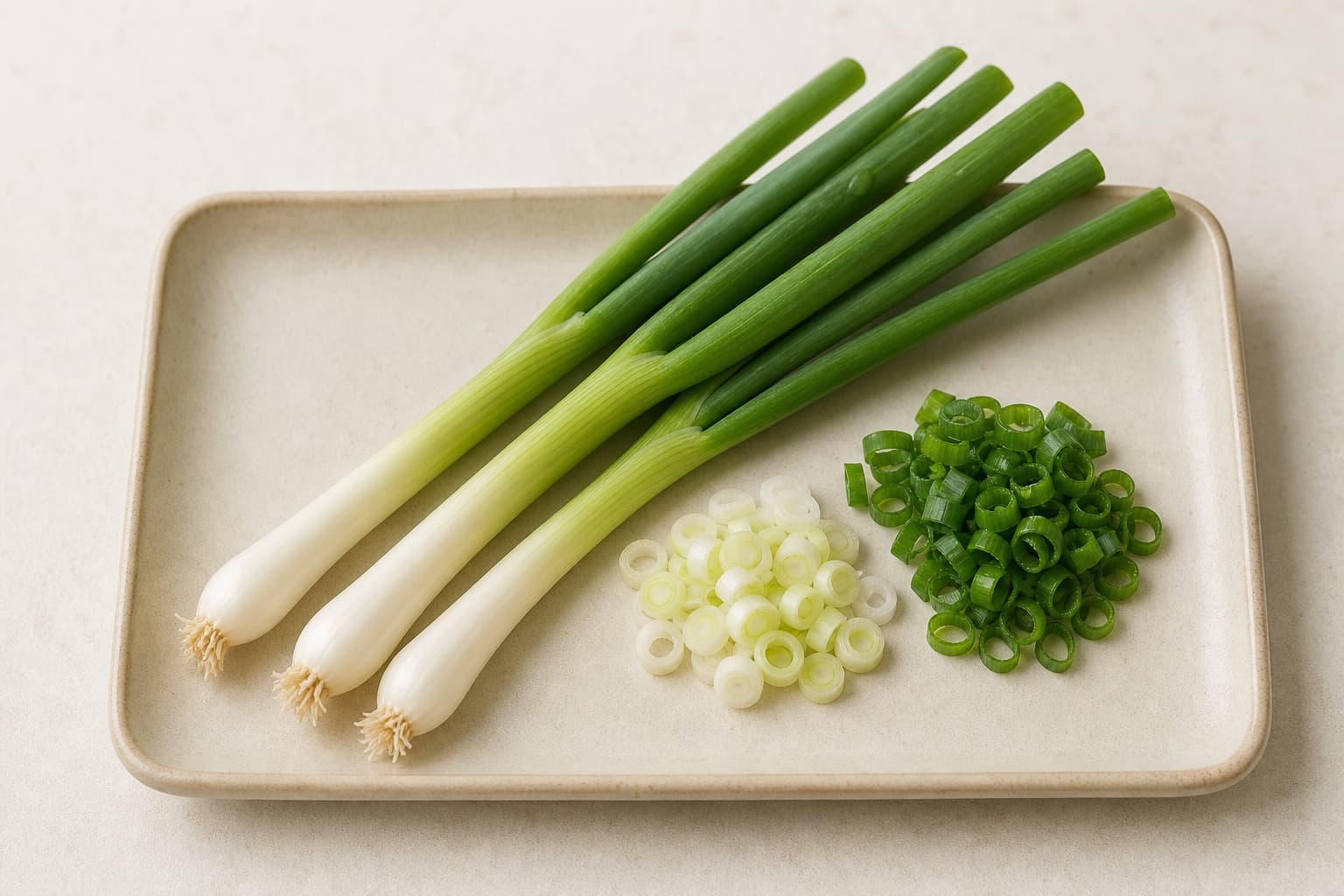
whole stock aromatic and fresh partner for ginger sauce
Melbourne
Nearby produce marketsSearch ColesSearch WoolworthsFind an ALDIFind an IGASearch TozerbaSearch Asian PantryToko NusantaraThese links open searches, catalogues, or store locators. Check the exact form and local availability there.
Jakarta
Nearby produce marketsPasar Jaya networkSuper Indo locationsRanch Market outletsHypermart onlineSearch SayurboxSearch TokopediaSearch ShopeeOpen GrabMartThese links open searches, catalogues, or store locators. Check the exact form and local availability there.
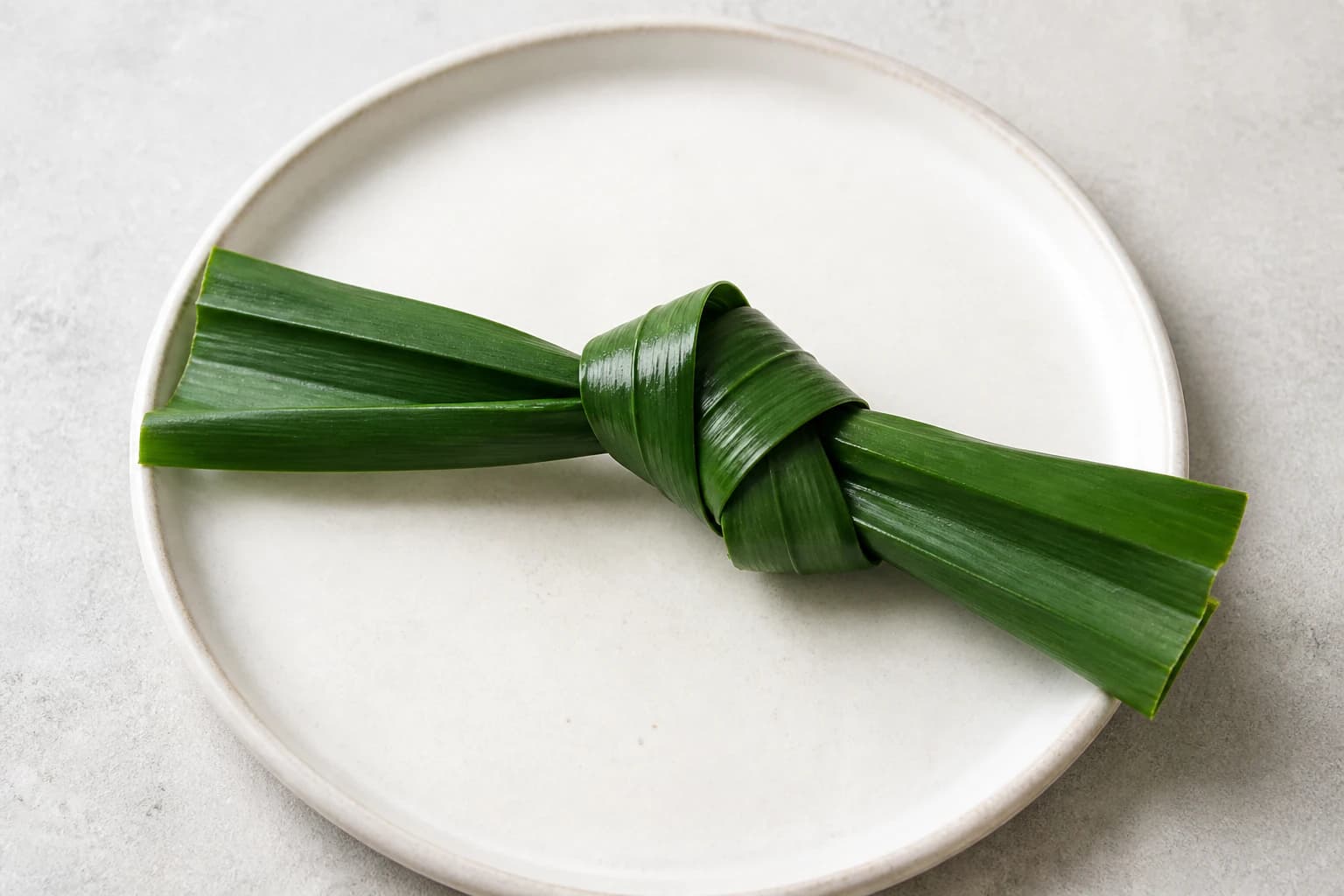
Singaporean fragrant-rice cue added during absorption
Swap: omit rather than use pandan essence
Melbourne
Nearby produce marketsSearch ColesSearch WoolworthsFind an ALDIFind an IGASearch TozerbaSearch Asian PantryToko NusantaraThese links open searches, catalogues, or store locators. Check the exact form and local availability there.
Jakarta
Nearby produce marketsPasar Jaya networkSuper Indo locationsRanch Market outletsHypermart onlineSearch SayurboxSearch TokopediaSearch ShopeeOpen GrabMartThese links open searches, catalogues, or store locators. Check the exact form and local availability there.
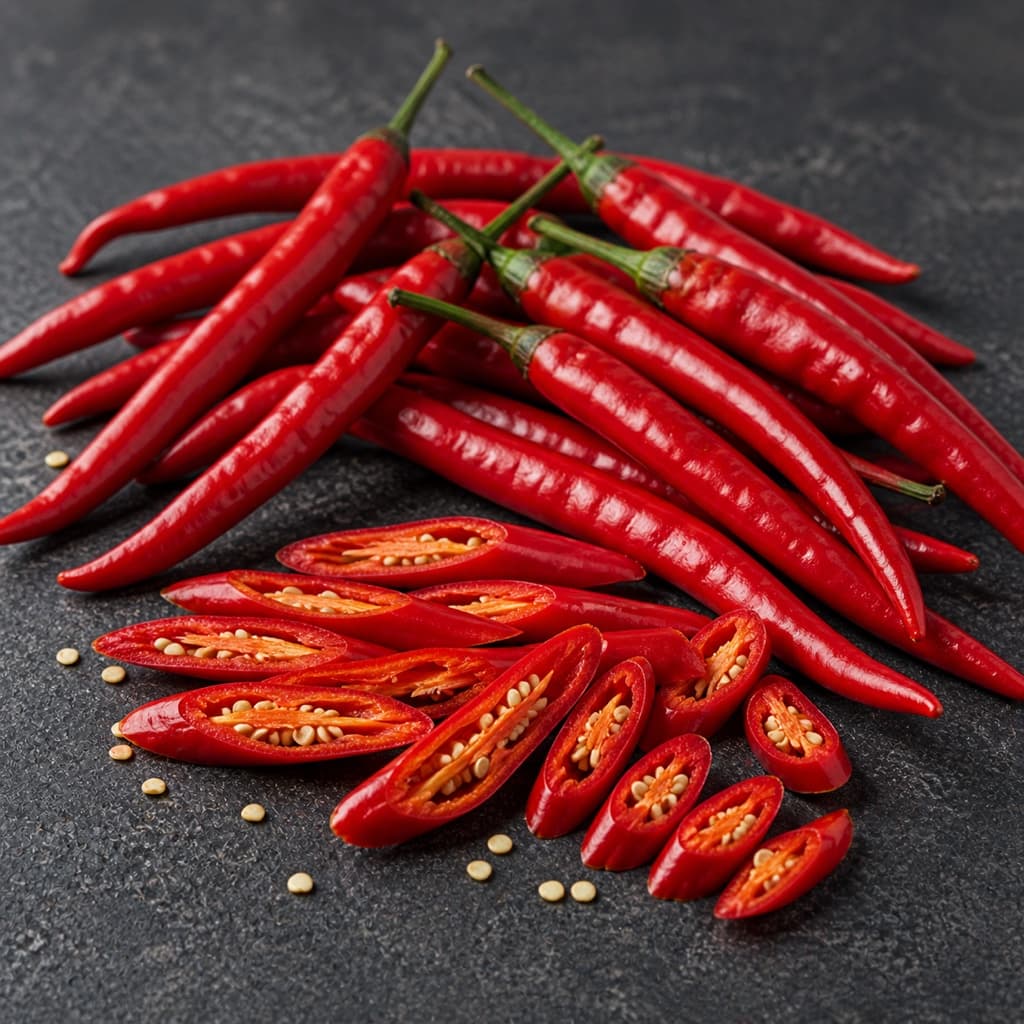
fruit and heat for the fresh chilli-garlic sauce
Melbourne
Nearby produce marketsSearch ColesSearch WoolworthsFind an ALDIFind an IGASearch TozerbaSearch Asian PantryToko NusantaraThese links open searches, catalogues, or store locators. Check the exact form and local availability there.
Jakarta
Nearby produce marketsPasar Jaya networkSuper Indo locationsRanch Market outletsHypermart onlineSearch SayurboxSearch TokopediaSearch ShopeeOpen GrabMartThese links open searches, catalogues, or store locators. Check the exact form and local availability there.
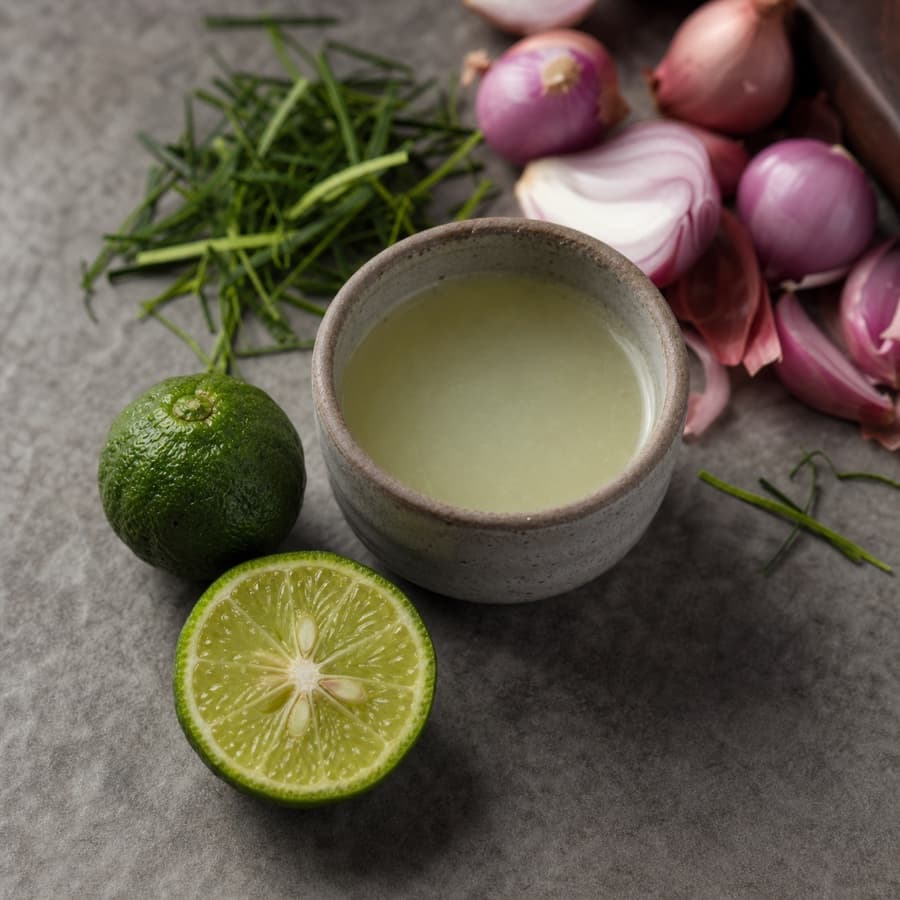
sharp citrus balance in the chilli sauce
Melbourne
Nearby produce marketsSearch ColesSearch WoolworthsFind an ALDIFind an IGASearch TozerbaSearch Asian PantryToko NusantaraThese links open searches, catalogues, or store locators. Check the exact form and local availability there.
Jakarta
Nearby produce marketsPasar Jaya networkSuper Indo locationsRanch Market outletsHypermart onlineSearch SayurboxSearch TokopediaSearch ShopeeOpen GrabMartThese links open searches, catalogues, or store locators. Check the exact form and local availability there.
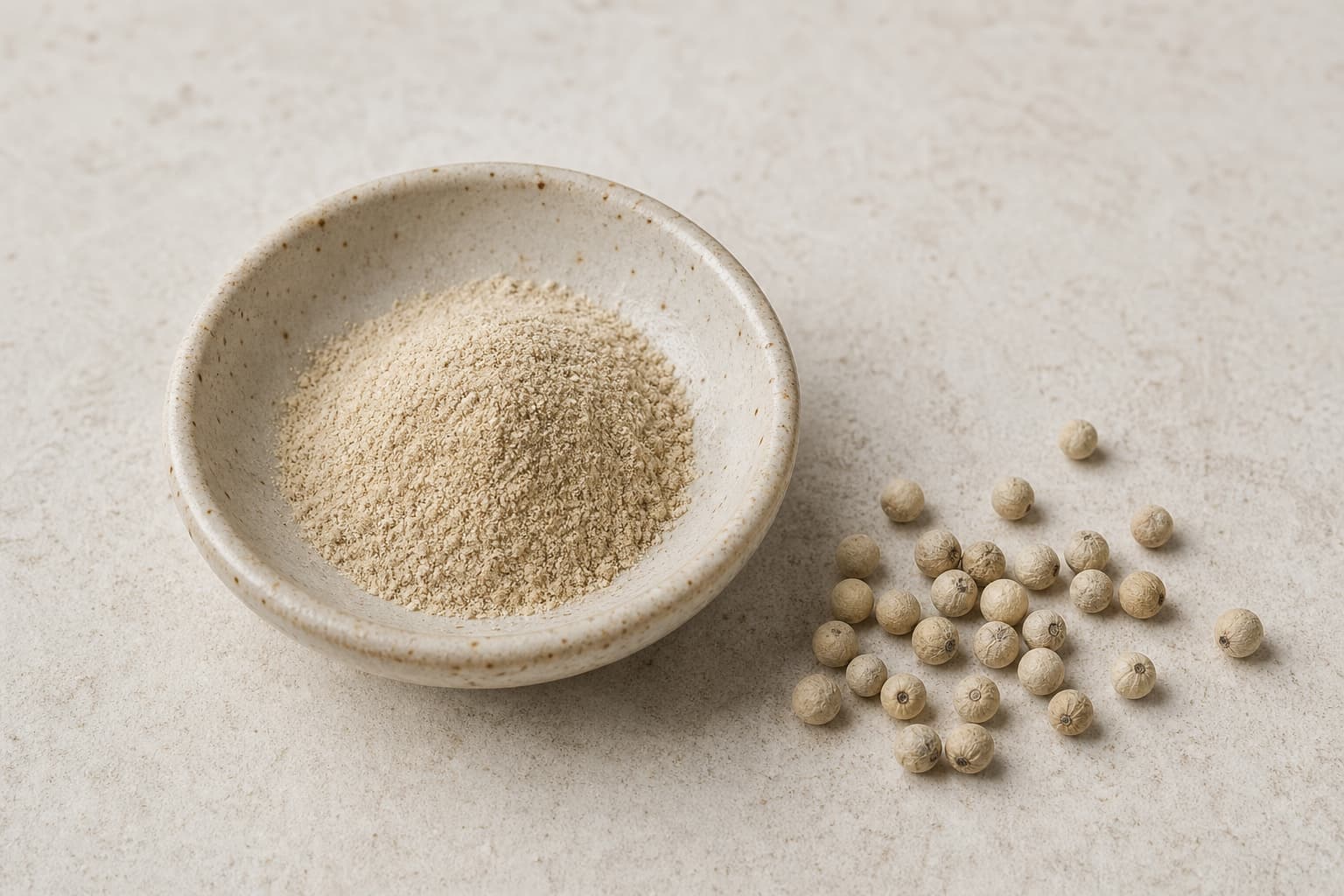
clean aromatic warmth in the serving broth
Melbourne
Nearby specialist grocersMr Dad CBD guideGuideSolAsia QV guideGuideSearch TozerbaSearch Asian PantryToko NusantaraSearch ColesSearch WoolworthsFind an ALDIFind an IGAThese links open searches, catalogues, or store locators. Check the exact form and local availability there.
Jakarta
Nearby specialist shopsSearch SayurboxSearch TokopediaSearch ShopeeOpen GrabMartSuper Indo locationsRanch Market outletsHypermart onlinePasar Jaya networkThese links open searches, catalogues, or store locators. Check the exact form and local availability there.
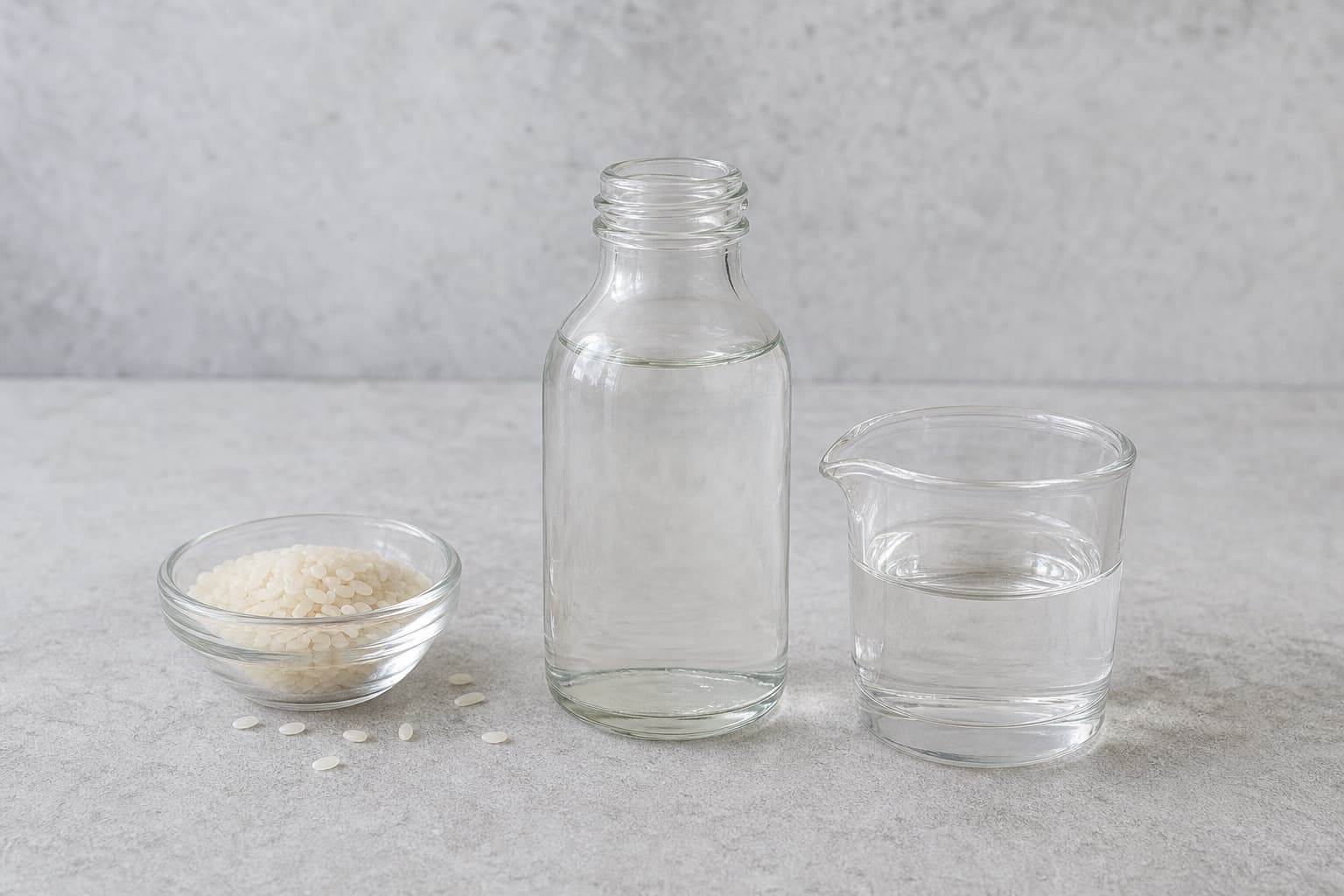
clean acidity and safer short holding for the chilli sauce
Note: Use unseasoned vinegar so sugar and salt remain controlled.
Melbourne
Nearby specialist grocersMr Dad CBD guideGuideSolAsia QV guideGuideSearch TozerbaSearch Asian PantryToko NusantaraSearch ColesSearch WoolworthsFind an ALDIFind an IGAThese links open searches, catalogues, or store locators. Check the exact form and local availability there.
Jakarta
Nearby specialist shopsSearch SayurboxSearch TokopediaSearch ShopeeOpen GrabMartSuper Indo locationsRanch Market outletsHypermart onlinePasar Jaya networkThese links open searches, catalogues, or store locators. Check the exact form and local availability there.
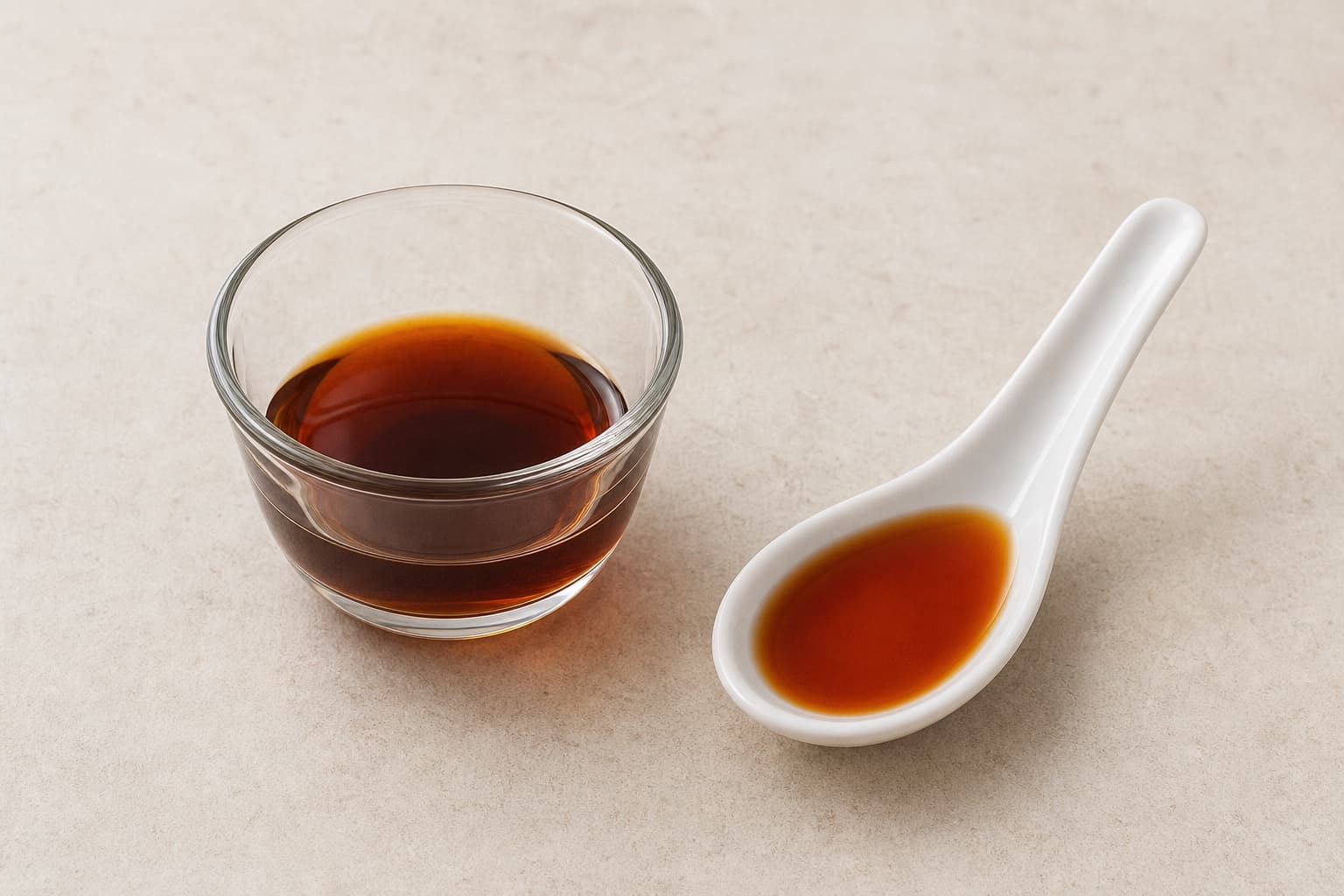
salty serving drizzle beside the pale chicken
Note: Contains soy and usually wheat; use certified gluten-free tamari if required.
Melbourne
Nearby specialist grocersMr Dad CBD guideGuideSolAsia QV guideGuideSearch TozerbaSearch Asian PantryToko NusantaraSearch ColesSearch WoolworthsFind an ALDIFind an IGAThese links open searches, catalogues, or store locators. Check the exact form and local availability there.
Jakarta
Nearby specialist shopsSearch SayurboxSearch TokopediaSearch ShopeeOpen GrabMartSuper Indo locationsRanch Market outletsHypermart onlinePasar Jaya networkThese links open searches, catalogues, or store locators. Check the exact form and local availability there.
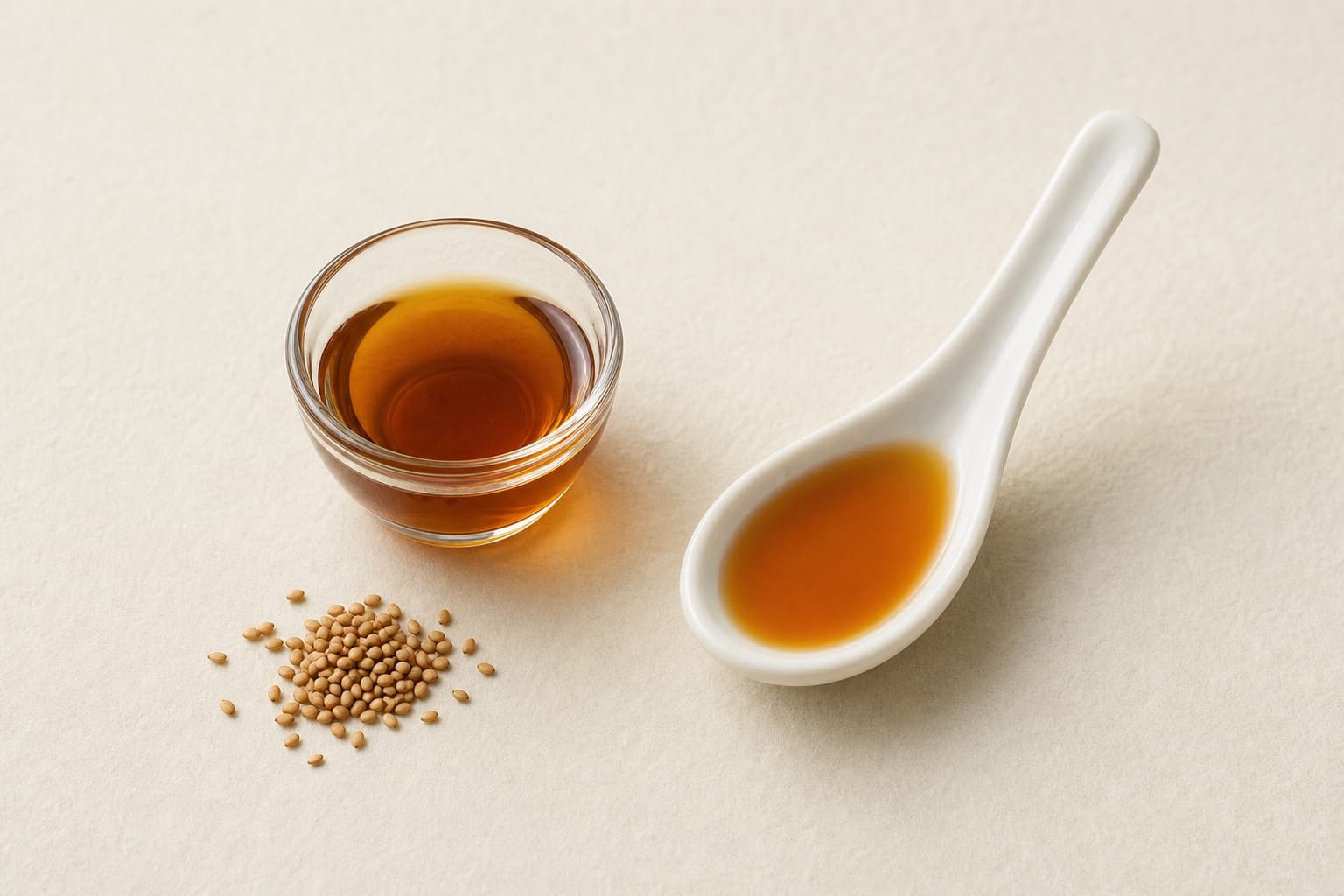
restrained nutty finish mixed with the soy drizzle
Note: Contains sesame.
Melbourne
Nearby specialist grocersMr Dad CBD guideGuideSolAsia QV guideGuideSearch TozerbaSearch Asian PantryToko NusantaraSearch ColesSearch WoolworthsFind an ALDIFind an IGAThese links open searches, catalogues, or store locators. Check the exact form and local availability there.
Jakarta
Nearby specialist shopsSearch SayurboxSearch TokopediaSearch ShopeeOpen GrabMartSuper Indo locationsRanch Market outletsHypermart onlinePasar Jaya networkThese links open searches, catalogues, or store locators. Check the exact form and local availability there.
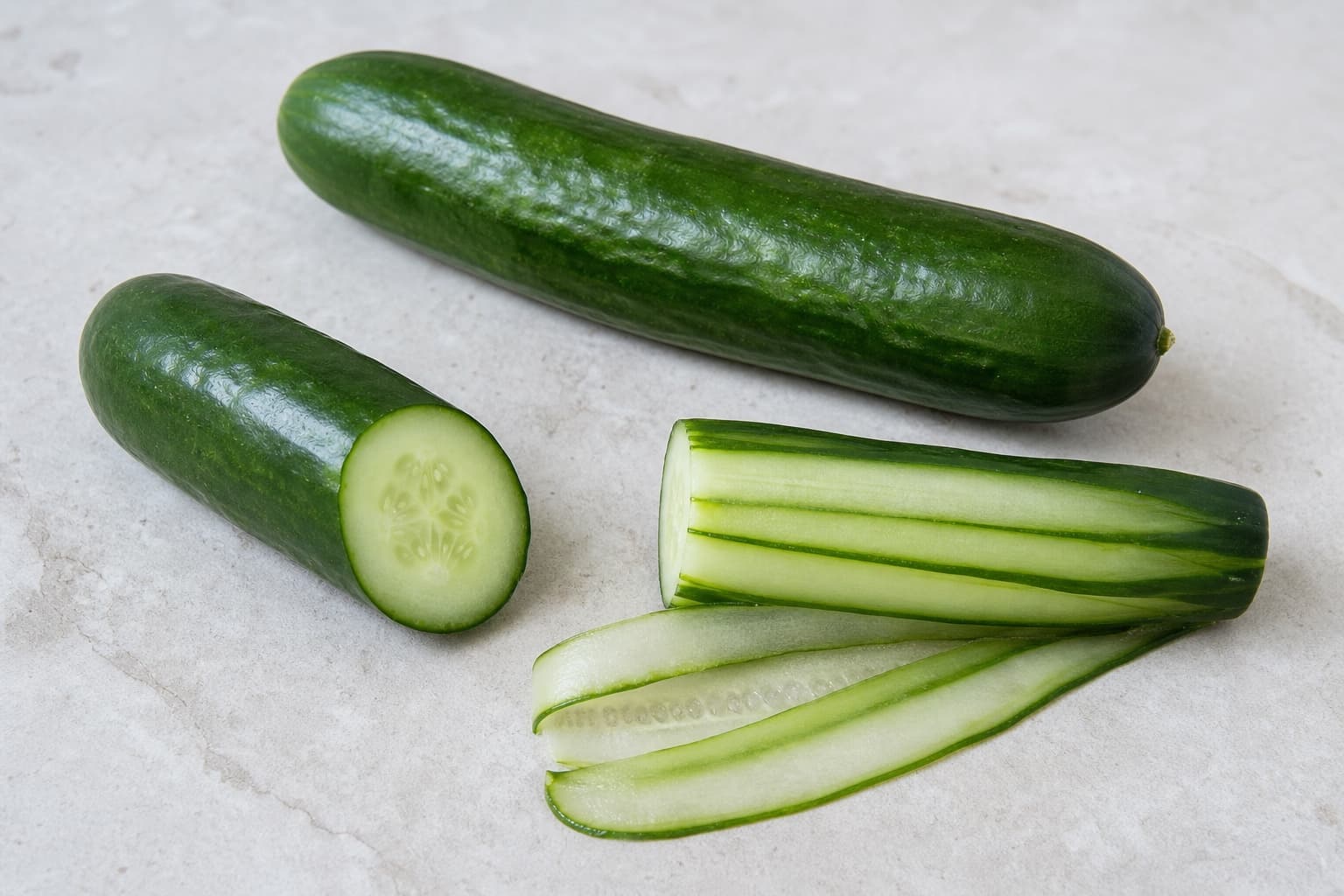
cool crisp layer beneath the dressed chicken
Melbourne
Nearby produce marketsSearch ColesSearch WoolworthsFind an ALDIFind an IGASearch TozerbaSearch Asian PantryToko NusantaraThese links open searches, catalogues, or store locators. Check the exact form and local availability there.
Jakarta
Nearby produce marketsPasar Jaya networkSuper Indo locationsRanch Market outletsHypermart onlineSearch SayurboxSearch TokopediaSearch ShopeeOpen GrabMartThese links open searches, catalogues, or store locators. Check the exact form and local availability there.
Calculated estimate · per serving
1 of 6 complete servings; includes chicken, seasoned rice, cucumber, broth, and all three sauces
Calculated from the authored edible ingredient weights using representative AFCD Release 3 and USDA FoodData Central profiles, then divided by the recipe yield. Energy follows the FSANZ ingredient-contribution method. Optional serving accompaniments are excluded. The model allocates the edible yield of the authored whole chicken, rendered chicken fat, rice, stock, cucumber, soy dressing, ginger-scallion sauce, and chilli sauce across six plates.
Calculated estimate only, not a laboratory result or personalised dietary advice. Actual values vary with brands, produce, meat trim, substitutions, final serving size, and how much cooking or rendered oil is left in the pan or skimmed. Check packaged labels for allergens and sodium; consult an accredited practising dietitian or clinician for medical dietary needs. Whole-chicken edible yield, skin served, rice absorption, stock and soy brands, rendered fat recovered, and sauce portions are the largest uncertainties.
Reference data: Australian Food Composition Database · FSANZ calculation method · USDA FoodData Central · calculated 2026-07-15
Step-by-step method
Read the action and cue together. Move on when the food matches the cue.
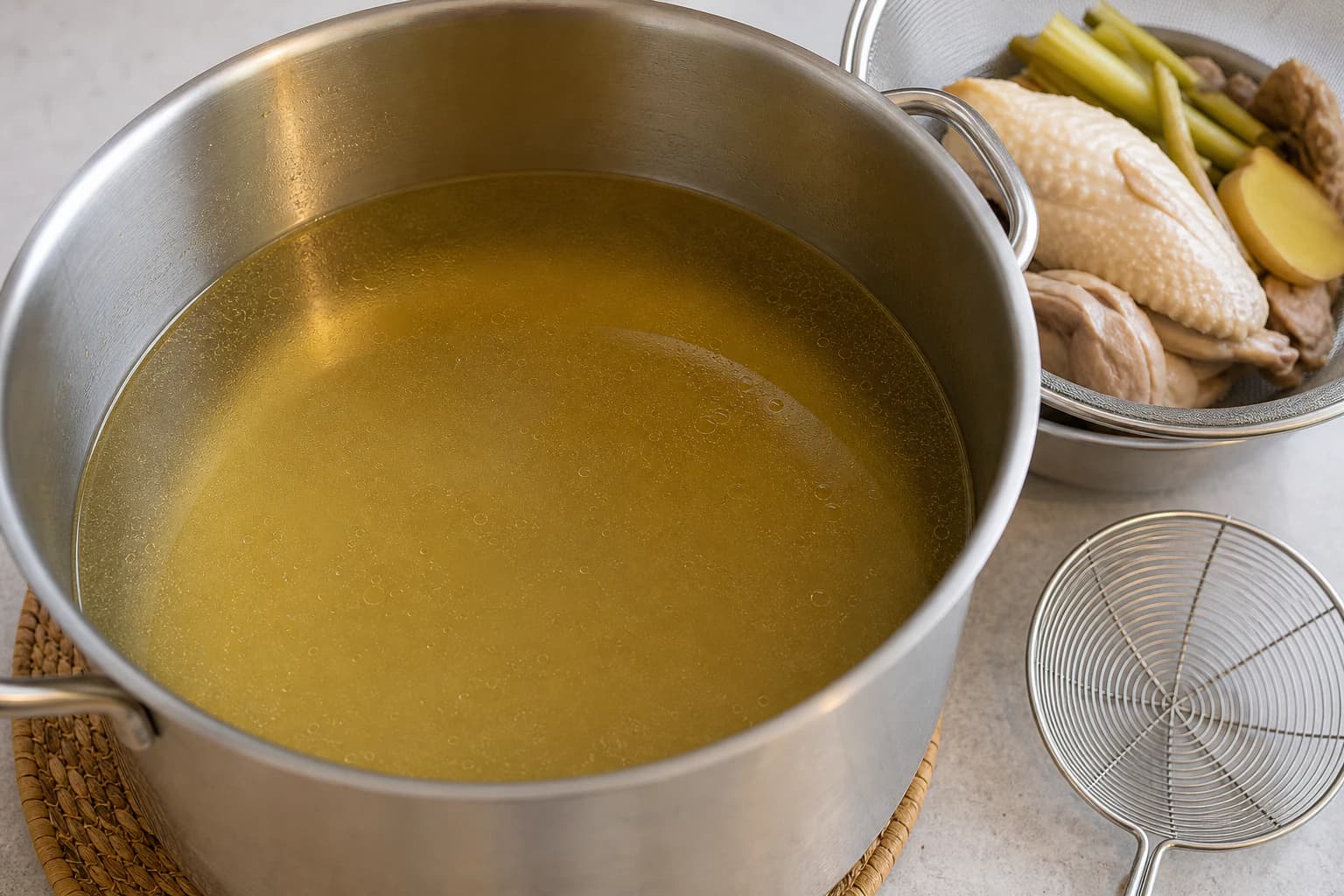
Keep the whole chicken refrigerated. Put wings, necks, or carcasses in the stockpot with the fresh water, 30 g sliced ginger, 20 g lightly crushed garlic, four spring onions, 10 g salt, and all the white pepper. Bring slowly to a boil, skim thoroughly, then hold a gentle simmer for 35 minutes. Strain out the solids and return the clear stock to the clean pot. Reserve the remaining ginger, garlic, spring onion, and salt for later steps.
Common mistake: Boiling hard emulsifies fat and sediment before the whole bird even enters.
Recovery: Lower the heat immediately, skim or stir gently, and continue at a small simmer until the surface calms.
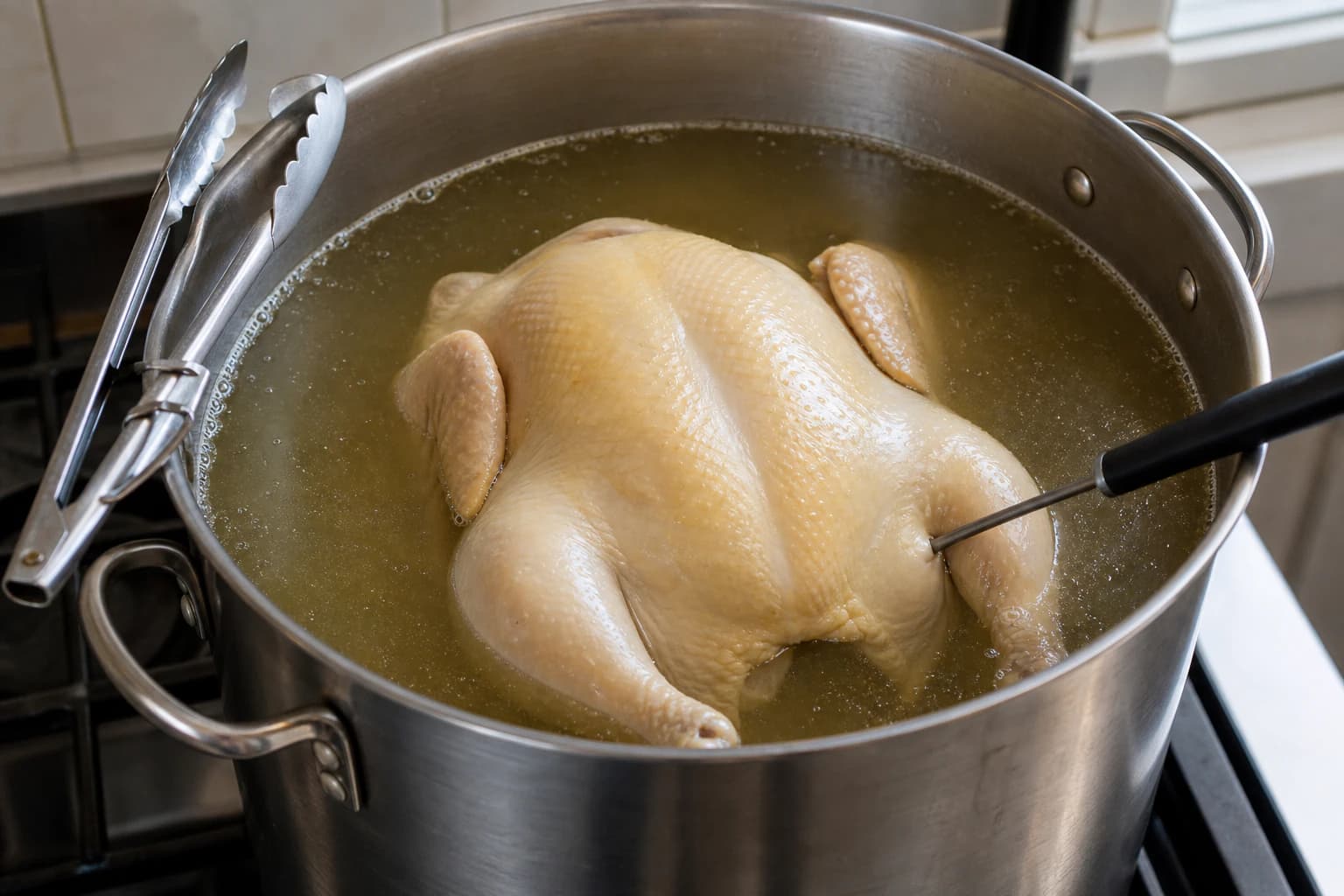
Pat the whole chicken dry; do not wash it. Trim and reserve 50 g cavity fat or loose skin for the rice. Bring stock to a full boil. Holding the chicken securely, lower it in and lift it out three times, tilting so hot stock fills and drains from the cavity each time. Fully submerge it breast-up, top up only with boiling water if needed, and reduce immediately to a bare simmer. Poach 30 minutes, turn heat off, cover, and stand 10 minutes. Probe the thickest breast and innermost thigh without touching bone; both must reach at least 75°C. If either is lower, return to a bare simmer in 5-minute blocks and recheck with a cleaned probe.
Common mistake: Timing by weight or checking only the breast can leave the thigh joint unsafe.
Recovery: Stop and discard the unsafe ingredient. Restart with a prepared edible version from a trusted food supplier.
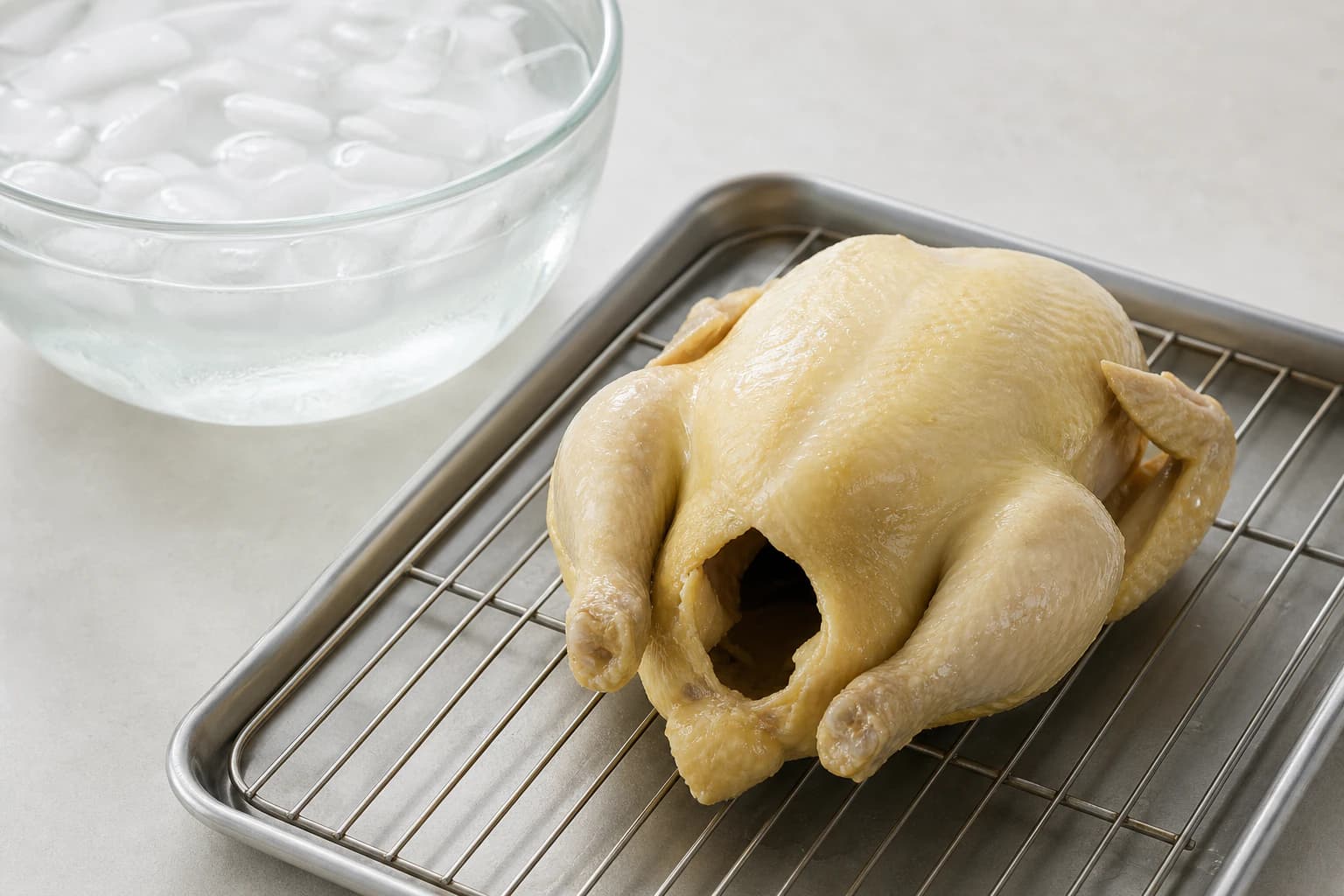
Using the clean tongs reserved for cooked food, transfer the verified chicken immediately to the clean iced drinking water for 10 minutes, turning once. Lift it to a wire rack, drain the cavity completely, and air-dry 15 minutes. Keep cumulative time between 5°C and 60°C under 2 hours; if service is delayed, refrigerate promptly below 5°C rather than leaving the bird on the bench. Reserve all poaching stock and skim off 500 ml for rice plus 600 ml for serving broth.
Common mistake: A long lukewarm soak trades texture for unsafe time in the temperature danger zone.
Recovery: Stop and discard the unsafe ingredient. Restart with a prepared edible version from a trusted food supplier.
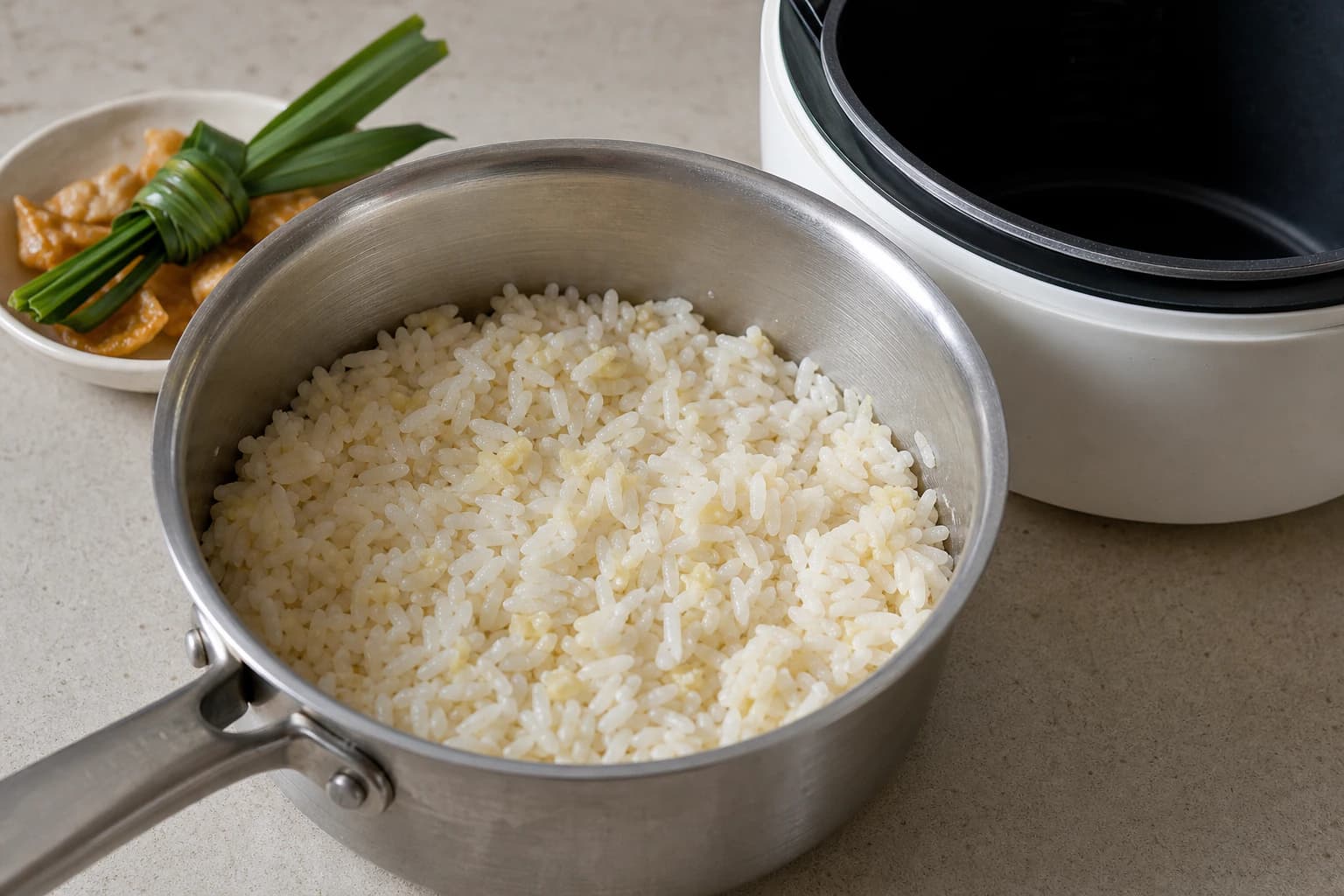
Finely chop 20 g of the reserved ginger and 15 g reserved garlic. Render the chicken fat in a saucepan over medium-low until 30–40 ml clear fat is released; discard crisp solids. Add ginger and garlic for 45 seconds without browning. Add the drained rice and 4 g of the reserved salt; stir 2 minutes until grains look glossy and smell nutty. Transfer to a rice cooker or heavy saucepan with 500 ml reserved stock and the knotted pandan. Cook by the appliance setting, or cover and simmer very low until absorbed, then rest covered 10 minutes. If the rice package requires a different liquid ratio, preserve its ratio rather than forcing 500 ml.
Common mistake: Brown garlic turns bitter; too much stock collapses the rice into porridge.
Recovery: Move the pan off heat, scrape only the unburnt paste into a clean spot, add a small splash of oil or liquid, and restart gently.
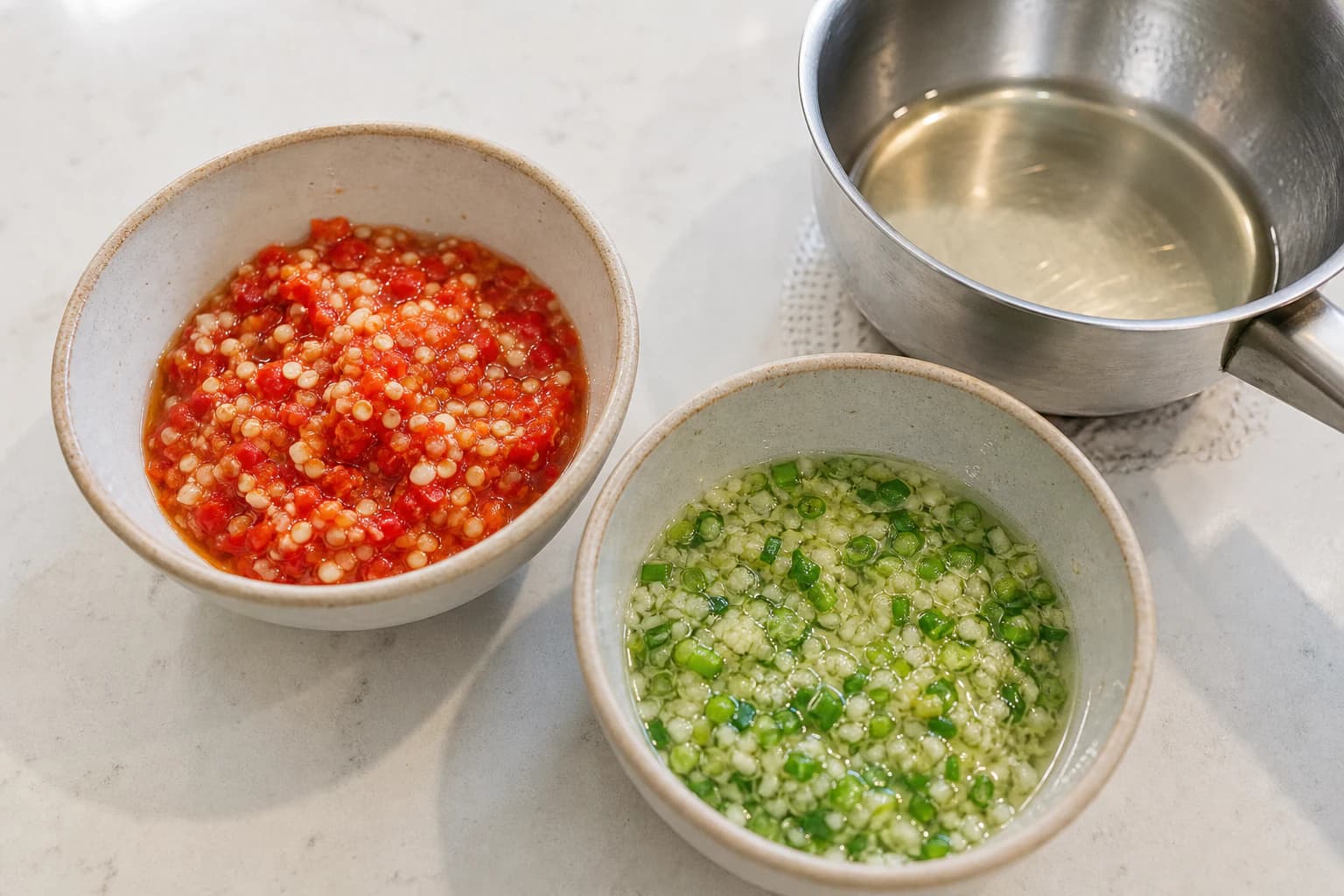
For chilli sauce, pound chillies with 20 g reserved garlic, 20 g reserved ginger, lime juice, rice vinegar, sugar, and 4 g reserved salt; loosen with 30–60 ml hot poaching stock until spoonable. For ginger-scallion sauce, finely mince the remaining ginger and spring onions with 4 g reserved salt. Heat the neutral oil until shimmering, pour it carefully over the aromatics in a heatproof bowl, and stir. Keep both sauces away from raw-poultry tools.
Common mistake: Raw-chicken cross-contact or smoking oil makes otherwise fresh condiments unsafe or bitter.
Recovery: Stop and discard the unsafe ingredient. Restart with a prepared edible version from a trusted food supplier.
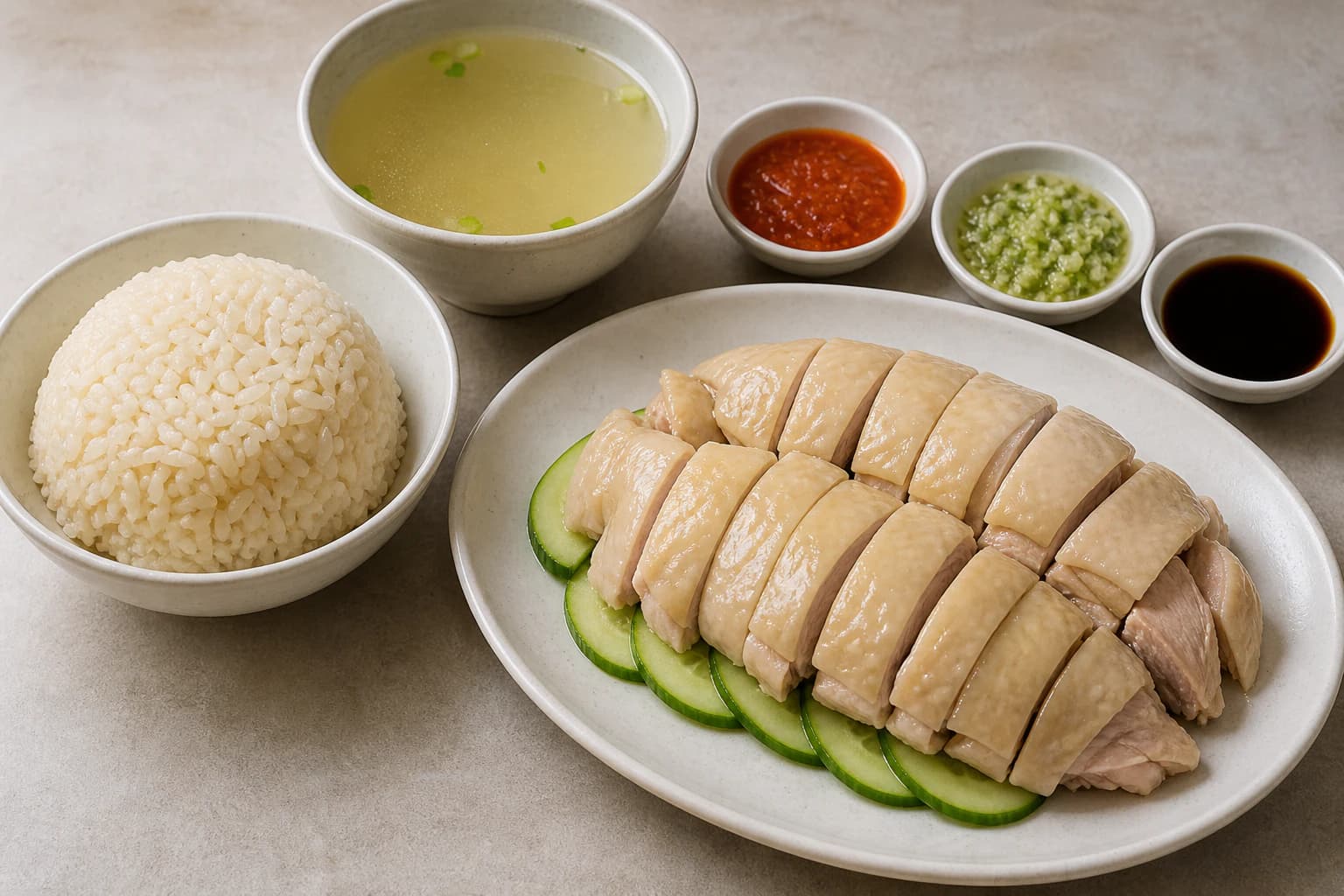
Reheat the reserved 600 ml serving stock to steaming and adjust with the last 2 g salt if needed. On a board used only for cooked food, remove legs and breasts, then cut into bite-size skin-on pieces; keep bones for future stock. Arrange sliced cucumber and chicken. Mix light soy with sesame oil and spoon beside or lightly over the chicken. Fluff rice and serve with hot broth, chilli sauce, and ginger-scallion sauce. Serve within 2 hours of the chicken leaving safe temperature control, or keep the chicken refrigerated below 5°C until needed.
Common mistake: Using the raw-poultry board again or leaving cool chicken out through a long meal creates avoidable risk.
Recovery: Pause before the next step, compare the cue, then correct heat, moisture, or seasoning while the dish is still flexible.
Fix problems
The active method already includes its most likely mistake and recovery. Open the reference library when your question falls outside the current step.
It is a diaspora dish with roots in Hainan's Wenchang chicken. Hainanese migrants adapted it across Southeast Asia; Singapore's now-iconic version includes local and Cantonese influences such as pandan rice and chilled silky skin. Malaysia also has important regional versions.
FSANZ gives at least 75°C as the straightforward safe internal endpoint for chicken. This home recipe verifies both the thickest breast and innermost thigh rather than presenting a lower restaurant texture target as universally safe.
No. Pat it dry and move it straight from refrigeration to the hot-stock process. Washing can spread raw-poultry contamination around the sink and does not replace cooking both thick sections to at least 75°C.
Render a measured amount of fat, keep garlic pale, coat well-drained rice for 2 minutes, then use the liquid ratio suited to that rice and cooker. Rest covered before fluffing; extra stock cannot be fixed after absorption.
Poach a whole chicken safely to 75°C while keeping silky skin and separate, savoury rice grains. Look for defined jasmine grains, neat skin-on chicken slices, cucumber, three separate condiments: Each rice grain is glossy but distinct, chicken slices retain silky skin, sauce stays beside rather than flooding the plate, and hot clear broth completes the service.
Timing by weight or checking only the breast can leave the thigh joint unsafe. Stop and discard the unsafe ingredient. Restart with a prepared edible version from a trusted food supplier.
Scale the measured ingredients with the serving count, then scale the vessel or work in batches. Keep the same visual finish - defined jasmine grains, neat skin-on chicken slices, cucumber, three separate condiments - rather than forcing the original timer.
chicken wings, necks, or carcasses: 400 g extra wings when carcasses are unavailable; aged jasmine rice: another long-grain fragrant rice; adjust stock to the package and cooker; trimmed chicken fat or skin: 30 ml neutral oil for a lighter but less chicken-forward rice; pandan leaves: omit rather than use pandan essence
whole chicken: Keep below 5°C, do not wash raw chicken, and cook both thickest breast and innermost thigh to at least 75°C.; chicken wings, necks, or carcasses: Handle as raw poultry and keep separate from cucumber and finished sauces.; iced drinking water: Use a clean vessel and a short 10-minute chill; do not leave cooked poultry in lukewarm water.; unseasoned rice vinegar: Use unseasoned vinegar so sugar and salt remain controlled.
Drain wet components well, keep the pan hot, and add sauce only after the main ingredient is hot. If the pan steams, spread the food out and pause extra sauce.
Recipe sourcing hand-off
This page keeps only the dish-specific brief. The complete aisle list, Bahasa names, dated store evidence, optional distance sorting, and map routes live in the connected shopping and city guides.
Ask a poultry shop, butcher, or supermarket for a 1.5–1.7 kg whole chicken that fits your stockpot, plus wings, necks, or carcasses for the strengthened stock. Keep all poultry below 5°C.
Open the Melbourne sourcing guideUse a trusted high-turnover poultry seller for an intact whole chicken and stock bones. Transport chilled poultry promptly and keep it separate from cucumber and sauce ingredients.
Open the Jakarta sourcing guideFlavour foundation
A strengthened poaching stock flavours both chicken and rice. Repeated cavity flushing equalises heat, sub-simmer poaching protects the skin, a probe verifies safety, and a short ice bath arrests carryover before the chicken drains. Rendering chicken fat before coating the rice keeps each grain aromatic rather than greasy.
Taste profile
Singaporean Hainanese chicken rice grew from Hainan's Wenchang chicken through migration and local adaptation, including Cantonese poaching and chilling influences and Southeast Asian pandan and chilli. Singapore and Malaysia both have living versions; this page describes its Singapore-style method without claiming sole ownership.
Cook plan
Versions
Diet & allergens
Dietary notes: dairy-free, nut-free, egg-free, alcohol-free.
Contains or may contain: soy, sesame, wheat/gluten depending on soy sauce.
Check packaged-ingredient labels and cross-contamination advice for the brands you use.
Budget
Planning estimate only - not live or locally verified pricing
What belongs where
The ingredient list is organised for shopping; this map reorganises the same recipe by cooking function so you know what belongs in the pot and what stays separate.
whole chicken, clear chicken stock, ginger, garlic, spring onion, pandan, chilli and lime
Lebanese cucumbers
Storage notes are conservative home-kitchen guidance. Chill perishable food within 2 hours, keep it at 5°C or colder, and follow local food-safety and package directions when they are stricter.
Sources & evidence
Sources support the specific technique or safety point stated below.
Grounds chicken rice as living Singapore food heritage with Hainanese and Cantonese versions, poached or roasted chicken, seasoned rice, chilli sauce, ginger, cucumber, and clear soup.
Boundary: The heritage record establishes identity and variation rather than one exact recipe. Bumbu Lens authors a thermometer-led home method and keeps Hainanese naming within the Singapore context.Cross-checks a documented Melbourne restaurant workflow for whole poached chicken, fragrant chicken-fat rice, condiments, and complete plate service.
Boundary: This published restaurant recipe is a local method reference, not evidence that the Bumbu Lens formula copies Gai Wong or carries any restaurant award.Recorded as a local editorial or generated visual cue asset, not an independent external source.
Boundary: A local or generated asset is visual guidance, not evidence of authenticity, ingredient quantities, timing, safety, or method accuracy.Applies the Australian consumer guidance to cook all poultry and minced meat to at least 75°C in the centre and to keep raw-meat tools separate from ready-to-eat garnishes.
Boundary: Colour, clear juices, wrapper translucency, and elapsed time do not replace a clean probe reading in the thickest or largest test piece.Treats cooked rice as potentially hazardous food: keep it at 5°C or colder or 60°C or hotter, and minimise time between those temperatures.
Boundary: Crisp texture does not establish safe storage. Cool leftovers promptly in shallow containers and reheat only the amount being served.Next cooks
Recipes here share ingredients, bumbu logic, region, spice level, or weeknight patterns so the next cook reuses what you just learned.
 China / home-style · IntermediateChinese Tomato Beef StewKnow when the beef is truly spoon-tender while keeping the tomato sauce glossy, not watery.
 China / home-style · BeginnerTomato Egg Stir-FryKeep large cloud-soft egg curds distinct inside a fresh, spoonable tomato sauce.
 Nanxiang / Shanghai · PatientXiao Long BaoSeal clear hot soup inside a delicate wrapper that survives the steamer and reaches the spoon intact.
 Korea / home-style gogi mandu · IntermediateHomemade Pork ManduSeal juicy pork filling inside thin mandu skins without wet seams or raw centres.
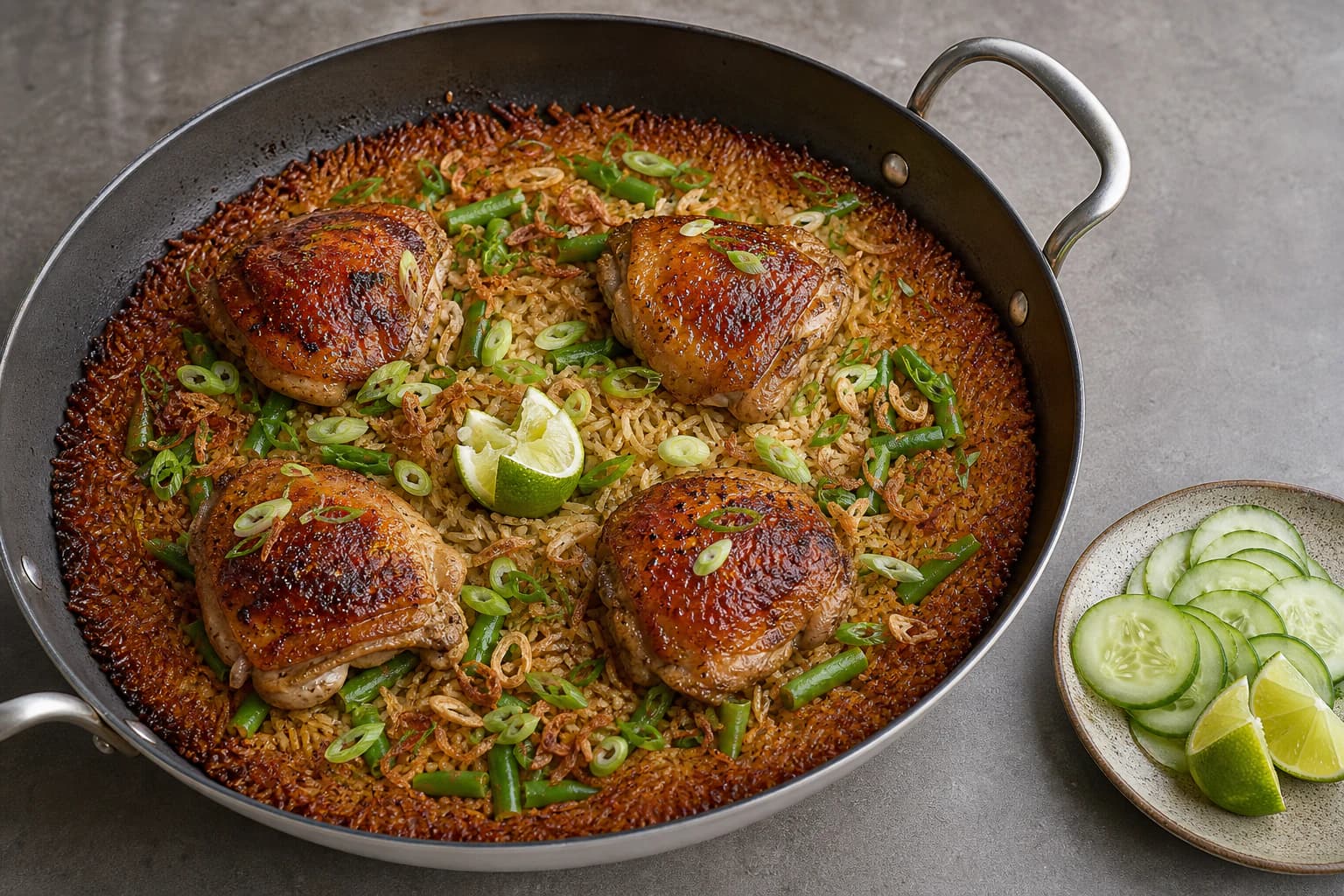 Contemporary Indonesian-inspired · IntermediateOne-Pan Chicken and Crispy RiceRender crisp chicken skin, cook separate rice grains in measured stock, and build brittle kecap-darkened edges without taking the chicken beyond its safe endpoint.
 Japan / composed pork-bone ramen · PatientTonkotsu Shoyu RamenBuild an opaque ivory broth that tastes like pork - not dairy - and assemble six balanced bowls before the noodles soften.