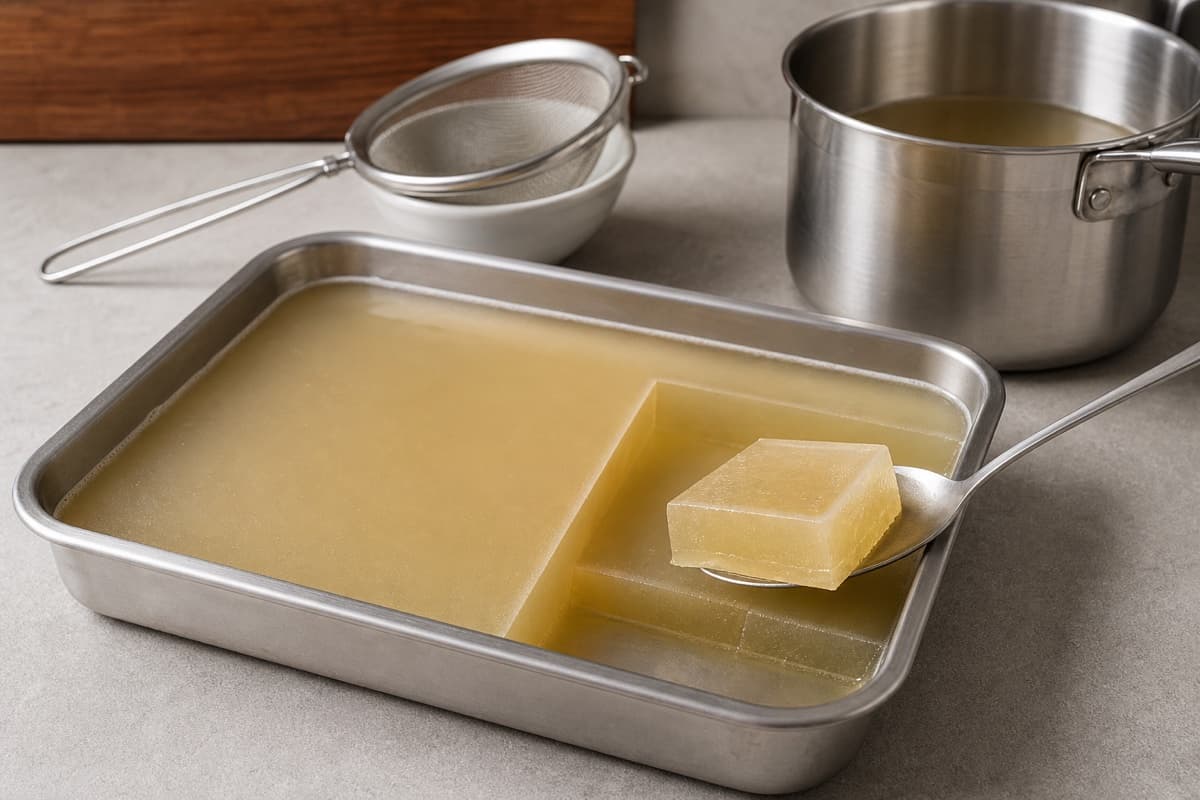
Blanch clean and extract the pork aspic
Cold stock is a clear pale-gold gel that jiggles as one firm mass and cuts into sharp 3–4 mm cubes.
See this stepCN · Nanxiang / Shanghai / Jiangnan
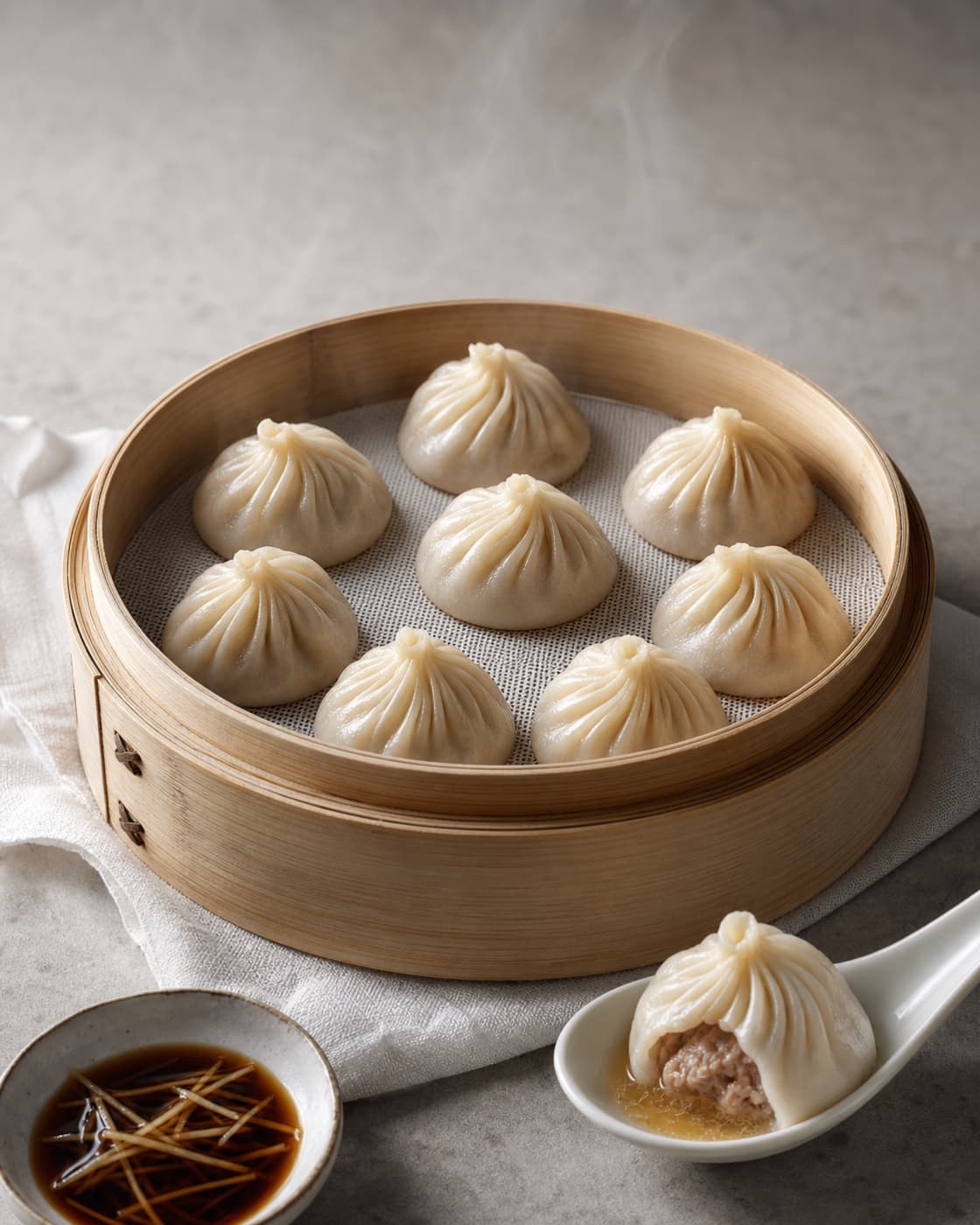
Shanghai-style soup dumplings built from a firm pork-skin aspic, cold cohesive pork filling, and an unleavened wrapper rolled thin at the edge but stronger in the centre. Pleats matter because they seal soup - not because one number is magic.
The transformation
Compare the colour, consistency, and cue at each stage.
Cold stock is a clear pale-gold gel that jiggles as one firm mass and cuts into sharp 3–4 mm cubes.
See this step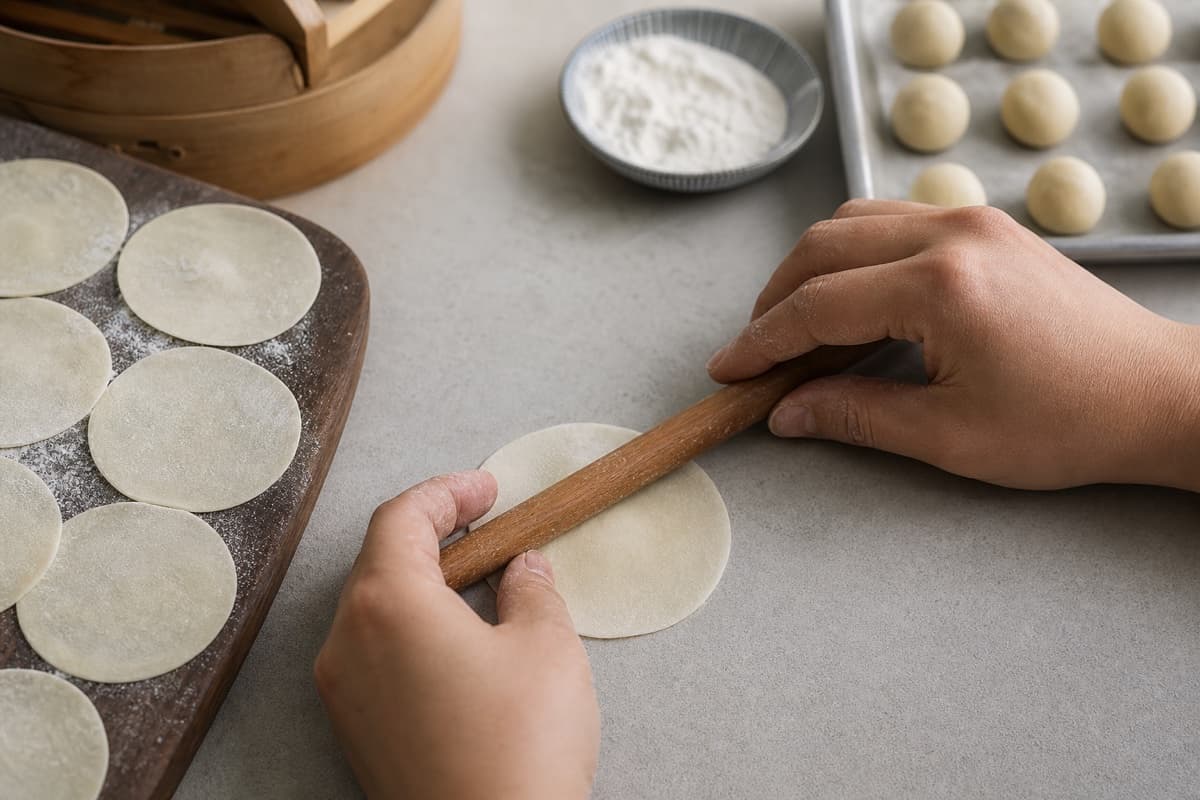
The edge shows fingertips faintly through it, while the stronger centre remains visibly opaque and supports filling without sagging.
See this step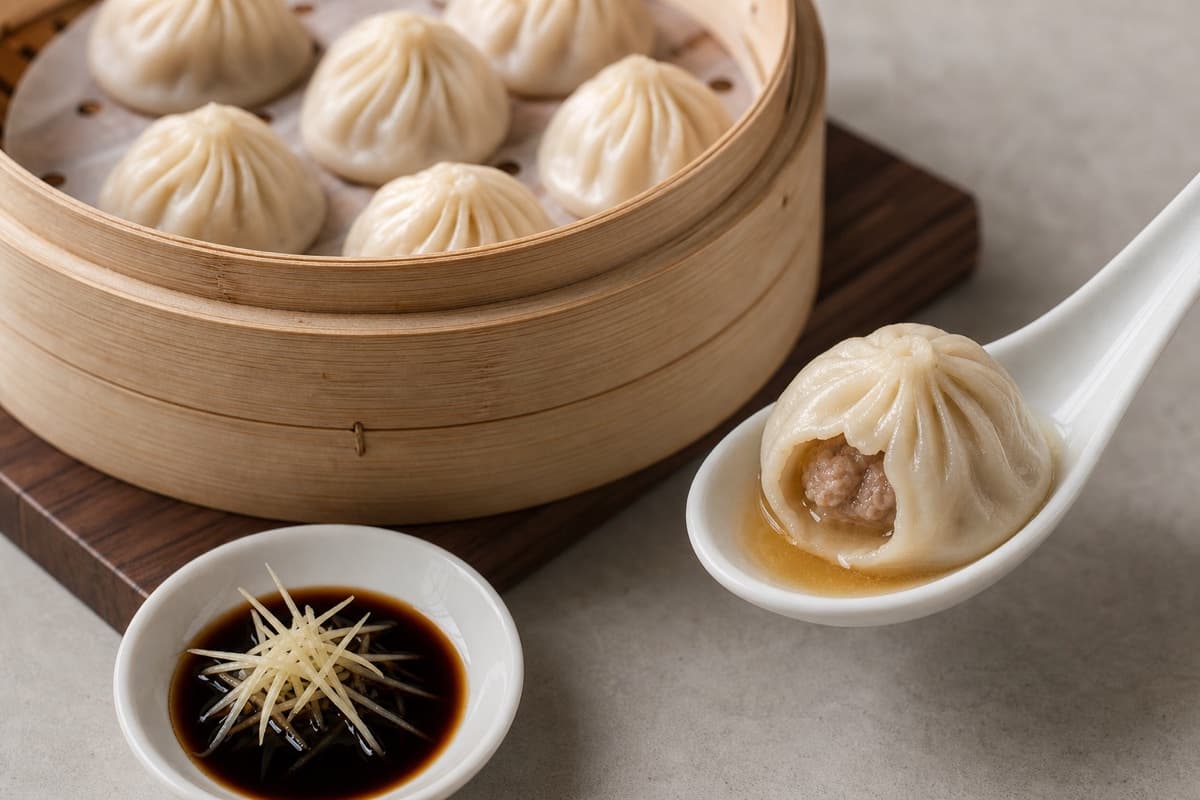
An intact dumpling reaches the spoon, a small side opening releases clear golden soup, and the pork centre is fully cooked and juicy.
ReadyFlavour foundation
Long-simmered skin stock sets into cuttable collagen, so soup can be folded into cold pork without wetting the wrapper. One-direction mixing binds the filling, a thicker wrapper centre supports its weight, and high steam melts the aspic only after the pleats are sealed.
Taste profile
Xiao Long Bao is a Jiangnan and Shanghai soup dumpling. Eighteen pleats is a documented Nanxiang benchmark, but a complete seal - not numerology - is the beginner's first standard.
Cook plan
Versions
Diet & allergens
Dietary notes: dairy-free.
Contains or may contain: pork, wheat, soy, sesame, sulphites depending on Shaoxing wine and vinegar.
Check packaged-ingredient labels and cross-contamination advice for the brands you use.
Budget
Planning estimate only · not live or locally verified pricing
What belongs where
Xiao long bao is a Shanghai/Jiangnan soup dumpling assembled from four distinct systems. Pork aspic is made and chilled first, then folded into a cold seasoned pork filling; unleavened dough forms the sealed wrapper; black-vinegar-and-ginger dip stays at the table. None of these components should be flattened into a bumbu or sambal label.
ròupí dòng · 肉皮冻
xiàn · 馅
pí · 皮
zhènjiāng xiāngcù and jiāng · 镇江香醋和姜
Storage notes are conservative home-kitchen guidance. Chill perishable food within 2 hours, keep it at 5°C or colder, and follow local food-safety and package directions when they are stricter.
Step-by-step method
Read the action and cue together. Move on when the food matches the cue.
Cover pork skin and bones with cold water, boil 5 minutes, drain, and discard that water. Rinse, scrape residue from the skin, scrub dark matter from bones, and wash the pot. Add the cleaned parts, 950 ml fresh water, 15 g ginger, scallion, and 15 ml Shaoxing. Bring to a boil, then cover and simmer gently for 2 hours. Strain and reduce if necessary to exactly 500 ml. Cool in a shallow tray and refrigerate at least 6 hours.
Common mistake: Using the dirty blanch water or stopping with a loose spoonable gel produces cloudy soup or filling too wet to wrap.
Recovery: Lower the heat immediately, skim or stir gently, and continue at a small simmer until the surface calms.
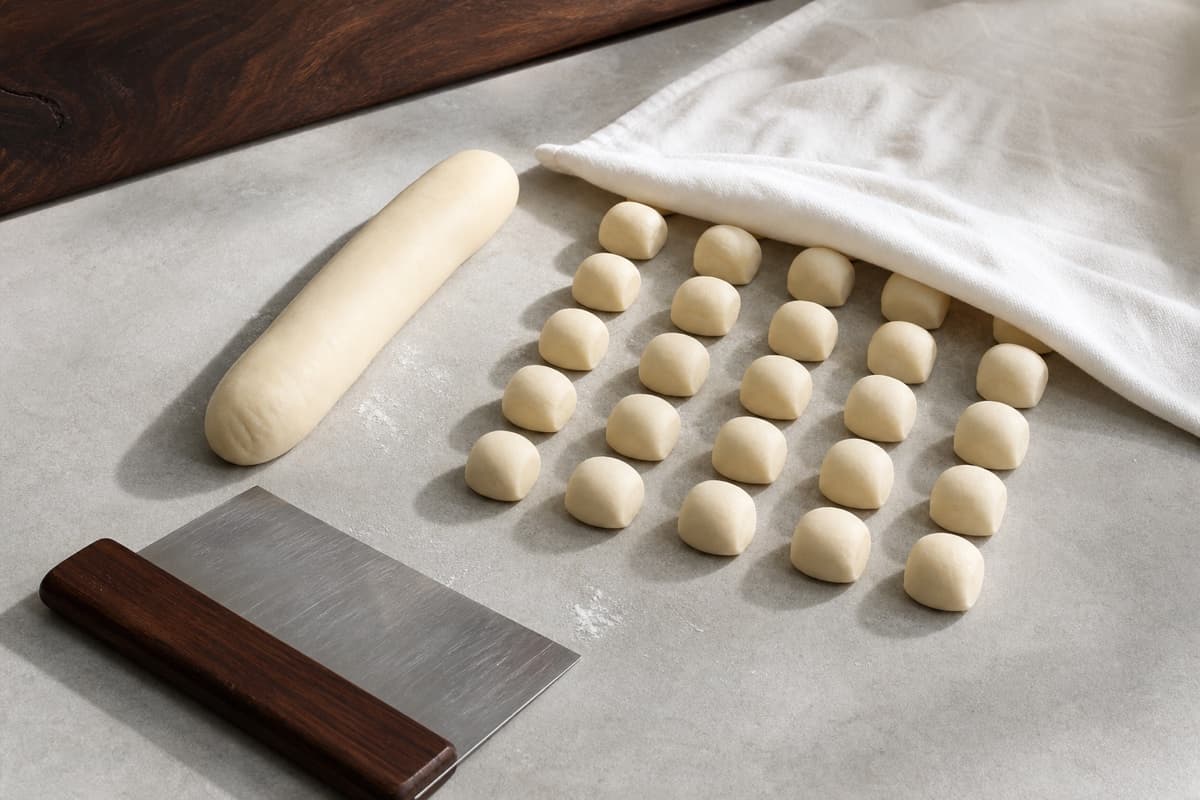
Add 110 g warm 40–45°C water to 160 g flour in three additions and stir with chopsticks until shaggy. Knead 10 minutes, cover and rest 20 minutes; knead another 5 minutes and rest covered for 30 minutes. Roll into a uniform rope and weigh twenty-four 11 g pieces. Keep every piece under a damp cloth so no dry skin forms.
Common mistake: Adding lots of bench flour before the first rest makes wrappers dry; uncovered portions crack before pleating.
Recovery: Pause before the next step, compare the cue, then correct heat, moisture, or seasoning while the dish is still flexible.
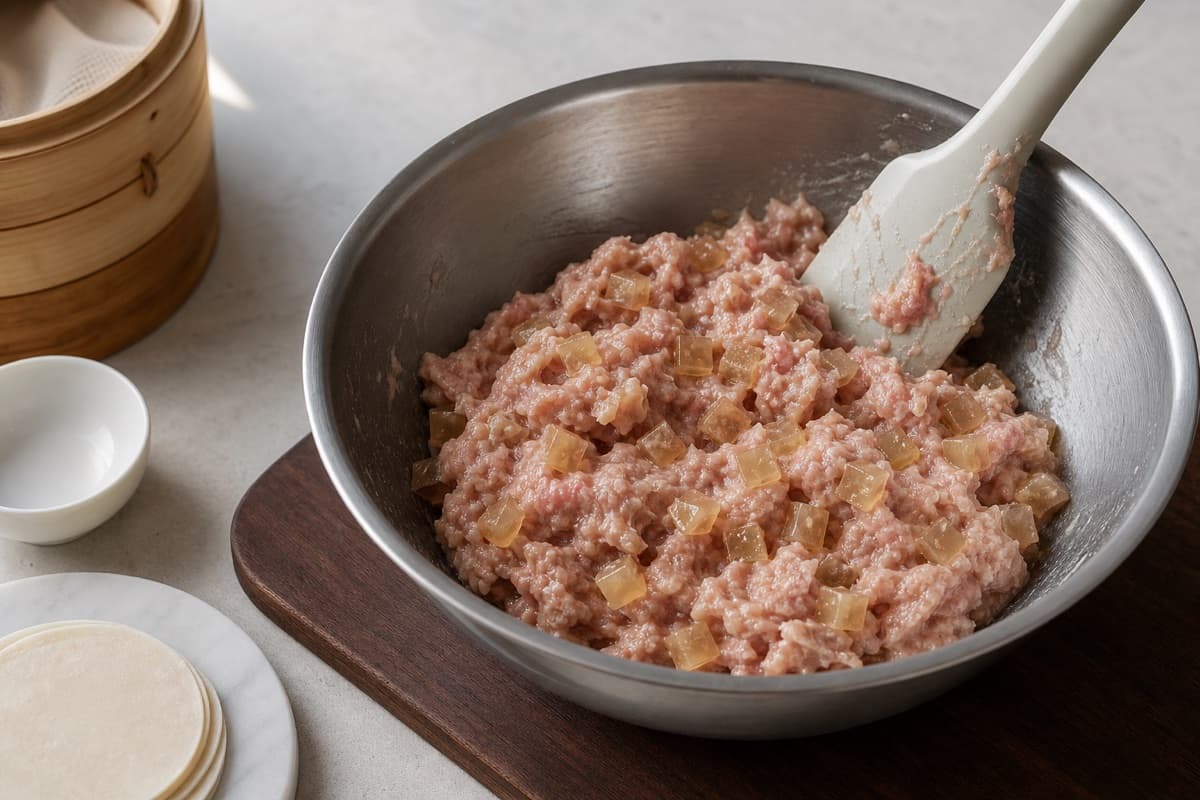
Mix pork, 22 ml Shaoxing, 14 ml soy, 22 ml cold water, 10 g ginger paste, salt, sugar, sesame oil, and white pepper firmly in one direction for 2–3 minutes. Cook a separate 15 g test portion to 71°C and taste; never taste raw filling. Re-chill the bowl, gently fold in 220 g very cold aspic cubes, chill 20 minutes, then portion 25 g for each dumpling, bringing only six portions to the bench at once.
Common mistake: Warm loose filling smears the gel and wets the seam; flour or starch does not repair melted aspic.
Recovery: Spread the food out, raise heat only after moisture drops, and hold back extra sauce until the pan is frying again.
Flatten one 11 g piece and use a narrow dowel while rotating the disc with the opposite hand. Roll from the outer edge toward - but not all the way through - the middle until 8–9 cm wide. Keep the perimeter about 0.5 mm and slightly translucent while the centre remains about 1 mm and opaque. Work one wrapper at a time so it cannot dry.
Common mistake: An evenly thick wrapper makes a doughy knot, but a paper-thin centre tears when the aspic melts.
Recovery: Reduce uncovered and season in small rounds, checking the visual cue before adding more salt, sugar, or sauce.
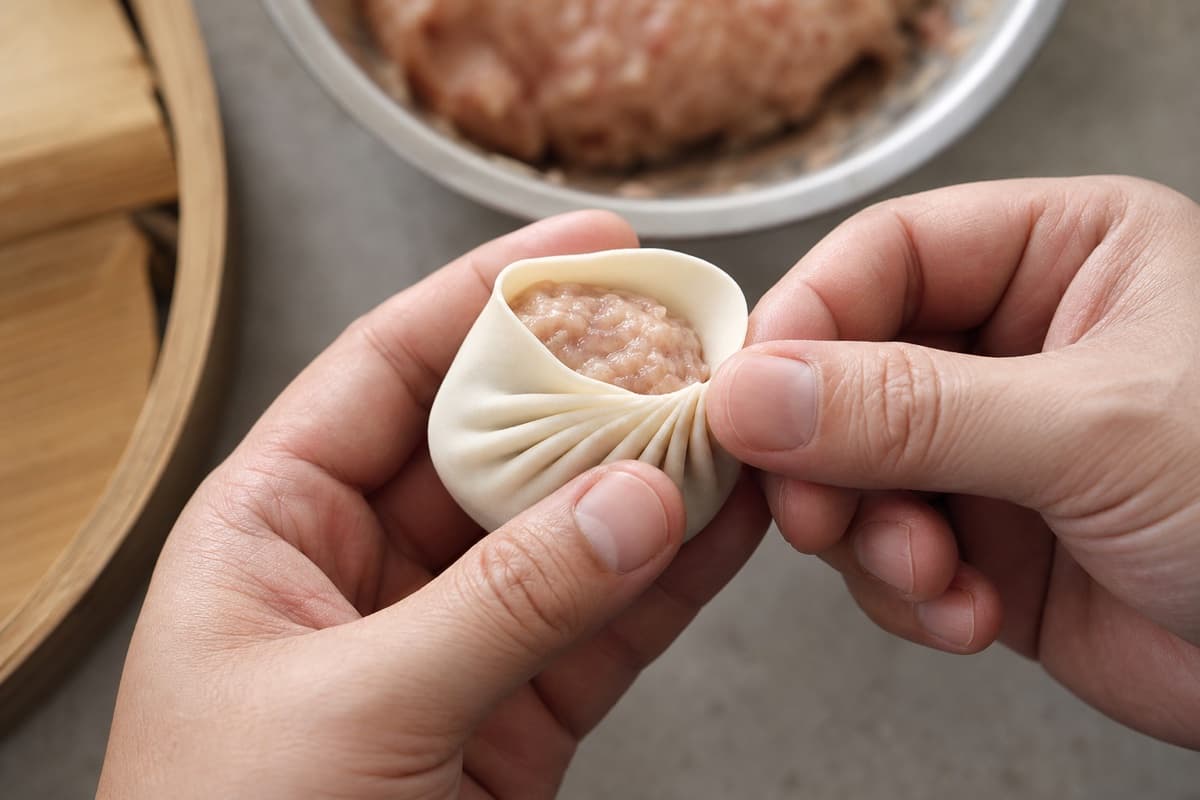
Place 25 g cold filling in the wrapper centre and keep the border clean. Pinch one point, rotate the dumpling while the thumb stays near the filling, and make narrow overlapping pleats. Aim toward 18 on a confident batch, but seal a sound 12-pleat practice dumpling rather than tearing it. Twist the final opening into a small closed knot; remove a little filling if the wrapper strains.
Common mistake: Overfilling or touching the rim with pork prevents a complete seal and leaks the soup before it reaches a spoon.
Recovery: Pause before the next step, compare the cue, then correct heat, moisture, or seasoning while the dish is still flexible.
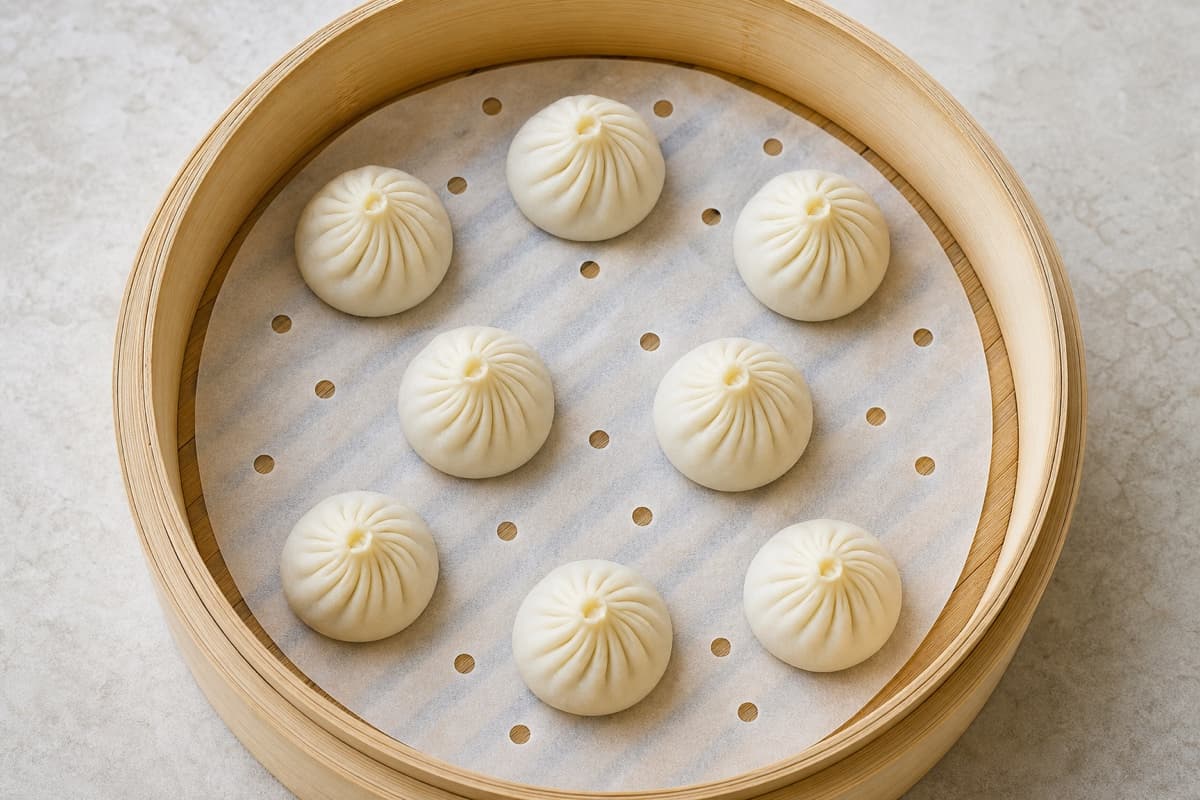
Use perforated parchment or individual napa-cabbage leaves so steam can pass. Arrange no more than eight dumplings per basket, leaving at least 3 cm around each and keeping them clear of the wall. Bring the water to a rolling boil before setting the basket on top; water must never touch the dumplings.
Common mistake: Touching dumplings fuse together, while a solid unperforated liner traps water and cooks the base unevenly.
Recovery: Pause before the next step, compare the cue, then correct heat, moisture, or seasoning while the dish is still flexible.
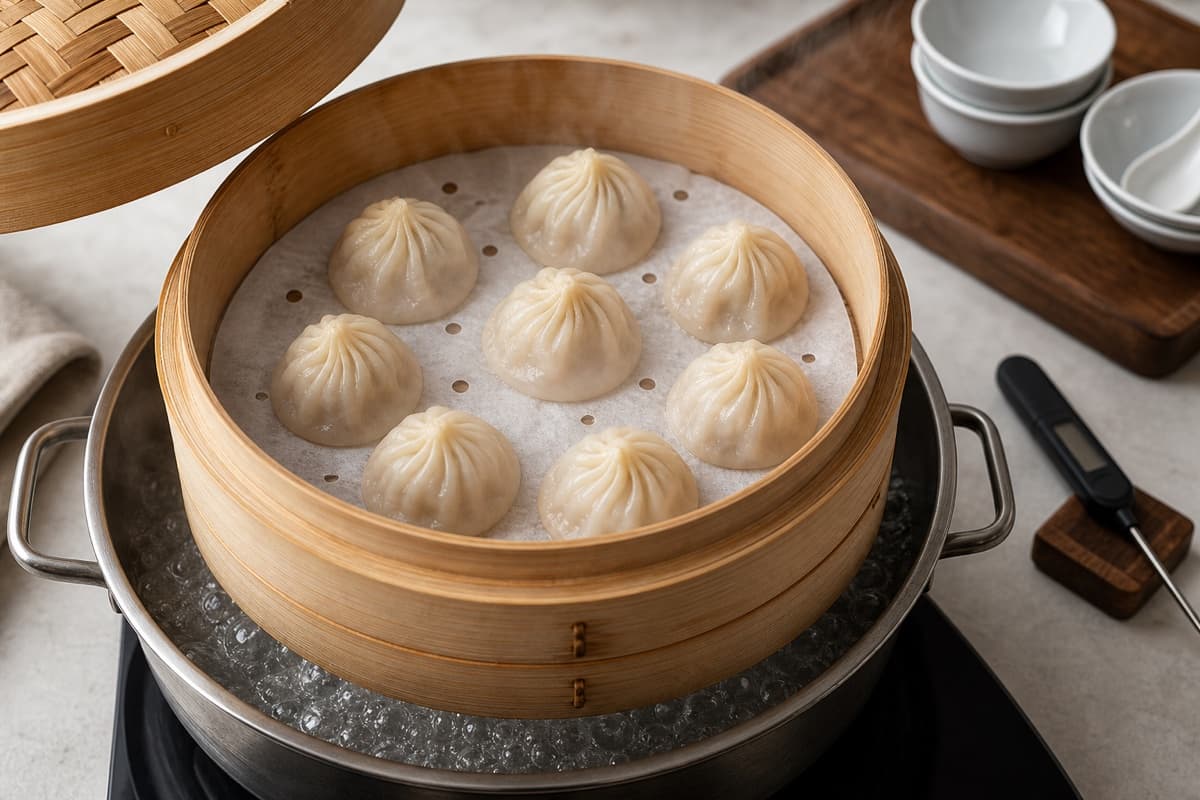
Cover and steam fresh dumplings over already boiling water for 8 minutes without lifting the lid. Move the whole basket off the heat and rest 60–90 seconds. For the first batch, sacrifice one dumpling and insert a clean probe through the top: minced pork must reach 71°C. If not, return the basket immediately for 2 more minutes and recheck.
Common mistake: Weak steam or opening early undercooks the centre; oversteaming eventually tears a wrapper that cannot be repaired.
Recovery: Spread the food out, raise heat only after moisture drops, and hold back extra sauce until the pan is frying again.
Cut 30 g ginger into hair-fine matchsticks and serve with Chinkiang vinegar. Lift each dumpling gently by the knot while supporting it immediately in a Chinese soup spoon. Add a little vinegar and ginger, make a small opening in the side, wait for steam to escape, and sip the clear soup cautiously before eating the wrapper and pork.
Common mistake: Biting a whole dumpling straight from the steamer can scald; squeezing with chopsticks ruptures it over the basket.
Recovery: Spread the food out, raise heat only after moisture drops, and hold back extra sauce until the pan is frying again.
Ingredients
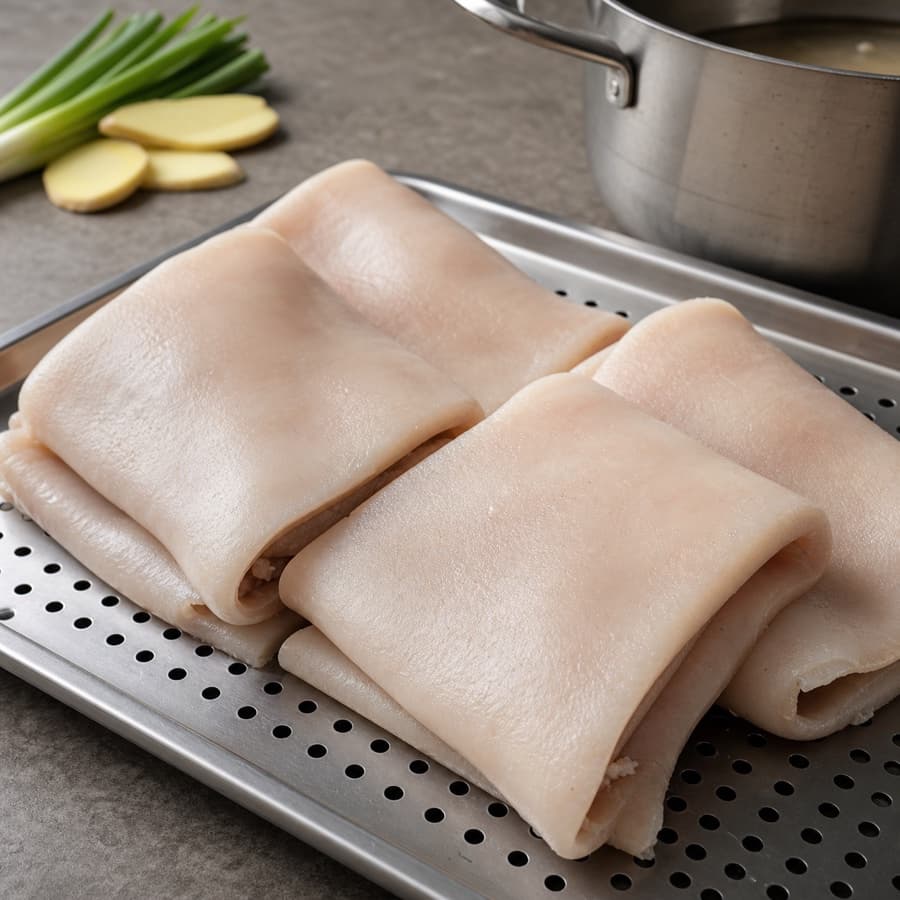
collagen source that makes the natural soup aspic firm enough to dice
Note: Contains pork. Remove hair and thick surface fat before blanching.
 Nearby Asian grocersSearch TozerbaSearch Asian PantryToko Nusantara
 Search Coles
 Search WoolworthsFind an ALDIFind an IGA
These links open searches, catalogues, or store locators. Check the exact form and local availability there.
Nearby traditional marketsPasar Jaya networkSuper Indo locationsRanch Market outletsHypermart online Search Sayurbox
 Search Tokopedia
 Search ShopeeOpen GrabMart
These links open searches, catalogues, or store locators. Check the exact form and local availability there.
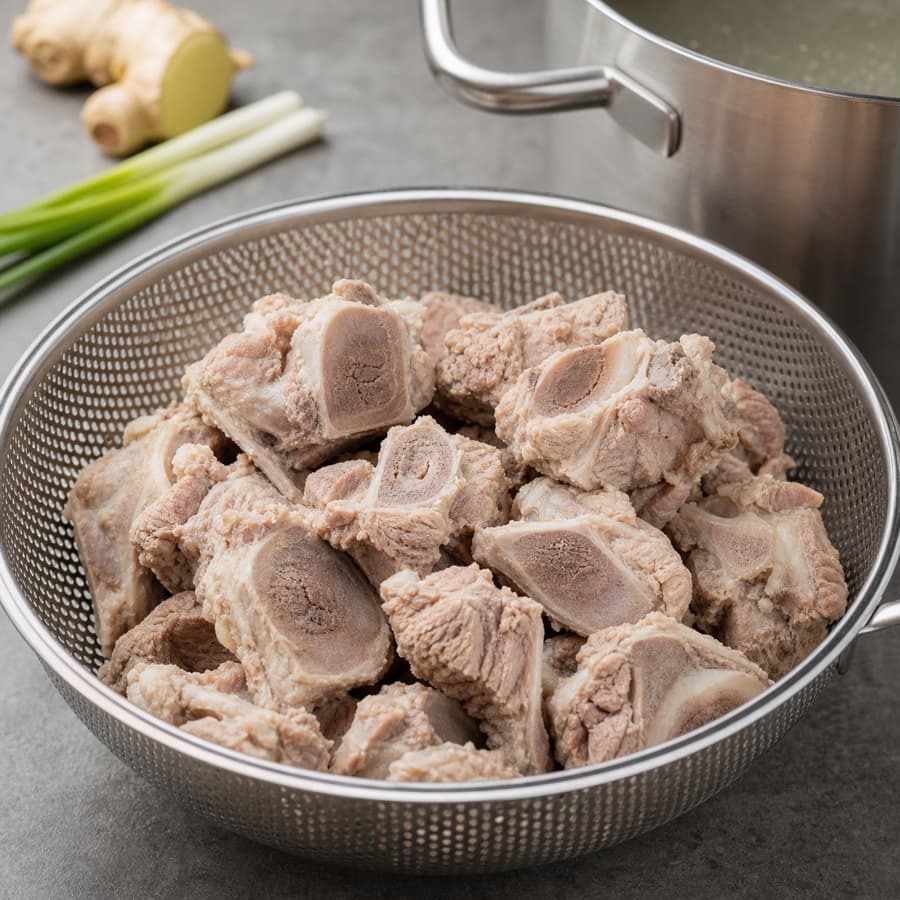
pork flavour and additional gelatin in the clear aspic stock
Note: Contains pork. Discard the first blanching water and scrub away grey residue.
Nearby Asian grocersSearch TozerbaSearch Asian PantryToko NusantaraSearch ColesSearch WoolworthsFind an ALDIFind an IGAThese links open searches, catalogues, or store locators. Check the exact form and local availability there.
Nearby traditional marketsPasar Jaya networkSuper Indo locationsRanch Market outletsHypermart onlineSearch SayurboxSearch TokopediaSearch ShopeeOpen GrabMartThese links open searches, catalogues, or store locators. Check the exact form and local availability there.
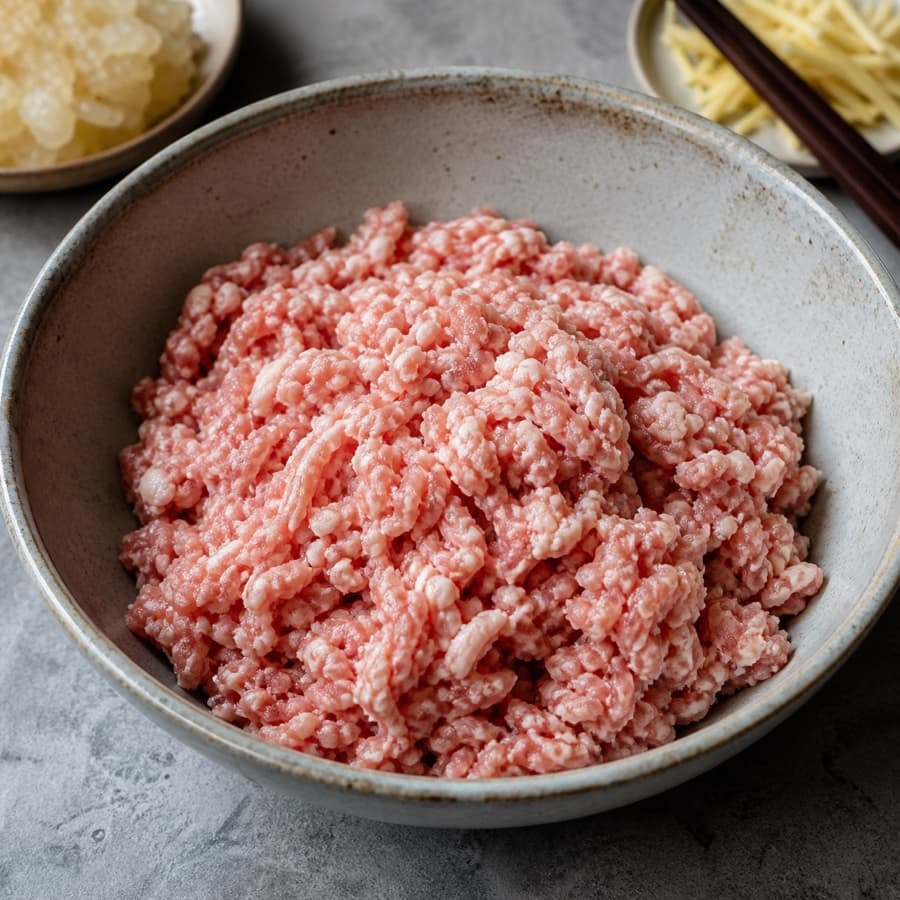
fat-balanced cohesive filling that stays juicy around the melted aspic
Note: Contains pork. Keep at 4°C or colder and cook a separate test portion - never taste raw filling.
Nearby Asian grocersSearch TozerbaSearch Asian PantryToko NusantaraSearch ColesSearch WoolworthsFind an ALDIFind an IGAThese links open searches, catalogues, or store locators. Check the exact form and local availability there.
Nearby traditional marketsPasar Jaya networkSuper Indo locationsRanch Market outletsHypermart onlineSearch SayurboxSearch TokopediaSearch ShopeeOpen GrabMartThese links open searches, catalogues, or store locators. Check the exact form and local availability there.
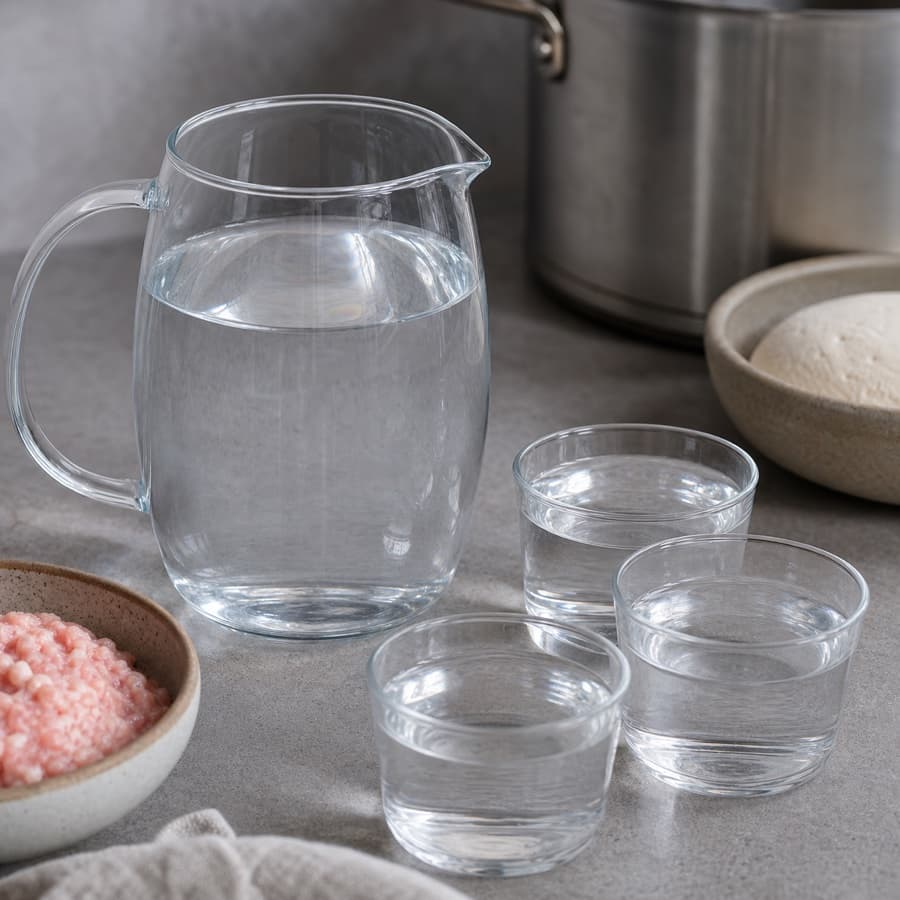
950 ml extracts aspic and smaller cold portions hydrate dough and filling
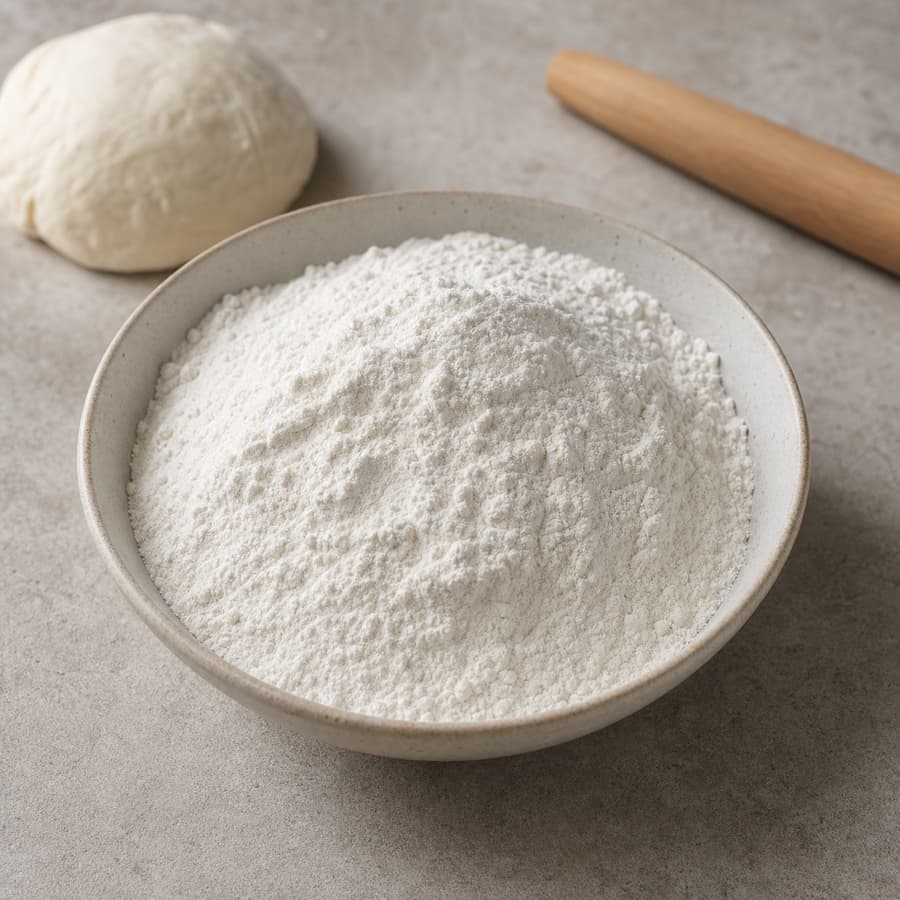
unleavened wrapper dough with enough gluten to roll thin and pleat
Note: Contains wheat and gluten.
Nearby Asian grocersSearch TozerbaSearch Asian PantryToko NusantaraSearch ColesSearch WoolworthsFind an ALDIFind an IGAThese links open searches, catalogues, or store locators. Check the exact form and local availability there.
Nearby traditional marketsPasar Jaya networkSuper Indo locationsRanch Market outletsHypermart onlineSearch SayurboxSearch TokopediaSearch ShopeeOpen GrabMartThese links open searches, catalogues, or store locators. Check the exact form and local availability there.
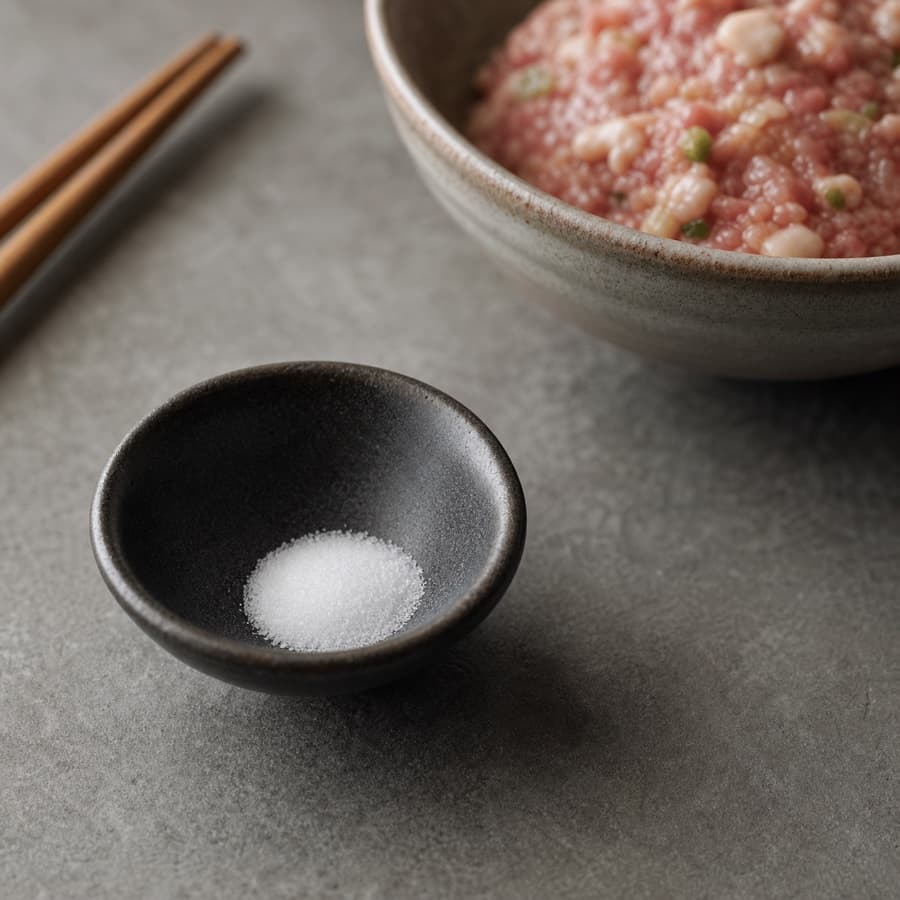
strengthens the pork bind and seasons the soup from within
Nearby Asian grocersSearch TozerbaSearch Asian PantryToko NusantaraSearch ColesSearch WoolworthsFind an ALDIFind an IGAThese links open searches, catalogues, or store locators. Check the exact form and local availability there.
Nearby traditional marketsPasar Jaya networkSuper Indo locationsRanch Market outletsHypermart onlineSearch SayurboxSearch TokopediaSearch ShopeeOpen GrabMartThese links open searches, catalogues, or store locators. Check the exact form and local availability there.
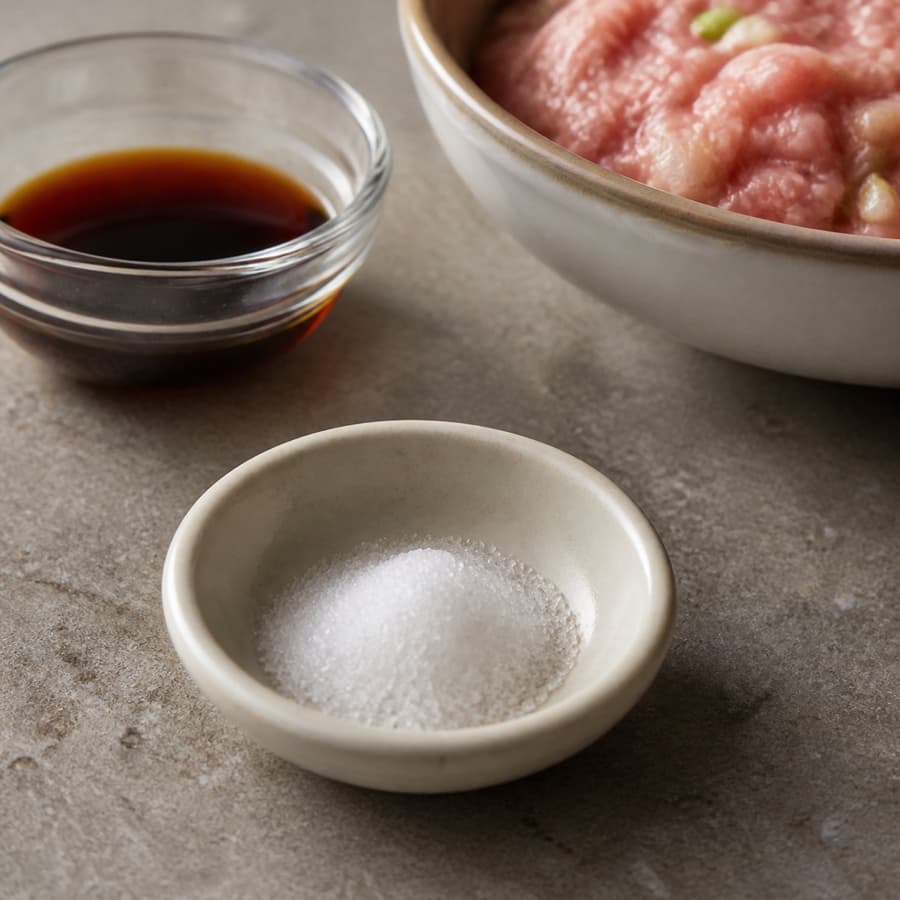
small Shanghai-style sweetness that rounds soy and pork
Nearby Asian grocersSearch TozerbaSearch Asian PantryToko NusantaraSearch ColesSearch WoolworthsFind an ALDIFind an IGAThese links open searches, catalogues, or store locators. Check the exact form and local availability there.
Nearby traditional marketsPasar Jaya networkSuper Indo locationsRanch Market outletsHypermart onlineSearch SayurboxSearch TokopediaSearch ShopeeOpen GrabMartThese links open searches, catalogues, or store locators. Check the exact form and local availability there.
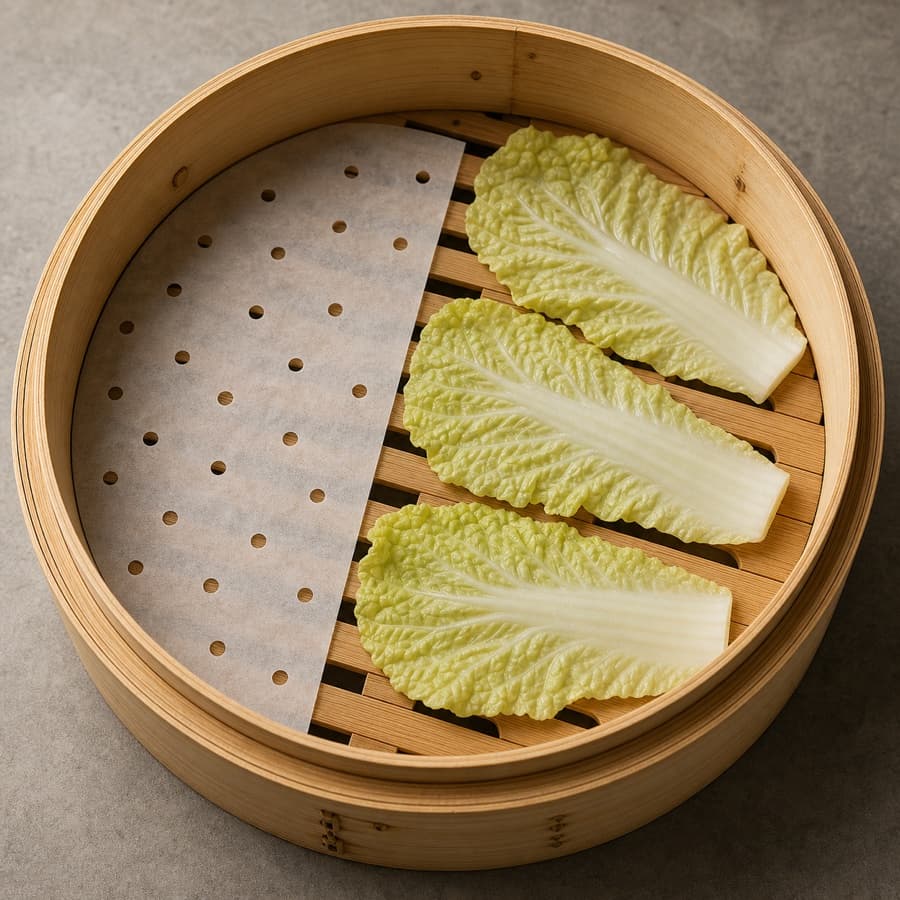
prevents sticking while leaving steam paths open
Note: Never use an unperforated solid sheet that blocks steam and collects water.
Nearby Asian grocersSearch TozerbaSearch Asian PantryToko NusantaraSearch ColesSearch WoolworthsFind an ALDIFind an IGAThese links open searches, catalogues, or store locators. Check the exact form and local availability there.
Nearby traditional marketsPasar Jaya networkSuper Indo locationsRanch Market outletsHypermart onlineSearch SayurboxSearch TokopediaSearch ShopeeOpen GrabMartThese links open searches, catalogues, or store locators. Check the exact form and local availability there.
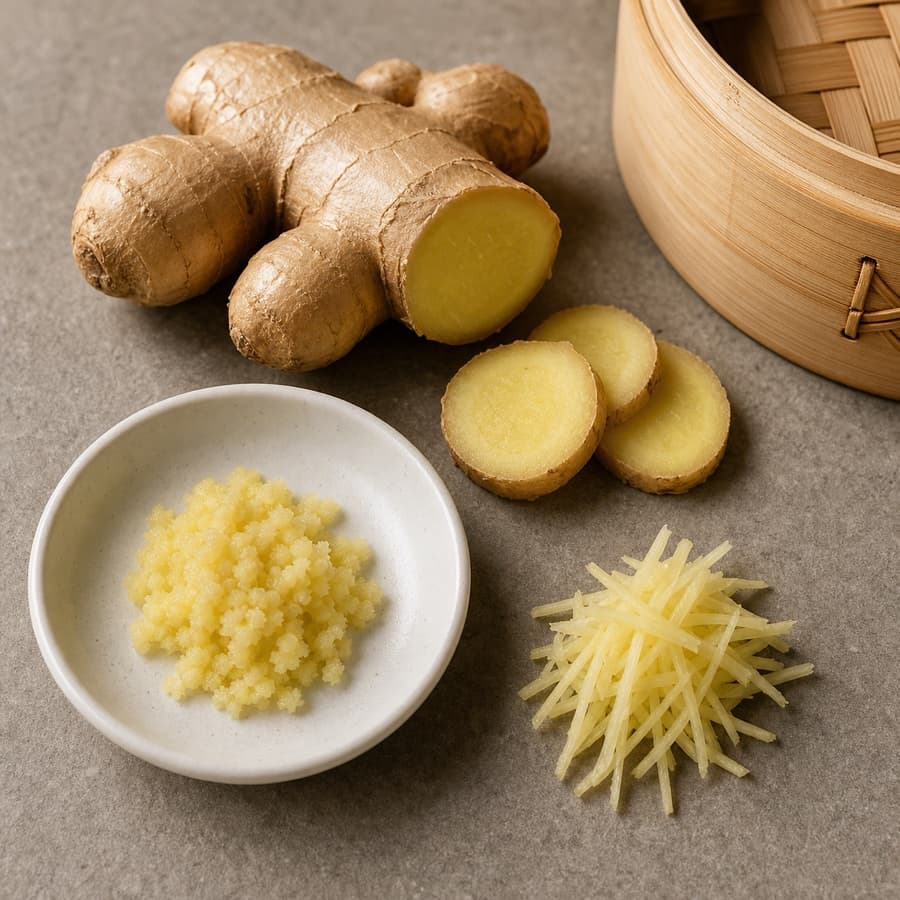
15 g perfumes stock, 10 g seasons filling, and 30 g becomes fine serving matchsticks
Nearby Asian grocersSearch TozerbaSearch Asian PantryToko NusantaraSearch ColesSearch WoolworthsFind an ALDIFind an IGAThese links open searches, catalogues, or store locators. Check the exact form and local availability there.
Nearby traditional marketsPasar Jaya networkSuper Indo locationsRanch Market outletsHypermart onlineSearch SayurboxSearch TokopediaSearch ShopeeOpen GrabMartThese links open searches, catalogues, or store locators. Check the exact form and local availability there.
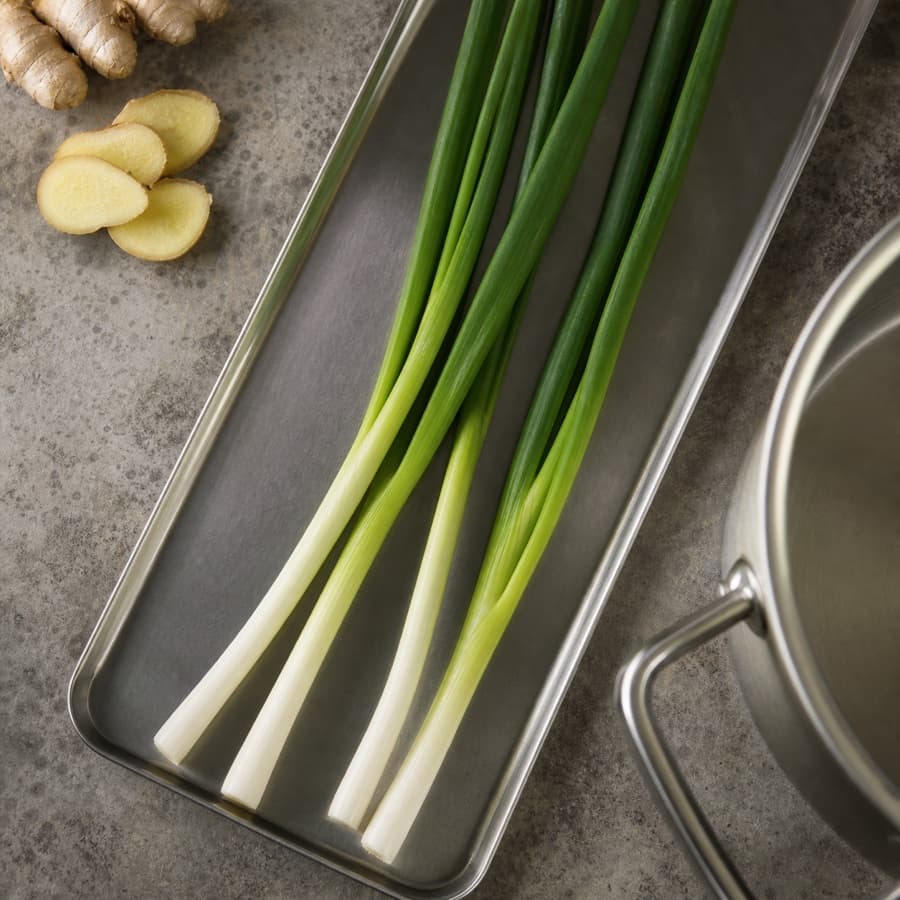
gentle whole aromatic in the aspic stock, removed before setting
Nearby Asian grocersSearch TozerbaSearch Asian PantryToko NusantaraSearch ColesSearch WoolworthsFind an ALDIFind an IGAThese links open searches, catalogues, or store locators. Check the exact form and local availability there.
Nearby traditional marketsPasar Jaya networkSuper Indo locationsRanch Market outletsHypermart onlineSearch SayurboxSearch TokopediaSearch ShopeeOpen GrabMartThese links open searches, catalogues, or store locators. Check the exact form and local availability there.
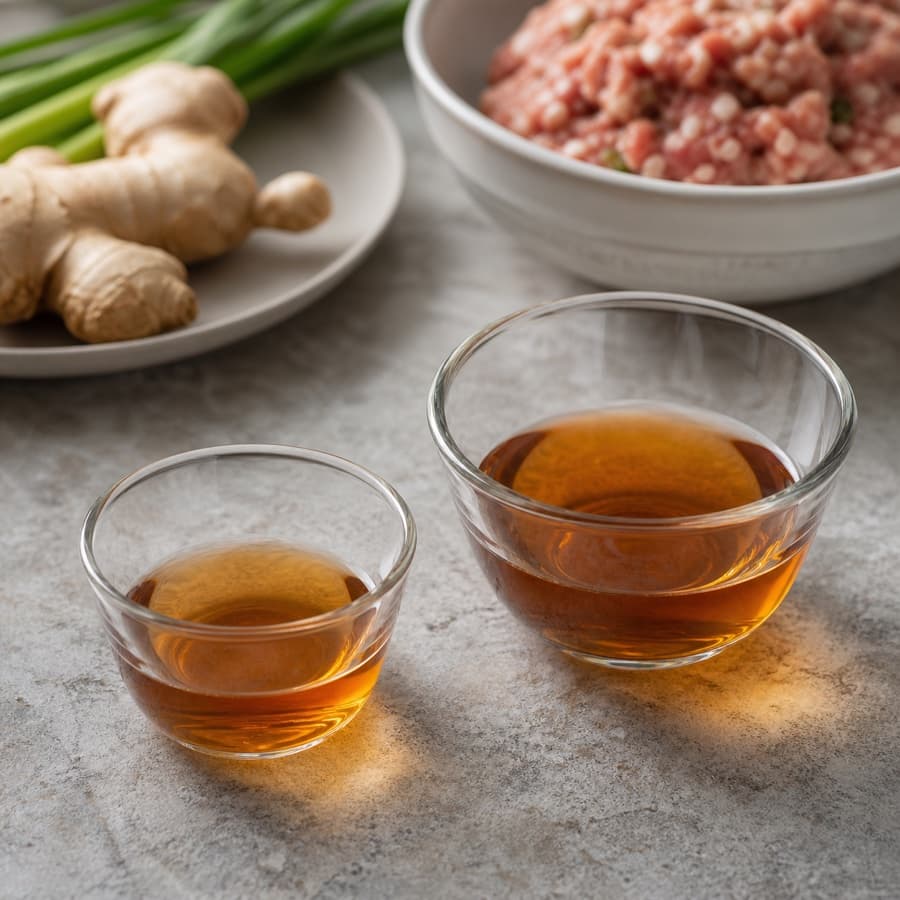
15 ml perfumes stock and 22 ml rounds the pork filling
Note: Contains alcohol and may contain sulphites.
Swap: dry sherry, or equal water plus 2 ml mild rice vinegar for an alcohol-free path
Nearby Asian grocersSearch TozerbaSearch Asian PantryToko NusantaraSearch ColesSearch WoolworthsFind an ALDIFind an IGAThese links open searches, catalogues, or store locators. Check the exact form and local availability there.
Nearby traditional marketsPasar Jaya networkSuper Indo locationsRanch Market outletsHypermart onlineSearch SayurboxSearch TokopediaSearch ShopeeOpen GrabMartThese links open searches, catalogues, or store locators. Check the exact form and local availability there.
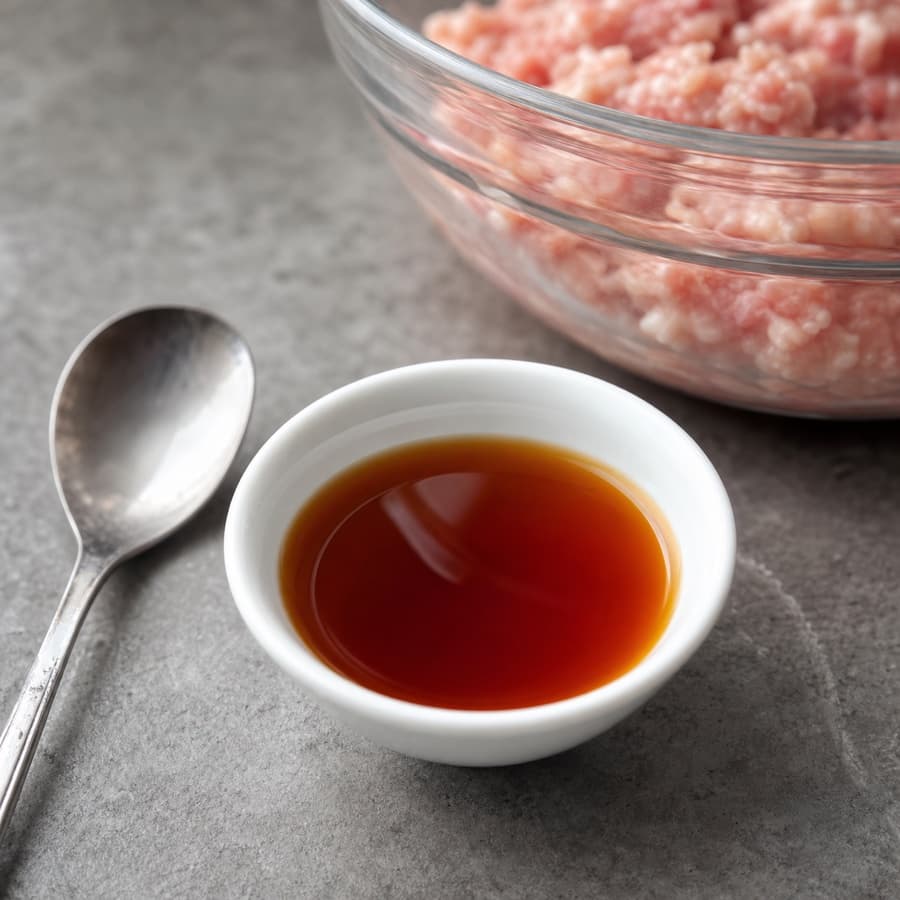
salt and fermented savour in the pork filling
Note: Contains soy and commonly wheat.
Nearby Asian grocersSearch TozerbaSearch Asian PantryToko NusantaraSearch ColesSearch WoolworthsFind an ALDIFind an IGAThese links open searches, catalogues, or store locators. Check the exact form and local availability there.
Nearby traditional marketsPasar Jaya networkSuper Indo locationsRanch Market outletsHypermart onlineSearch SayurboxSearch TokopediaSearch ShopeeOpen GrabMartThese links open searches, catalogues, or store locators. Check the exact form and local availability there.
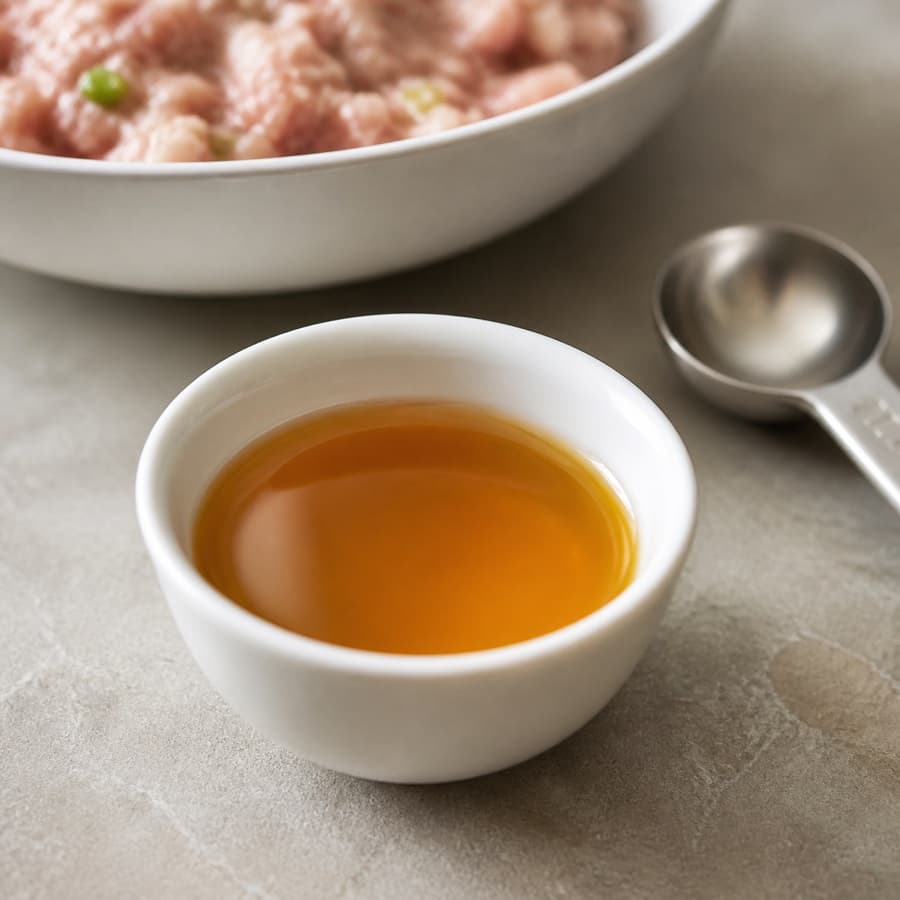
restrained nutty perfume in the filling
Note: Contains sesame.
Nearby Asian grocersSearch TozerbaSearch Asian PantryToko NusantaraSearch ColesSearch WoolworthsFind an ALDIFind an IGAThese links open searches, catalogues, or store locators. Check the exact form and local availability there.
Nearby traditional marketsPasar Jaya networkSuper Indo locationsRanch Market outletsHypermart onlineSearch SayurboxSearch TokopediaSearch ShopeeOpen GrabMartThese links open searches, catalogues, or store locators. Check the exact form and local availability there.
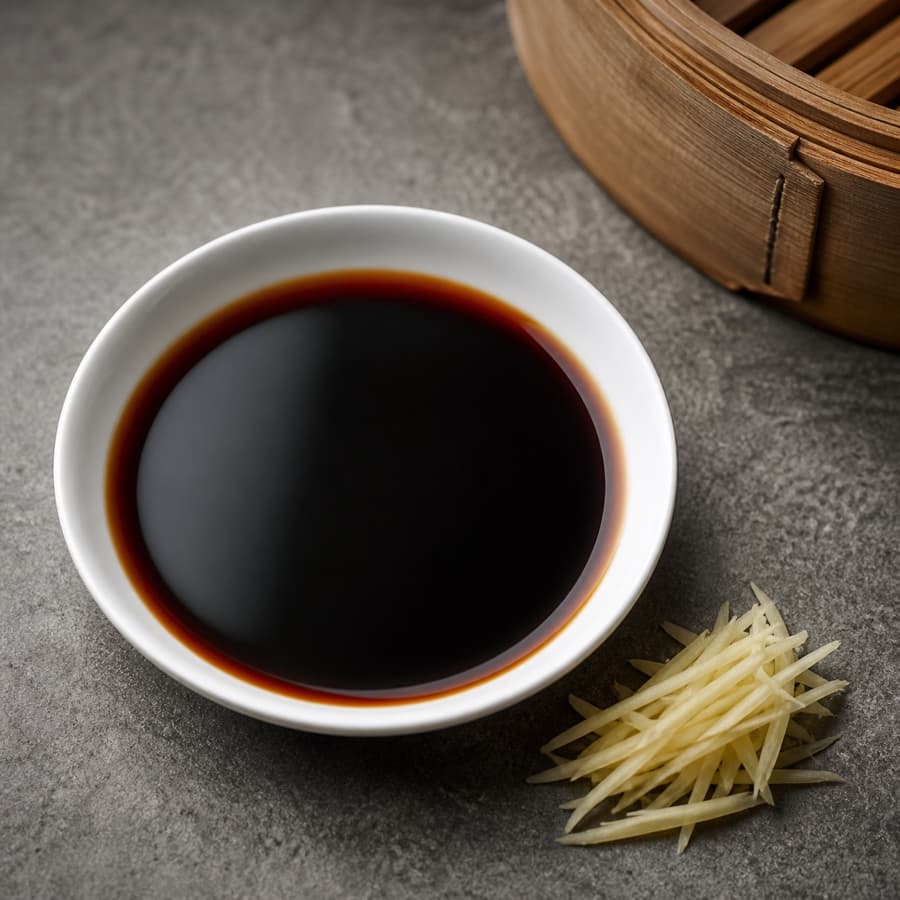
dark aromatic acid served with ginger, never poured into the filling
Note: Some brands contain wheat or sulphites; check the label.
Nearby Asian grocersSearch TozerbaSearch Asian PantryToko NusantaraSearch ColesSearch WoolworthsFind an ALDIFind an IGAThese links open searches, catalogues, or store locators. Check the exact form and local availability there.
Nearby traditional marketsPasar Jaya networkSuper Indo locationsRanch Market outletsHypermart onlineSearch SayurboxSearch TokopediaSearch ShopeeOpen GrabMartThese links open searches, catalogues, or store locators. Check the exact form and local availability there.
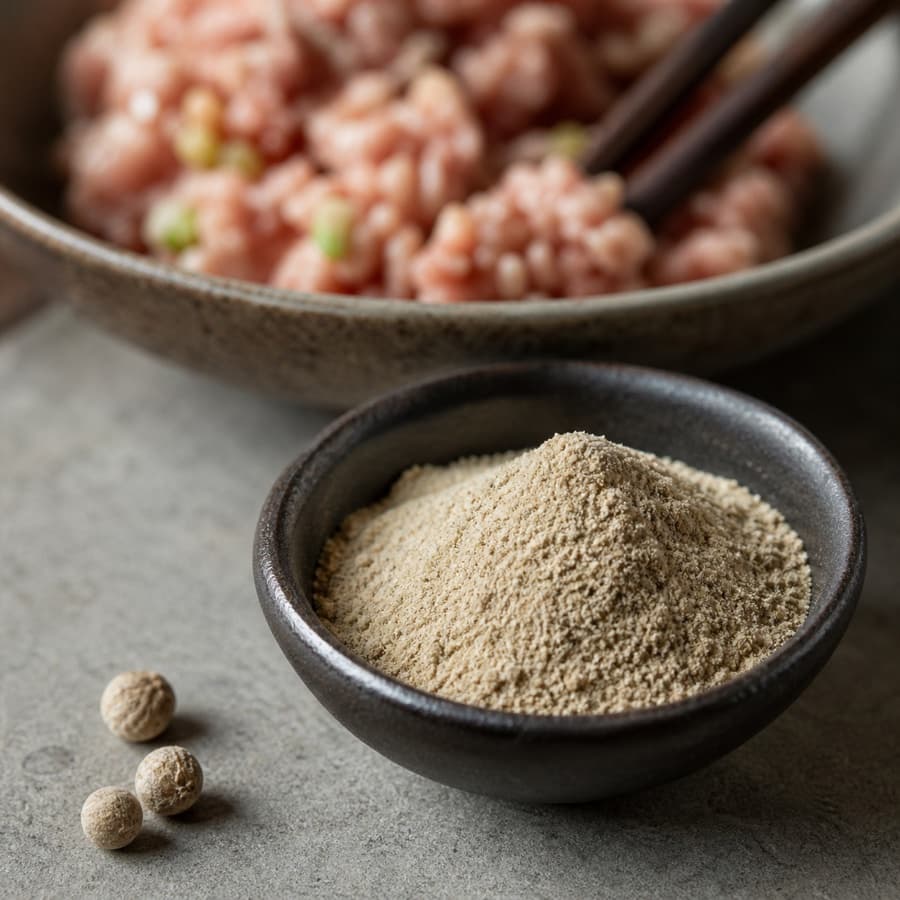
quiet warm finish without dark flecks
Nearby Asian grocersSearch TozerbaSearch Asian PantryToko NusantaraSearch ColesSearch WoolworthsFind an ALDIFind an IGAThese links open searches, catalogues, or store locators. Check the exact form and local availability there.
Nearby traditional marketsPasar Jaya networkSuper Indo locationsRanch Market outletsHypermart onlineSearch SayurboxSearch TokopediaSearch ShopeeOpen GrabMartThese links open searches, catalogues, or store locators. Check the exact form and local availability there.
Melbourne and Jakarta
Current links help you search by the right ingredient name; they do not confirm a product, price, or stock level.
Start with an Indonesian or broader Asian grocer for cleaned pork skin; use supermarkets or butchers for cleaned pork skin, meaty pork neck bones.
Shaoxing wine, divided: dry sherry, or equal water plus 2 ml mild rice vinegar for an alcohol-free path.
cleaned pork skin: Contains pork. Remove hair and thick surface fat before blanching.
Nearby Asian grocersSearch TozerbaSearch Asian PantryToko NusantaraSearch ColesSearch WoolworthsFind an ALDIFind an IGAThese links open searches, catalogues, or store locators. Check the exact form and local availability there.
Start with pasar stalls for kulit babi yang sudah dibersihkan, tulang leher babi berdaging; use supermarkets or online marketplaces for sealed pantry staples.
Shaoxing wine, divided: dry sherry, or equal water plus 2 ml mild rice vinegar for an alcohol-free path.
cleaned pork skin: Contains pork. Remove hair and thick surface fat before blanching.
Nearby traditional marketsPasar Jaya networkSuper Indo locationsRanch Market outletsHypermart onlineSearch SayurboxSearch TokopediaSearch ShopeeOpen GrabMartThese links open searches, catalogues, or store locators. Check the exact form and local availability there.
Fix problems
The active method already includes its most likely mistake and recovery. Open the reference library when your question falls outside the current step.
Eighteen pleats is a documented Nanxiang and restaurant benchmark, but seal quality comes first. A neat sealed 12-pleat practice dumpling is better than a torn 18-pleat one.
No. It uses fresh unleavened flour-and-water dough, a thin round wrapper with a stronger centre, and chilled aspic that melts into soup. It should not be shaped or textured like leavened bao, gyoza, or an oversized dumpling.
Remelt it, reduce by about 20%, and test a spoonful on a chilled plate. If it remains weak, bloom 7 g powdered gelatin in 30 ml cold water, dissolve it into the hot stock, and chill again.
Yes. Tray-freeze immediately without touching, bag airtight when solid, and use within one month for best wrapper quality. Steam from frozen without thawing for 10–12 minutes and verify the first batch reaches 71°C.
Seal clear hot soup inside a delicate wrapper that survives the steamer and reaches the spoon intact. Look for semi-translucent wrapper, defined pleats, slight inflation, and no leaked soup: Fresh dumplings steam over already boiling water for 8 minutes; the first batch is verified to 71°C through one sacrificial dumpling.
Using the dirty blanch water or stopping with a loose spoonable gel produces cloudy soup or filling too wet to wrap. Lower the heat immediately, skim or stir gently, and continue at a small simmer until the surface calms.
Scale the measured ingredients with the serving count, then scale the vessel or work in batches. Keep the same visual finish - semi-translucent wrapper, defined pleats, slight inflation, and no leaked soup - rather than forcing the original timer.
Shaoxing wine, divided: dry sherry, or equal water plus 2 ml mild rice vinegar for an alcohol-free path
cleaned pork skin: Contains pork. Remove hair and thick surface fat before blanching.; meaty pork neck bones: Contains pork. Discard the first blanching water and scrub away grey residue.; Shaoxing wine, divided: Contains alcohol and may contain sulphites.; plain flour: Contains wheat and gluten.
Next cooks
Recipes here share ingredients, bumbu logic, region, spice level, or weeknight patterns so the next cook reuses what you just learned.
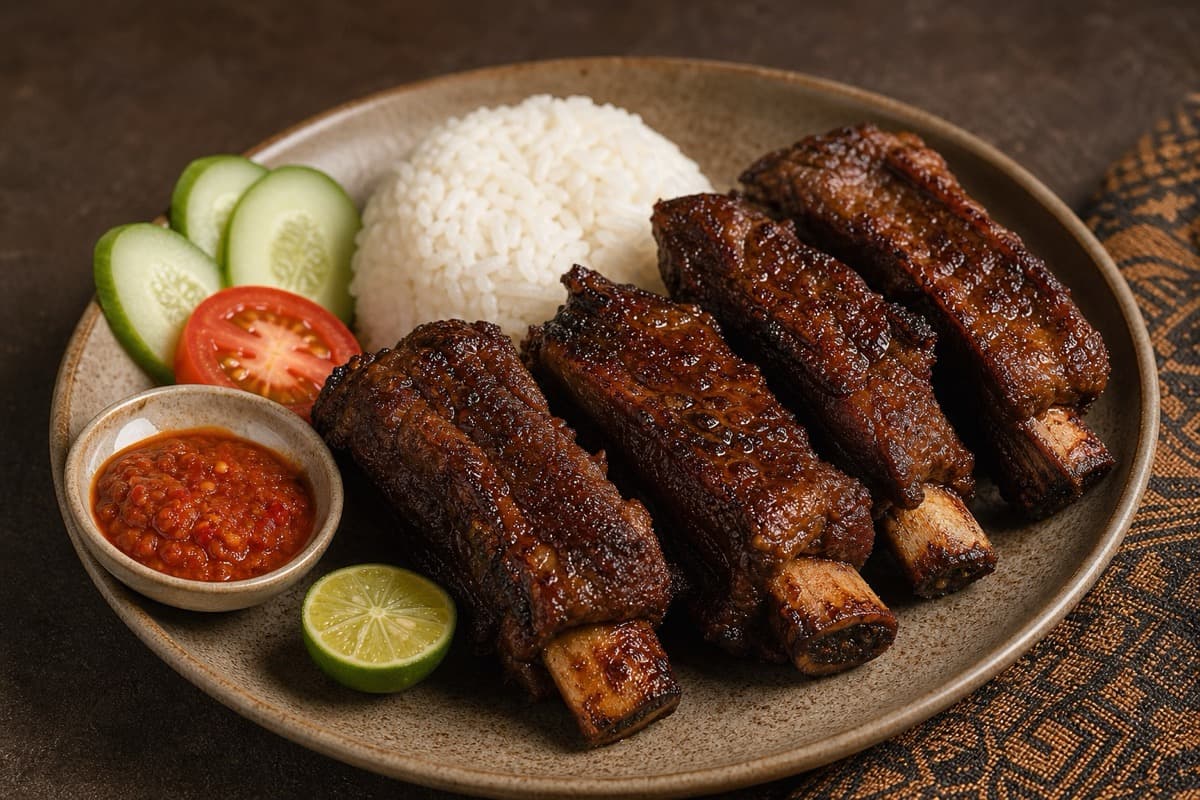 Modern Indonesian · PatientIga Sapi Goreng MaduMake ribs fork-tender yet intact, then glaze them glossy without scorching the honey.
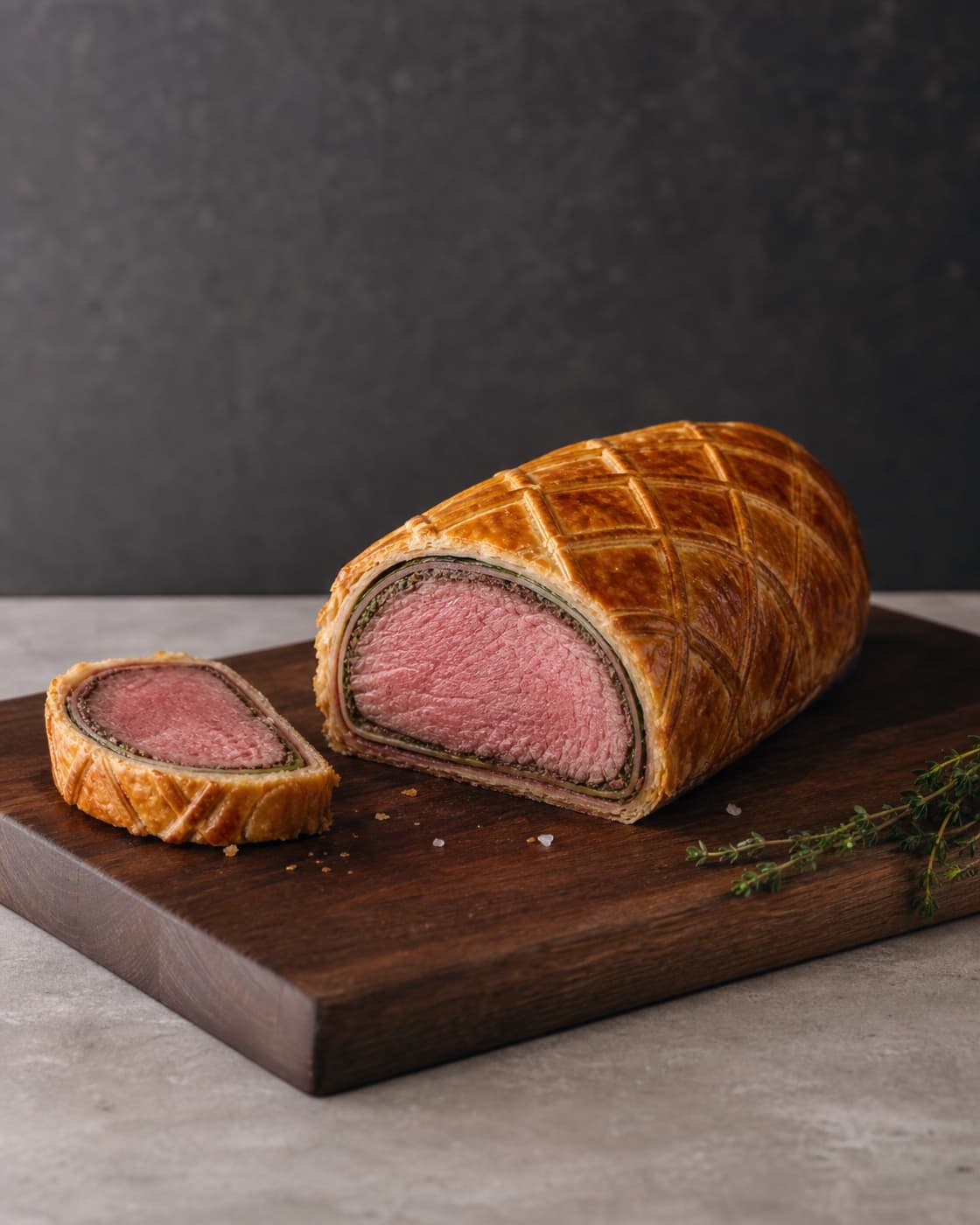 Britain / modern restaurant tradition · PatientBeef WellingtonSynchronise a crisp pastry shell with safely rested, evenly pink beef and thin, distinct moisture-barrier layers.
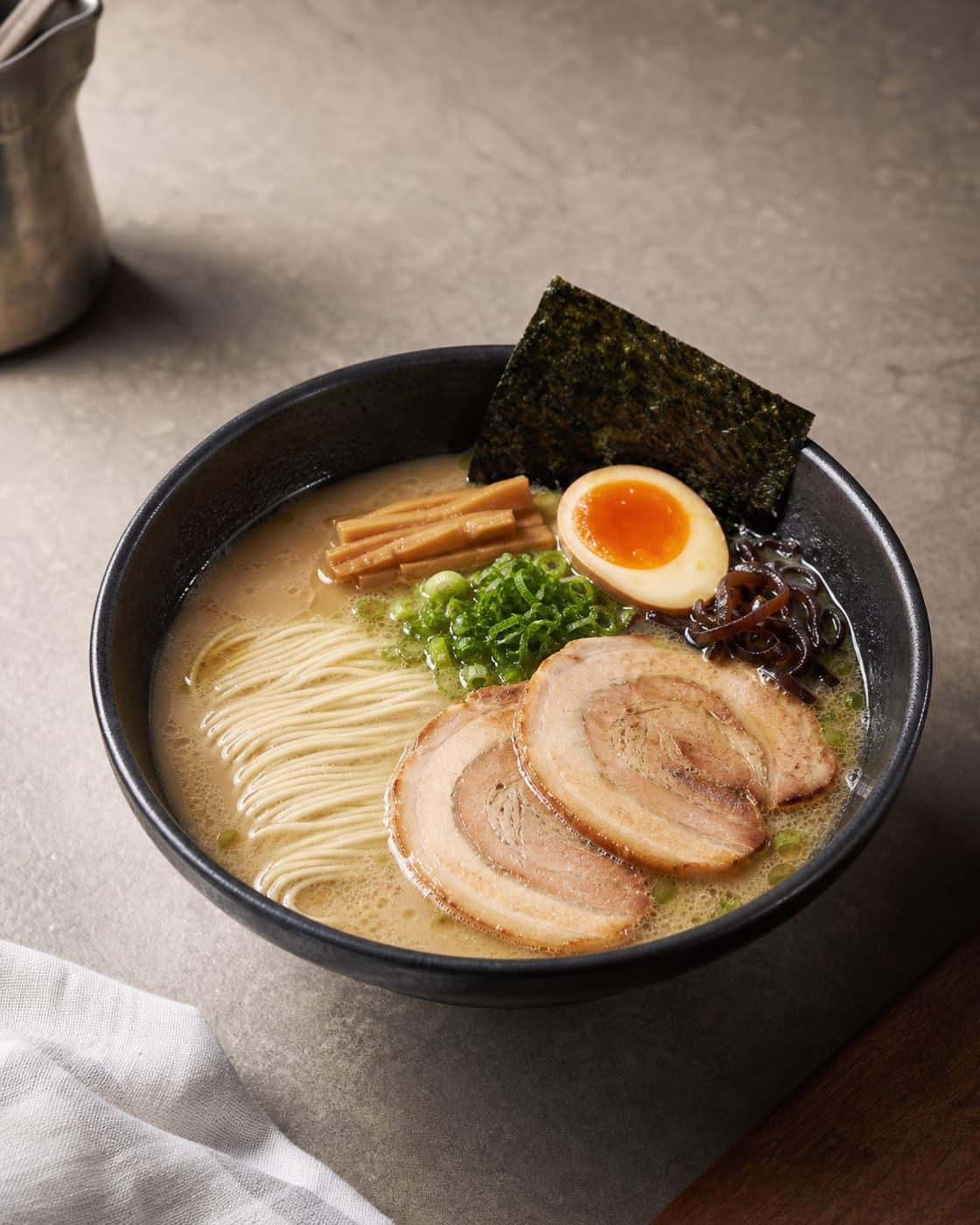 Japan / composed pork-bone ramen · PatientTonkotsu Shoyu RamenBuild an opaque ivory broth that tastes like pork - not dairy - and assemble six balanced bowls before the noodles soften.
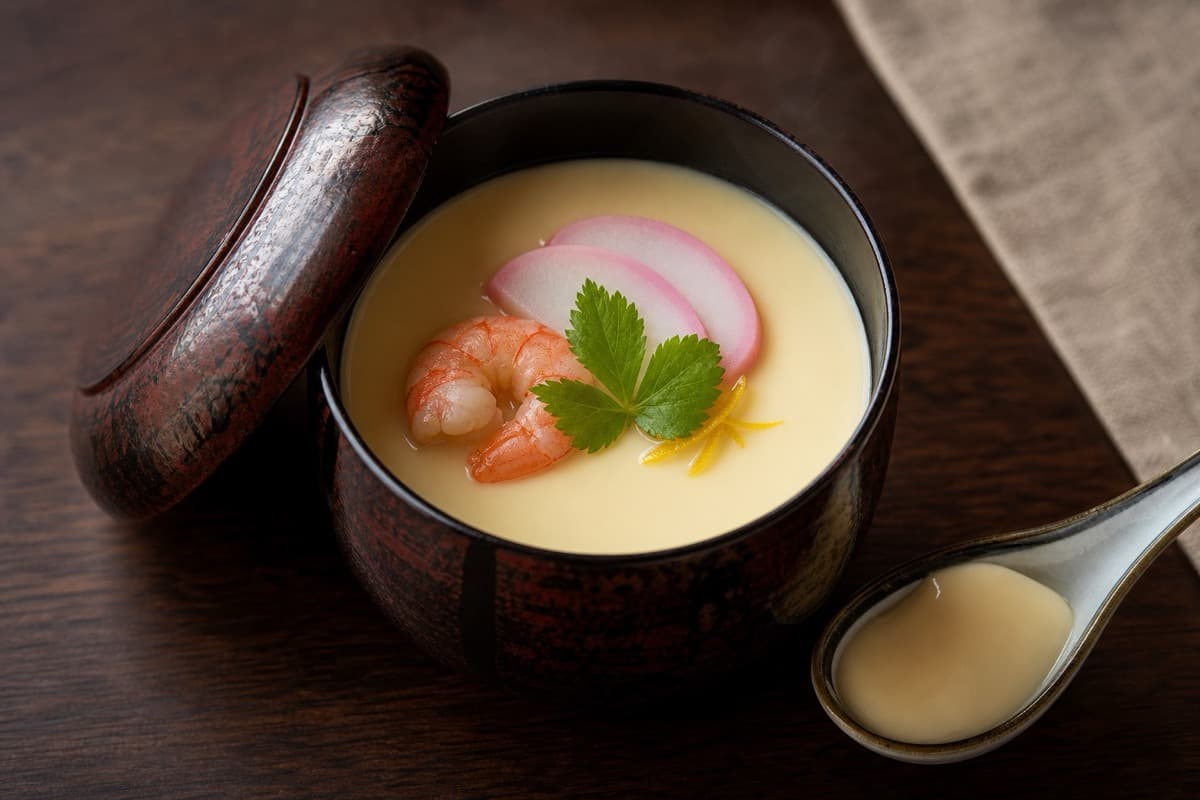 Japan · IntermediateChawanmushiSet a glossy, spoonable custard with no bubbles, stringy egg, or honeycomb holes.
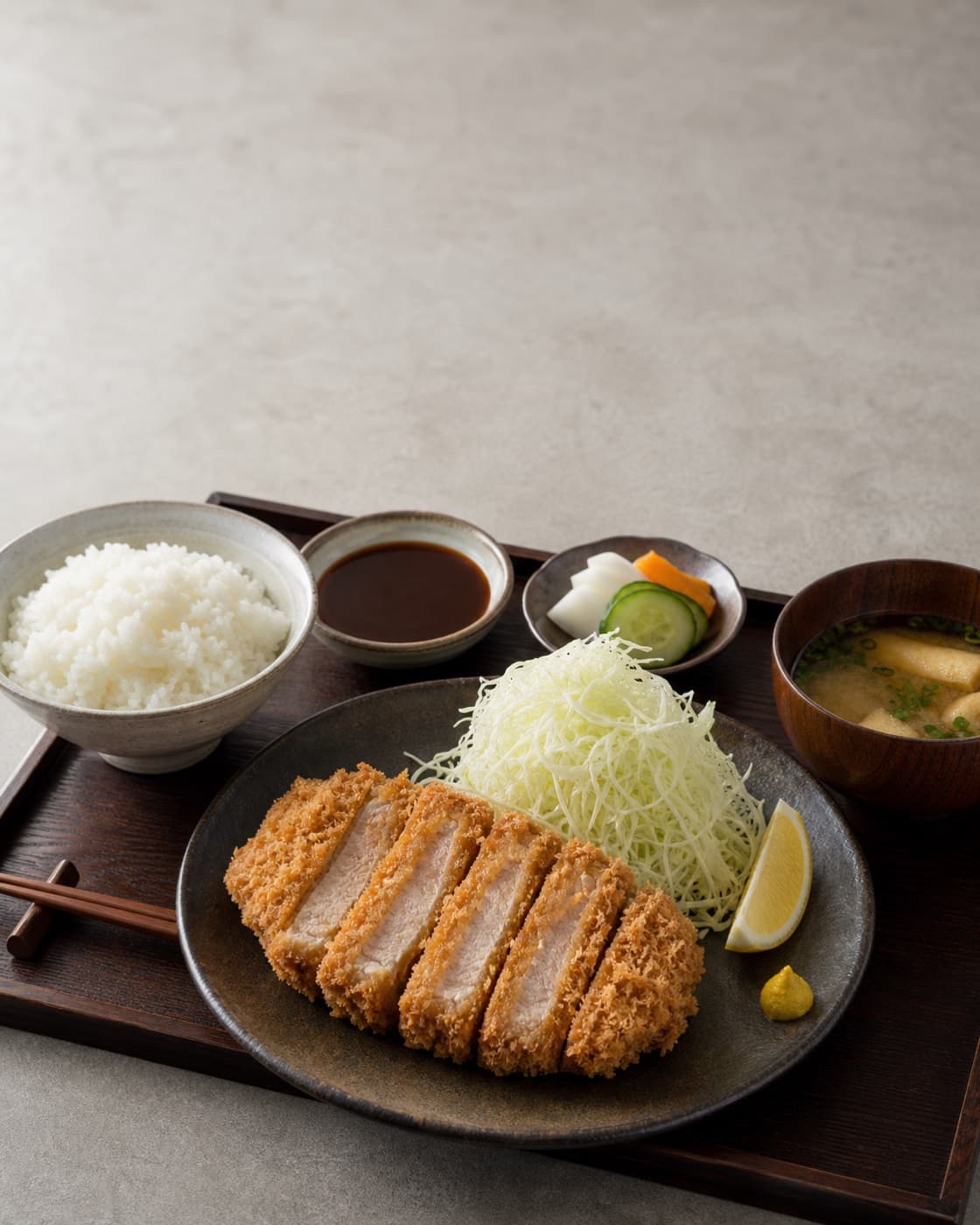 Japan / yōshoku · IntermediateJapanese Pork TonkatsuKeep a thick pork chop juicy and safely cooked inside an airy panko shell that stays attached and audibly crisp.
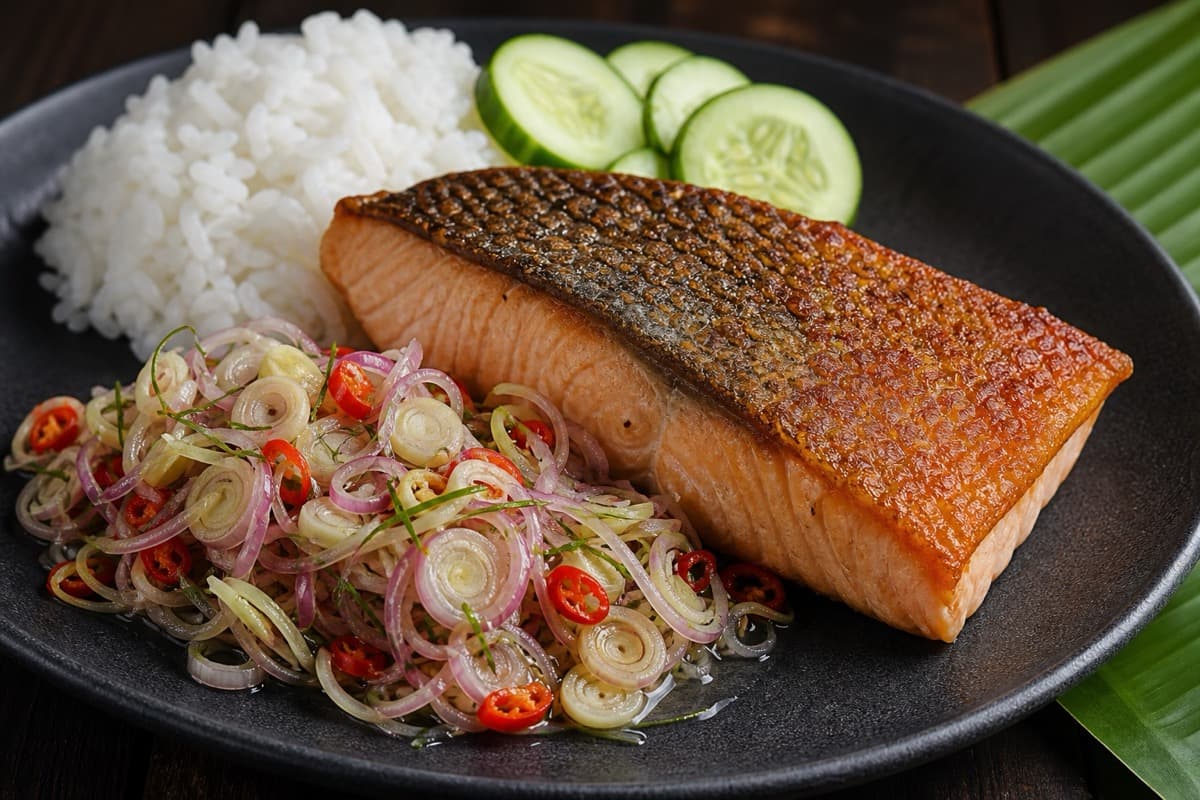 Bali-inspired · IntermediateCrispy-Skin Salmon Sambal MatahCrisp the skin without drying the fish, then keep bright sambal beside - not over - the crust.