Recipe 27 / 30
SG · Singapore / Hainanese diaspora
Hainanese Chicken Rice
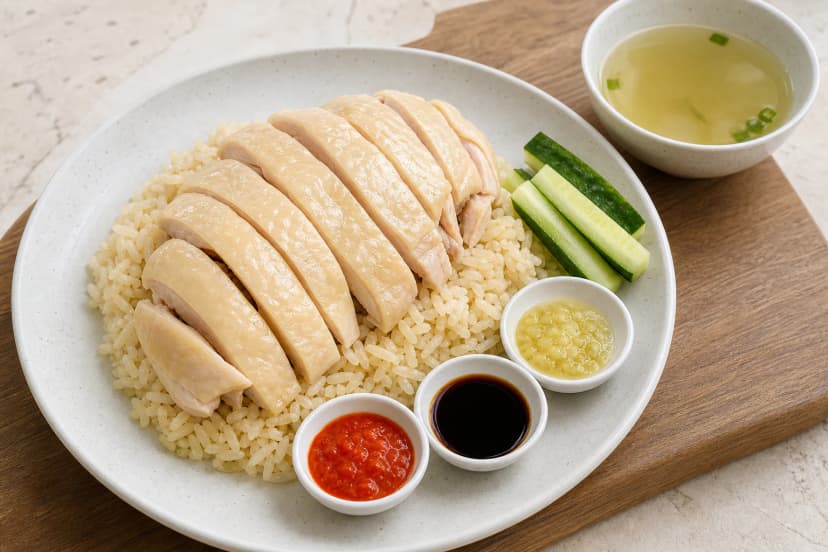
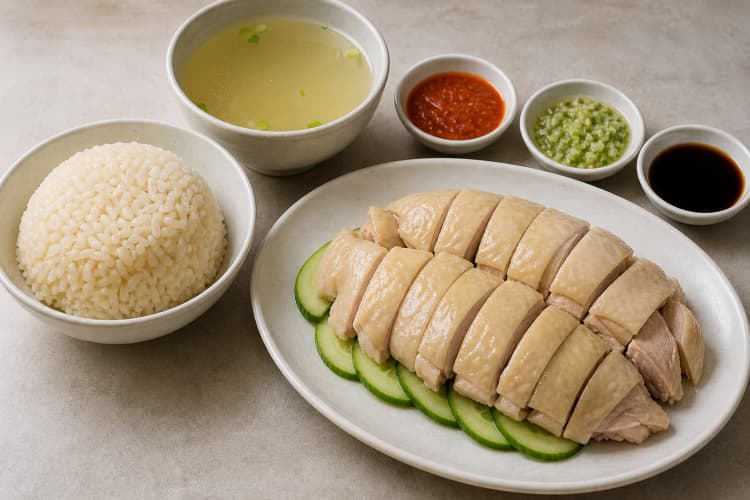
Singapore's poached-chicken rice evolved from Hainanese Wenchang chicken through local and Cantonese influence. The complete plate is chicken, fat-polished stock rice, clear broth, cucumber, chilli, and ginger-scallion sauce.
Poach a whole chicken safely to 75°C while keeping silky skin and separate, savoury rice grains.
- Place & style
- Singapore / Hainanese diaspora Singaporean · Rice
- Yield
- 6 servings Chicken · spice 2/5
- Time
- 3 hr 35 min prep · 2 hr 25 min cook
- Cook level
- Intermediate Singaporean · Hainanese · chicken rice · poached chicken · hawker food · rice cooker
Bumbu / flavour foundation
whole chicken, clear chicken stock, ginger, garlic, spring onion, pandan, chilli and lime
A strengthened poaching stock flavours both chicken and rice. Repeated cavity flushing equalises heat, sub-simmer poaching protects the skin, a probe verifies safety, and a short ice bath arrests carryover before the chicken drains. Rendering chicken fat before coating the rice keeps each grain aromatic rather than greasy.
Equipment
- 8-10 L stockpot with lid
- two pairs of long tongs and a sturdy wooden spoon; reserve one clean pair for cooked chicken
- instant-read probe thermometer
- large clean ice-bath bowl
- wire rack over tray
- rice cooker or heavy lidded saucepan
- small saucepan
- mortar and pestle or small blender
- clean carving board reserved for cooked food
Read the visual cue before each step. The clock is guidance; the food decides when you move.
01 · Market sheet
Know what you are buying.
Every ingredient is shown in context, named in English and Bahasa Indonesia, and tied to its job in the dish.Meat or seafoodDaging atau seafood
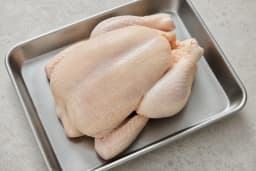
1 chicken, 1.5-1.7 kg
whole chicken
ayam utuh
silky poached centrepiece and source of useful cavity fat
Watch: Keep below 5°C, do not wash raw chicken, and cook both thickest breast and innermost thigh to at least 75°C.
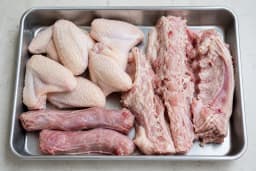
600 g
chicken wings, necks, or carcasses
sayap, leher, atau kerangka ayam
strengthens the poaching liquid so it can season rice and table broth
Watch: Handle as raw poultry and keep separate from cucumber and finished sauces.
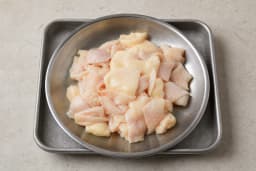
50 g
trimmed chicken fat or skin
lemak atau kulit ayam yang dipotong
renders the defining poultry aroma that coats the uncooked rice
Dry pantryBahan kering
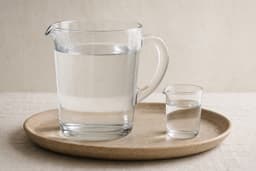
4.5 L, plus enough boiling water to keep chicken submerged
fresh water
air bersih
measured poaching stock and clear soup
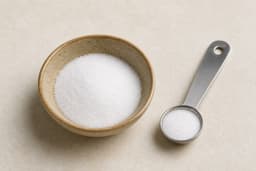
24 g
fine salt, divided
garam halus, dibagi
seasons stock, sauces, and chicken surface in measured stages

4 L
iced drinking water
air minum dengan es
short controlled chill that stops carryover and sets the silky skin
Watch: Use a clean vessel and a short 10-minute chill; do not leave cooked poultry in lukewarm water.
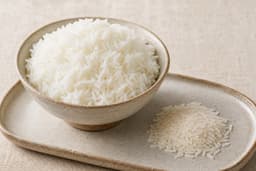
400 g, rinsed and drained 20 min
aged jasmine rice
beras melati yang tidak baru dipanen
fragrant rice that stays separate after coating with chicken fat

20 g
white sugar
gula pasir
rounds the chilli-lime sauce without making it jammy
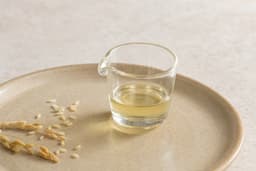
80 ml
neutral cooking oil
minyak goreng netral
hot carrier that blooms the ginger-scallion sauce
Fresh produceSayur & bahan segar
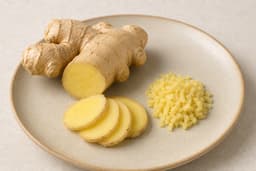
160 g
fresh ginger, divided
jahe segar, dibagi
perfumes stock and rice, then forms the fresh ginger-scallion sauce
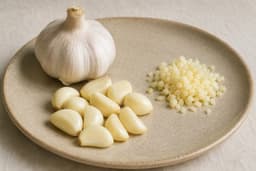
55 g, about 14 cloves
garlic, divided
bawang putih, dibagi
savoury stock, rice, and chilli-sauce aromatic
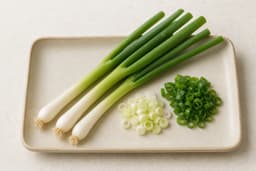
8, about 160 g
spring onions, divided
daun bawang, dibagi
whole stock aromatic and fresh partner for ginger sauce
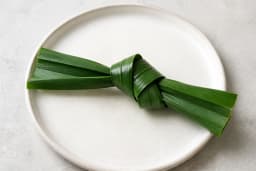
2 leaves, washed and knotted
pandan leaves
daun pandan
Singaporean fragrant-rice cue added during absorption
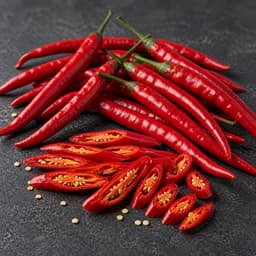
100 g, deseeded partly if preferred
long red chillies
cabai merah panjang
fruit and heat for the fresh chilli-garlic sauce
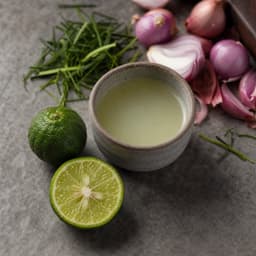
60 ml
fresh lime juice
air jeruk nipis segar
sharp citrus balance in the chilli sauce
SpicesRempah
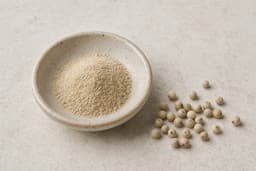
1 g, about 1/2 tsp
ground white pepper
lada putih bubuk
clean aromatic warmth in the serving broth
SaucesSaus & bumbu botol

20 ml
unseasoned rice vinegar
cuka beras tanpa bumbu
clean acidity and safer short holding for the chilli sauce
Watch: Use unseasoned vinegar so sugar and salt remain controlled.
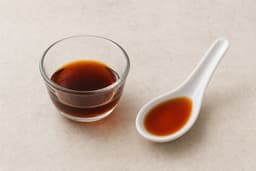
30 ml
light soy sauce
kecap asin ringan
salty serving drizzle beside the pale chicken
Watch: Contains soy and usually wheat; use certified gluten-free tamari if required.
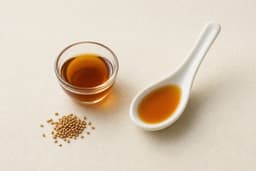
15 ml
toasted sesame oil
minyak wijen sangrai
restrained nutty finish mixed with the soy drizzle
Watch: Contains sesame.
GarnishPelengkap
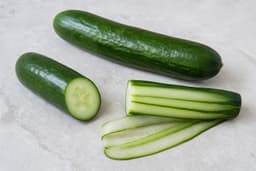
300 g, thinly sliced
Lebanese cucumbers
mentimun kecil
cool crisp layer beneath the dressed chicken
Calculated estimate · per serving
Nutrition information
1 of 6 complete servings; includes chicken, seasoned rice, cucumber, broth, and all three sauces
- Energy
- 2890 kJ691 kcal
- Protein
- 45.2 g
- Carbohydrate
- 70.8 g
- Sugars
- 6.9 g
- Dietary fibre
- 2.7 g
- Total fat
- 24.6 g
- Saturated fat
- 6.8 g
- Sodium
- 1510 mg
How this estimate was calculated
Calculated from the authored edible ingredient weights using representative AFCD Release 3 and USDA FoodData Central profiles, then divided by the recipe yield. Energy follows the FSANZ ingredient-contribution method. Optional serving accompaniments are excluded. The model allocates the edible yield of the authored whole chicken, rendered chicken fat, rice, stock, cucumber, soy dressing, ginger-scallion sauce, and chilli sauce across six plates.
Calculated estimate only, not a laboratory result or personalised dietary advice. Actual values vary with brands, produce, meat trim, substitutions, final serving size, and how much cooking or rendered oil is left in the pan or skimmed. Check packaged labels for allergens and sodium; consult an accredited practising dietitian or clinician for medical dietary needs. Whole-chicken edible yield, skin served, rice absorption, stock and soy brands, rendered fat recovered, and sauce portions are the largest uncertainties.
Reference data: Australian Food Composition Database · FSANZ calculation method · USDA FoodData Central · calculated 2026-07-15
02 · Method
Cook in order. Read the decisive cue.
6 stages · 3 hr total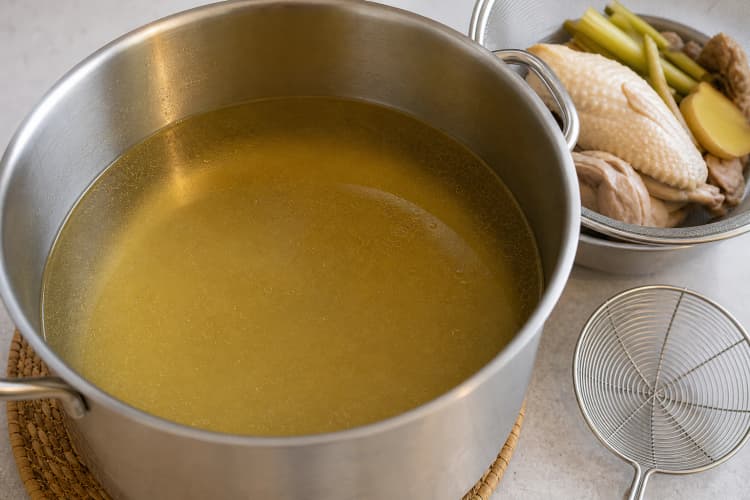
Stage 01
Build a clean poaching stock
Keep the whole chicken refrigerated. Put wings, necks, or carcasses in the stockpot with the fresh water, 30 g sliced ginger, 20 g lightly crushed garlic, four spring onions, 10 g salt, and all the white pepper. Bring slowly to a boil, skim thoroughly, then hold a gentle simmer for 35 minutes. Strain out the solids and return the clear stock to the clean pot. Reserve the remaining ginger, garlic, spring onion, and salt for later steps.
- Move on when
- The stock is pale gold, clearly chicken-forward, and free of loose grey foam.
- Common mistake
- Boiling hard emulsifies fat and sediment before the whole bird even enters.
- Recovery
- Lower the heat immediately, skim or stir gently, and continue at a small simmer until the surface calms.
Stage 02
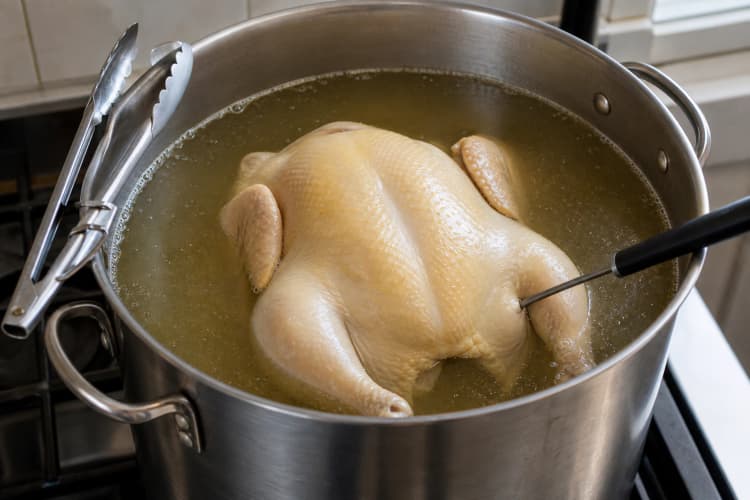
Scald, poach, and verify both thick sections
Pat the whole chicken dry; do not wash it. Trim and reserve 50 g cavity fat or loose skin for the rice. Bring stock to a full boil. Holding the chicken securely, lower it in and lift it out three times, tilting so hot stock fills and drains from the cavity each time. Fully submerge it breast-up, top up only with boiling water if needed, and reduce immediately to a bare simmer. Poach 30 minutes, turn heat off, cover, and stand 10 minutes. Probe the thickest breast and innermost thigh without touching bone; both must reach at least 75°C. If either is lower, return to a bare simmer in 5-minute blocks and recheck with a cleaned probe.
- Move on when
- Skin is taut and intact, the cavity has flushed hot, and both breast and thigh verify at least 75°C.
- Common mistake
- Timing by weight or checking only the breast can leave the thigh joint unsafe.
- Recovery
- Stop and discard the unsafe ingredient. Restart with a prepared edible version from a trusted food supplier.
Stage 03
Stop carryover, drain, and protect the skin
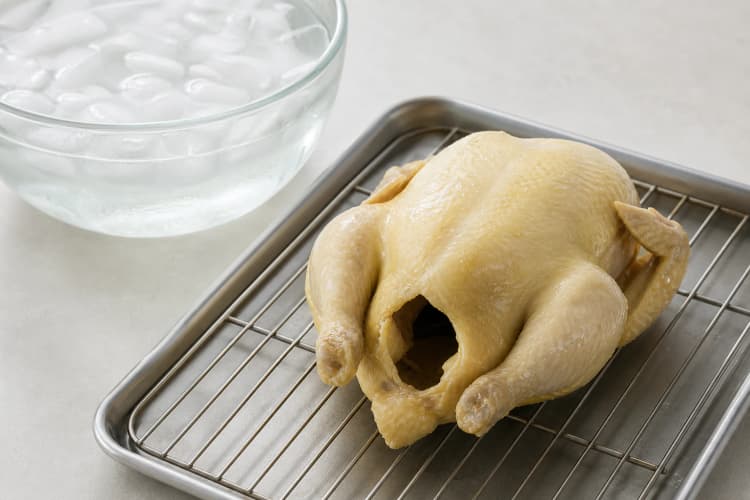
Using the clean tongs reserved for cooked food, transfer the verified chicken immediately to the clean iced drinking water for 10 minutes, turning once. Lift it to a wire rack, drain the cavity completely, and air-dry 15 minutes. Keep cumulative time between 5°C and 60°C under 2 hours; if service is delayed, refrigerate promptly below 5°C rather than leaving the bird on the bench. Reserve all poaching stock and skim off 500 ml for rice plus 600 ml for serving broth.
- Move on when
- The skin is smooth, taut, and dry with a fine gelatinous layer instead of chalky waterlogged patches.
- Common mistake
- A long lukewarm soak trades texture for unsafe time in the temperature danger zone.
- Recovery
- Stop and discard the unsafe ingredient. Restart with a prepared edible version from a trusted food supplier.
Stage 04
Render fat and cook separate fragrant rice
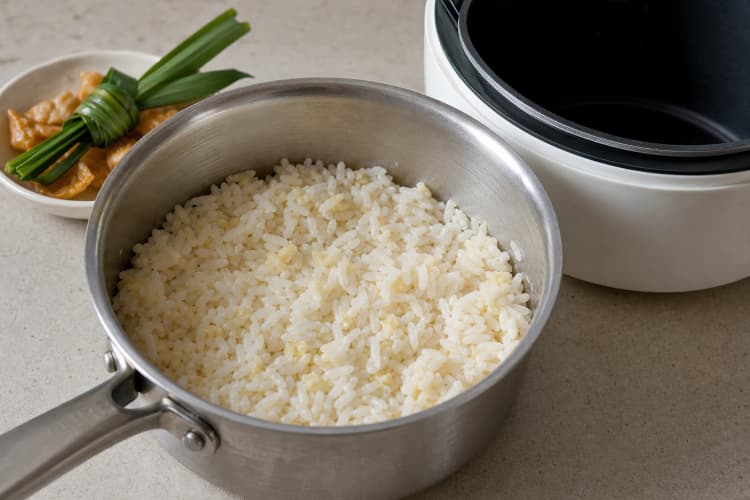
Finely chop 20 g of the reserved ginger and 15 g reserved garlic. Render the chicken fat in a saucepan over medium-low until 30-40 ml clear fat is released; discard crisp solids. Add ginger and garlic for 45 seconds without browning. Add the drained rice and 4 g of the reserved salt; stir 2 minutes until grains look glossy and smell nutty. Transfer to a rice cooker or heavy saucepan with 500 ml reserved stock and the knotted pandan. Cook by the appliance setting, or cover and simmer very low until absorbed, then rest covered 10 minutes. If the rice package requires a different liquid ratio, preserve its ratio rather than forcing 500 ml.
- Move on when
- Rested grains are tender, aromatic, and distinct with no oily or wet layer at the base.
- Common mistake
- Brown garlic turns bitter; too much stock collapses the rice into porridge.
- Recovery
- Move the pan off heat, scrape only the unburnt paste into a clean spot, add a small splash of oil or liquid, and restart gently.
Stage 05
Pound chilli and bloom ginger-scallion sauces
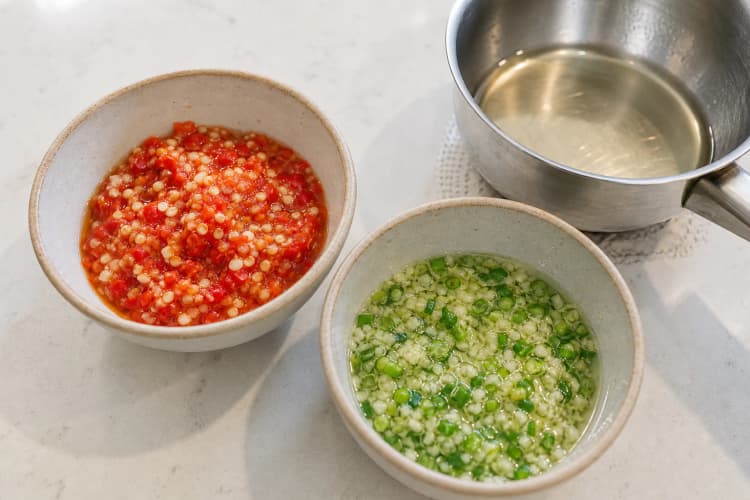
For chilli sauce, pound chillies with 20 g reserved garlic, 20 g reserved ginger, lime juice, rice vinegar, sugar, and 4 g reserved salt; loosen with 30-60 ml hot poaching stock until spoonable. For ginger-scallion sauce, finely mince the remaining ginger and spring onions with 4 g reserved salt. Heat the neutral oil until shimmering, pour it carefully over the aromatics in a heatproof bowl, and stir. Keep both sauces away from raw-poultry tools.
- Move on when
- Chilli sauce is bright, sharp, and spoonable; ginger-scallion sauce sizzles fragrant without browned bits.
- Common mistake
- Raw-chicken cross-contact or smoking oil makes otherwise fresh condiments unsafe or bitter.
- Recovery
- Stop and discard the unsafe ingredient. Restart with a prepared edible version from a trusted food supplier.
Stage 06
Carve cleanly and serve the complete plate
Reheat the reserved 600 ml serving stock to steaming and adjust with the last 2 g salt if needed. On a board used only for cooked food, remove legs and breasts, then cut into bite-size skin-on pieces; keep bones for future stock. Arrange sliced cucumber and chicken. Mix light soy with sesame oil and spoon beside or lightly over the chicken. Fluff rice and serve with hot broth, chilli sauce, and ginger-scallion sauce. Serve within 2 hours of the chicken leaving safe temperature control, or keep the chicken refrigerated below 5°C until needed.
- Move on when
- Chicken slices retain skin, rice grains are separate, cucumber stays crisp, and every sauce remains visually distinct.
- Common mistake
- Using the raw-poultry board again or leaving cool chicken out through a long meal creates avoidable risk.
- Recovery
- Pause before the next step, compare the cue, then correct heat, moisture, or seasoning while the dish is still flexible.
03 · Source & shop
Where the guidance comes from.
Technique guidance is stable editorial material. Prices, stock, and local availability should be rechecked before a special trip.Melbourne
- Ask a poultry shop, butcher, or supermarket for a 1.5-1.7 kg whole chicken that fits your stockpot, plus wings, necks, or carcasses for the strengthened stock. Keep all poultry below 5°C.
- Jasmine rice, ginger, garlic, spring onions, cucumber, chilli, lime, soy, sesame oil, vinegar, sugar, and neutral oil are mainstream supermarket or Asian-grocer lines. Southeast Asian grocers are the most reliable route for fresh or frozen pandan.
- Mr Dad Queen Street and SolAsia QV are documented central Asian-grocery routes; KT Mart and Tokyo Hometown may cover common pantry items. Store pages establish shopping routes, not live stock or suitability.
- A current Melbourne restaurant source from Gai Wong supports the local relevance of poached chicken, iced setting, fragrant rice, broth, and chilli service, but this home method independently uses FSANZ's 75°C poultry endpoint.
Jakarta
- Use a trusted high-turnover poultry seller for an intact whole chicken and stock bones. Transport chilled poultry promptly and keep it separate from cucumber and sauce ingredients.
- Pasar stalls readily cover pandan, ginger, garlic, spring onion, cucumber, chilli, and lime; supermarkets cover jasmine rice, soy, sesame oil, vinegar, sugar, and neutral oil.
- Choose light soy rather than kecap manis for the serving drizzle. Check soy, sesame, and wheat requirements on exact packages.
- Do not wash raw chicken. Set up separate raw and ready-to-eat boards before cooking, and use safe drinking water and food-safe ice for the short post-poach chill.
Editorial provenance
Singapore National Heritage Board - Chicken Rice
Grounds chicken rice as living Singapore food heritage with Hainanese and Cantonese versions, poached or roasted chicken, seasoned rice, chilli sauce, ginger, cucumber, and clear soup.
Supports: Singapore chicken-rice heritage, poached chicken and seasoned rice, sauce and soup service.
Boundary: The heritage record establishes identity and variation rather than one exact recipe. Bumbu Lens authors a thermometer-led home method and keeps Hainanese naming within the Singapore context.
Reviewed 2026-07-15Broadsheet - Gai Wong's Hainanese chicken rice
Cross-checks a documented Melbourne restaurant workflow for whole poached chicken, fragrant chicken-fat rice, condiments, and complete plate service.
Supports: Melbourne restaurant workflow, whole-chicken poaching context, rice and condiment service.
Boundary: This published restaurant recipe is a local method reference, not evidence that the Bumbu Lens formula copies Gai Wong or carries any restaurant award.
Reviewed 2026-07-15Generated reference image · not verified cook evidence
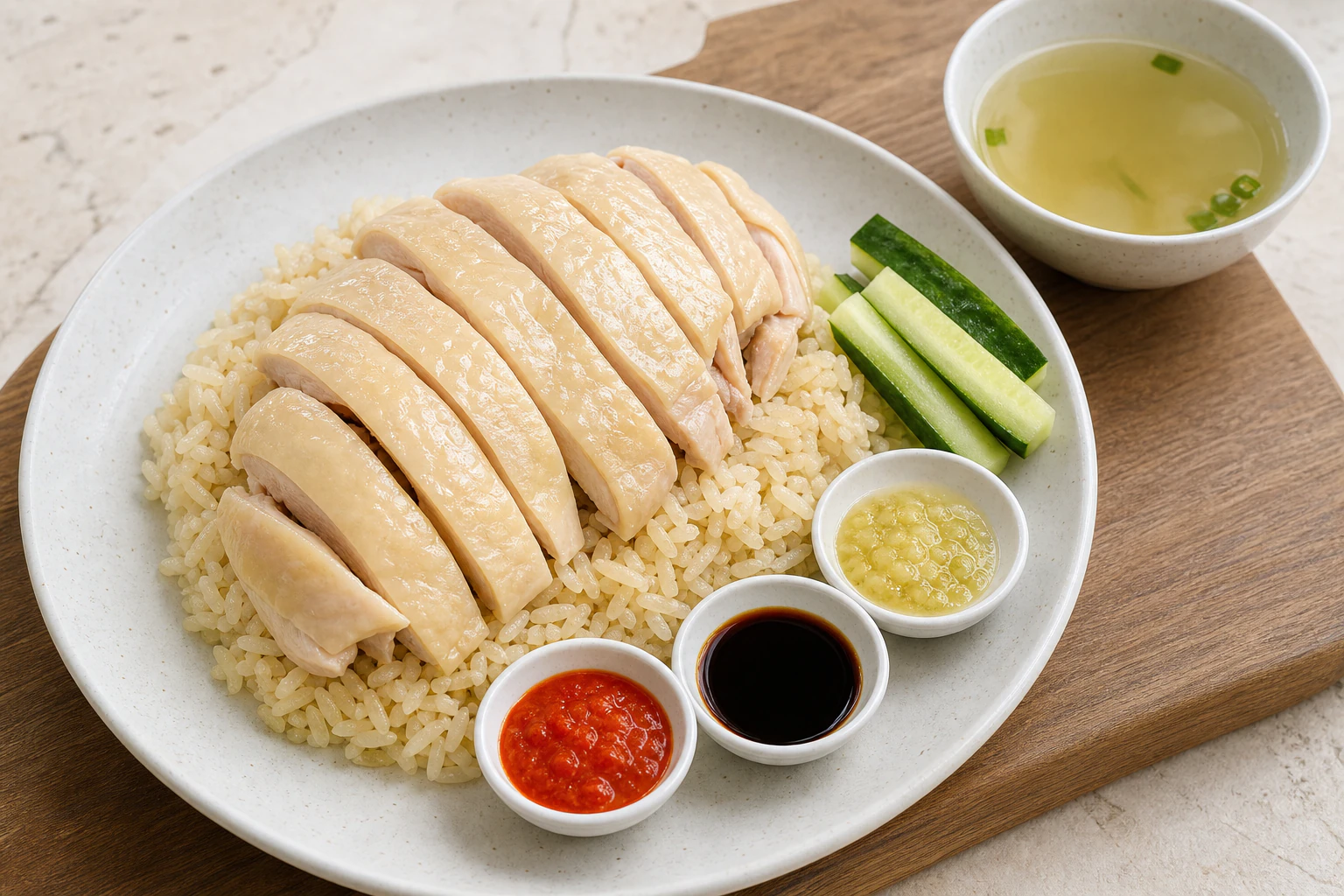
Recorded as a local editorial or generated visual cue asset, not an independent external source.
Supports: finished-dish appearance, image credit boundary.
Boundary: A local or generated asset is visual guidance, not evidence of authenticity, ingredient quantities, timing, safety, or method accuracy.
Reviewed 2026-07-15Bumbu Lens editorial method audit
Reviewed Hainanese Chicken Rice as an ordered cook flow with visual cues, common mistakes, and recovery notes.
Supports: method sequence, visual checkpoints, mistake and recovery notes.
Boundary: Use this as editorial guidance; run a tested-kitchen pass before publishing nutrition, safety guarantees, or commercial pack quantities.
Reviewed 2026-07-15Bumbu Lens Melbourne/Jakarta sourcing heuristic
Mapped ingredient groups to likely Melbourne grocer, supermarket, butcher, pasar, and Jakarta supermarket paths.
Supports: Melbourne sourcing, Jakarta sourcing, volatile availability boundary.
Boundary: Ingredient availability, price, and store stock change; verify with local grocers before travel, bulk shopping, or holiday cooking.
Reviewed 2026-07-15Food Standards Australia New Zealand - Food safety basics
Applies the Australian consumer guidance to cook all poultry and minced meat to at least 75°C in the centre and to keep raw-meat tools separate from ready-to-eat garnishes.
Supports: 75°C poultry endpoint, 75°C minced-meat endpoint, cross-contamination control.
Boundary: Colour, clear juices, wrapper translucency, and elapsed time do not replace a clean probe reading in the thickest or largest test piece.
Reviewed 2026-07-15Food Standards Australia New Zealand - Keeping food at the right temperature
Treats cooked rice as potentially hazardous food: keep it at 5°C or colder or 60°C or hotter, and minimise time between those temperatures.
Supports: cooked-rice temperature control, prompt cooling and refrigeration, safe hot holding.
Boundary: Crisp texture does not establish safe storage. Cool leftovers promptly in shallow containers and reheat only the amount being served.
Reviewed 2026-07-15Your next cook
Kitchen notes
Record the batch size, timing, substitutions, and visual cue you want to remember next time.