Step 1 decision
Peel, split, and stage the produce
Two clearly different tomato cuts are ready, with every seed and drop of juice retained and the aromatics separated by use.
Open step 1CN · China / home-style
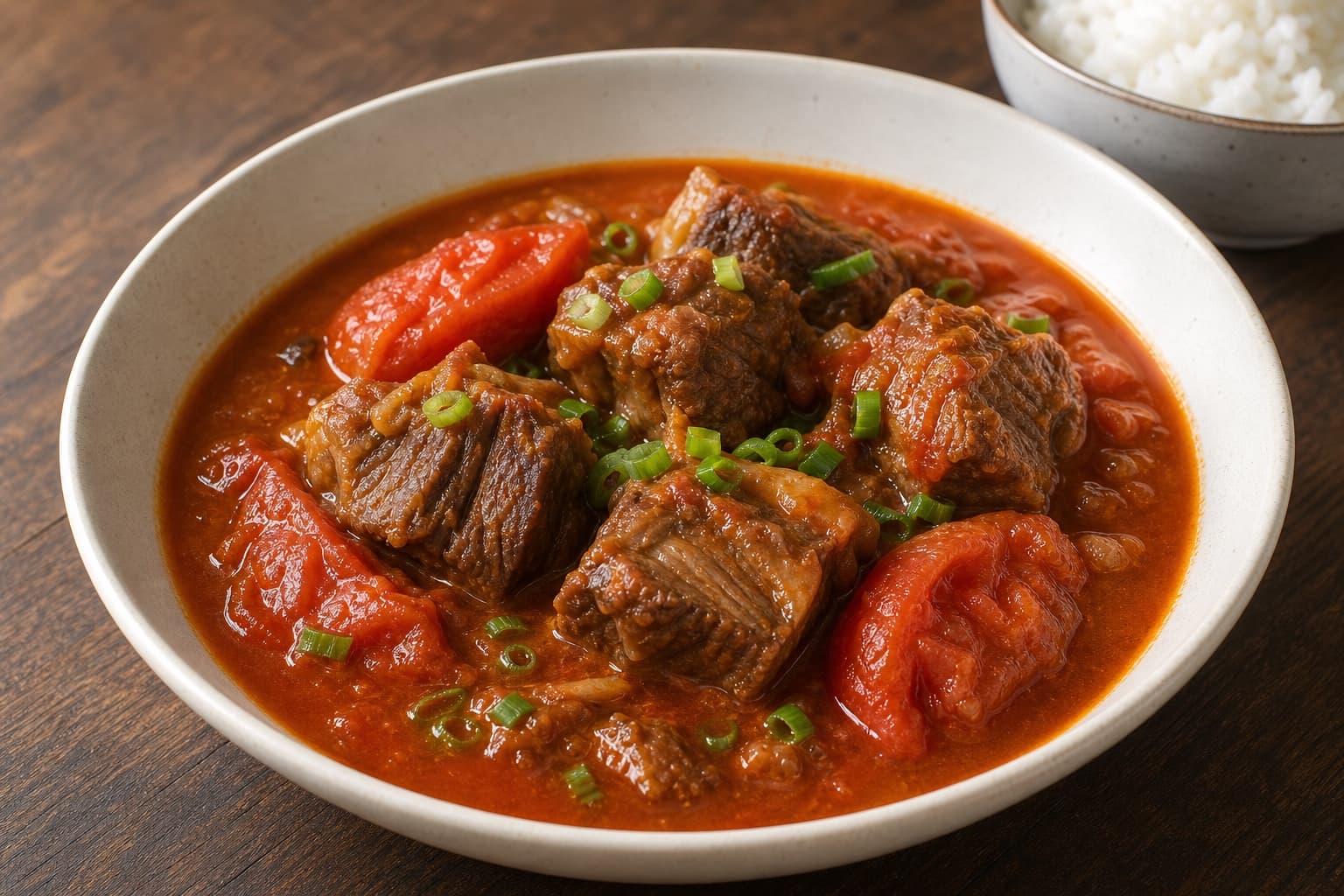
番茄炖牛腩 turns a connective, affordable beef cut into a clear-tasting, gelatinous braise. One portion of tomato melts into the sauce; a second stays bright enough to taste fresh.
Decision-point map
Scan the decision points now. Each full-size cooking frame appears once, beside the step where you need it.
Two clearly different tomato cuts are ready, with every seed and drop of juice retained and the aromatics separated by use.
Open step 1Dry mahogany patches contrast with paler edges, and the pot holds clean brown fond with no black residue.
Open step 3The sauce coats a spoon in a glossy, pourable film, with both melted tomato and recognisable softened wedges.
Check the final stepIngredients
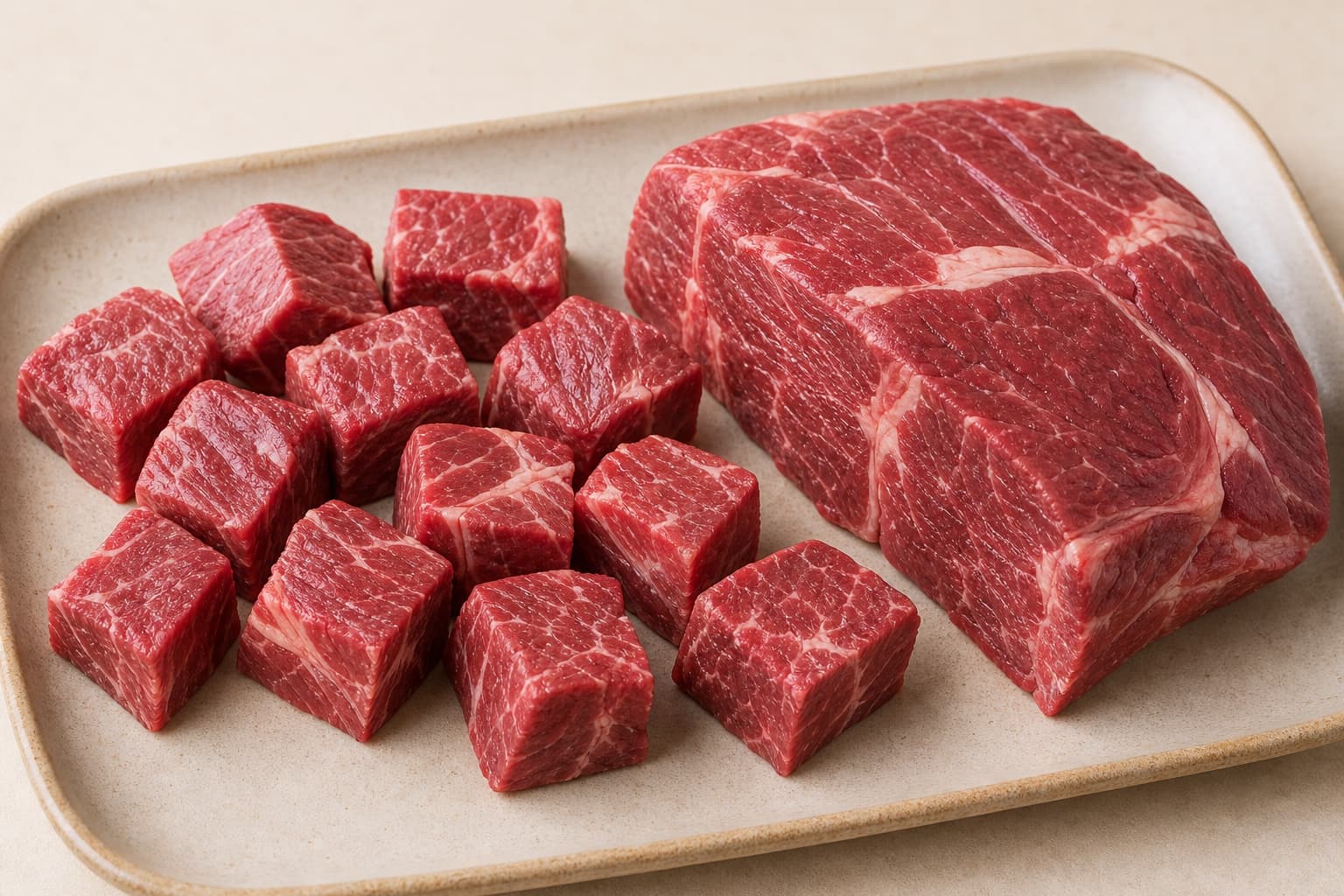
collagen-rich beef that becomes spoon-tender without drying out
Generated reference - not verified cook evidence.
Note: Avoid lean topside; visible connective seams are what become gelatin during the long braise.
Swap: boneless short rib for a richer premium version
 Nearby butchers
 Search Coles
 Search WoolworthsFind an ALDIFind an IGASearch TozerbaSearch Asian PantryToko Nusantara
These links open searches, catalogues, or store locators. Check the exact form and local availability there.
Nearby butchers and marketsPasar Jaya networkSuper Indo locationsRanch Market outletsHypermart online Search Sayurbox
 Search Tokopedia
 Search ShopeeOpen GrabMart
These links open searches, catalogues, or store locators. Check the exact form and local availability there.
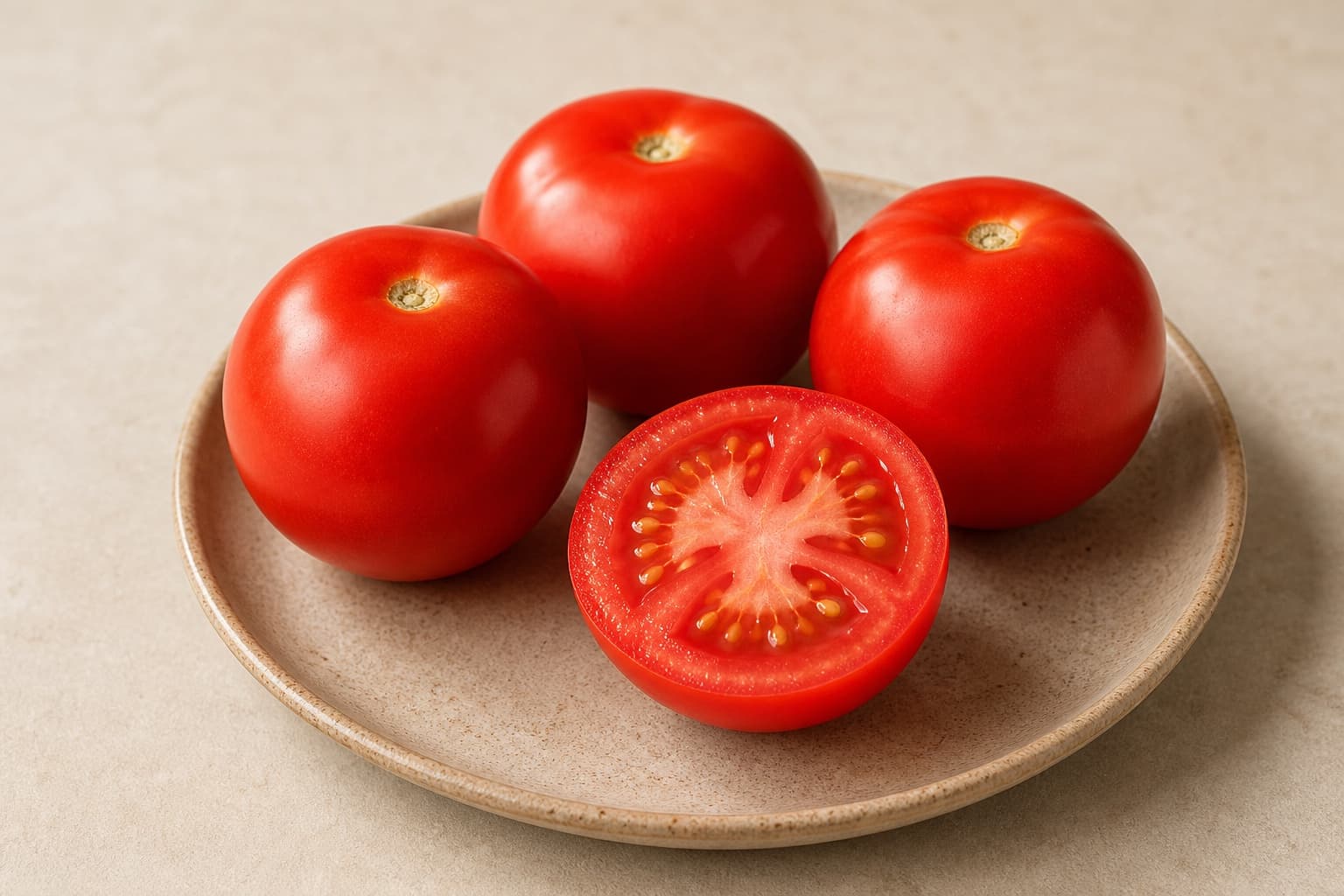
two-stage tomato base: two-thirds melts into sauce and one-third stays recognisable
Generated reference - not verified cook evidence.
Note: Keep every seed and drop of juice; draining them removes flavour and useful braising liquid.
Swap: in poor tomato season, use one 800 g can whole peeled tomatoes for the chopped portion, plus 400 g fresh tomatoes for finishing
Nearby produce marketsSearch ColesSearch WoolworthsFind an ALDIFind an IGASearch TozerbaSearch Asian PantryToko NusantaraThese links open searches, catalogues, or store locators. Check the exact form and local availability there.
Nearby produce marketsPasar Jaya networkSuper Indo locationsRanch Market outletsHypermart onlineSearch SayurboxSearch TokopediaSearch ShopeeOpen GrabMartThese links open searches, catalogues, or store locators. Check the exact form and local availability there.
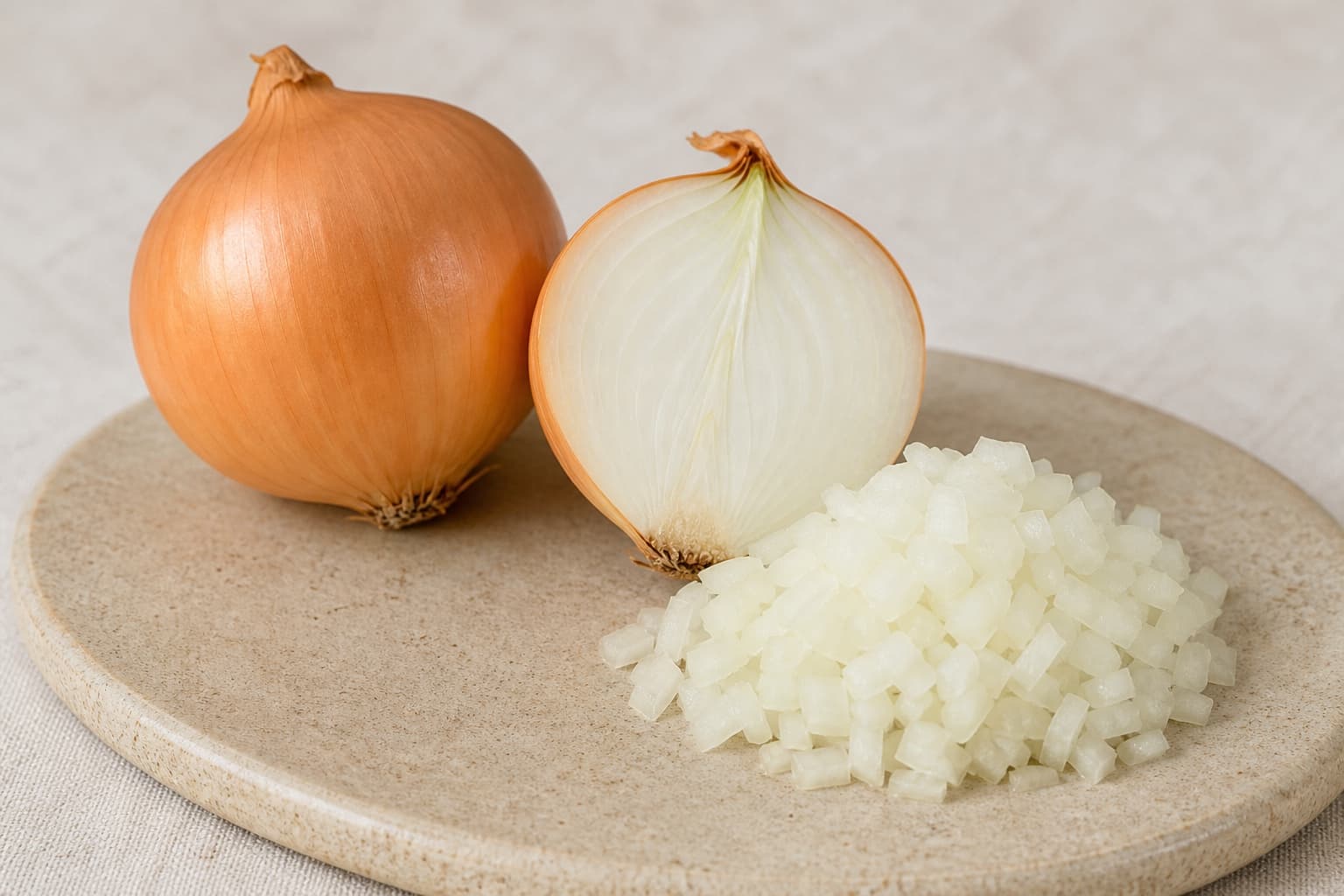
sweet body beneath the concentrated tomato base
Generated reference - not verified cook evidence.
Swap: 150 g shallots
Nearby produce marketsSearch ColesSearch WoolworthsFind an ALDIFind an IGASearch TozerbaSearch Asian PantryToko NusantaraThese links open searches, catalogues, or store locators. Check the exact form and local availability there.
Nearby produce marketsPasar Jaya networkSuper Indo locationsRanch Market outletsHypermart onlineSearch SayurboxSearch TokopediaSearch ShopeeOpen GrabMartThese links open searches, catalogues, or store locators. Check the exact form and local availability there.
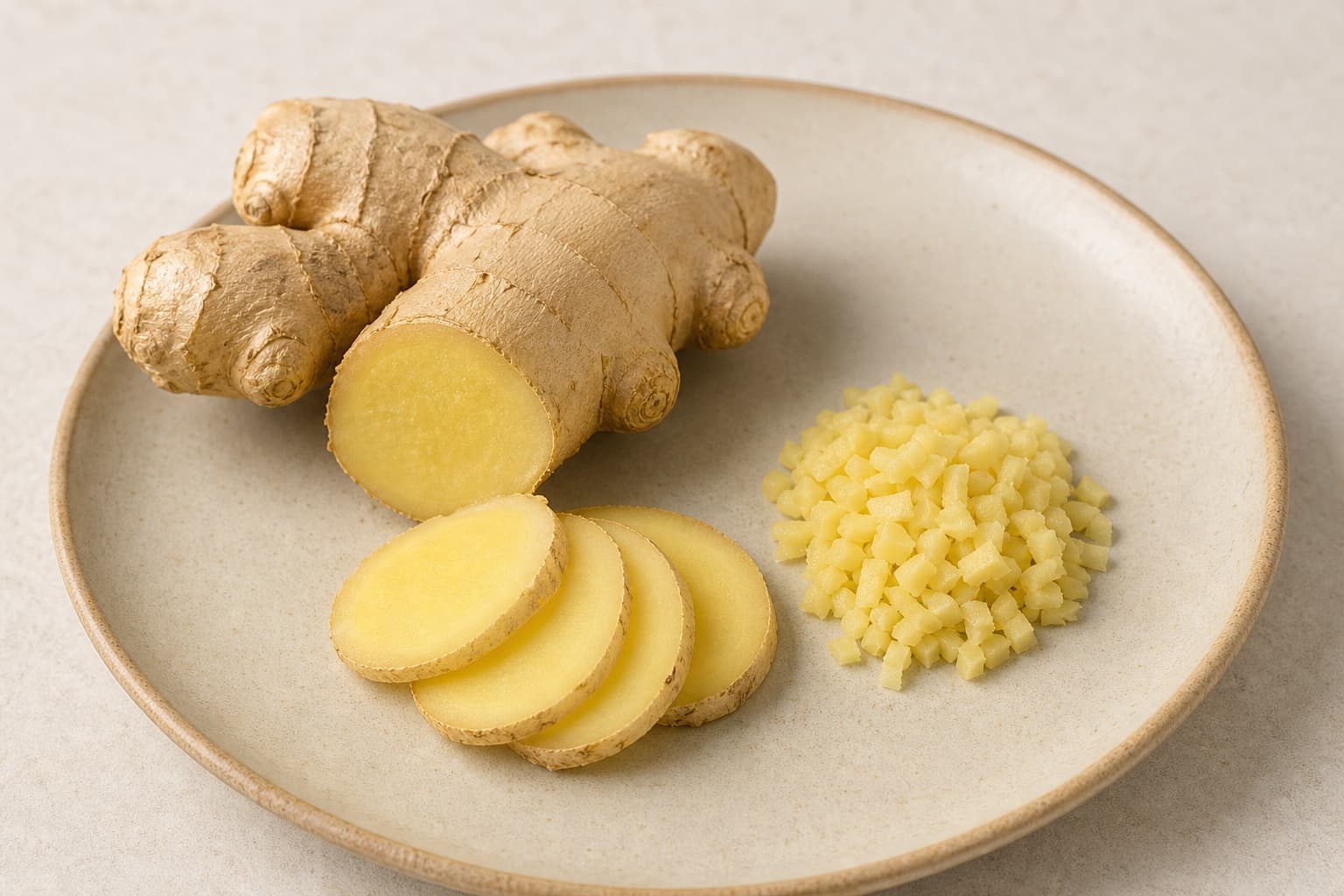
half cleans the blanch; half perfumes the tomato base
Generated reference - not verified cook evidence.
Nearby produce marketsSearch ColesSearch WoolworthsFind an ALDIFind an IGASearch TozerbaSearch Asian PantryToko NusantaraThese links open searches, catalogues, or store locators. Check the exact form and local availability there.
Nearby produce marketsPasar Jaya networkSuper Indo locationsRanch Market outletsHypermart onlineSearch SayurboxSearch TokopediaSearch ShopeeOpen GrabMartThese links open searches, catalogues, or store locators. Check the exact form and local availability there.
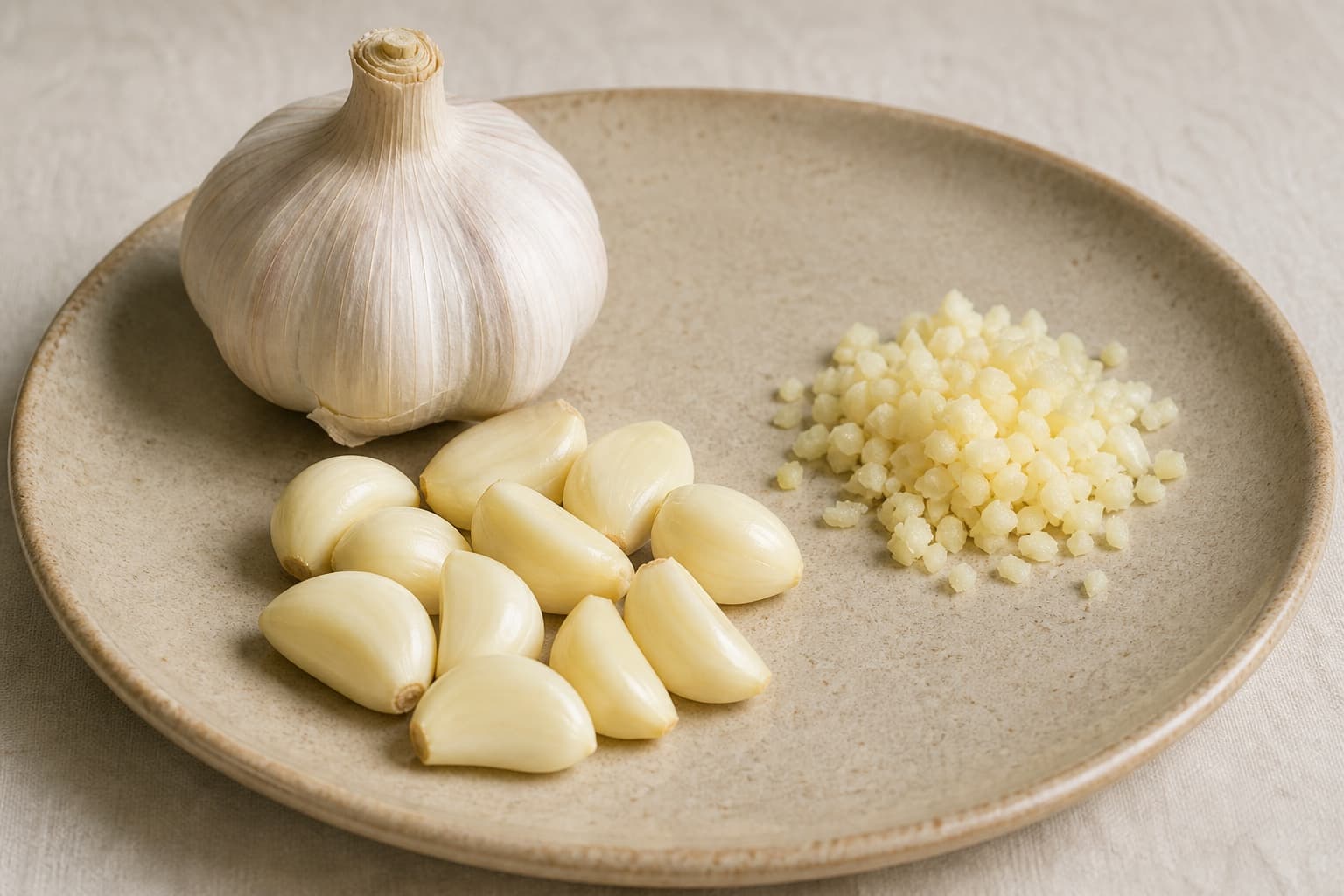
savoury aromatic for the tomato base
Generated reference - not verified cook evidence.
Note: Keep it pale; dark garlic makes the long braise bitter.
Nearby produce marketsSearch ColesSearch WoolworthsFind an ALDIFind an IGASearch TozerbaSearch Asian PantryToko NusantaraThese links open searches, catalogues, or store locators. Check the exact form and local availability there.
Nearby produce marketsPasar Jaya networkSuper Indo locationsRanch Market outletsHypermart onlineSearch SayurboxSearch TokopediaSearch ShopeeOpen GrabMartThese links open searches, catalogues, or store locators. Check the exact form and local availability there.
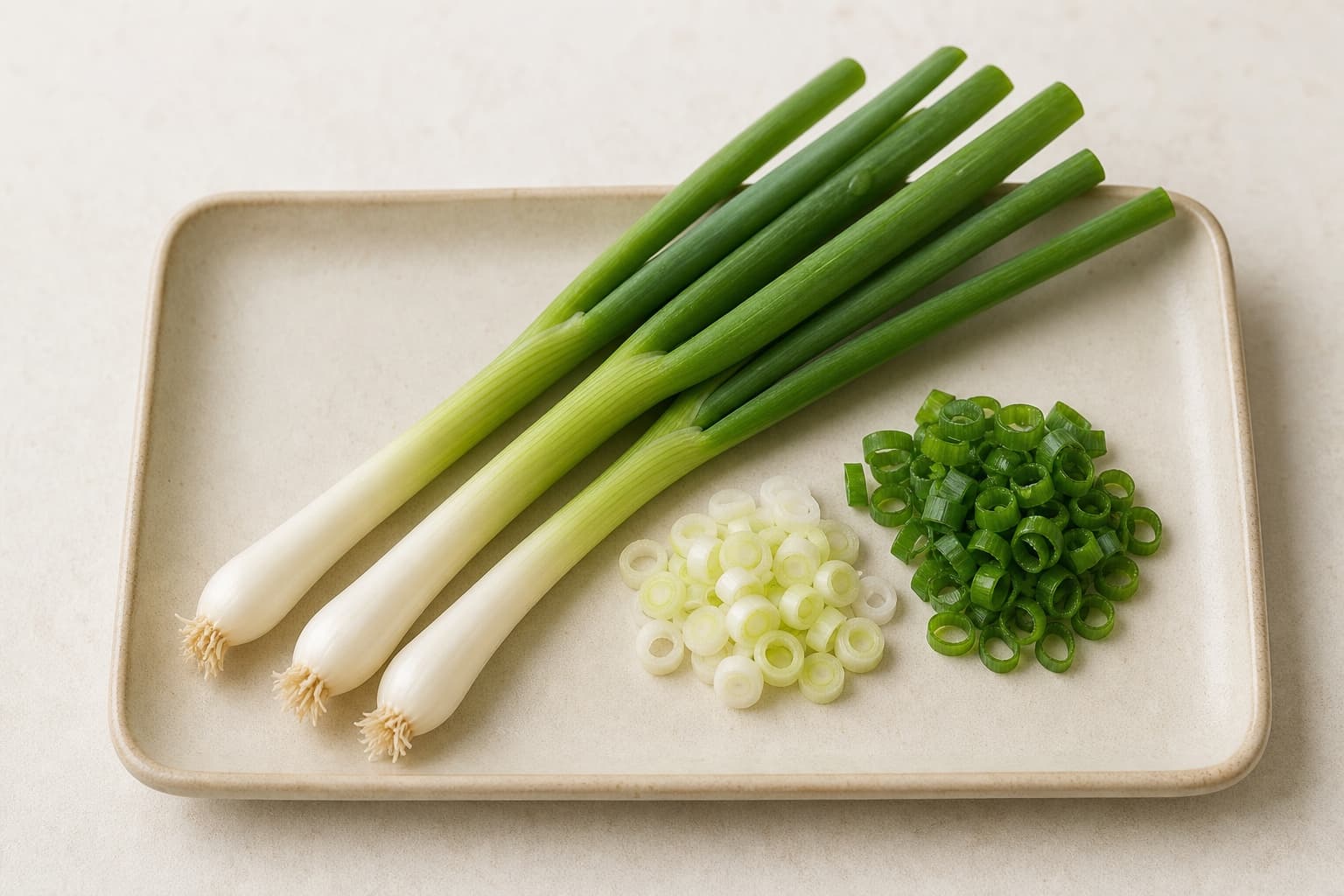
cleans the blanch, seasons the base, and supplies the fresh finish
Generated reference - not verified cook evidence.
Nearby produce marketsSearch ColesSearch WoolworthsFind an ALDIFind an IGASearch TozerbaSearch Asian PantryToko NusantaraThese links open searches, catalogues, or store locators. Check the exact form and local availability there.
Nearby produce marketsPasar Jaya networkSuper Indo locationsRanch Market outletsHypermart onlineSearch SayurboxSearch TokopediaSearch ShopeeOpen GrabMartThese links open searches, catalogues, or store locators. Check the exact form and local availability there.

conducts enough heat to brown the dried beef and cook the tomato paste
Generated reference - not verified cook evidence.
Swap: rice-bran, canola, peanut, or vegetable oil
Nearby supermarketsSearch ColesSearch WoolworthsFind an ALDIFind an IGASearch TozerbaSearch Asian PantryToko NusantaraThese links open searches, catalogues, or store locators. Check the exact form and local availability there.
Nearby supermarketsSuper Indo locationsRanch Market outletsHypermart onlinePasar Jaya networkSearch SayurboxSearch TokopediaSearch ShopeeOpen GrabMartThese links open searches, catalogues, or store locators. Check the exact form and local availability there.
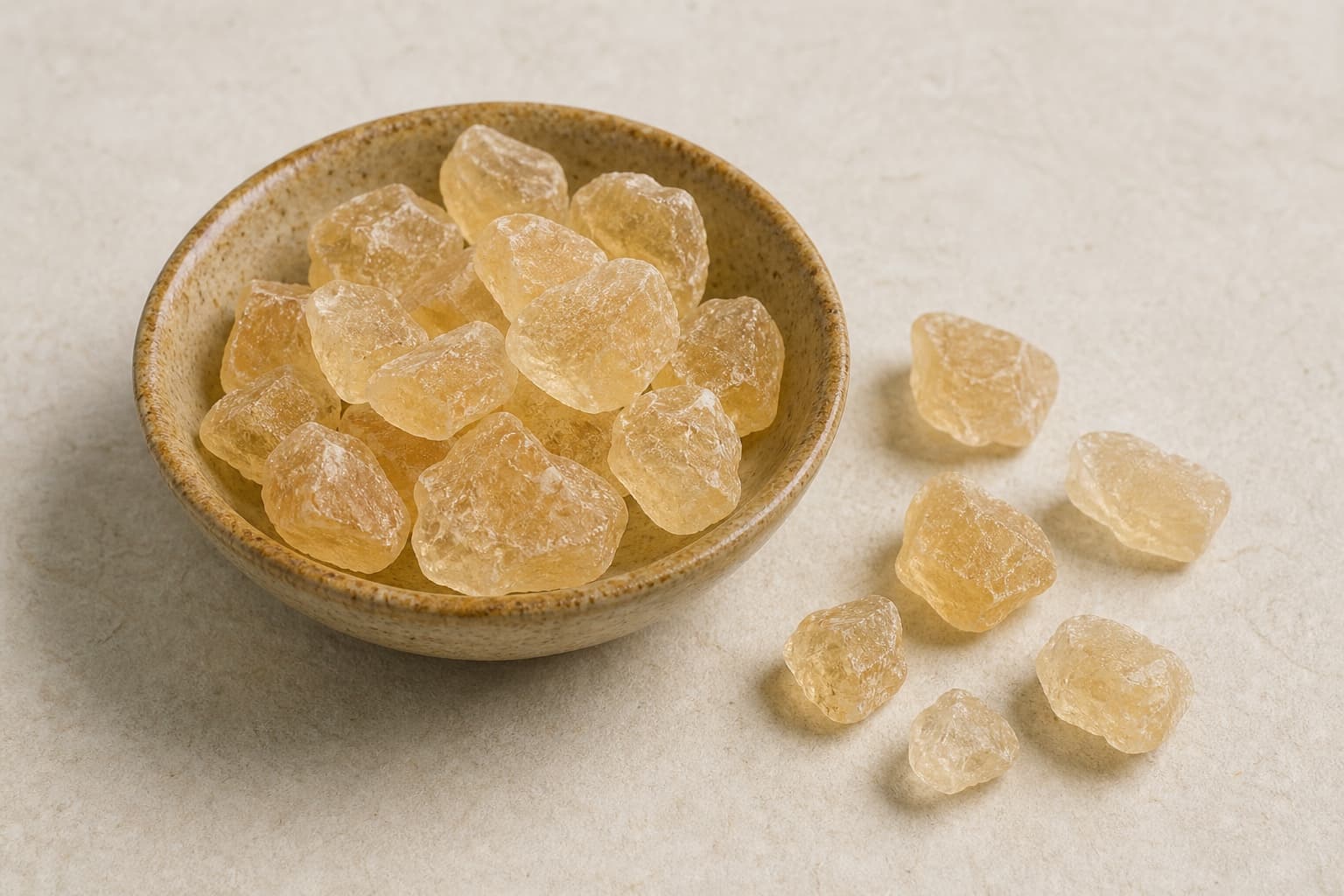
rounds tomato acidity without turning the braise into a sweet sauce
Generated reference - not verified cook evidence.
Swap: 12 g white sugar
Nearby specialist grocersMr Dad CBD guideGuideLaguna QV route leadGuideSearch TozerbaSearch Asian PantryToko NusantaraSearch ColesSearch WoolworthsFind an ALDIFind an IGAThese links open searches, catalogues, or store locators. Check the exact form and local availability there.
Nearby specialist shopsSearch SayurboxSearch TokopediaSearch ShopeeOpen GrabMartSuper Indo locationsRanch Market outletsHypermart onlinePasar Jaya networkThese links open searches, catalogues, or store locators. Check the exact form and local availability there.
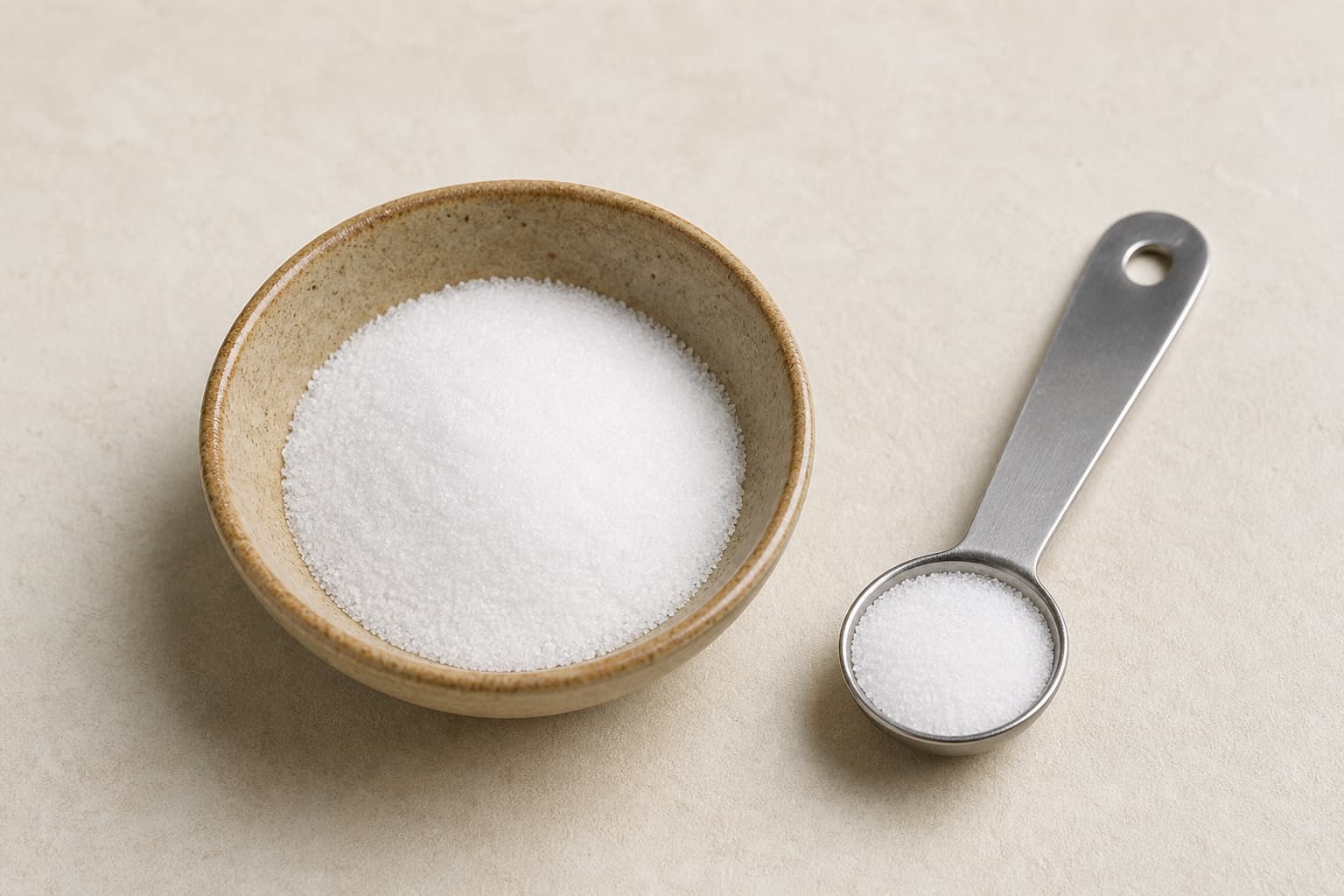
seasons the tomato base first, then balances the reduced sauce
Generated reference - not verified cook evidence.
Nearby supermarketsSearch ColesSearch WoolworthsFind an ALDIFind an IGASearch TozerbaSearch Asian PantryToko NusantaraThese links open searches, catalogues, or store locators. Check the exact form and local availability there.
Nearby supermarketsSuper Indo locationsRanch Market outletsHypermart onlinePasar Jaya networkSearch SayurboxSearch TokopediaSearch ShopeeOpen GrabMartThese links open searches, catalogues, or store locators. Check the exact form and local availability there.

cold blanching water plus measured boiling braising water
Generated reference - not verified cook evidence.
Note: Use boiling water for the braise so the browned beef does not cool abruptly.
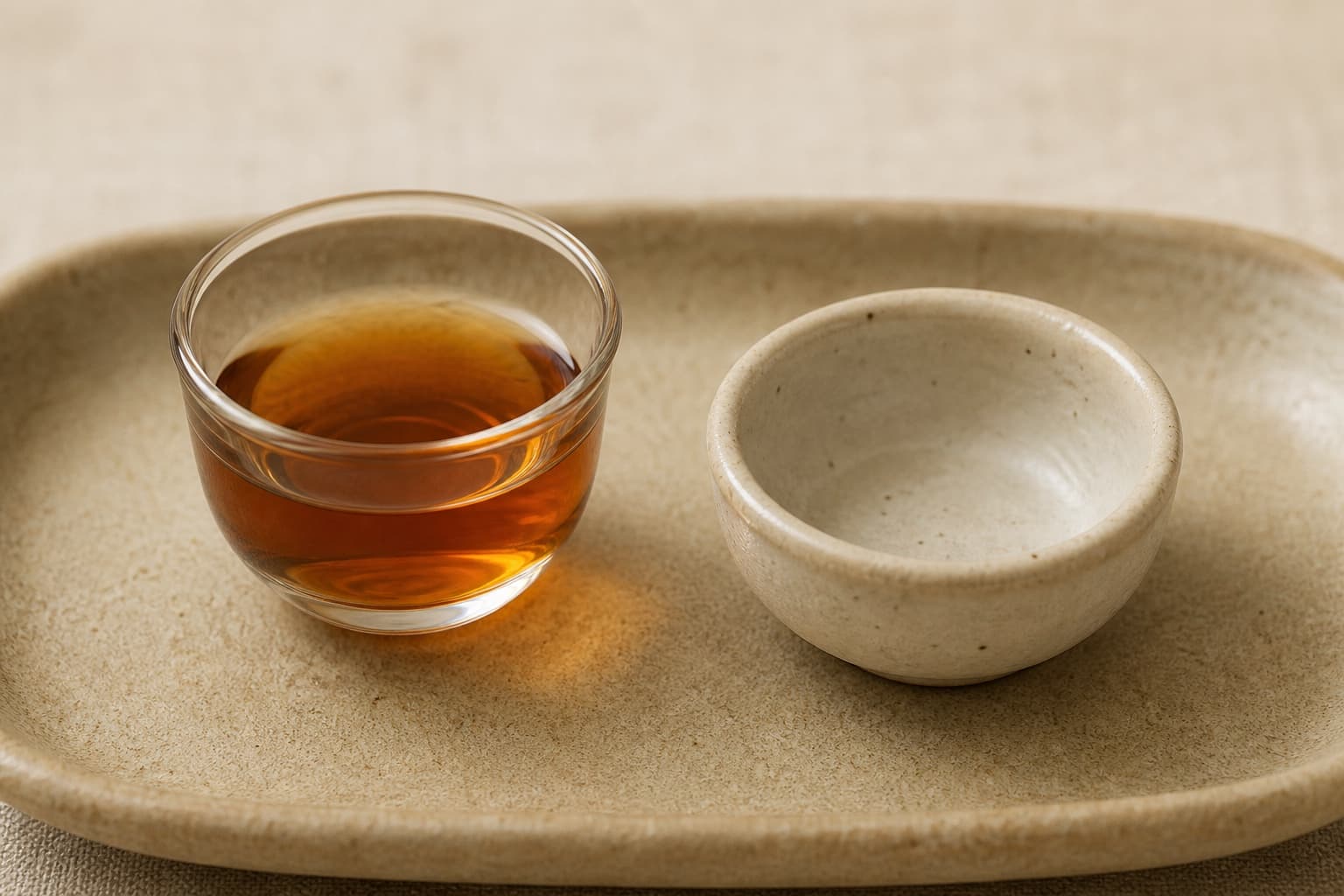
half cleans the blanch and half releases browned flavour from the pot
Generated reference - not verified cook evidence.
Note: Contains alcohol and may contain wheat or sulphites; check the exact label.
Swap: dry sherry, or 30 ml water for an alcohol-free version
Nearby specialist grocersMr Dad CBD guideGuideLaguna QV route leadGuideSearch TozerbaSearch Asian PantryToko NusantaraSearch ColesSearch WoolworthsFind an ALDIFind an IGAThese links open searches, catalogues, or store locators. Check the exact form and local availability there.
Nearby specialist shopsSearch SayurboxSearch TokopediaSearch ShopeeOpen GrabMartSuper Indo locationsRanch Market outletsHypermart onlinePasar Jaya networkThese links open searches, catalogues, or store locators. Check the exact form and local availability there.
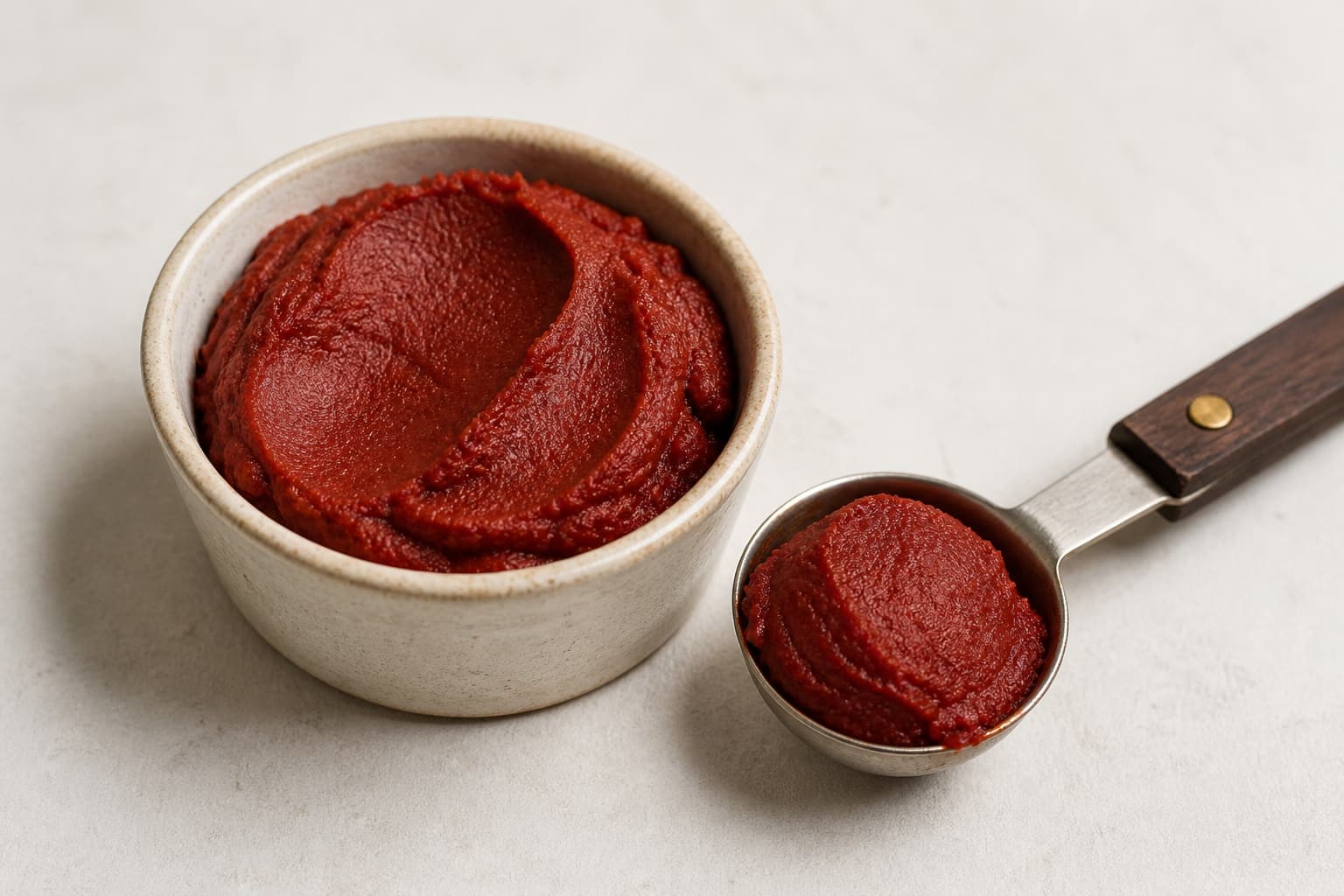
reliable concentration and savour without ketchup sweetness
Generated reference - not verified cook evidence.
Note: Use concentrated paste, not tomato sauce or ketchup.
Nearby specialist grocersMr Dad CBD guideGuideLaguna QV route leadGuideSearch TozerbaSearch Asian PantryToko NusantaraSearch ColesSearch WoolworthsFind an ALDIFind an IGAThese links open searches, catalogues, or store locators. Check the exact form and local availability there.
Nearby specialist shopsSearch SayurboxSearch TokopediaSearch ShopeeOpen GrabMartSuper Indo locationsRanch Market outletsHypermart onlinePasar Jaya networkThese links open searches, catalogues, or store locators. Check the exact form and local availability there.
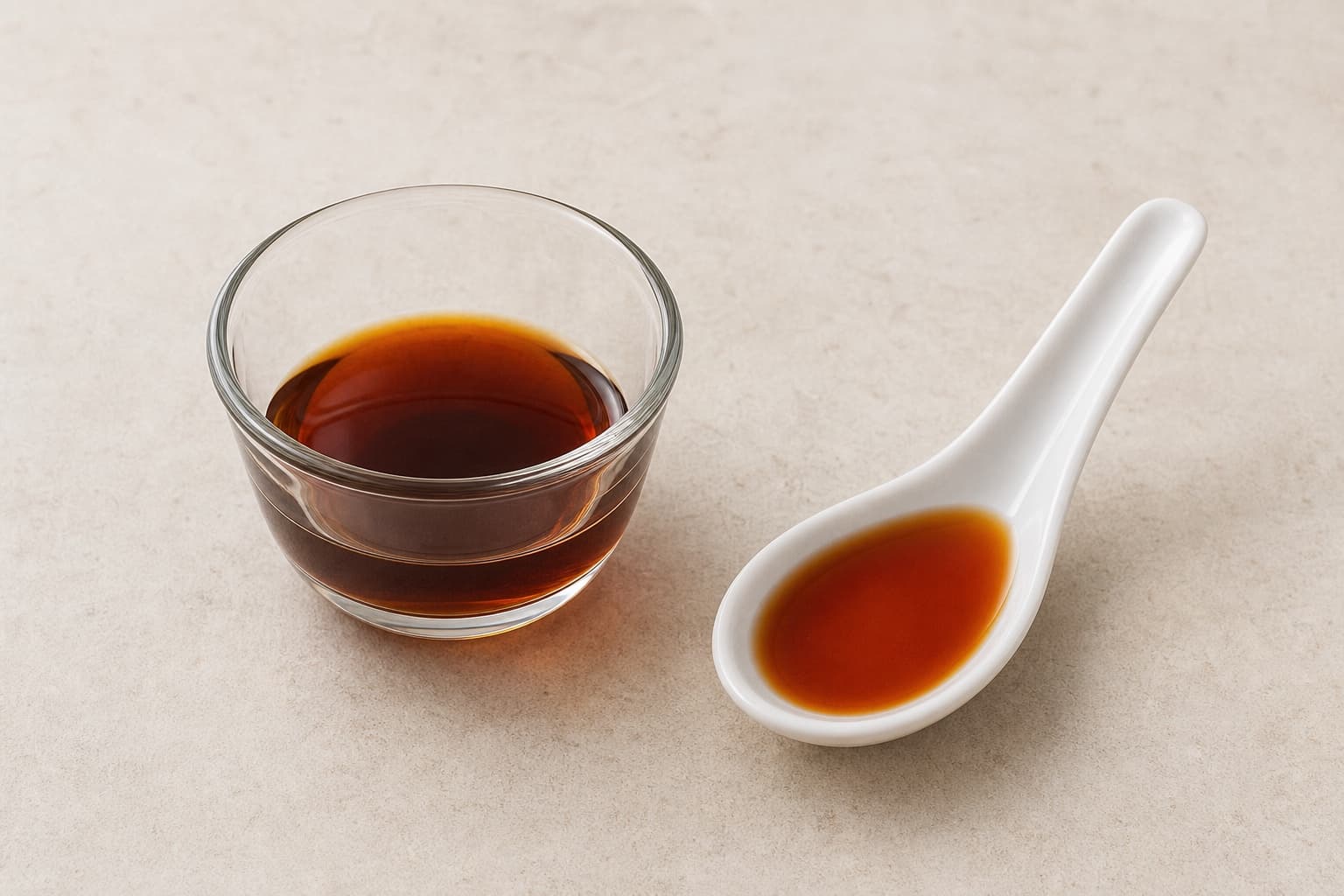
restrained fermented savour that keeps the tomato colour clear
Generated reference - not verified cook evidence.
Note: Most soy sauce contains soy and wheat. Dark soy will make the stew heavier and much darker.
Swap: gluten-free tamari, with final salt adjusted cautiously
Nearby specialist grocersMr Dad CBD guideGuideLaguna QV route leadGuideSearch TozerbaSearch Asian PantryToko NusantaraSearch ColesSearch WoolworthsFind an ALDIFind an IGAThese links open searches, catalogues, or store locators. Check the exact form and local availability there.
Nearby specialist shopsSearch SayurboxSearch TokopediaSearch ShopeeOpen GrabMartSuper Indo locationsRanch Market outletsHypermart onlinePasar Jaya networkThese links open searches, catalogues, or store locators. Check the exact form and local availability there.
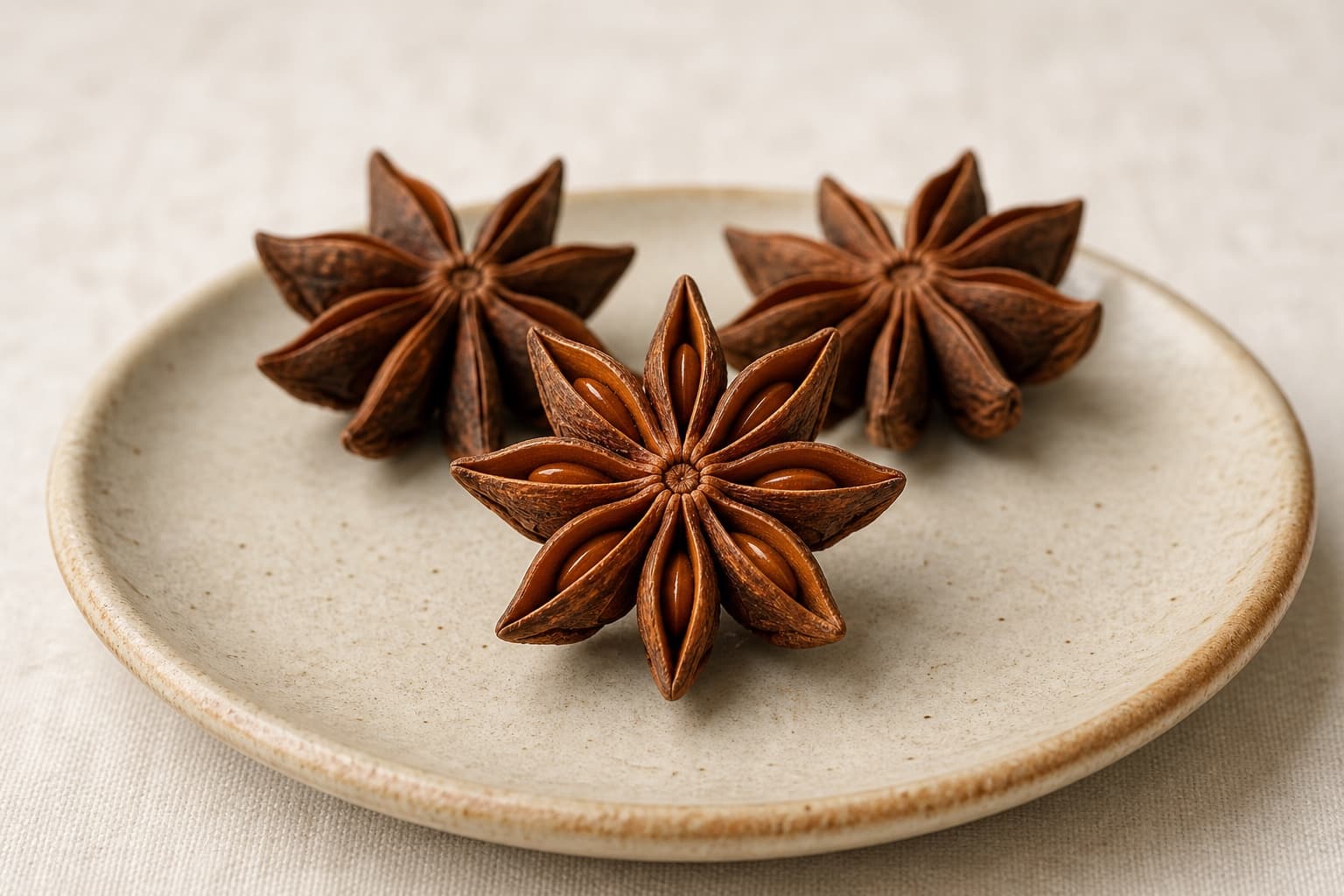
a restrained warm background note rather than a dominant five-spice taste
Generated reference - not verified cook evidence.
Note: Remove after 1 hour; extra pods make the sauce medicinal.
Nearby specialist grocersMr Dad CBD guideGuideLaguna QV route leadGuideSearch TozerbaSearch Asian PantryToko NusantaraSearch ColesSearch WoolworthsFind an ALDIFind an IGAThese links open searches, catalogues, or store locators. Check the exact form and local availability there.
Nearby specialist shopsSearch SayurboxSearch TokopediaSearch ShopeeOpen GrabMartSuper Indo locationsRanch Market outletsHypermart onlinePasar Jaya networkThese links open searches, catalogues, or store locators. Check the exact form and local availability there.
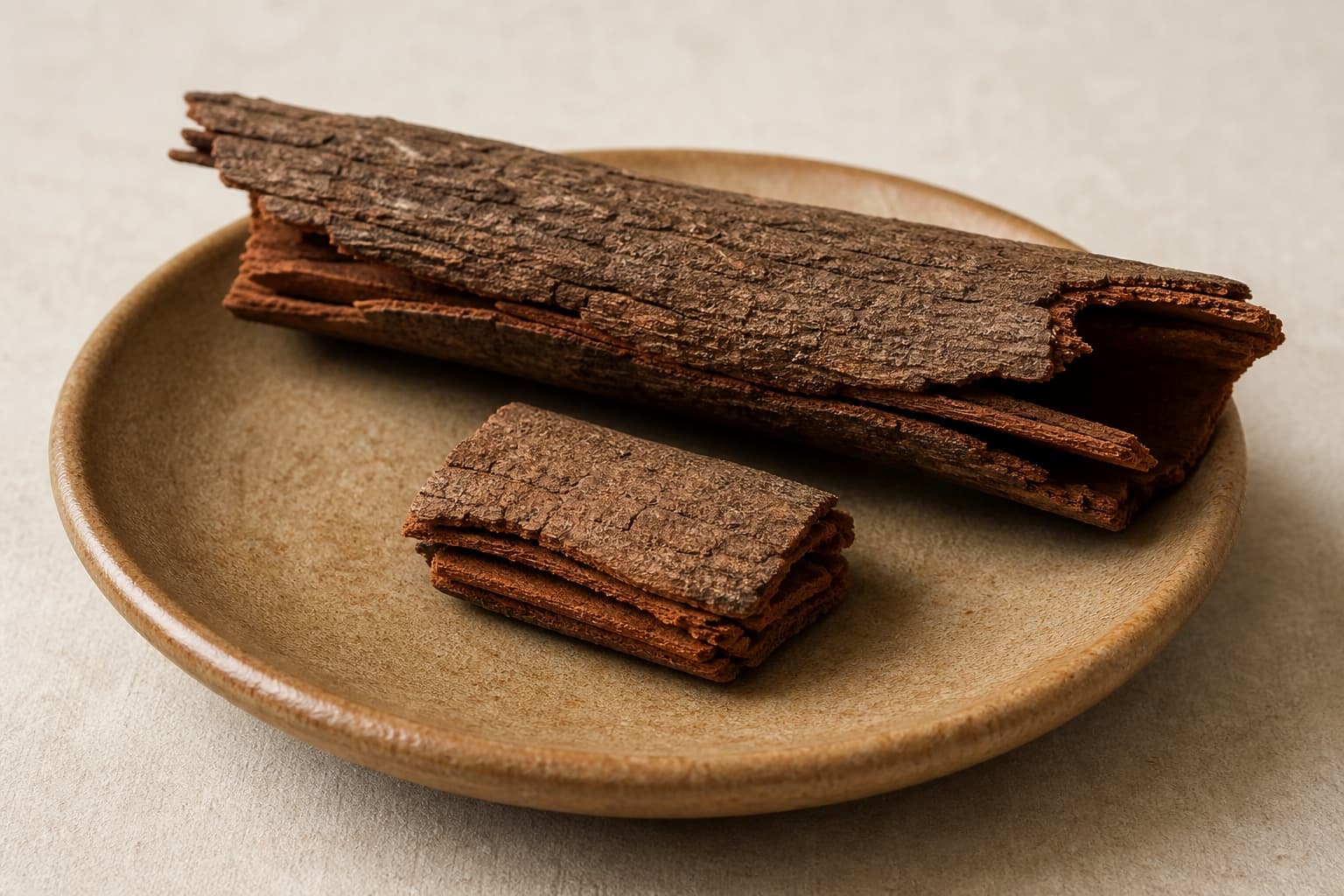
quiet woody warmth through the first half of the braise
Generated reference - not verified cook evidence.
Note: Remove after 1 hour so it does not dominate the fresh tomato finish.
Swap: a slightly longer piece of milder Ceylon cinnamon
Nearby specialist grocersMr Dad CBD guideGuideLaguna QV route leadGuideSearch TozerbaSearch Asian PantryToko NusantaraSearch ColesSearch WoolworthsFind an ALDIFind an IGAThese links open searches, catalogues, or store locators. Check the exact form and local availability there.
Nearby specialist shopsSearch SayurboxSearch TokopediaSearch ShopeeOpen GrabMartSuper Indo locationsRanch Market outletsHypermart onlinePasar Jaya networkThese links open searches, catalogues, or store locators. Check the exact form and local availability there.
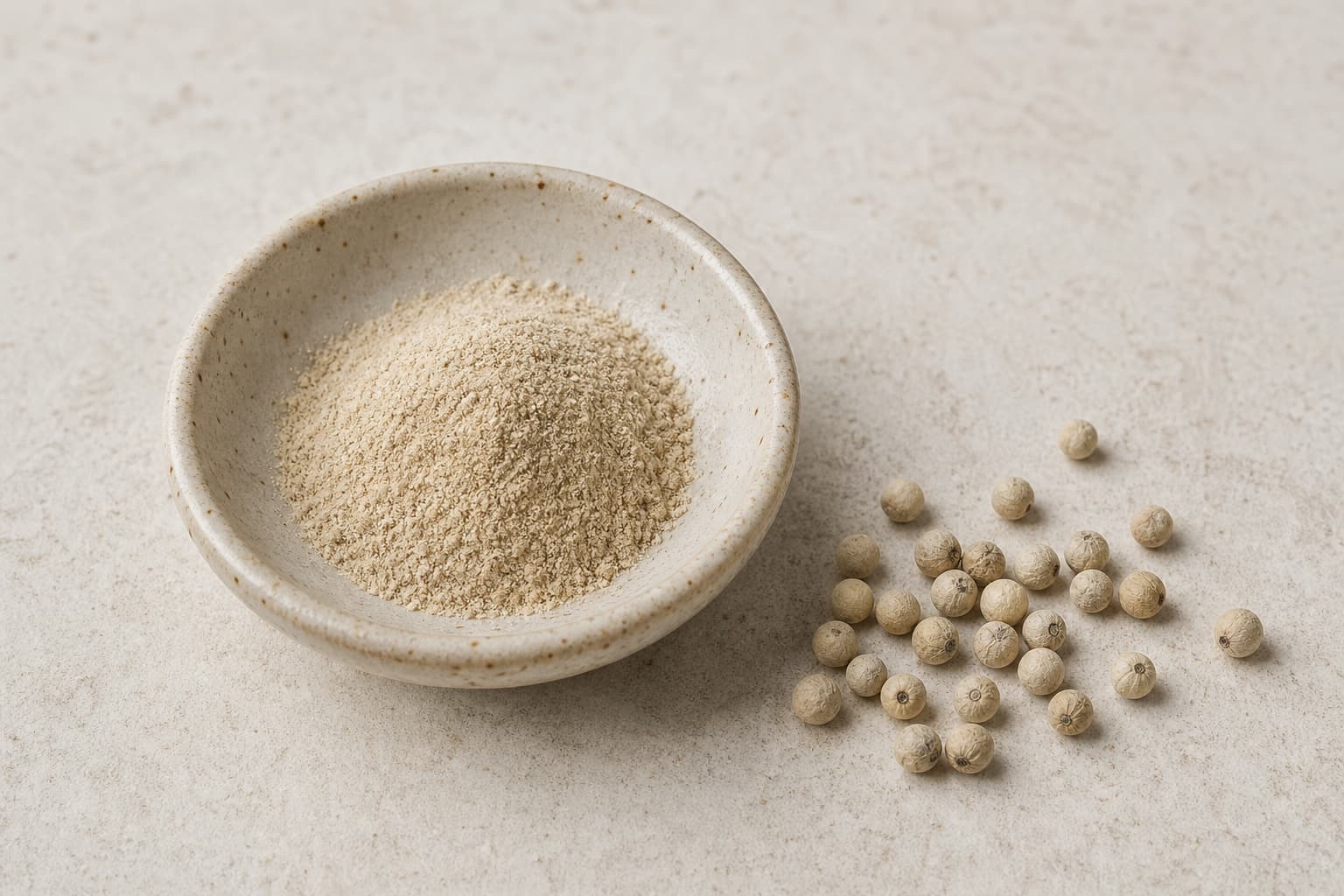
clean aromatic warmth added only after reduction
Generated reference - not verified cook evidence.
Nearby specialist grocersMr Dad CBD guideGuideLaguna QV route leadGuideSearch TozerbaSearch Asian PantryToko NusantaraSearch ColesSearch WoolworthsFind an ALDIFind an IGAThese links open searches, catalogues, or store locators. Check the exact form and local availability there.
Nearby specialist shopsSearch SayurboxSearch TokopediaSearch ShopeeOpen GrabMartSuper Indo locationsRanch Market outletsHypermart onlinePasar Jaya networkThese links open searches, catalogues, or store locators. Check the exact form and local availability there.
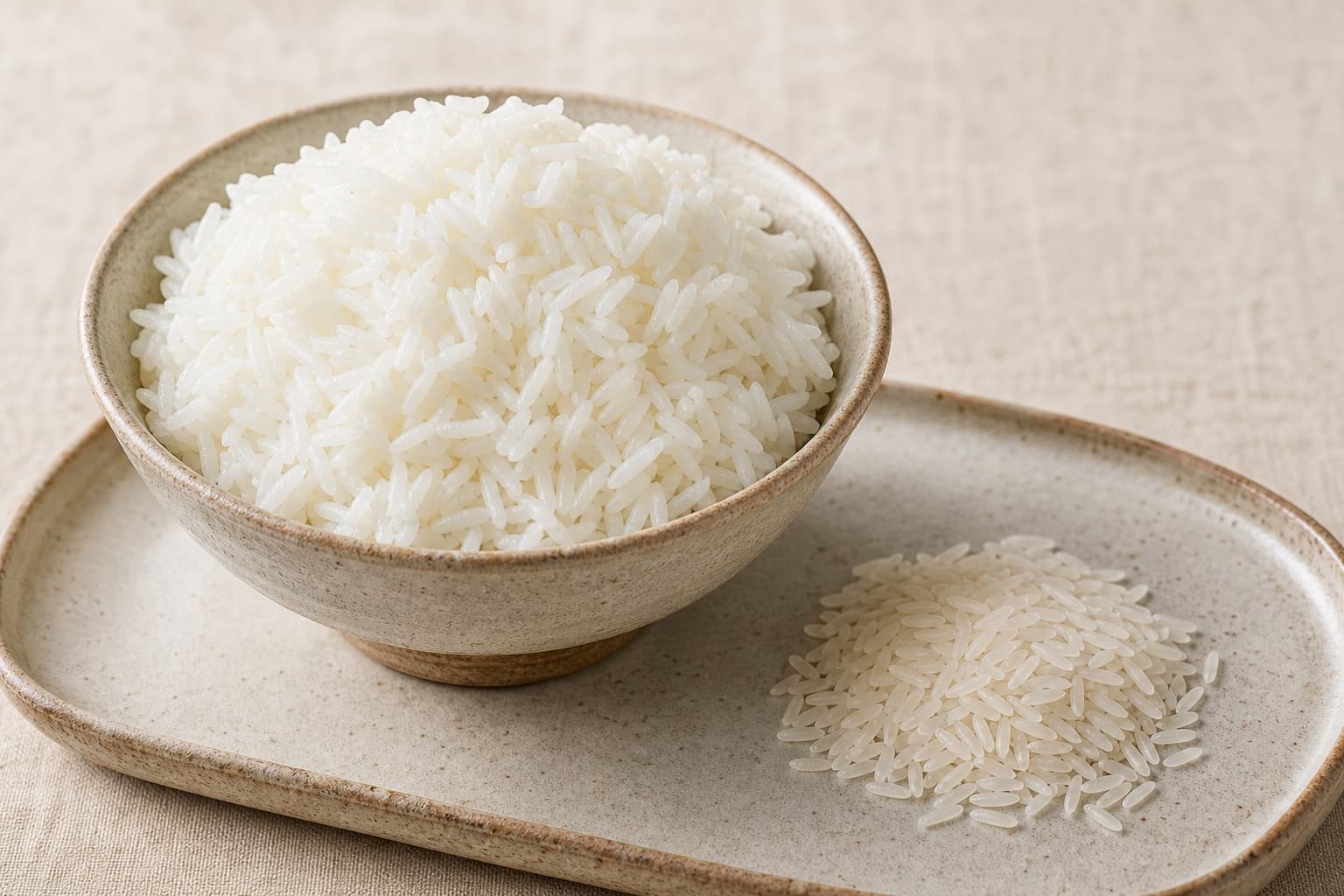
optional prepared accompaniment for six bowls
Generated reference - not verified cook evidence.
Nearby produce marketsSearch ColesSearch WoolworthsFind an ALDIFind an IGASearch TozerbaSearch Asian PantryToko NusantaraThese links open searches, catalogues, or store locators. Check the exact form and local availability there.
Nearby produce marketsPasar Jaya networkSuper Indo locationsRanch Market outletsHypermart onlineSearch SayurboxSearch TokopediaSearch ShopeeOpen GrabMartThese links open searches, catalogues, or store locators. Check the exact form and local availability there.
Calculated estimate · per serving
1 of 6 recipe servings; optional 150 g cooked jasmine rice excluded
Calculated from the authored edible ingredient weights using representative AFCD Release 3 and USDA FoodData Central profiles, then divided by the recipe yield. Energy follows the FSANZ ingredient-contribution method. Optional serving accompaniments are excluded. The calculation uses a representative raw beef chuck profile and counts all 30 ml measured oil and all recipe salt/soy; discarded blanching water contributes no nutrition.
Calculated estimate only, not a laboratory result or personalised dietary advice. Actual values vary with brands, produce, meat trim, substitutions, final serving size, and how much cooking or rendered oil is left in the pan or skimmed. Check packaged labels for allergens and sodium; consult an accredited practising dietitian or clinician for medical dietary needs.
Reference data: Australian Food Composition Database · FSANZ calculation method · USDA FoodData Central · calculated 2026-07-14
Step-by-step method
Read the action and cue together. Move on when the food matches the cue.
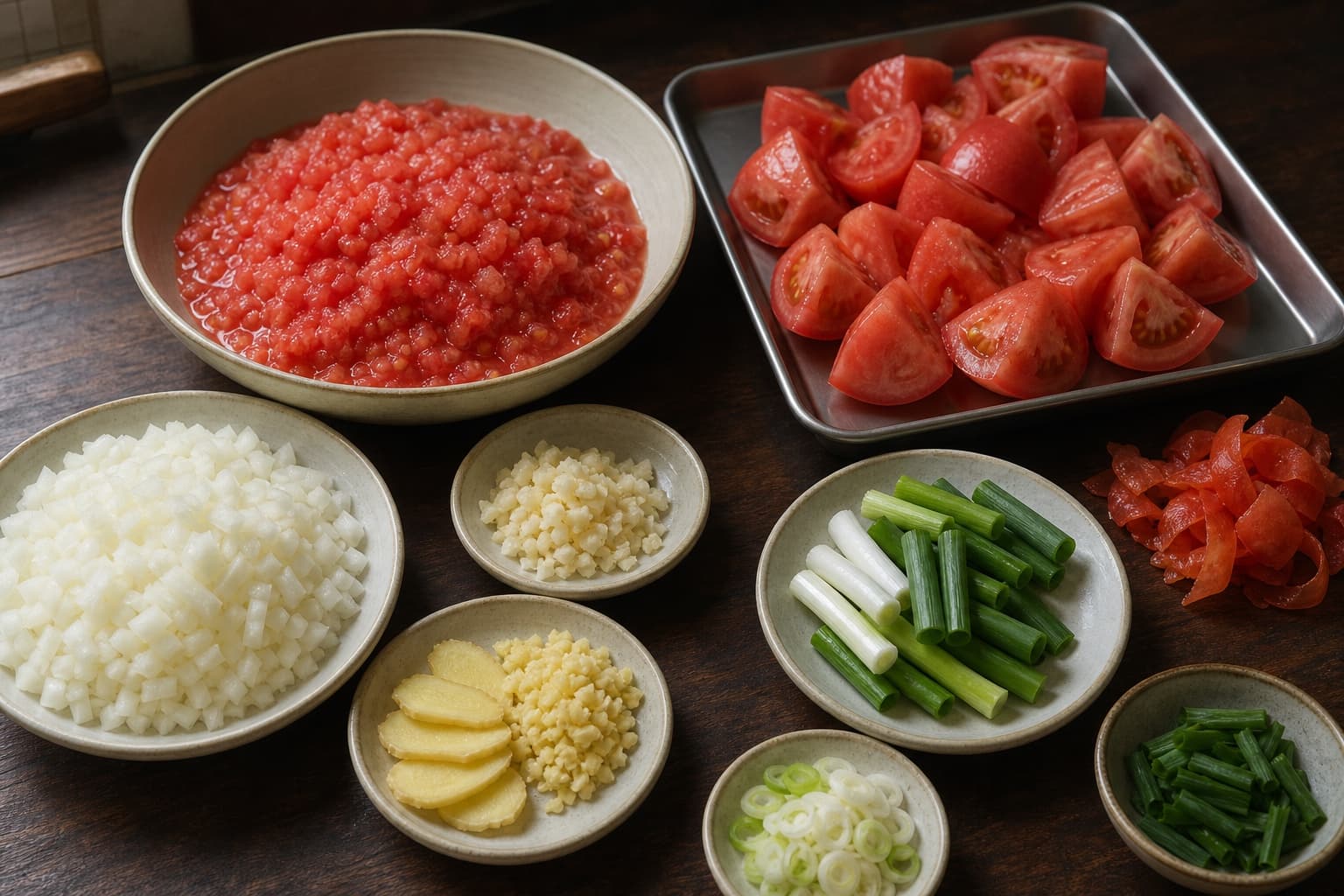
Score a shallow X in each tomato. Cover with boiling water for 30–45 seconds, then cool in cold water and peel. Core without discarding seeds or juice. Finely chop roughly 800 g and cut the remaining 400 g into 3 cm wedges. Finely chop the onion and garlic. Divide the ginger: slice half and finely chop half. Cut two scallions into thirds for blanching; slice the remaining whites and reserve all greens for serving.
Common mistake: Draining tomato juice removes the liquid and flavour needed to build the sauce.
Recovery: Pause before the next step, compare the cue, then correct heat, moisture, or seasoning while the dish is still flexible.
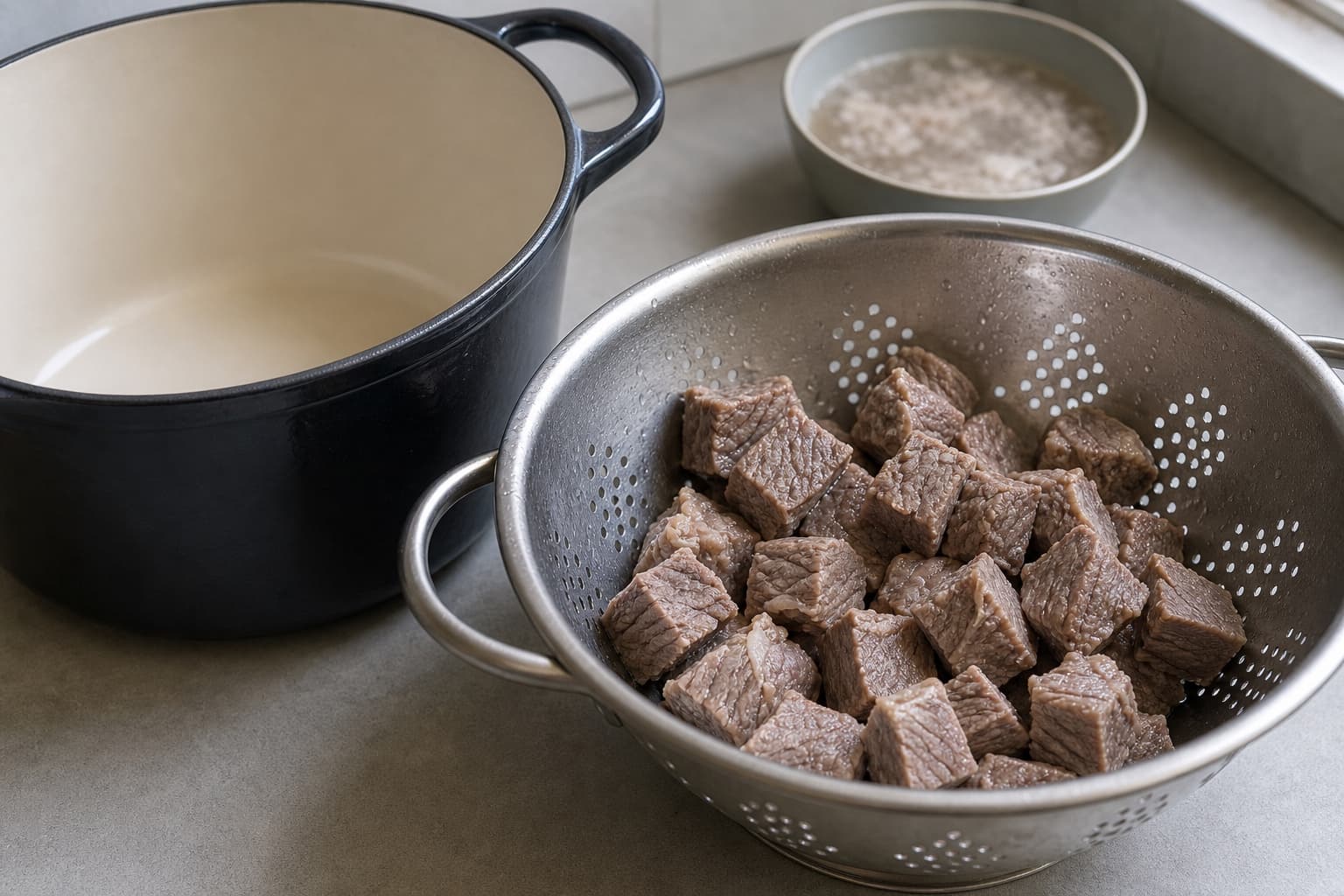
Put the beef in the clean heavy pot with about 2 L cold water, the sliced ginger, scallion thirds, and 15 ml of the measured Shaoxing wine. Bring slowly to a boil, skim, and boil for 2 minutes. Drain, rinse the cubes with warm water, wash the pot, and pat the beef very dry. Reserve the remaining 15 ml Shaoxing for the tomato base. The beef remains raw for safety purposes after this cleaning step.
Common mistake: Keeping the blanch water muddies the sauce; putting wet beef into oil causes dangerous spitting.
Recovery: Spread the food out, raise heat only after moisture drops, and hold back extra sauce until the pan is frying again.
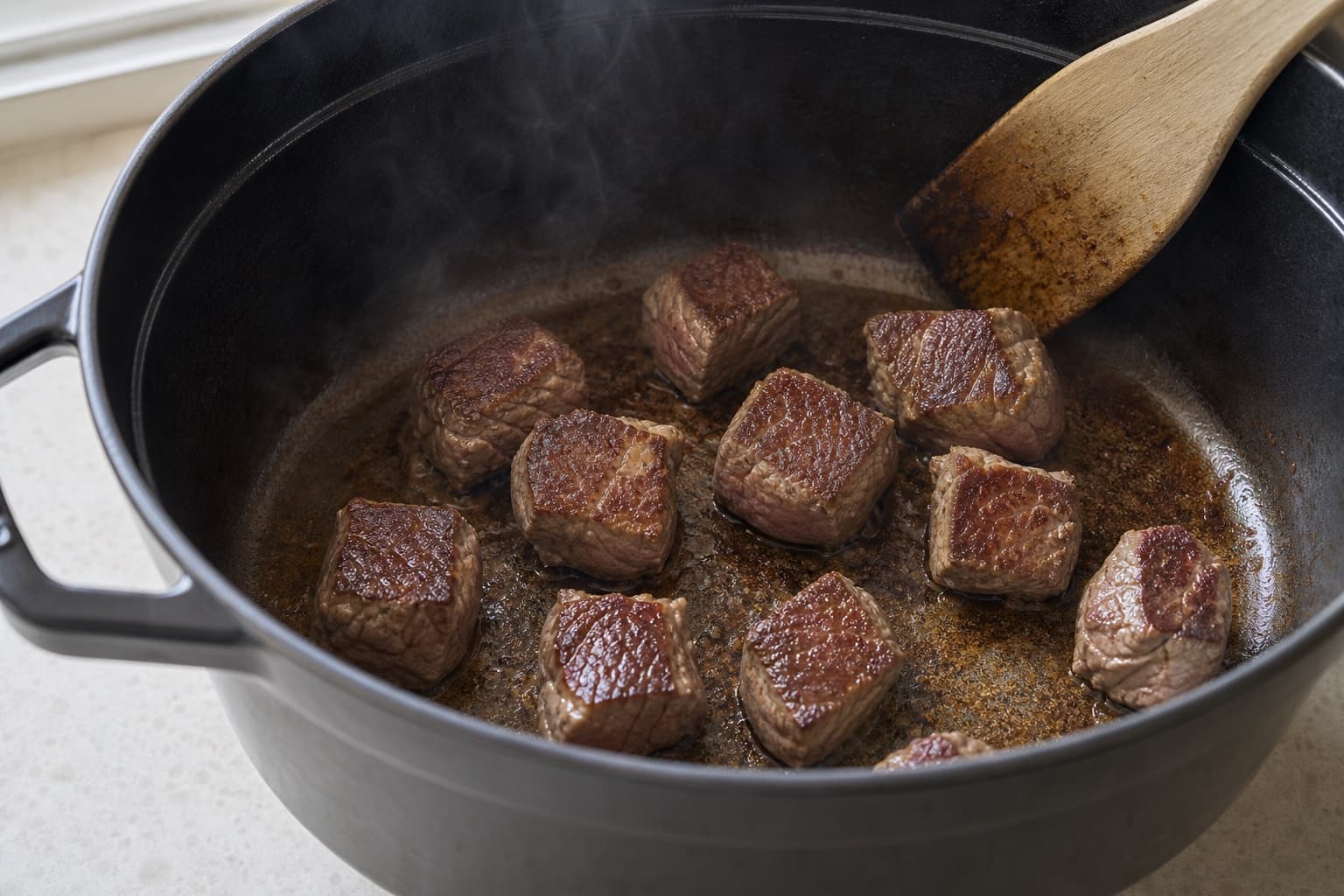
Heat the washed, completely dry Dutch oven over medium-high. Add all the measured neutral oil and brown the dried beef in two batches. Leave each batch undisturbed long enough to colour two broad faces, then move it to a tray. The cubes do not need colour on every side.
Common mistake: Crowding releases steam; blackening the fond makes the tomato sauce bitter.
Recovery: Move the pan off heat, scrape only the unburnt paste into a clean spot, add a small splash of oil or liquid, and restart gently.
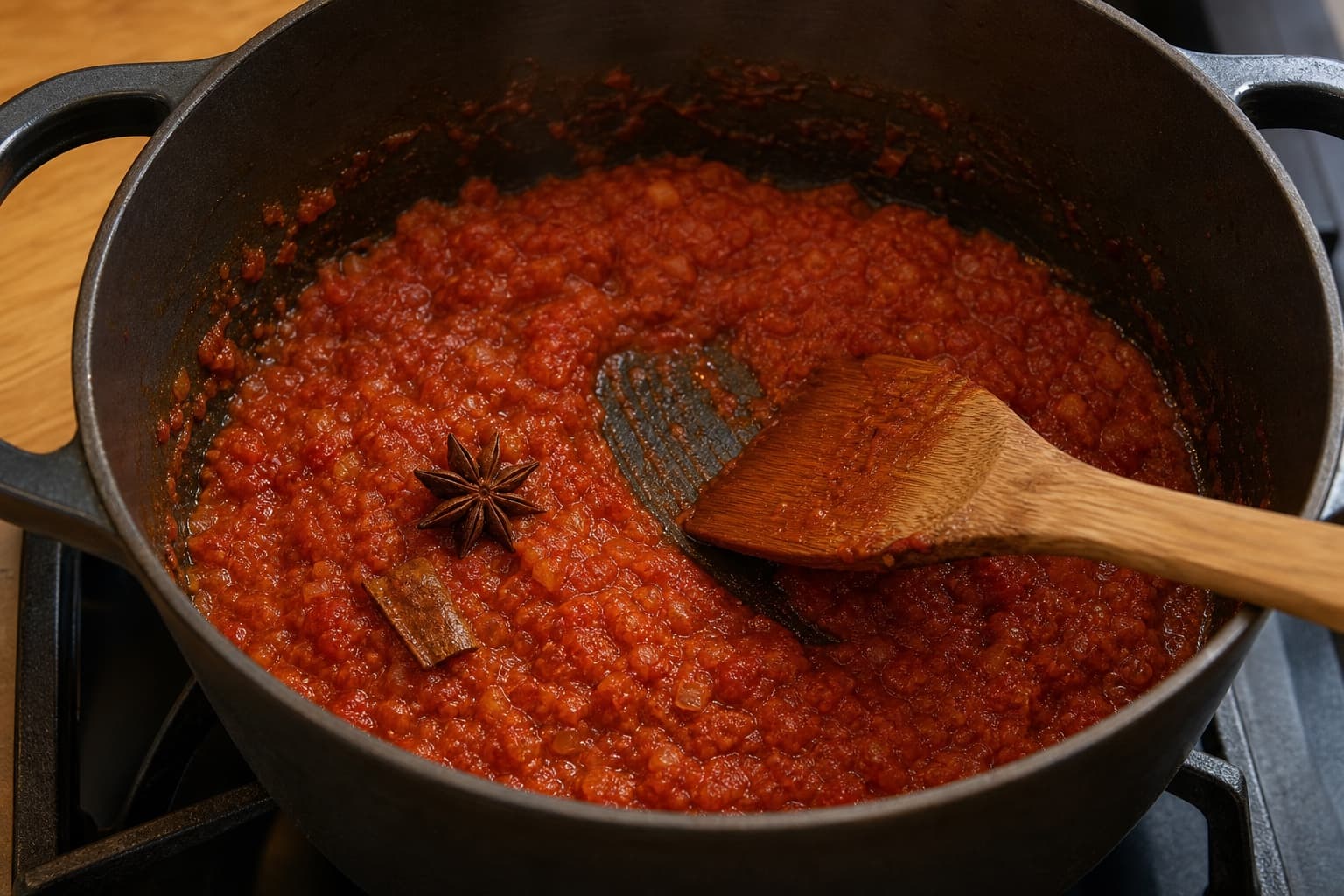
Lower the pot to medium. Cook the prepared onion for 6–8 minutes until soft and lightly gold. Add the prepared chopped ginger, garlic, scallion whites, star anise, and cassia for 60 seconds. Fry the tomato paste for 1–2 minutes until brick red. Add the finely chopped tomato with all its juice, rock sugar, and 4 g of the measured salt. Cook for 8–10 minutes, pressing occasionally, until thick and glossy. Deglaze with the reserved 15 ml Shaoxing and reserve the remaining salt for the finish.
Common mistake: Adding braising water while the tomatoes still look raw produces a thin, one-dimensional stew.
Recovery: Reduce uncovered and season in small rounds, checking the visual cue before adding more salt, sugar, or sauce.
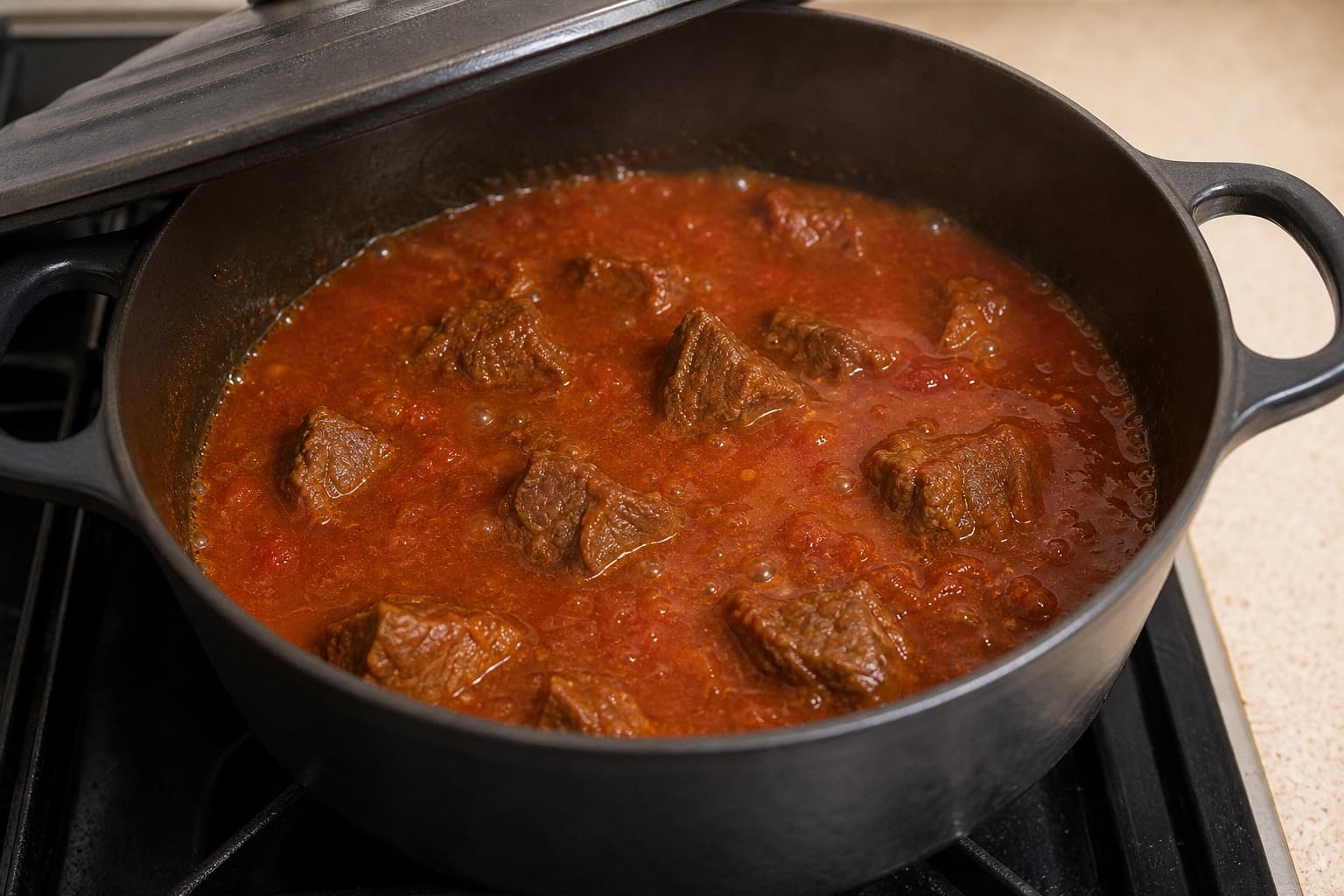
Return the browned beef and its tray juices. Add the light soy and exactly 900 ml boiling water. Bring to a boil, skim once, then partly cover and hold the Dutch oven at roughly 88–95°C: small edge bubbles and only an occasional centre bubble. Turn pieces every 30 minutes and top up only with boiling water if they become exposed. Remove the star anise and cassia after 1 hour. Begin testing at 1 1/2 hours; continue in 20-minute blocks until a skewer enters the centre with little resistance and a spoon can split a cube while it still lifts intact.
Common mistake: Stopping when the beef is merely cooked leaves collagen chewy; boiling harder tightens the meat and breaks the sauce.
Recovery: Lower the heat immediately, skim or stir gently, and continue at a small simmer until the surface calms.
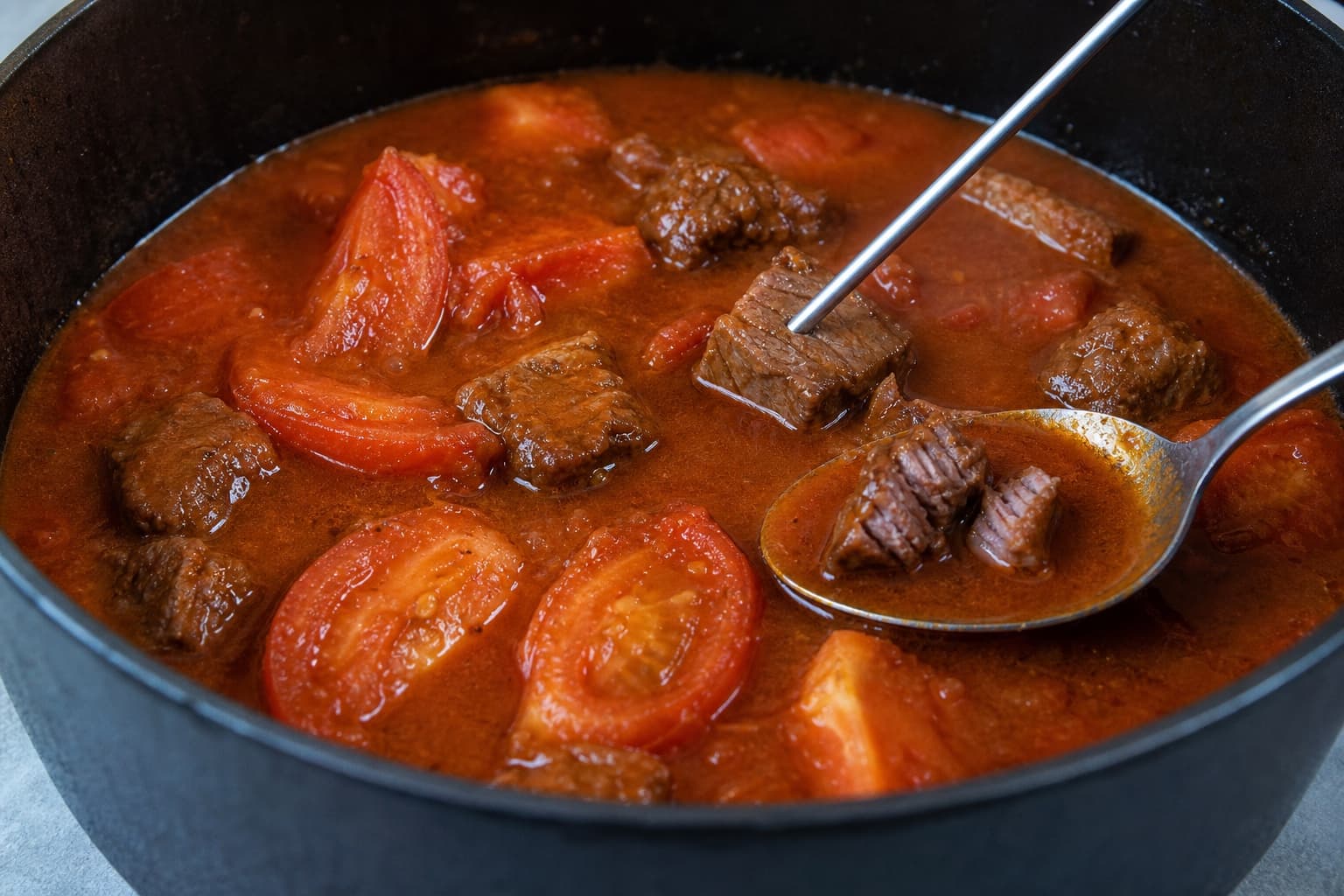
Add the reserved tomato wedges and simmer uncovered for 8–12 minutes. Their edges should soften while their centres retain shape. If the sauce is watery, temporarily lift out the beef and intact tomato wedges, reduce the liquid briskly, then return them. Add the white pepper and only enough of the reserved salt after reduction. Do not use cornstarch to disguise unreduced broth.
Common mistake: Hard boiling destroys the fresh tomato phase; salting before reduction can make the final glaze too salty.
Recovery: Lower the heat immediately, skim or stir gently, and continue at a small simmer until the surface calms.
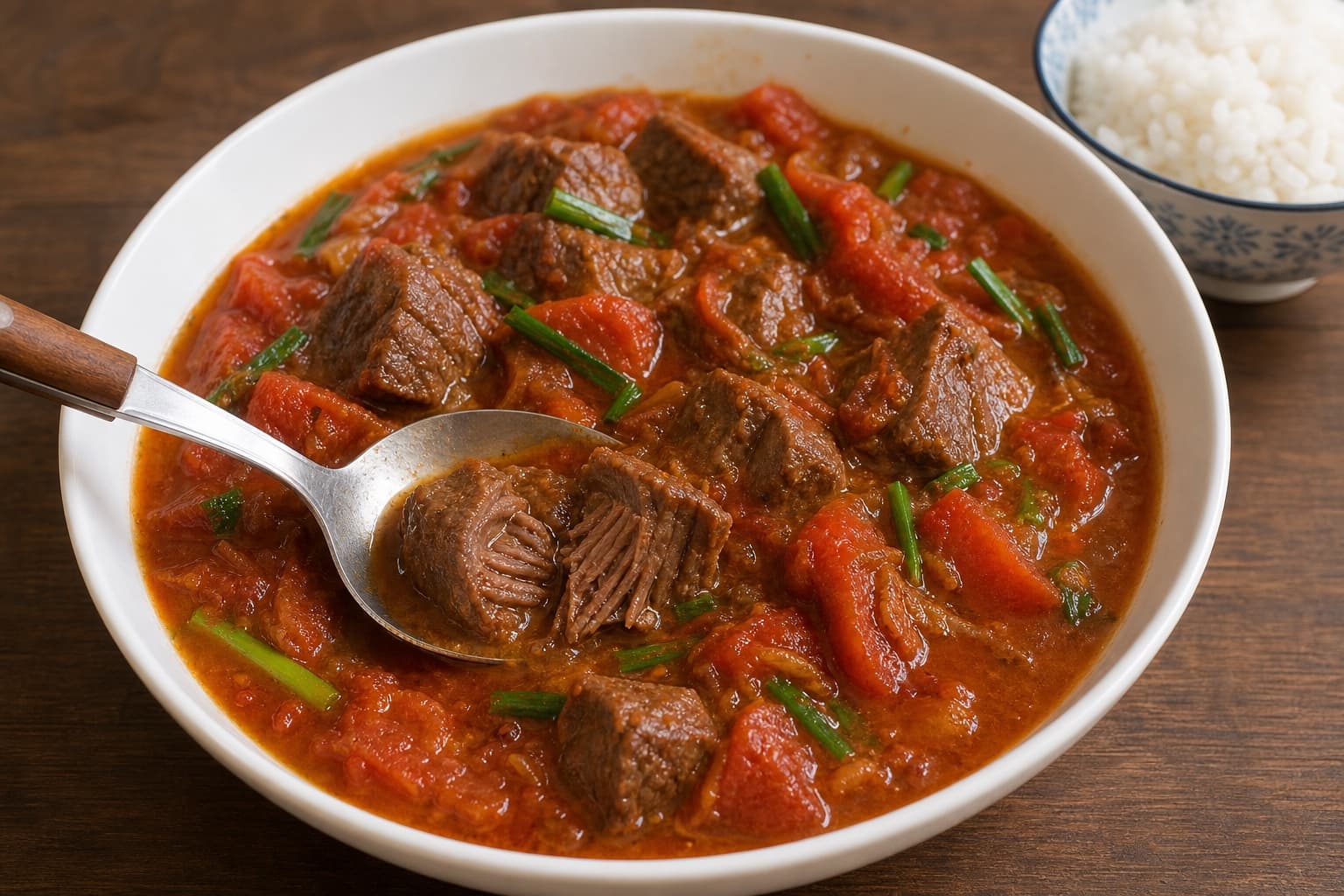
Rest the pot off heat for 10 minutes. Skim only any large free-fat pool while retaining the glossy gelatin. Fold in the prepared scallion greens and serve with the optional hot jasmine rice. Cool leftovers in shallow portions from 60°C to 21°C within 2 hours, then to 5°C within another 4 hours. Refrigerate for up to 4 days or freeze for 2–3 months; reheat rapidly to 74°C.
Common mistake: Aggressive skimming removes body; leaving a full hot Dutch oven to cool slowly is unsafe.
Recovery: Stop and discard the unsafe ingredient. Restart with a prepared edible version from a trusted food supplier.
Fix problems
The active method already includes its most likely mistake and recovery. Open the reference library when your question falls outside the current step.
Choose chuck, brisket, gravy beef, shin, or boneless short rib with visible collagen seams. Lean topside may become dry before it reaches the spoon-tender cue.
Yes. Build the tomato base first, add beef, soy, and 750 ml hot water, then cook at high pressure for 35 minutes and natural-release for 15 minutes. Add the fresh tomato wedges and reduce uncovered afterward.
Lift out the tender beef and intact tomato wedges, reduce the liquid uncovered until it coats a spoon, then return the solids. Cornstarch would hide rather than solve an unreduced broth.
The first 800 g collapses into a concentrated sauce; the final 400 g keeps fresh acidity, colour, and recognisable tomato texture.
Know when the beef is truly spoon-tender while keeping the tomato sauce glossy, not watery. Look for melted tomato sauce plus softened intact wedges with no watery ring: The sauce clings in a glossy pourable film while recognisable softened tomato wedges remain visible.
Keeping the blanch water muddies the sauce; putting wet beef into oil causes dangerous spitting. Spread the food out, raise heat only after moisture drops, and hold back extra sauce until the pan is frying again.
Scale the measured ingredients with the serving count, then scale the vessel or work in batches. Keep the same visual finish - melted tomato sauce plus softened intact wedges with no watery ring - rather than forcing the original timer.
beef chuck or brisket: boneless short rib for a richer premium version; ripe round or vine tomatoes: in poor tomato season, use one 800 g can whole peeled tomatoes for the chopped portion, plus 400 g fresh tomatoes for finishing; yellow onion: 150 g shallots; neutral cooking oil: rice-bran, canola, peanut, or vegetable oil
beef chuck or brisket: Avoid lean topside; visible connective seams are what become gelatin during the long braise.; ripe round or vine tomatoes: Keep every seed and drop of juice; draining them removes flavour and useful braising liquid.; garlic: Keep it pale; dark garlic makes the long braise bitter.; Shaoxing cooking wine, divided: Contains alcohol and may contain wheat or sulphites; check the exact label.
Melbourne and Jakarta
Current links help you search by the right ingredient name; they do not confirm a product, price, or stock level.
Start with a high-turnover butcher or Asian butcher for chuck, brisket, gravy beef, shin, or boneless short rib with visible connective seams. Mr Dad Queen Street is the nearest specialist stop in this guide; Laguna QV, KT Mart, and Tokyo Hometown are useful pantry alternatives, but no store listing is a live stock promise.
beef chuck or brisket: boneless short rib for a richer premium version.
beef chuck or brisket: Avoid lean topside; visible connective seams are what become gelatin during the long braise.
Nearby butchersSearch ColesSearch WoolworthsFind an ALDIFind an IGAMr Dad CBD guideGuideLaguna QV route leadGuideKT Mart route leadGuideTokyo Hometown guideGuideSearch TozerbaSearch Asian PantryToko NusantaraThese links open searches, catalogues, or store locators. Check the exact form and local availability there.
Ask a trusted pasar butcher or supermarket meat counter for sandung lamur or sengkel with visible connective seams; avoid very lean cuts for this long braise.
beef chuck or brisket: boneless short rib for a richer premium version.
beef chuck or brisket: Avoid lean topside; visible connective seams are what become gelatin during the long braise.
Nearby butchers and marketsPasar Jaya networkSuper Indo locationsRanch Market outletsHypermart onlineSearch SayurboxSearch TokopediaSearch ShopeeOpen GrabMartThese links open searches, catalogues, or store locators. Check the exact form and local availability there.
Flavour foundation
Blanching keeps the braise clean; brief browning restores roasted depth. Tomato paste and the first tomato cut form a concentrated base, while late tomato wedges preserve acidity, colour, and identity.
Taste profile
番茄炖牛腩 is Chinese home cooking with many family versions, not one settled provincial formula. Potatoes, carrots, oyster sauce, ketchup, and blanch-versus-sear choices all vary.
Cook plan
Versions
Diet & allergens
Dietary notes: dairy-free, nut-free, gluten-free option, alcohol-free option.
Contains or may contain: soy, wheat/gluten depending on soy sauce and Shaoxing wine.
Check packaged-ingredient labels and cross-contamination advice for the brands you use.
Budget
Planning estimate only - not live or locally verified pricing
What belongs where
This family braise gets depth from browned beef and a cooked tomato foundation, then regains freshness from the final tomato addition. Rice remains an optional serving partner rather than a thickener.
Storage notes are conservative home-kitchen guidance. Chill perishable food within 2 hours, keep it at 5°C or colder, and follow local food-safety and package directions when they are stricter.
Sources & evidence
Sources support the specific technique or safety point stated below. Generated reference imagery is editorial guidance, not proof that this recipe has passed an independent cook test.
Cross-checks a Chinese family tomato-beef braise using a clean blanch, connective beef, a concentrated tomato base, long gentle cooking, and fresh tomatoes added in stages.
Boundary: This is a modern family recipe source, not evidence that every Chinese household uses the same aromatics, vegetables, or blanch-and-brown sequence.Cross-checks a 1 kg brisket scale, peeled tomato, a wine-scallion-ginger blanch, tomato-paste base, and roughly one-and-a-half-hour tenderness window.
Boundary: This is a community recipe rather than a regional authority; its formula supports home-cook technique, not a universal origin or authenticity claim.Cross-checks blanching connective brisket, frying tomato paste, simmering until tender, and staging vegetables late enough to retain shape.
Boundary: Its potato, carrot, slurry, and timing are not copied into this two-texture tomato version.Applies two-stage cooling to the finished braise: 60°C to 21°C within two hours, then 21°C to 5°C within four hours, using shallow portions and rapid reheating.
Boundary: A full Dutch oven cools too slowly as one mass. The guidance does not validate the recipe's tenderness timing or storage quality.Separates safety from tenderness: intact beef reaches the conservative chart endpoint before collagen becomes spoon-tender, while leftovers are reheated to 74°C.
Boundary: Internal temperature cannot replace the skewer-resistance test for braise quality; the recipe requires both safe handling and collagen tenderness.Recorded as a local editorial or generated visual cue asset, not an independent external source.
Boundary: A local or generated asset is visual guidance, not evidence of authenticity, ingredient quantities, timing, safety, or method accuracy.Next cooks
Recipes here share ingredients, bumbu logic, region, spice level, or weeknight patterns so the next cook reuses what you just learned.
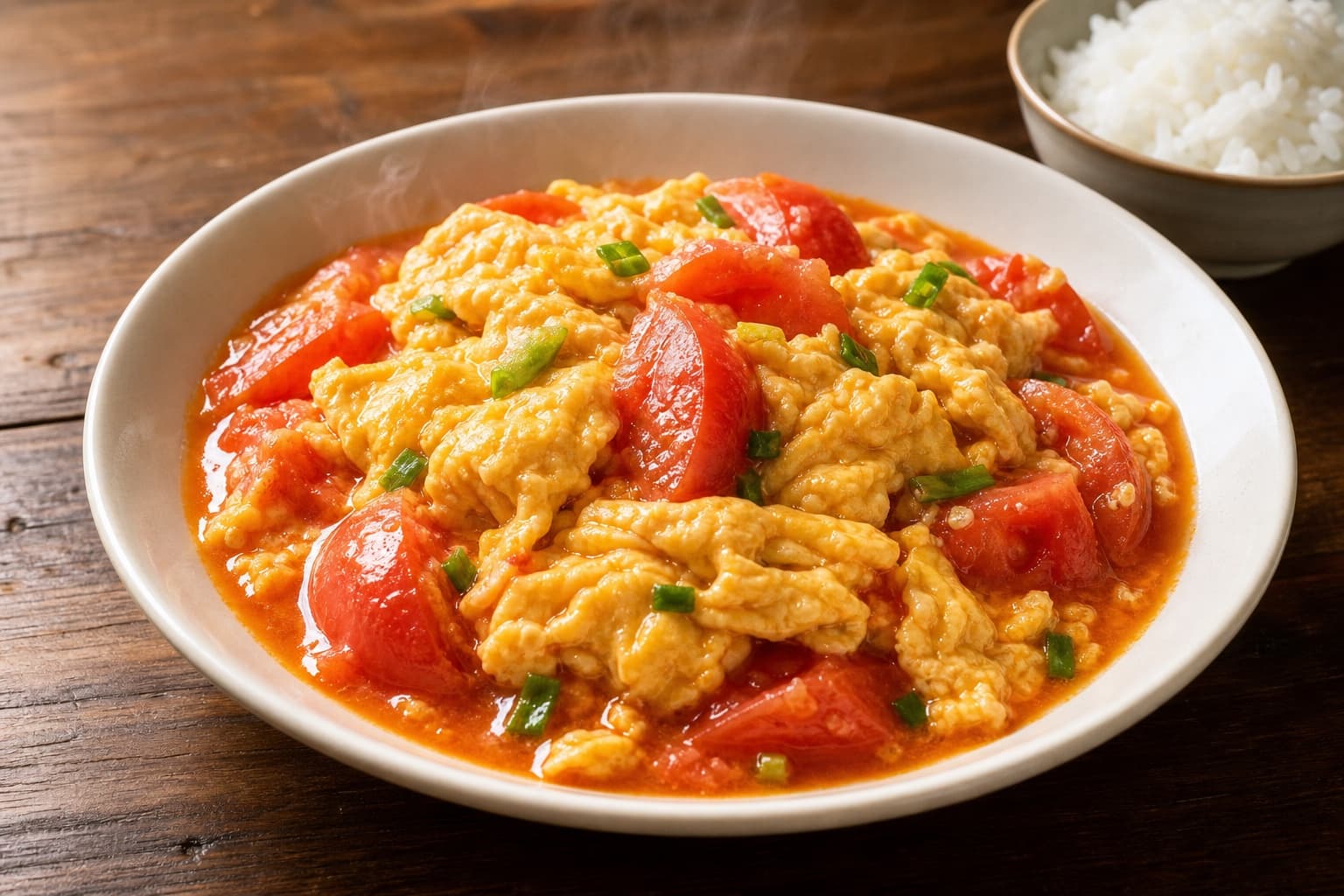 China / home-style · BeginnerTomato Egg Stir-FryKeep large cloud-soft egg curds distinct inside a fresh, spoonable tomato sauce.
 Nanxiang / Shanghai · PatientXiao Long BaoSeal clear hot soup inside a delicate wrapper that survives the steamer and reaches the spoon intact.
 Minangkabau · PatientRendangKnow exactly when the coconut milk has reduced enough.
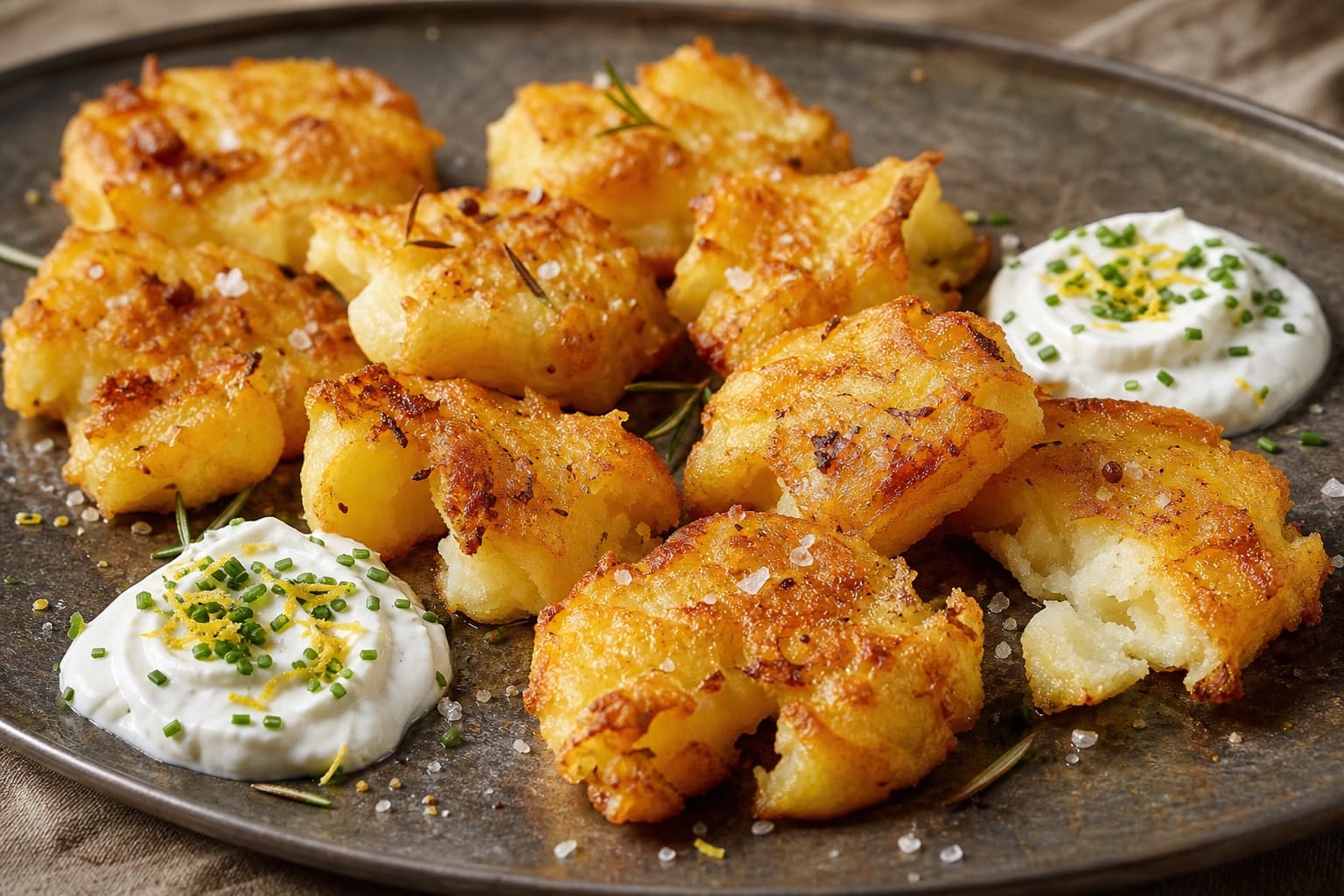 Contemporary British technique · IntermediateUltra-Crispy Smashed PotatoesBuild a brittle, craggy golden shell around a genuinely fluffy centre without needing a deep fryer.
 Britain / modern restaurant tradition · PatientBeef WellingtonSynchronise a crisp pastry shell with safely rested, evenly pink beef and thin, distinct moisture-barrier layers.
 Japan / composed pork-bone ramen · PatientTonkotsu Shoyu RamenBuild an opaque ivory broth that tastes like pork - not dairy - and assemble six balanced bowls before the noodles soften.