Step 1 decision
Dry-brine an even surface
The salt has dissolved and the steak faces look matte, dry, and slightly tacky with no beads.
Open step 1GB · Contemporary bistro
A contemporary bistro plate built from three restaurant fundamentals rather than luxury clutter: an evenly crusted steak, a glossy shallot pan jus, and a butter-basted egg with a firm white and softly thickened yolk.
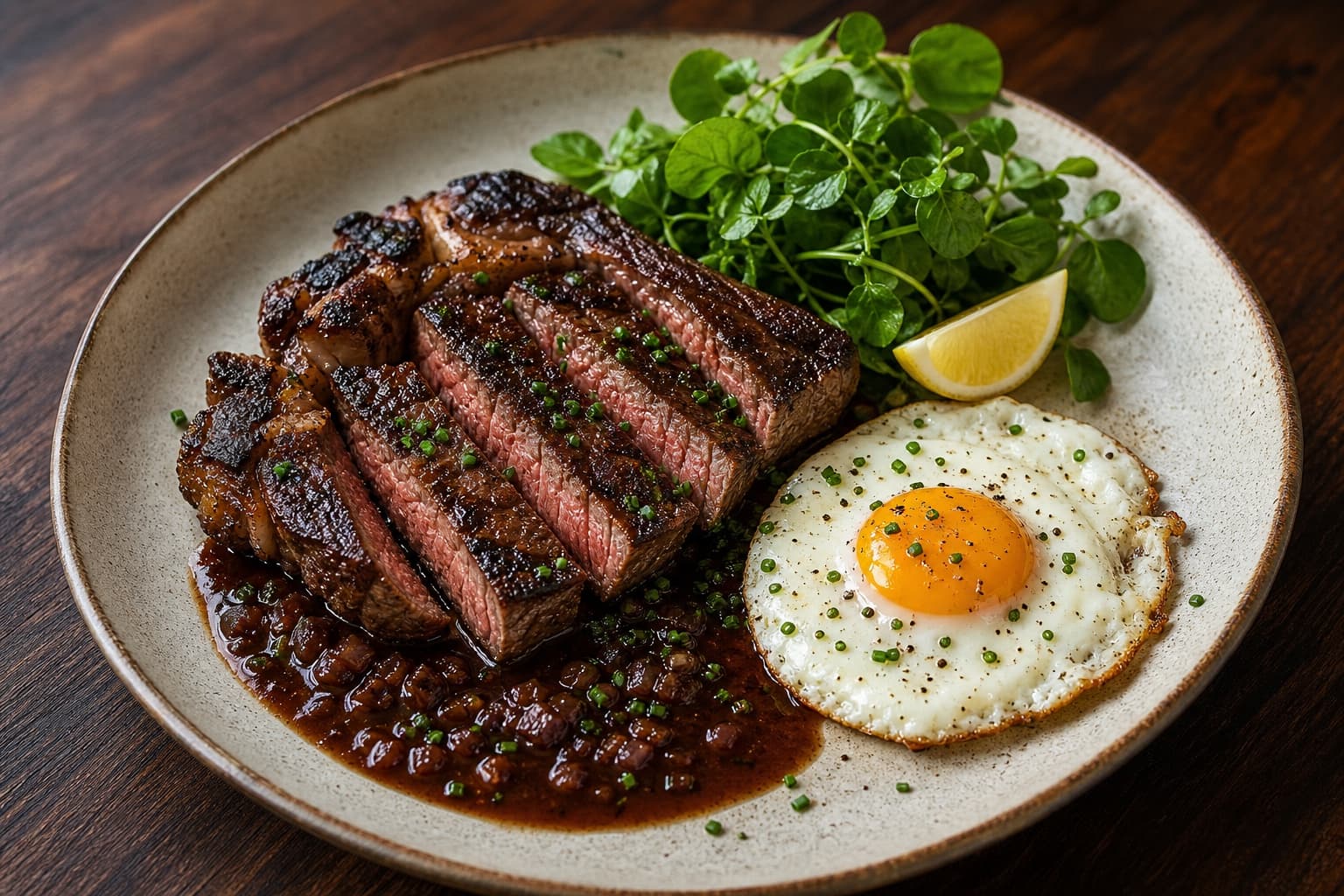
Decision-point map
Scan the decision points now. Each full-size cooking frame appears once, beside the step where you need it.
The salt has dissolved and the steak faces look matte, dry, and slightly tacky with no beads.
Open step 1The crust is lacquered, butter smells nutty, and the true centre reads 63°C.
Open step 3Crust stays defined beside moist beef, glossy sauce, firm white, thick yolk, and unwilted greens.
Check the final stepIngredients
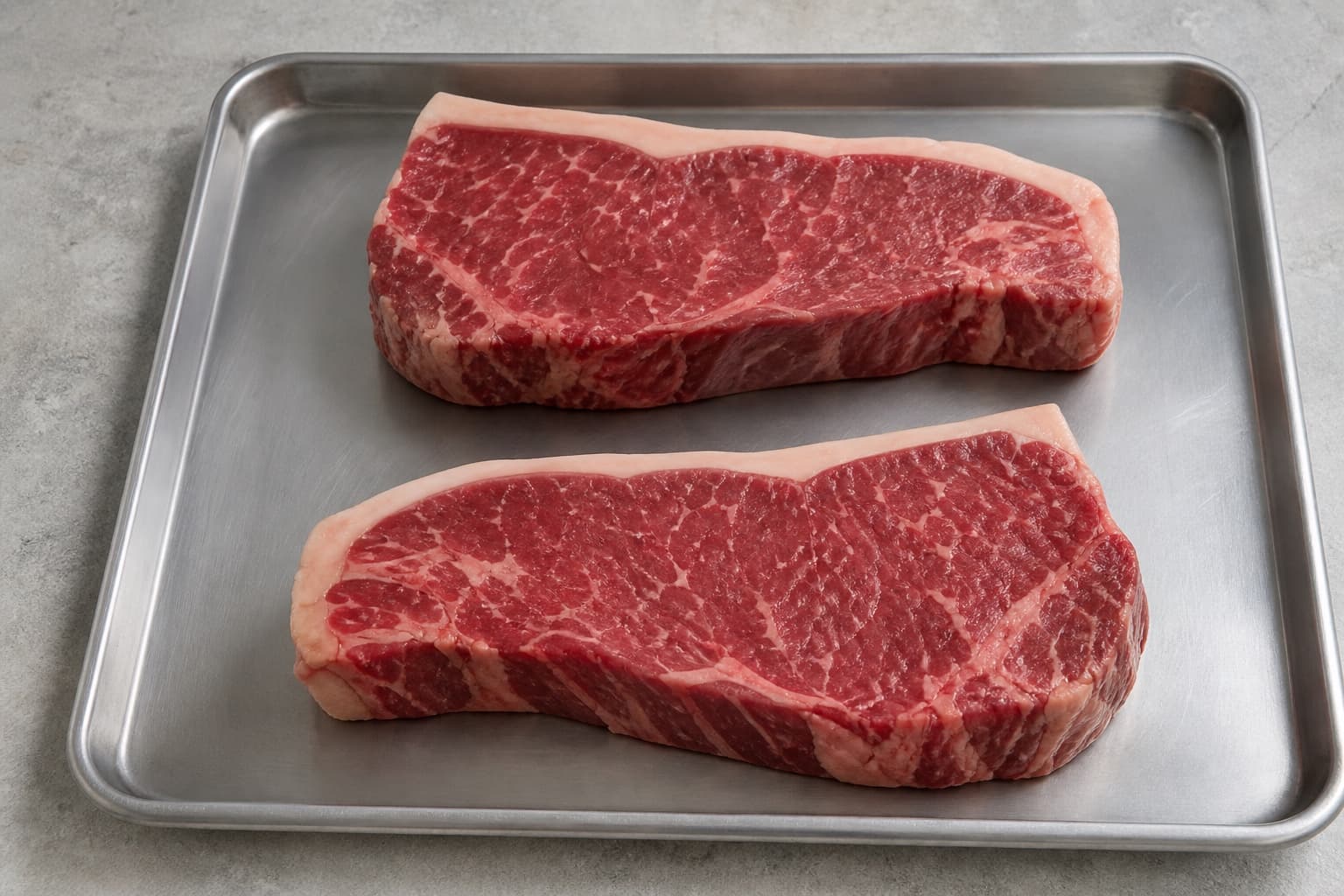
even, flavourful whole-muscle steaks that crust well and remain juicy at medium doneness
Generated reference - not verified cook evidence.
Note: Use intact whole-muscle steak. Mechanically tenderised, injected, rolled, or reconstructed beef needs its own package safety directions.
Swap: 2 x 200-220 g scotch fillet for more marbling, or eye fillet for a leaner plate
 Nearby butchers
 Search Coles
 Search WoolworthsFind an ALDIFind an IGASearch TozerbaSearch Asian PantryToko Nusantara
These links open searches, catalogues, or store locators. Check the exact form and local availability there.
Nearby butchers and marketsPasar Jaya networkSuper Indo locationsRanch Market outletsHypermart online Search Sayurbox
 Search Tokopedia
 Search ShopeeOpen GrabMart
These links open searches, catalogues, or store locators. Check the exact form and local availability there.
seasons the steak ahead, then balances the jus, eggs, and greens
Generated reference - not verified cook evidence.
Nearby supermarketsSearch ColesSearch WoolworthsFind an ALDIFind an IGASearch TozerbaSearch Asian PantryToko NusantaraThese links open searches, catalogues, or store locators. Check the exact form and local availability there.
Nearby supermarketsSuper Indo locationsRanch Market outletsHypermart onlinePasar Jaya networkSearch SayurboxSearch TokopediaSearch ShopeeOpen GrabMartThese links open searches, catalogues, or store locators. Check the exact form and local availability there.
conducts the initial high heat before butter enters the pan
Generated reference - not verified cook evidence.
Swap: canola, rice-bran, grapeseed, or vegetable oil
Nearby supermarketsSearch ColesSearch WoolworthsFind an ALDIFind an IGASearch TozerbaSearch Asian PantryToko NusantaraThese links open searches, catalogues, or store locators. Check the exact form and local availability there.
Nearby supermarketsSuper Indo locationsRanch Market outletsHypermart onlinePasar Jaya networkSearch SayurboxSearch TokopediaSearch ShopeeOpen GrabMartThese links open searches, catalogues, or store locators. Check the exact form and local availability there.
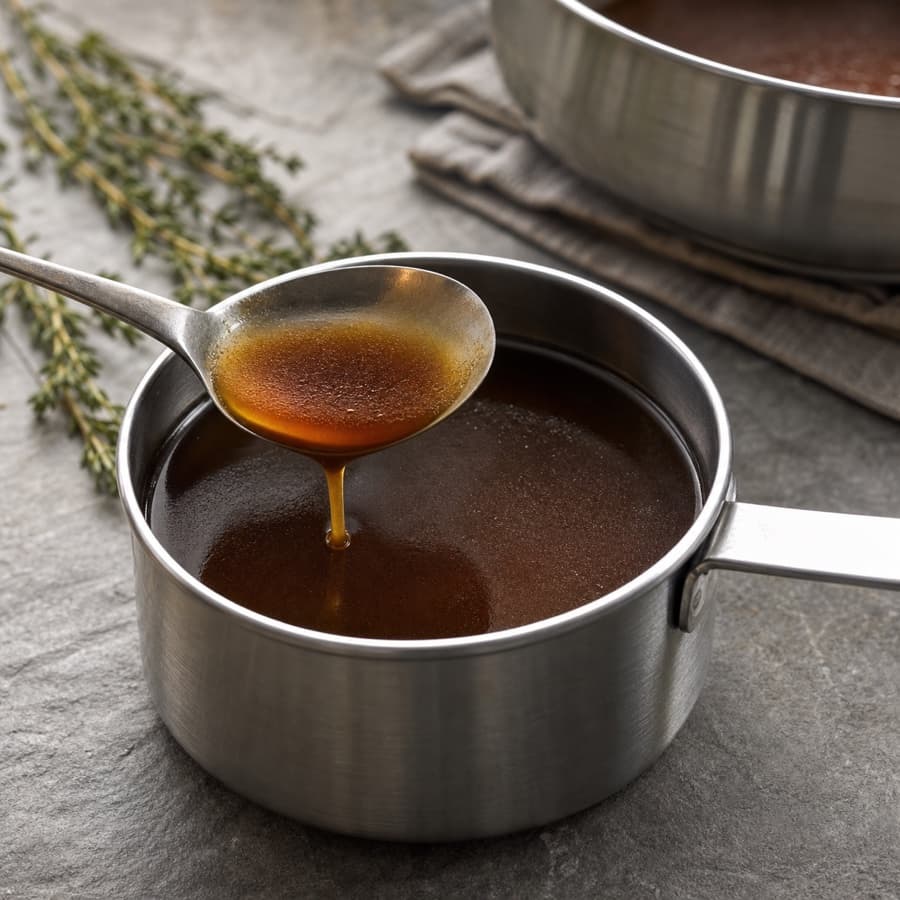
supplies savour and gelatin without making the reduction prematurely salty
Generated reference - not verified cook evidence.
Note: Check packaged stock for wheat/gluten, celery, yeast extracts, and sodium.
Swap: unsalted chicken stock for a lighter jus
Nearby supermarketsSearch ColesSearch WoolworthsFind an ALDIFind an IGASearch TozerbaSearch Asian PantryToko NusantaraThese links open searches, catalogues, or store locators. Check the exact form and local availability there.
Nearby supermarketsSuper Indo locationsRanch Market outletsHypermart onlinePasar Jaya networkSearch SayurboxSearch TokopediaSearch ShopeeOpen GrabMartThese links open searches, catalogues, or store locators. Check the exact form and local availability there.
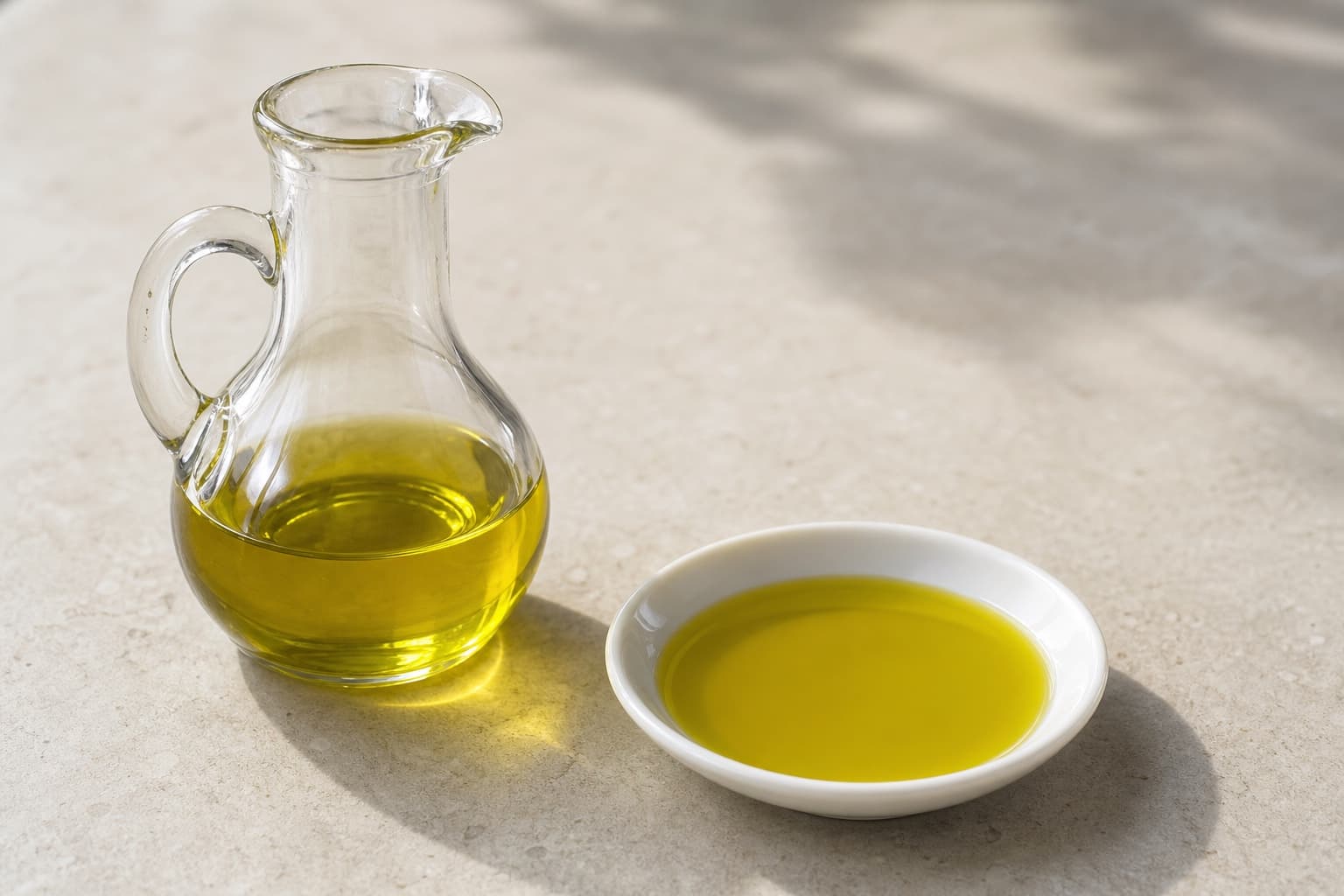
light dressing for the greens
Generated reference - not verified cook evidence.
Nearby supermarketsSearch ColesSearch WoolworthsFind an ALDIFind an IGASearch TozerbaSearch Asian PantryToko NusantaraThese links open searches, catalogues, or store locators. Check the exact form and local availability there.
Nearby supermarketsSuper Indo locationsRanch Market outletsHypermart onlinePasar Jaya networkSearch SayurboxSearch TokopediaSearch ShopeeOpen GrabMartThese links open searches, catalogues, or store locators. Check the exact form and local availability there.
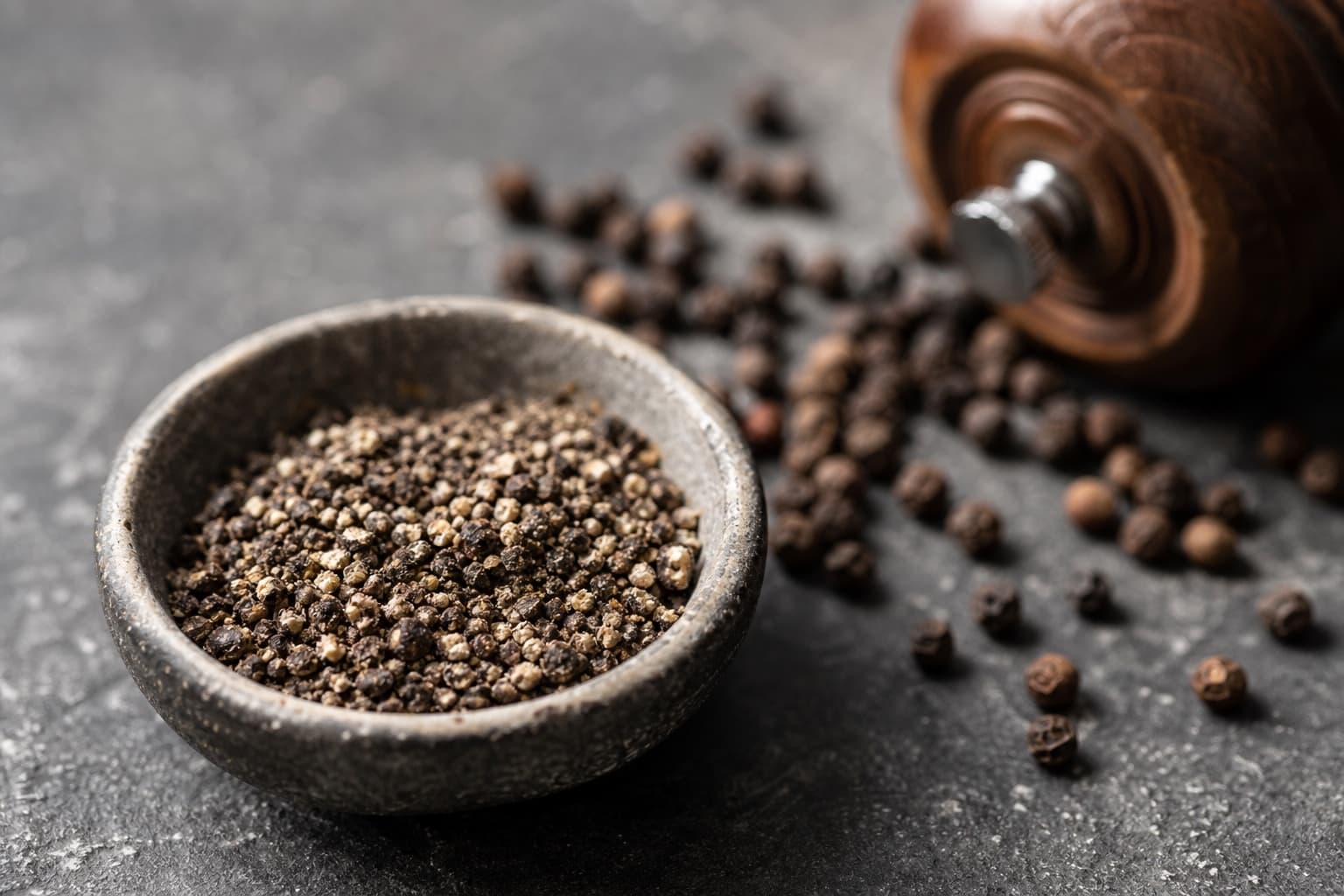
blooms in foaming butter after the high-heat crust is established
Generated reference - not verified cook evidence.
Note: Fine pepper dust scorches quickly; add coarse pepper only after searing.
Nearby specialist grocersMr Dad CBD guideGuideLaguna QV route leadGuideSearch TozerbaSearch Asian PantryToko NusantaraSearch ColesSearch WoolworthsFind an ALDIFind an IGAThese links open searches, catalogues, or store locators. Check the exact form and local availability there.
Nearby specialist shopsSearch SayurboxSearch TokopediaSearch ShopeeOpen GrabMartSuper Indo locationsRanch Market outletsHypermart onlinePasar Jaya networkThese links open searches, catalogues, or store locators. Check the exact form and local availability there.
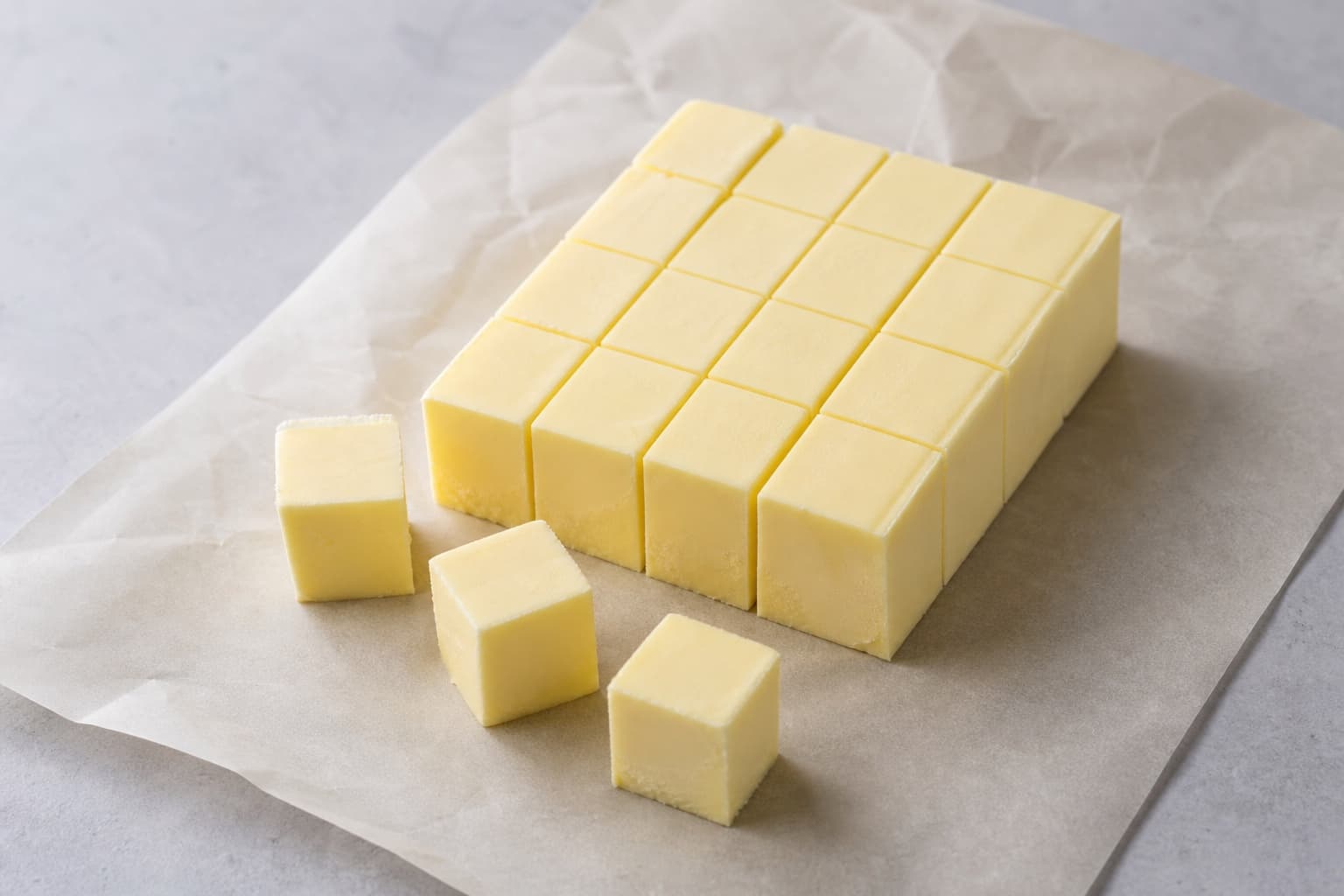
foams around garlic and thyme and carries their aroma over the steak
Generated reference - not verified cook evidence.
Note: Contains milk.
Nearby supermarketsSearch ColesSearch WoolworthsFind an ALDIFind an IGASearch TozerbaSearch Asian PantryToko NusantaraThese links open searches, catalogues, or store locators. Check the exact form and local availability there.
Nearby supermarketsSuper Indo locationsRanch Market outletsHypermart onlinePasar Jaya networkSearch SayurboxSearch TokopediaSearch ShopeeOpen GrabMartThese links open searches, catalogues, or store locators. Check the exact form and local availability there.
mounts the reduced liquid into a glossy spoon-coating jus
Generated reference - not verified cook evidence.
Note: Contains milk; keep cold until whisked in off heat.
Nearby supermarketsSearch ColesSearch WoolworthsFind an ALDIFind an IGASearch TozerbaSearch Asian PantryToko NusantaraThese links open searches, catalogues, or store locators. Check the exact form and local availability there.
Nearby supermarketsSuper Indo locationsRanch Market outletsHypermart onlinePasar Jaya networkSearch SayurboxSearch TokopediaSearch ShopeeOpen GrabMartThese links open searches, catalogues, or store locators. Check the exact form and local availability there.
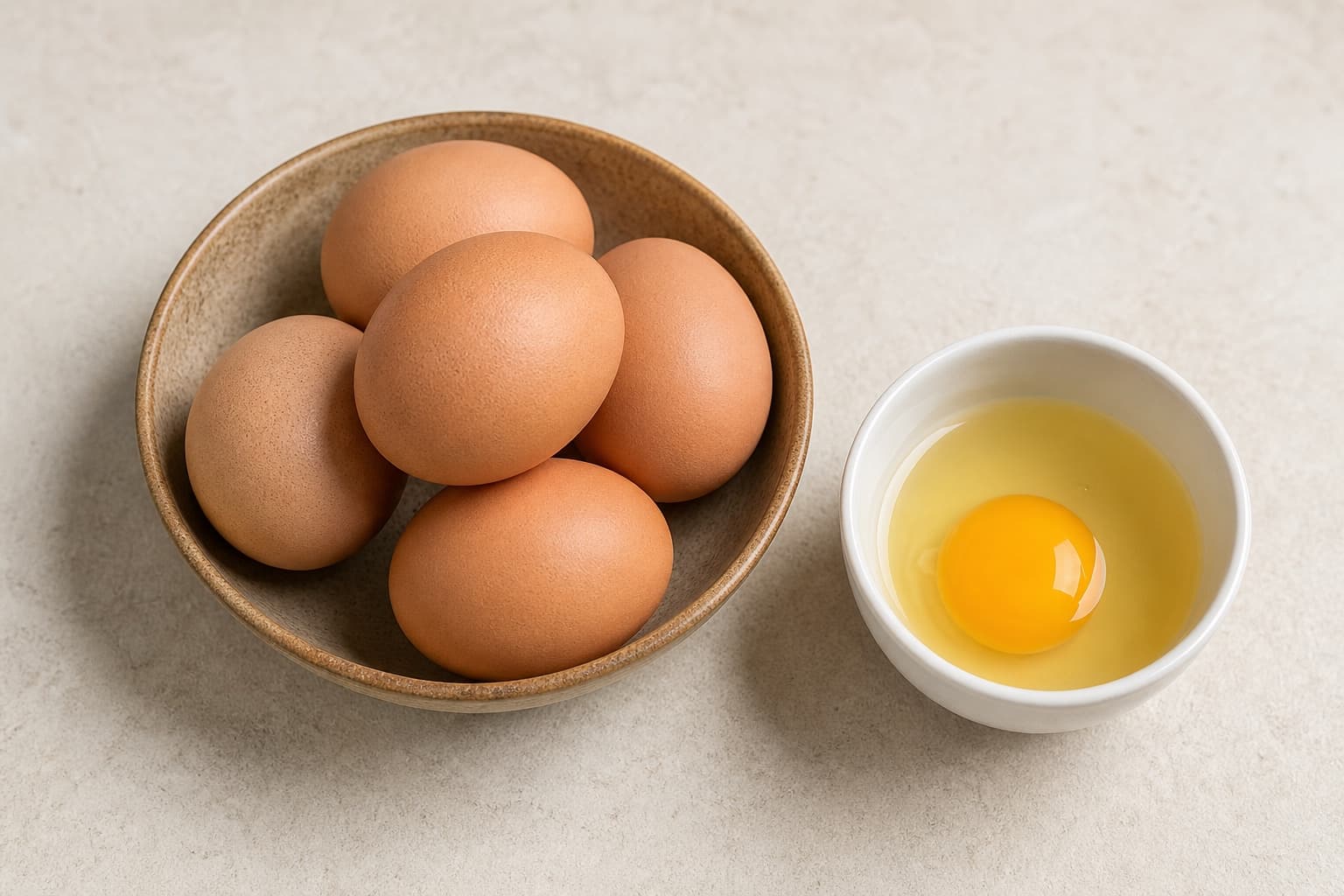
softly thickened yolk that becomes a second sauce on the plate
Generated reference - not verified cook evidence.
Note: Use clean uncracked eggs within date. Cook yolks firm for diners who need a higher-safety path.
Nearby supermarketsSearch ColesSearch WoolworthsFind an ALDIFind an IGASearch TozerbaSearch Asian PantryToko NusantaraThese links open searches, catalogues, or store locators. Check the exact form and local availability there.
Nearby supermarketsSuper Indo locationsRanch Market outletsHypermart onlinePasar Jaya networkSearch SayurboxSearch TokopediaSearch ShopeeOpen GrabMartThese links open searches, catalogues, or store locators. Check the exact form and local availability there.
gently fries and bastes the whites without deep-frying the egg
Generated reference - not verified cook evidence.
Note: Contains milk.
Nearby supermarketsSearch ColesSearch WoolworthsFind an ALDIFind an IGASearch TozerbaSearch Asian PantryToko NusantaraThese links open searches, catalogues, or store locators. Check the exact form and local availability there.
Nearby supermarketsSuper Indo locationsRanch Market outletsHypermart onlinePasar Jaya networkSearch SayurboxSearch TokopediaSearch ShopeeOpen GrabMartThese links open searches, catalogues, or store locators. Check the exact form and local availability there.
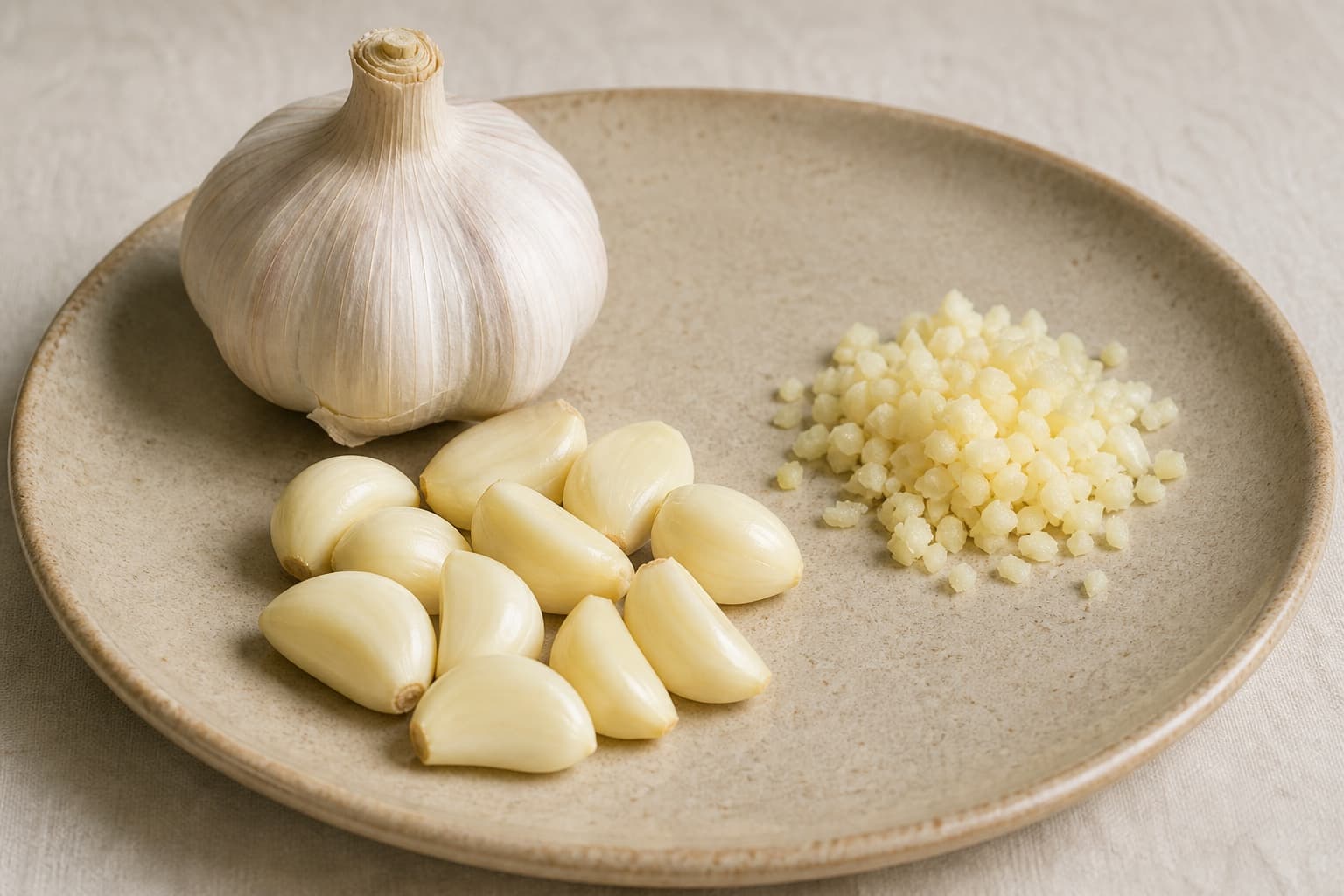
large crushed aromatic for basting without fast burning
Generated reference - not verified cook evidence.
Note: Do not mince; small pieces burn during basting.
Nearby produce marketsSearch ColesSearch WoolworthsFind an ALDIFind an IGASearch TozerbaSearch Asian PantryToko NusantaraThese links open searches, catalogues, or store locators. Check the exact form and local availability there.
Nearby produce marketsPasar Jaya networkSuper Indo locationsRanch Market outletsHypermart onlineSearch SayurboxSearch TokopediaSearch ShopeeOpen GrabMartThese links open searches, catalogues, or store locators. Check the exact form and local availability there.
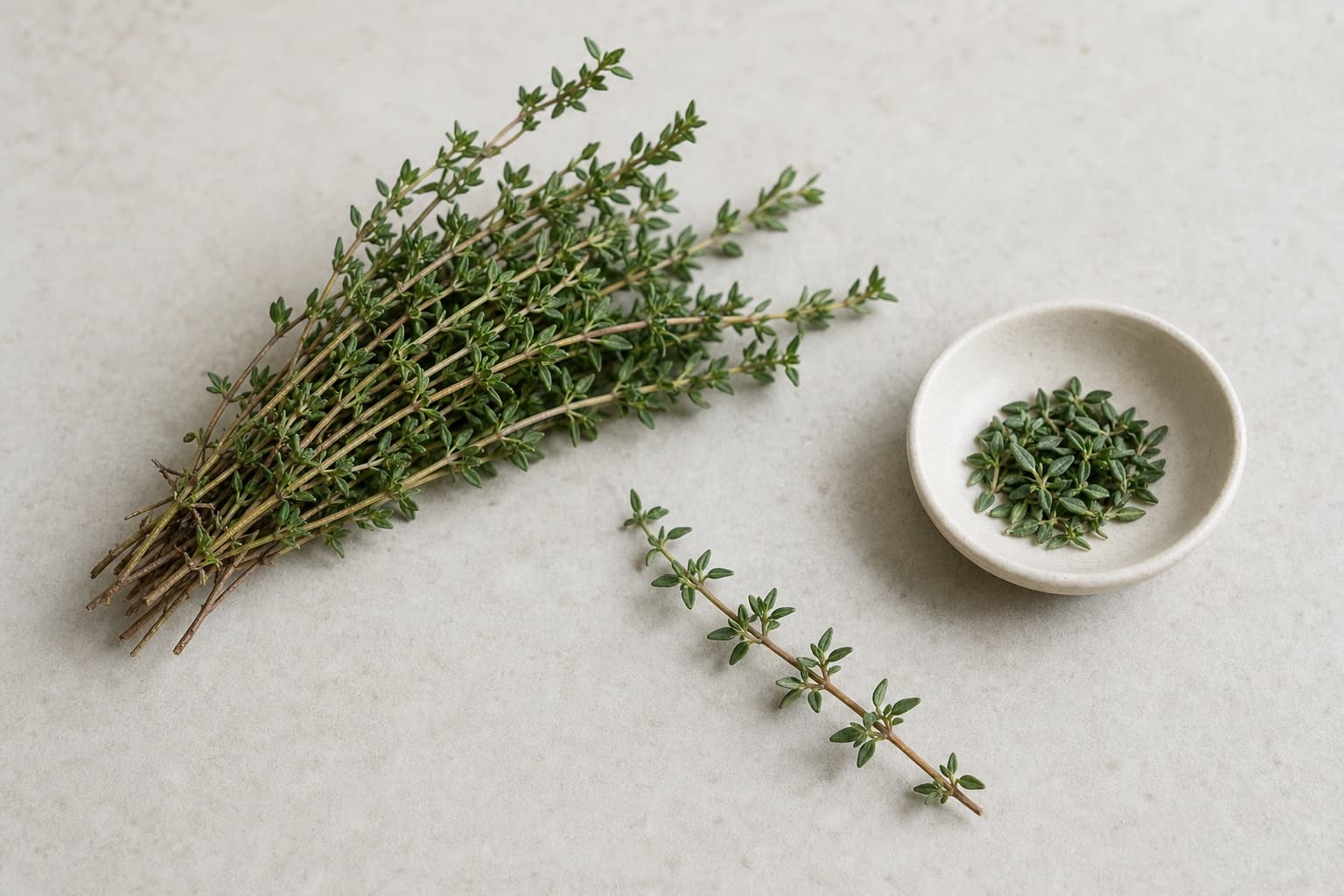
woodland aroma infused briefly into the basting butter
Generated reference - not verified cook evidence.
Swap: 2 small rosemary sprigs, removed as soon as fragrant
Nearby produce marketsSearch ColesSearch WoolworthsFind an ALDIFind an IGASearch TozerbaSearch Asian PantryToko NusantaraThese links open searches, catalogues, or store locators. Check the exact form and local availability there.
Nearby produce marketsPasar Jaya networkSuper Indo locationsRanch Market outletsHypermart onlineSearch SayurboxSearch TokopediaSearch ShopeeOpen GrabMartThese links open searches, catalogues, or store locators. Check the exact form and local availability there.
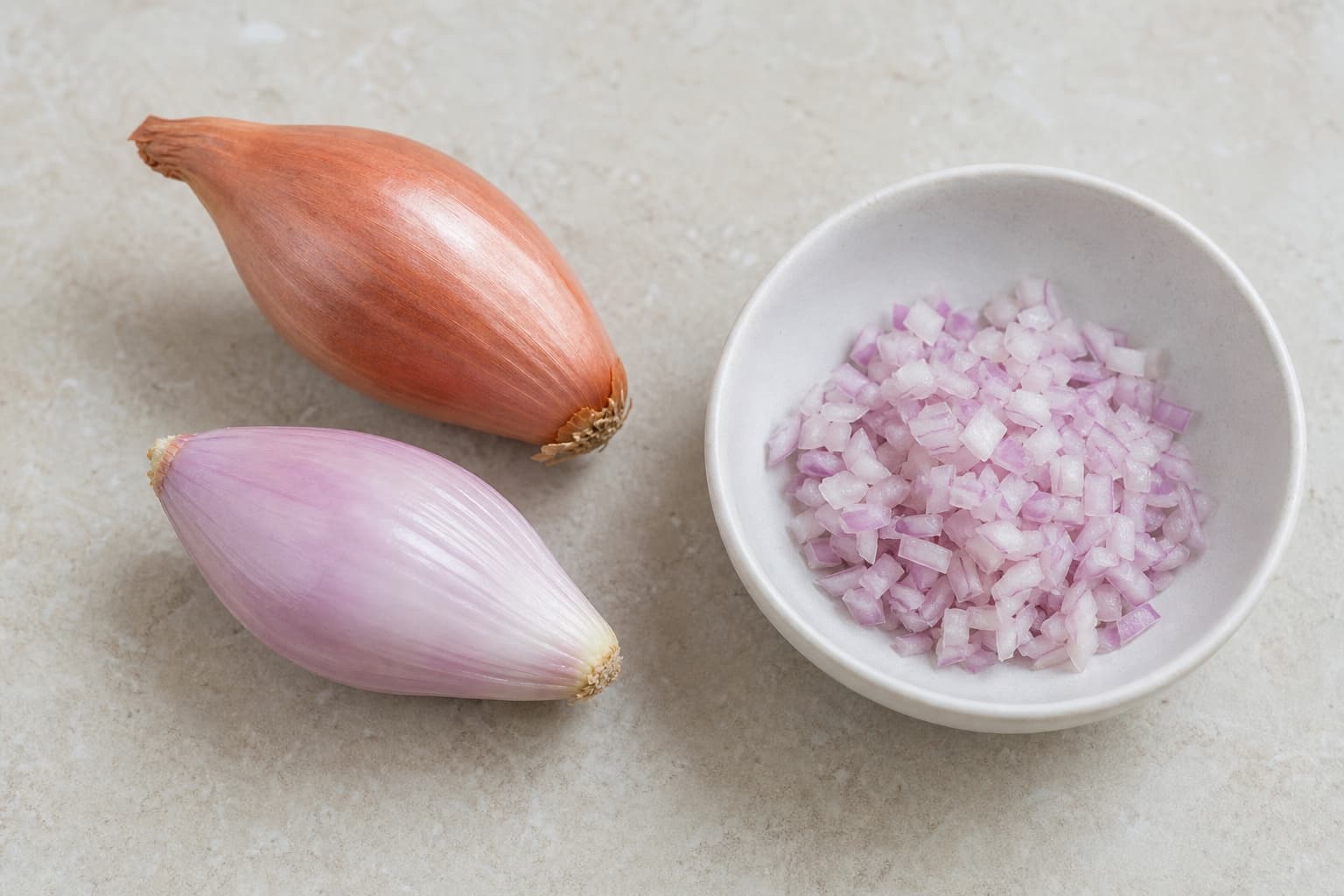
sweet aromatic base for the pan jus
Generated reference - not verified cook evidence.
Swap: 40 g Indonesian shallots or finely minced red onion
Nearby produce marketsSearch ColesSearch WoolworthsFind an ALDIFind an IGASearch TozerbaSearch Asian PantryToko NusantaraThese links open searches, catalogues, or store locators. Check the exact form and local availability there.
Nearby produce marketsPasar Jaya networkSuper Indo locationsRanch Market outletsHypermart onlineSearch SayurboxSearch TokopediaSearch ShopeeOpen GrabMartThese links open searches, catalogues, or store locators. Check the exact form and local availability there.
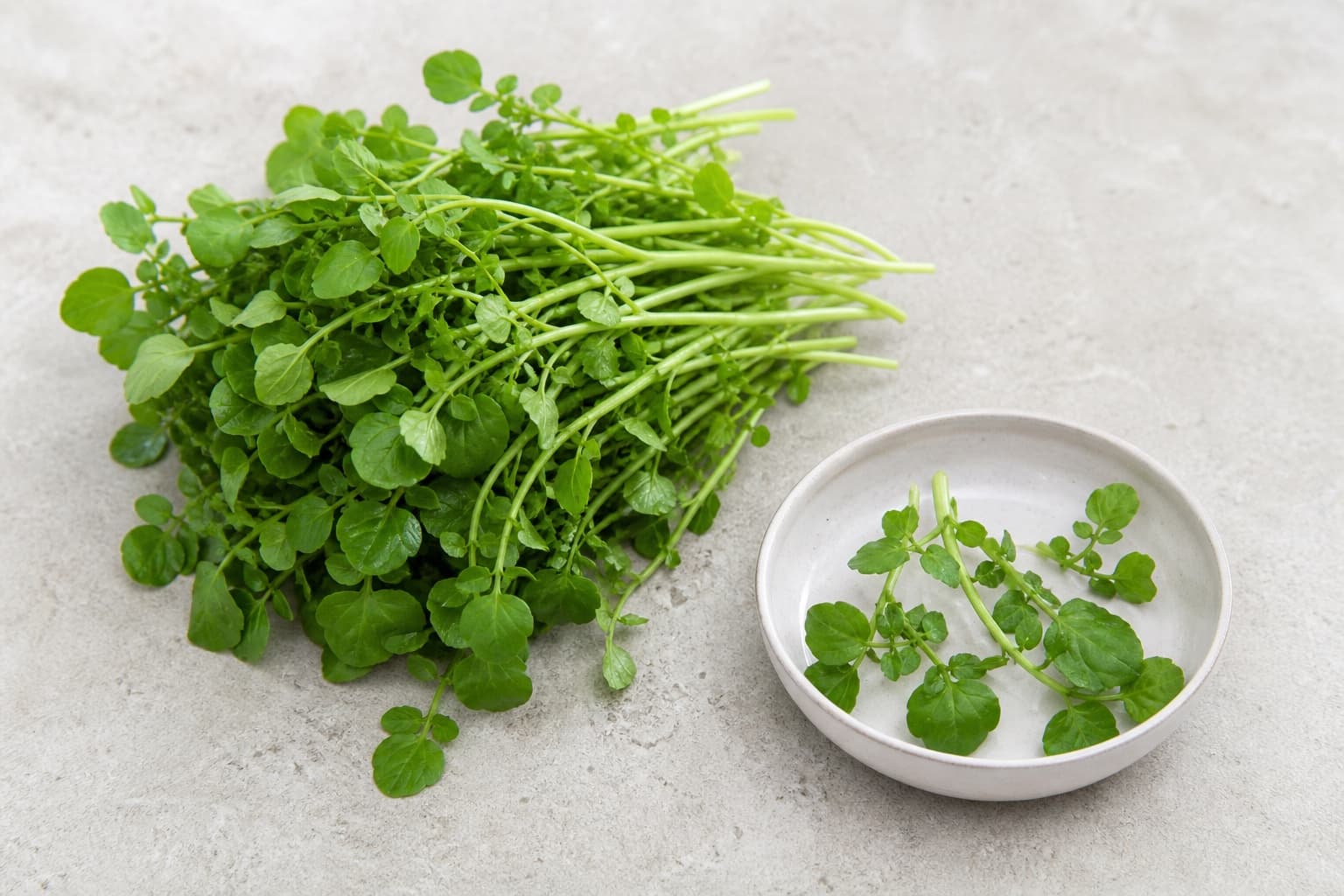
peppery fresh contrast to steak, butter, and yolk
Generated reference - not verified cook evidence.
Swap: 60 g baby rocket or arugula
Nearby produce marketsSearch ColesSearch WoolworthsFind an ALDIFind an IGASearch TozerbaSearch Asian PantryToko NusantaraThese links open searches, catalogues, or store locators. Check the exact form and local availability there.
Nearby produce marketsPasar Jaya networkSuper Indo locationsRanch Market outletsHypermart onlineSearch SayurboxSearch TokopediaSearch ShopeeOpen GrabMartThese links open searches, catalogues, or store locators. Check the exact form and local availability there.
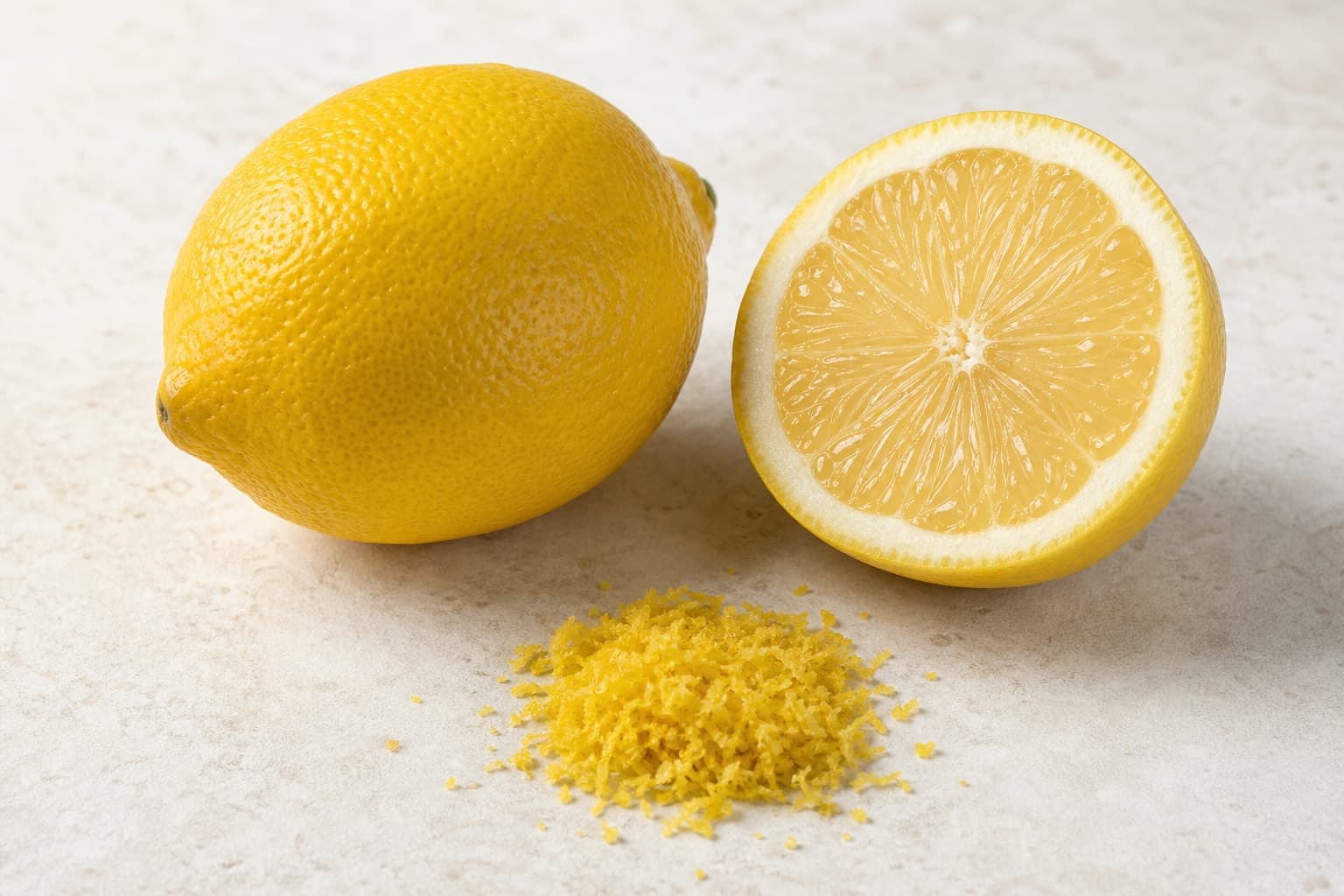
fresh acidity for the watercress rather than the reduced jus
Generated reference - not verified cook evidence.
Swap: 10 ml mild sherry vinegar
Nearby produce marketsSearch ColesSearch WoolworthsFind an ALDIFind an IGASearch TozerbaSearch Asian PantryToko NusantaraThese links open searches, catalogues, or store locators. Check the exact form and local availability there.
Nearby produce marketsPasar Jaya networkSuper Indo locationsRanch Market outletsHypermart onlineSearch SayurboxSearch TokopediaSearch ShopeeOpen GrabMartThese links open searches, catalogues, or store locators. Check the exact form and local availability there.
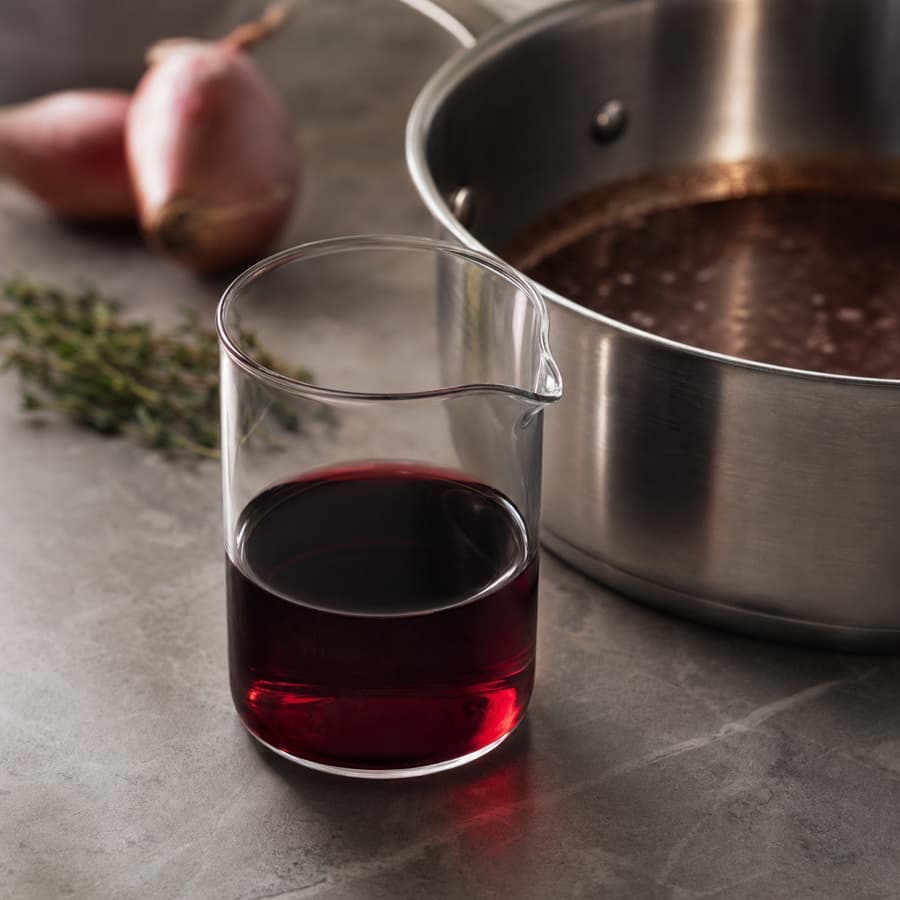
deglazes the fond and adds acidity and dark-fruit depth
Generated reference - not verified cook evidence.
Note: Contains alcohol and usually sulphites; cooking does not guarantee all alcohol is removed.
Swap: 60 ml extra beef stock plus 15 ml red-wine vinegar
Nearby specialist grocersMr Dad CBD guideGuideLaguna QV route leadGuideSearch TozerbaSearch Asian PantryToko NusantaraSearch ColesSearch WoolworthsFind an ALDIFind an IGAThese links open searches, catalogues, or store locators. Check the exact form and local availability there.
Nearby specialist shopsSearch SayurboxSearch TokopediaSearch ShopeeOpen GrabMartSuper Indo locationsRanch Market outletsHypermart onlinePasar Jaya networkThese links open searches, catalogues, or store locators. Check the exact form and local availability there.
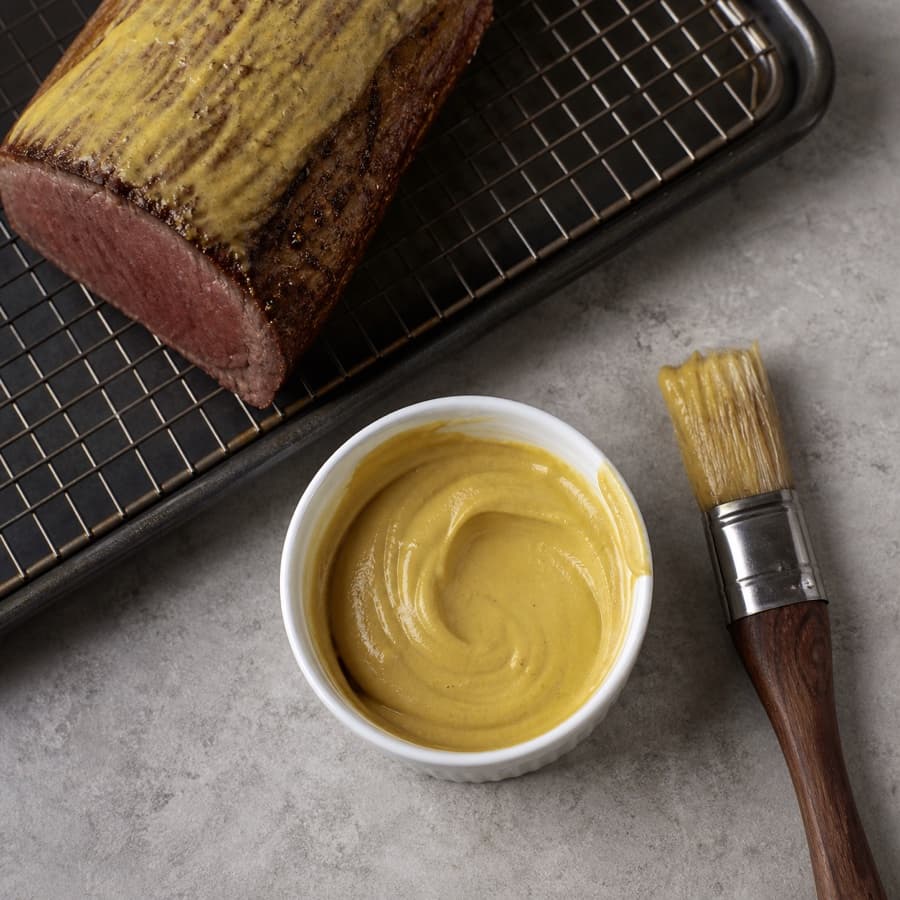
restrained sharpness that also helps the final butter emulsion hold
Generated reference - not verified cook evidence.
Note: Contains mustard; verify gluten requirements on the exact label.
Nearby specialist grocersMr Dad CBD guideGuideLaguna QV route leadGuideSearch TozerbaSearch Asian PantryToko NusantaraSearch ColesSearch WoolworthsFind an ALDIFind an IGAThese links open searches, catalogues, or store locators. Check the exact form and local availability there.
Nearby specialist shopsSearch SayurboxSearch TokopediaSearch ShopeeOpen GrabMartSuper Indo locationsRanch Market outletsHypermart onlinePasar Jaya networkThese links open searches, catalogues, or store locators. Check the exact form and local availability there.
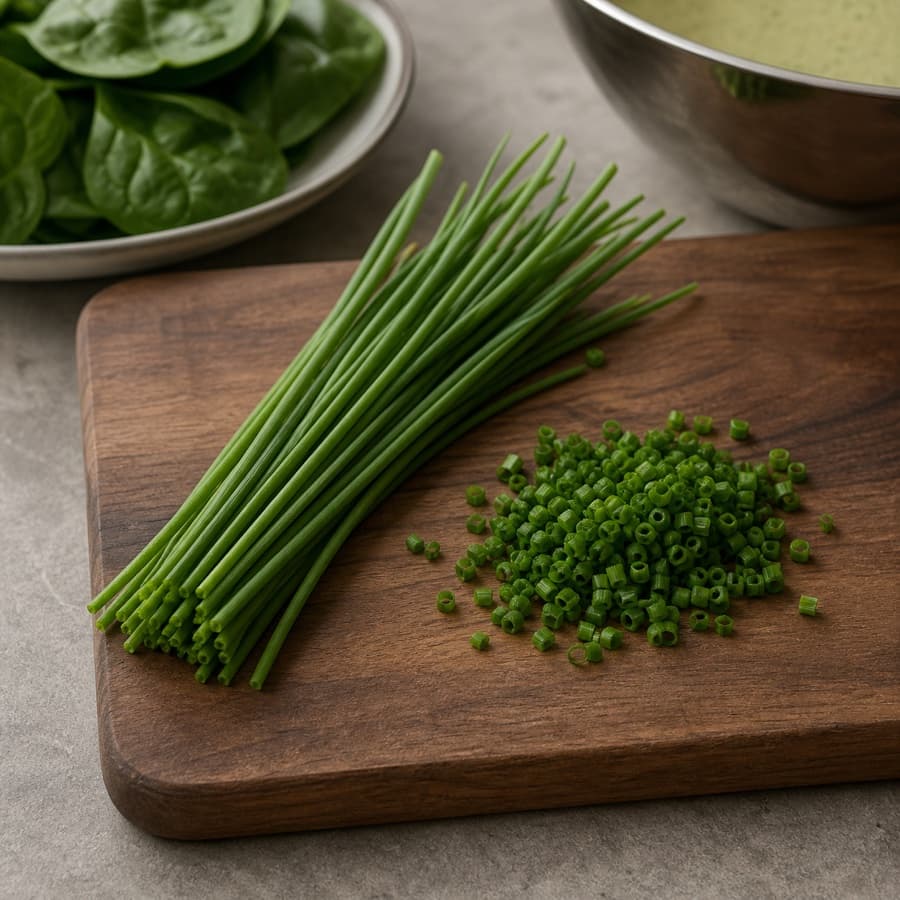
clean onion aroma and a precise fresh finish
Generated reference - not verified cook evidence.
Swap: 8 g very finely sliced scallion greens
Nearby produce marketsSearch ColesSearch WoolworthsFind an ALDIFind an IGASearch TozerbaSearch Asian PantryToko NusantaraThese links open searches, catalogues, or store locators. Check the exact form and local availability there.
Nearby produce marketsPasar Jaya networkSuper Indo locationsRanch Market outletsHypermart onlineSearch SayurboxSearch TokopediaSearch ShopeeOpen GrabMartThese links open searches, catalogues, or store locators. Check the exact form and local availability there.
Calculated estimate · per serving
1 of 2 plated servings: one 220 g raw-weight steak, one egg, half the jus and greens; no bread, chips, or other side included
Calculated from the authored edible ingredient weights using representative AFCD Release 3 and USDA FoodData Central profiles, then divided by the recipe yield. Energy follows the FSANZ ingredient-contribution method. Optional serving accompaniments are excluded. The calculation uses representative raw striploin, whole egg, dairy, stock, wine, and produce profiles. It assumes about 12 g of the 35 g basting butter, half the initial neutral oil, and 80% of the egg butter remain on the plate after the authored pour-off; all jus butter, olive oil, stock, mustard, and measured salt are counted.
Calculated estimate only, not a laboratory result or personalised dietary advice. Actual values vary with brands, produce, meat trim, substitutions, final serving size, and how much cooking or rendered oil is left in the pan or skimmed. Check packaged labels for allergens and sodium; consult an accredited practising dietitian or clinician for medical dietary needs. Steak marbling and the amount of basting fat discarded materially affect this estimate; sodium counts all 8 g authored salt even when the final seasoning uses less.
Reference data: Australian Food Composition Database · FSANZ calculation method · USDA FoodData Central · calculated 2026-07-14
Step-by-step method
Read the action and cue together. Move on when the food matches the cue.
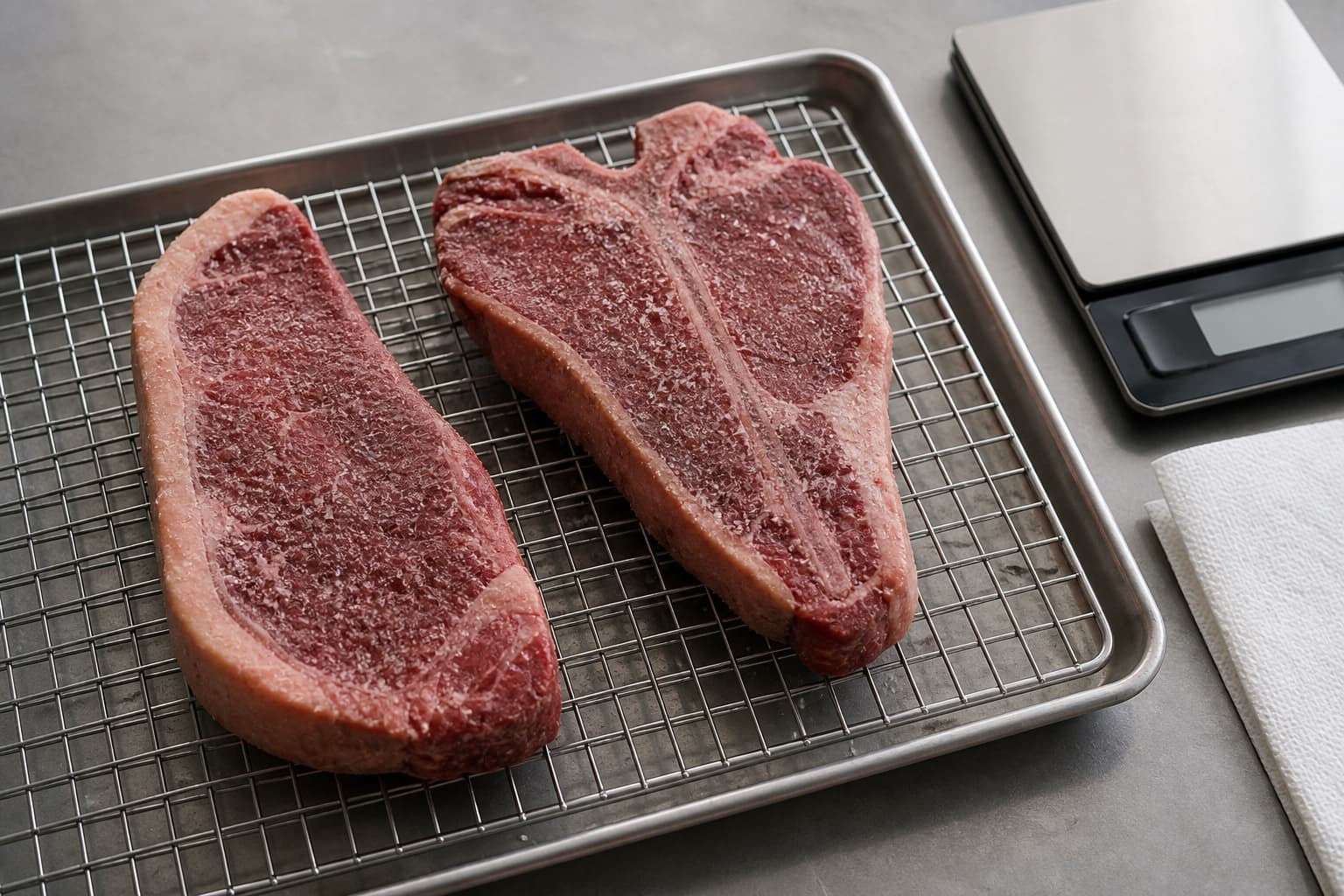
Pat the steaks completely dry and set them on a rack. Use 5 g of the measured salt evenly over both steaks and reserve 3 g for the jus, eggs, and greens. Leave uncovered for 15 minutes; refrigerate if delaying longer. Heat the heavy skillet over medium-high for the final 5 minutes.
Common mistake: Wet meat or steaks of different thickness prevent simultaneous browning and doneness.
Recovery: Spread the food out, raise heat only after moisture drops, and hold back extra sauce until the pan is frying again.
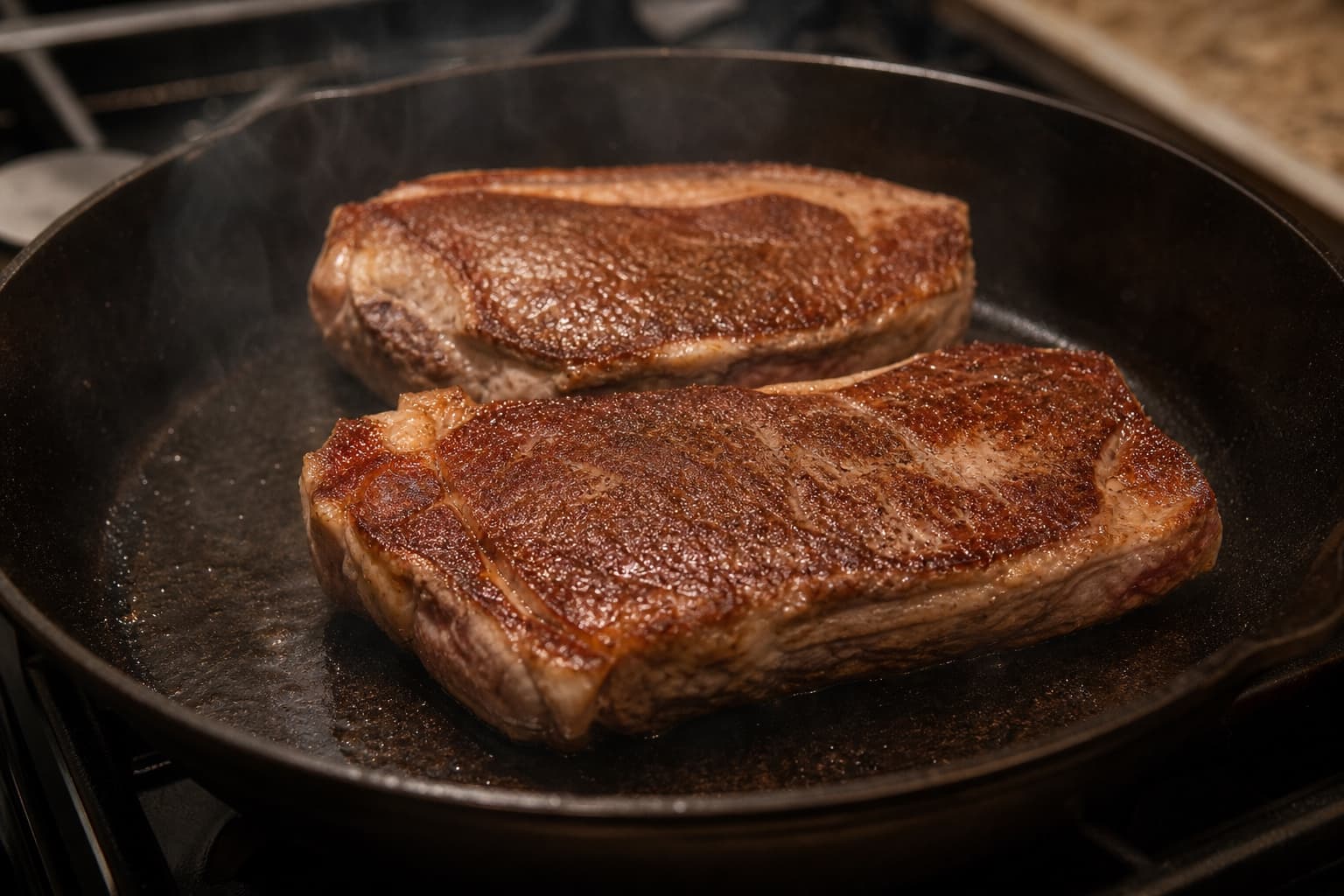
Add the neutral oil to the properly hot skillet. When it shimmers, lay the steaks away from you and press only for 5 seconds. Leave the first face undisturbed for about 2 minutes, turn, sear the second face for 2 minutes, then hold the fat edge down for 20-30 seconds. Do not add butter or pepper yet.
Common mistake: Moving before release tears the crust; grey liquid means the pan was not hot enough.
Recovery: Pause before the next step, compare the cue, then correct heat, moisture, or seasoning while the dish is still flexible.
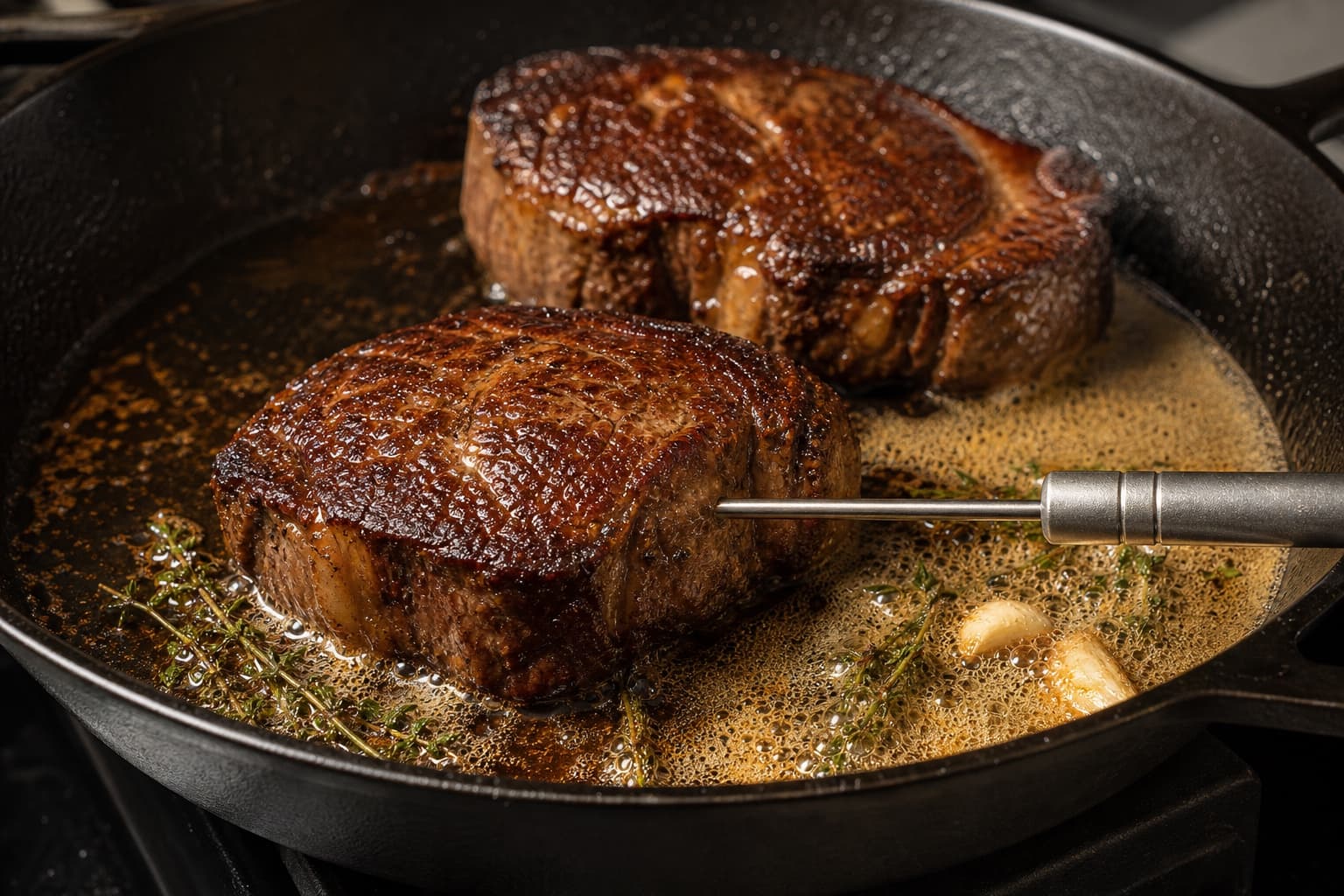
Lower to medium. Press the cracked pepper over the seared faces, then add basting butter, crushed garlic, and thyme. When butter foams hazelnut-gold, tilt and baste, turning every 30 seconds. Probe horizontally from an edge and remove each intact steak only at 63°C. Rest on the clean rack for 8 minutes, never less than 3. Pour off excess fat, leaving about 10 ml clean butter and brown fond; discard black solids and spent aromatics.
Common mistake: Early butter burns; elapsed time cannot replace the centre temperature.
Recovery: Move the pan off heat, scrape only the unburnt paste into a clean spot, add a small splash of oil or liquid, and restart gently.
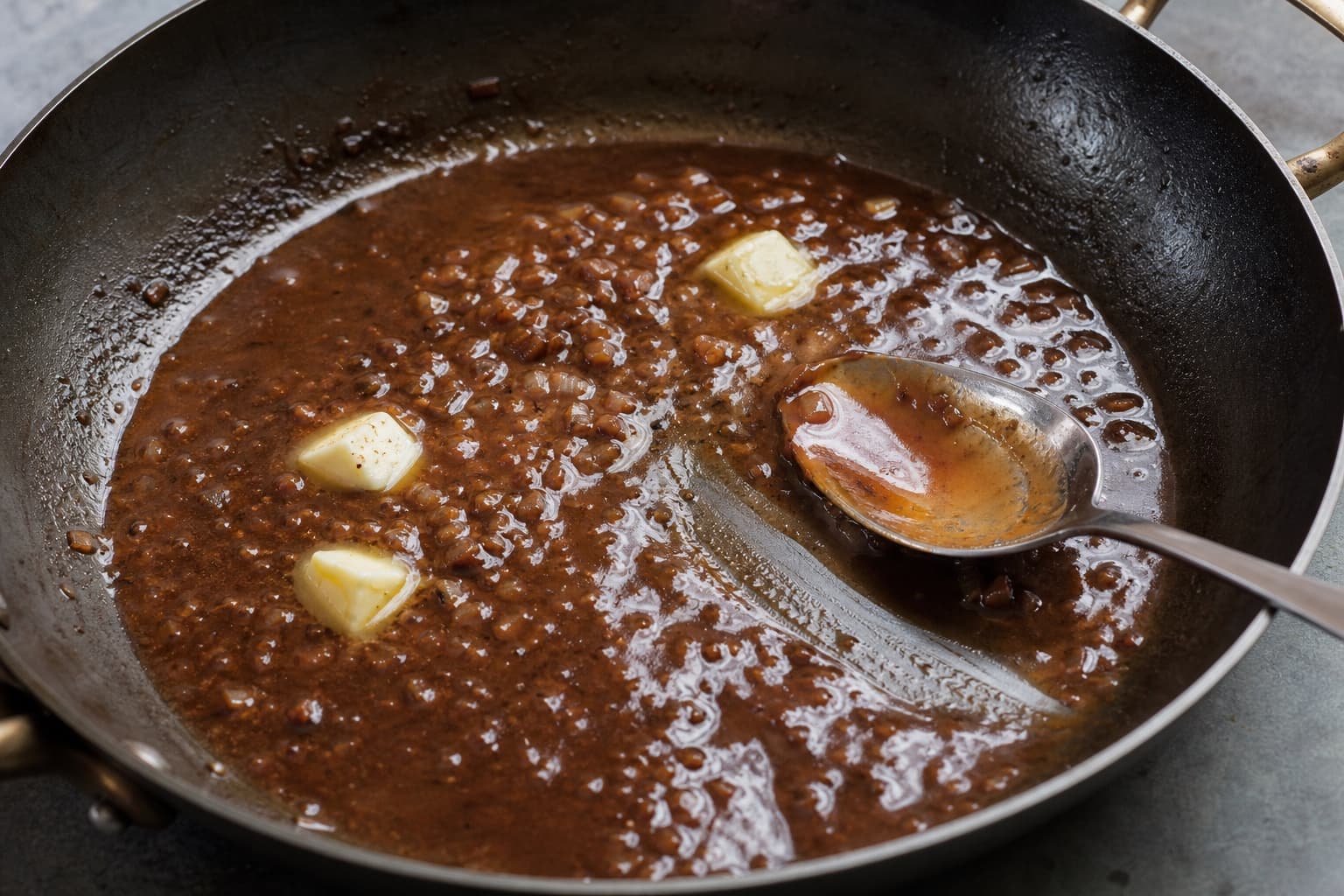
While steak rests, cook the minced eschalot in the retained clean fat for 60-90 seconds without darkening. Away from open flame add wine, return to heat, and scrape the fond. Reduce to about 15 ml. Add stock and reduce to 80-100 ml. Turn off heat, whisk in Dijon and the four cold sauce-butter cubes one at a time, then all resting juices. Taste now and use up to 1 g of reserved salt. Keep warm without boiling.
Common mistake: Butter before sufficient reduction makes greasy thin sauce; boiling afterward splits it.
Recovery: Lower the heat immediately, skim or stir gently, and continue at a small simmer until the surface calms.
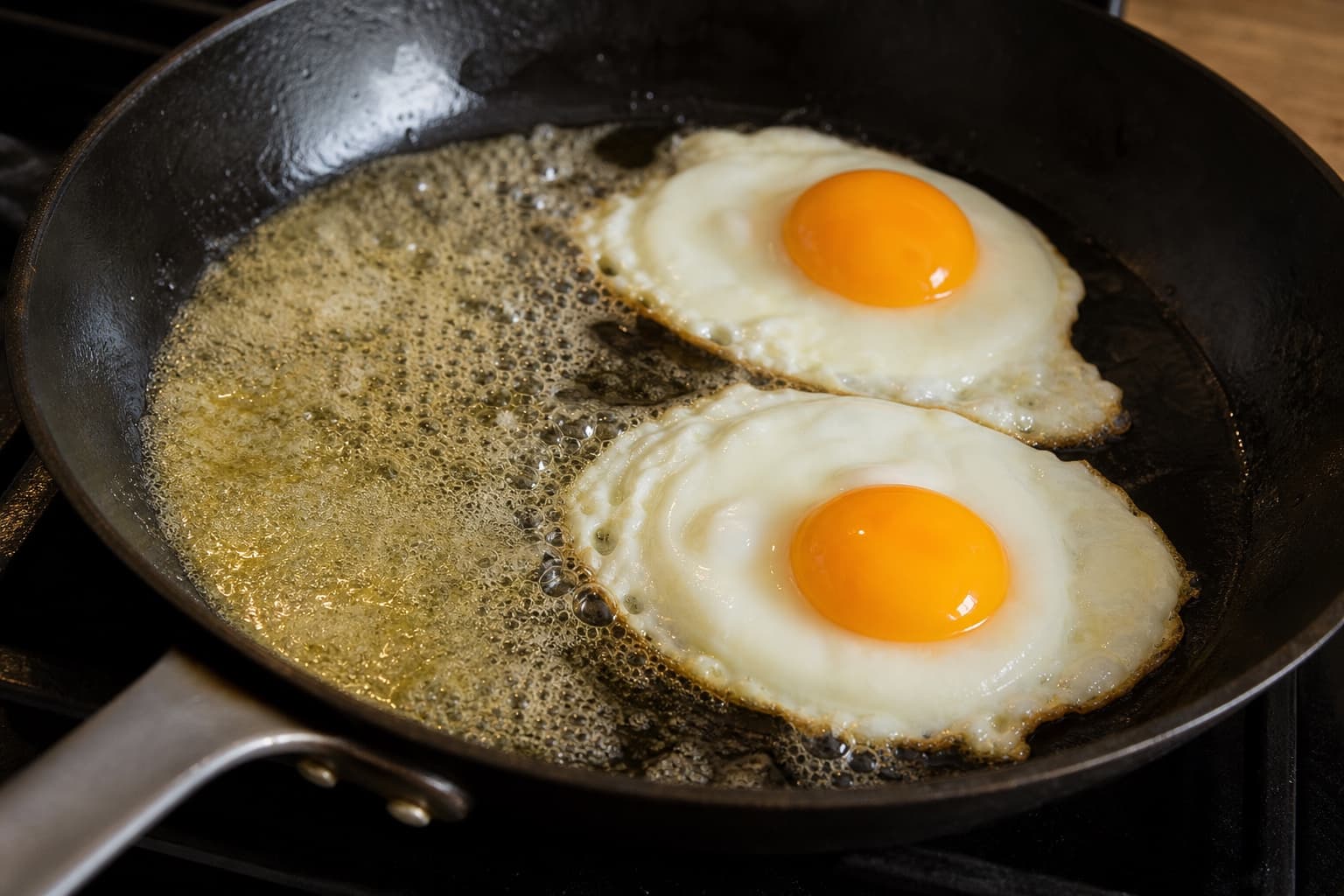
Crack each egg into a separate clean ramekin. Melt the egg butter in the non-stick skillet over medium until foaming but pale. Slide in eggs separately. As outer whites turn opaque, tilt and spoon hot butter only over transparent white around each yolk. Use about 1 g reserved salt. Cook until whites are firm and yolks begin to thicken. For vulnerable diners, continue until both white and yolk are firm.
Common mistake: High heat toughens the base; pouring over the yolk too early makes a rubbery skin.
Recovery: Lower to a gentle simmer and give it more time; texture fixes happen slowly, not with harder heat.
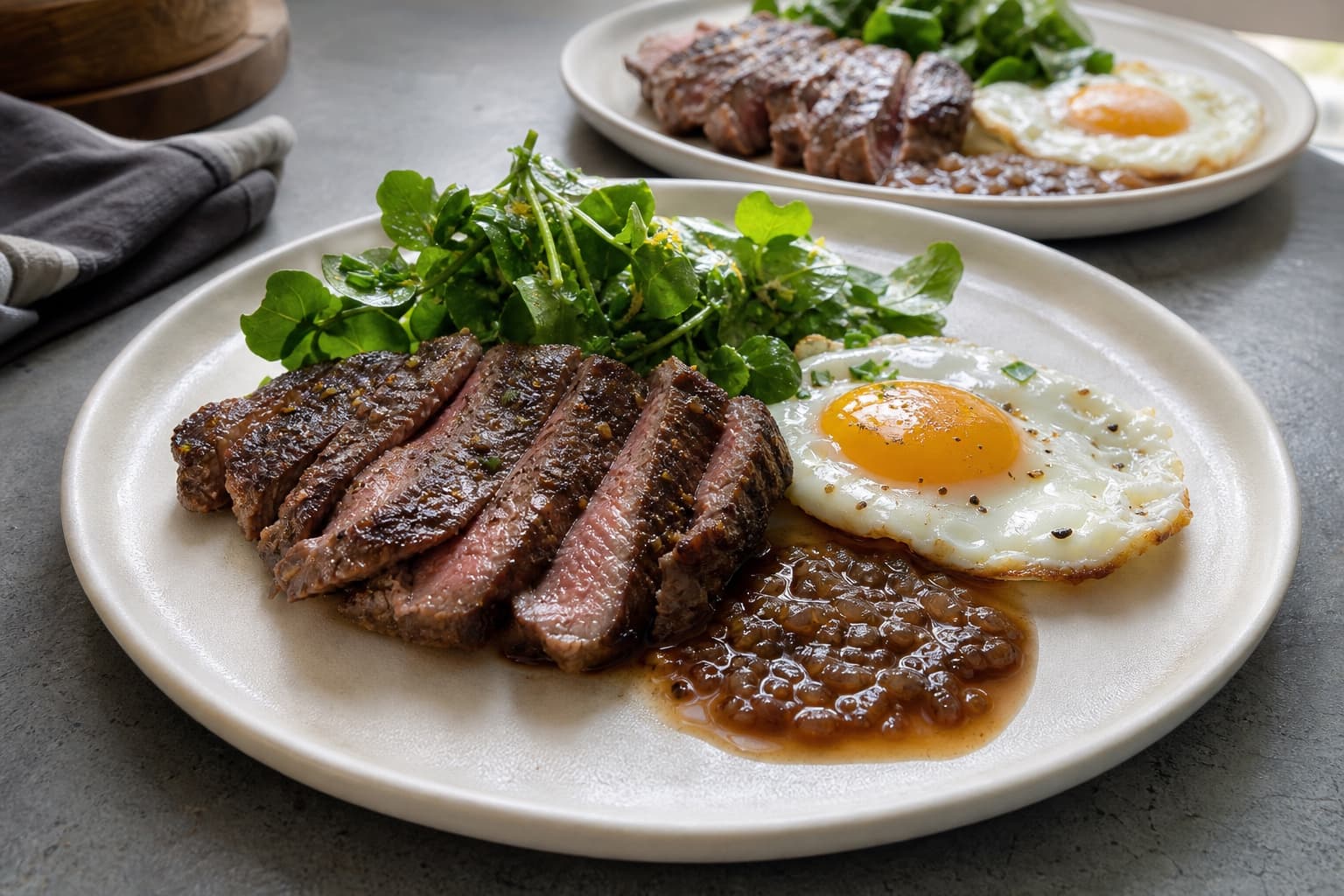
Toss dry watercress with lemon juice, olive oil, and enough remaining salt. Slice rested steak across the grain into 1 cm pieces. Spoon jus beside and beneath rather than over all the crust. Add one egg and watercress bundle to each warm plate, finish with chives, and serve. Refrigerate steak and jus separately within 2 hours for up to 3-4 days; reheat to 74°C. Cook eggs fresh.
Common mistake: Flooding softens crust; dressing watercress early makes it limp.
Recovery: Pause before the next step, compare the cue, then correct heat, moisture, or seasoning while the dish is still flexible.
Fix problems
The active method already includes its most likely mistake and recovery. Open the reference library when your question falls outside the current step.
Australian porterhouse, also sold as sirloin, striploin, or New York steak, balances flavour, tenderness, and price. Equal 3 cm thickness matters more than identical weight.
The public safe minimum for intact beef steak is 63°C followed by at least a 3-minute rest. This recipe targets a juicy medium result rather than presenting a lower restaurant doneness as universally safe.
Lower the heat first, keep garlic cloves large, and baste while foam is hazelnut-gold. If it turns black or acrid, remove the steak, discard the fat, wipe the pan, and restart with fresh butter.
Reduce a thin jus before butter. For a split jus, take it off heat and whisk in 5-10 ml cold water, then one fresh cold butter cube. Never repair over a hard boil.
Replace wine with 60 ml extra stock plus 15 ml red-wine vinegar, reduce this to about 15 ml, then add the regular 180 ml stock.
Build a deep crust, juicy safe centre, spoon-coating jus, and tender basted egg without restaurant equipment. Look for opaque tender white, narrow crisp edge, and a domed deep-gold yolk: No transparent white remains and the yolk moves as one thick wobble rather than raw liquid.
Wet meat or steaks of different thickness prevent simultaneous browning and doneness. Spread the food out, raise heat only after moisture drops, and hold back extra sauce until the pan is frying again.
Scale the measured ingredients with the serving count, then scale the vessel or work in batches. Keep the same visual finish - opaque tender white, narrow crisp edge, and a domed deep-gold yolk - rather than forcing the original timer.
intact porterhouse or striploin steaks: 2 x 200-220 g scotch fillet for more marbling, or eye fillet for a leaner plate; high-smoke-point neutral oil: canola, rice-bran, grapeseed, or vegetable oil; fresh thyme: 2 small rosemary sprigs, removed as soon as fragrant; eschalot or French shallot: 40 g Indonesian shallots or finely minced red onion
intact porterhouse or striploin steaks: Use intact whole-muscle steak. Mechanically tenderised, injected, rolled, or reconstructed beef needs its own package safety directions.; coarsely cracked black pepper: Fine pepper dust scorches quickly; add coarse pepper only after searing.; unsalted butter for basting: Contains milk.; garlic: Do not mince; small pieces burn during basting.
Melbourne and Jakarta
Current links help you search by the right ingredient name; they do not confirm a product, price, or stock level.
Ask a high-turnover butcher, Queen Victoria Market meat counter, or supermarket for two intact porterhouse, striploin, or New York steaks cut to the same 3 cm thickness. No store mention is a live stock promise.
intact porterhouse or striploin steaks: 2 x 200-220 g scotch fillet for more marbling, or eye fillet for a leaner plate.
intact porterhouse or striploin steaks: Use intact whole-muscle steak. Mechanically tenderised, injected, rolled, or reconstructed beef needs its own package safety directions.
Nearby butchersSearch ColesSearch WoolworthsFind an ALDIFind an IGASearch TozerbaSearch Asian PantryToko NusantaraThese links open searches, catalogues, or store locators. Check the exact form and local availability there.
Ask a trusted butcher or premium meat counter for intact sirloin or has luar cut into two even 3 cm steaks. Avoid mechanically tenderised or injected meat for this whole-cut path.
intact porterhouse or striploin steaks: 2 x 200-220 g scotch fillet for more marbling, or eye fillet for a leaner plate.
intact porterhouse or striploin steaks: Use intact whole-muscle steak. Mechanically tenderised, injected, rolled, or reconstructed beef needs its own package safety directions.
Nearby butchers and marketsPasar Jaya networkSuper Indo locationsRanch Market outletsHypermart onlineSearch SayurboxSearch TokopediaSearch ShopeeOpen GrabMartThese links open searches, catalogues, or store locators. Check the exact form and local availability there.
Flavour foundation
Even-thickness steak is salted before cooking, seared before pepper and butter are introduced, and basted only after the crust forms. Its fond becomes a reduced shallot jus mounted with cold butter, while the egg cooks separately so the white can set without sacrificing the yolk.
Taste profile
A contemporary synthesis of Anglo-American steak-and-eggs and French-influenced bistro sauce technique. It is not a historic canonical British formula or a Michelin-awarded recipe.
Cook plan
Versions
Diet & allergens
Dietary notes: nut-free, gluten-free option.
Contains or may contain: egg, milk, mustard, sulphites in wine, check stock for wheat/gluten and celery.
Check packaged-ingredient labels and cross-contamination advice for the brands you use.
Budget
Planning estimate only - not live or locally verified pricing
What belongs where
Three separately controlled elements meet on the warm plate: whole-cut steak, mounted shallot jus, and a gently basted egg. The watercress is a fresh counterpoint, not decoration.
Storage notes are conservative home-kitchen guidance. Chill perishable food within 2 hours, keep it at 5°C or colder, and follow local food-safety and package directions when they are stricter.
Sources & evidence
Sources support the specific technique or safety point stated below. Generated reference imagery is editorial guidance, not proof that this recipe has passed an independent cook test.
Grounds the Australian porterhouse, sirloin, striploin, and New York naming used in the cut-selection guidance, then pairs that intact whole cut with an independently sourced safe endpoint.
Boundary: A cut guide does not establish pan timing or sauce technique. Steak thickness, starting temperature, pan mass, and burner output still require thermometer-led cooking.Cross-checks porterhouse with a reduced red-wine and beef-stock pan sauce, shallot, mustard, resting, and across-the-grain slicing.
Boundary: The published sauce is a reference architecture. Bumbu Lens uses its own measured reduction, butter-mounting, and egg-and-watercress service.Applies 63°C / 145°F followed by at least a three-minute rest to intact beef steak and uses a thermometer rather than colour to verify the centre.
Boundary: Mechanically tenderised, injected, minced, or stuffed beef needs different controls; restaurant doneness preferences below this endpoint are not represented as universally safe.Supports clean uncracked eggs, cold storage, cross-contamination control, and firmer eggs for vulnerable diners.
Boundary: A softly thickened yolk retains more risk than a fully firm egg; pasteurised egg or fully cooked yolk is the safer route for vulnerable diners.Recorded as a local editorial or generated visual cue asset, not an independent external source.
Boundary: A local or generated asset is visual guidance, not evidence of authenticity, ingredient quantities, timing, safety, or method accuracy.Next cooks
Recipes here share ingredients, bumbu logic, region, spice level, or weeknight patterns so the next cook reuses what you just learned.
 Britain / modern restaurant tradition · PatientBeef WellingtonSynchronise a crisp pastry shell with safely rested, evenly pink beef and thin, distinct moisture-barrier layers.
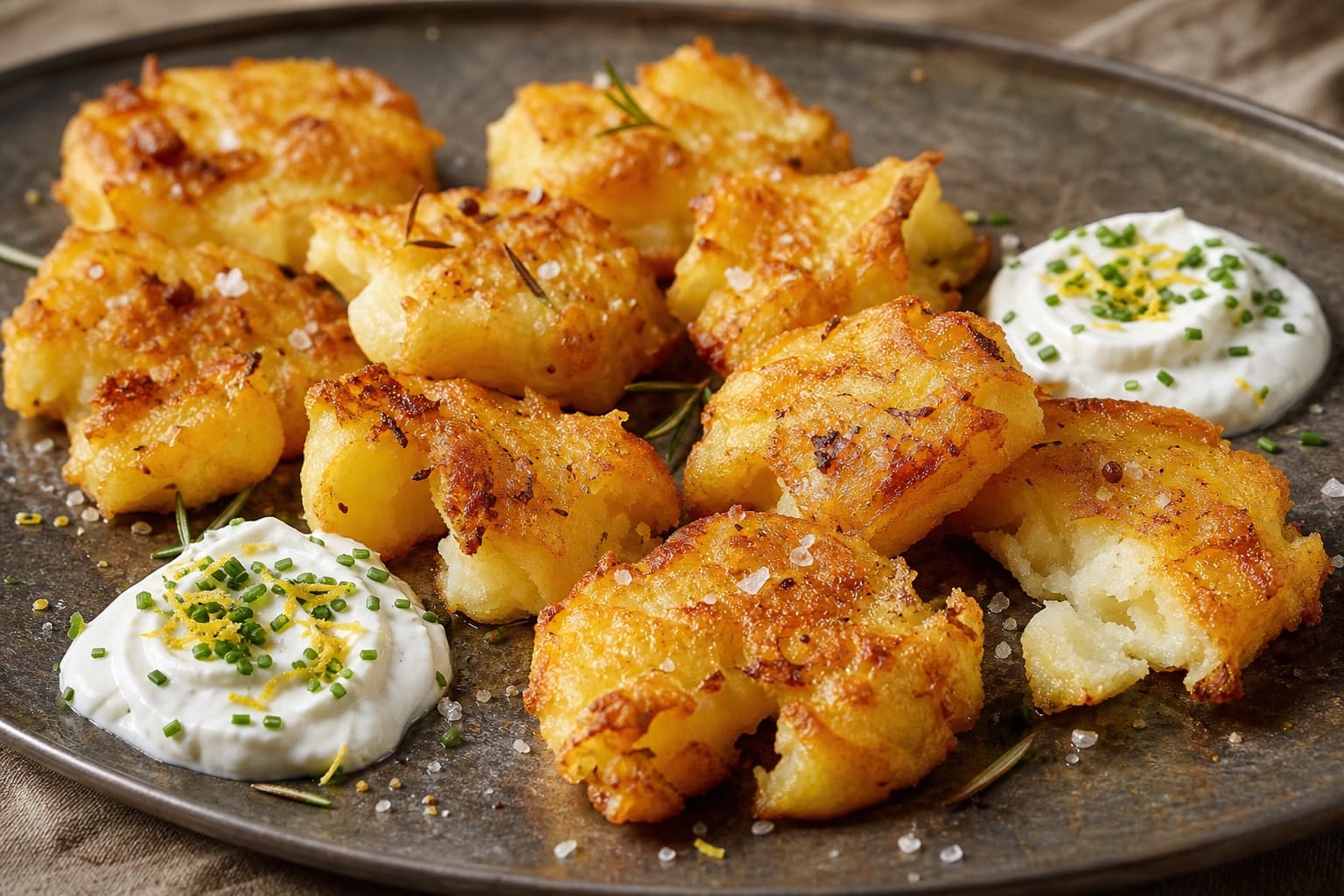 Contemporary British technique · IntermediateUltra-Crispy Smashed PotatoesBuild a brittle, craggy golden shell around a genuinely fluffy centre without needing a deep fryer.
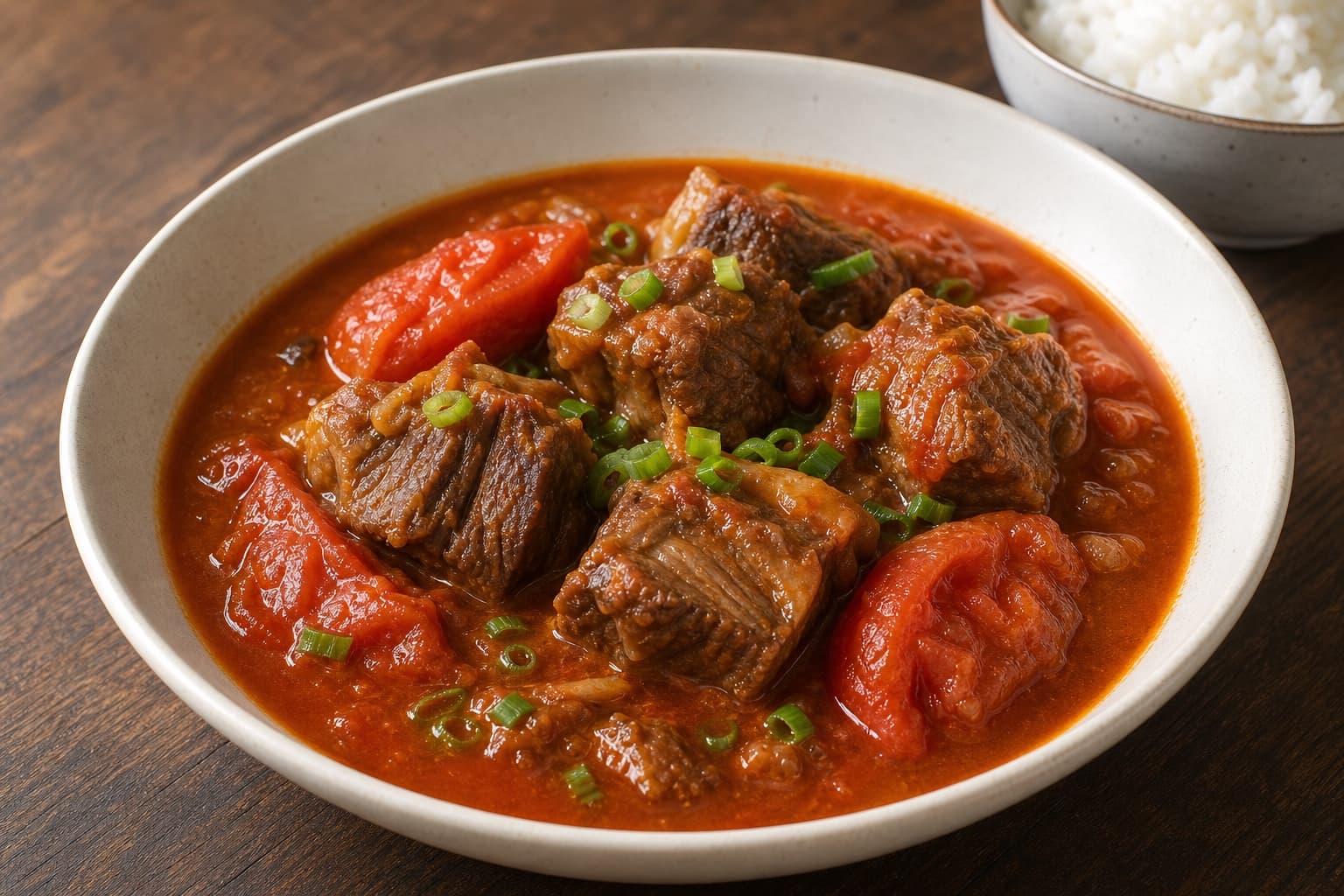 China / home-style · IntermediateChinese Tomato Beef StewKnow when the beef is truly spoon-tender while keeping the tomato sauce glossy, not watery.
 Java · IntermediateOpor AyamKeep coconut sauce silky and aromatic.
 Yogyakarta · IntermediateAyam Goreng KalasanKeep the chicken juicy, the crust golden, and the kremes brittle - not greasy.
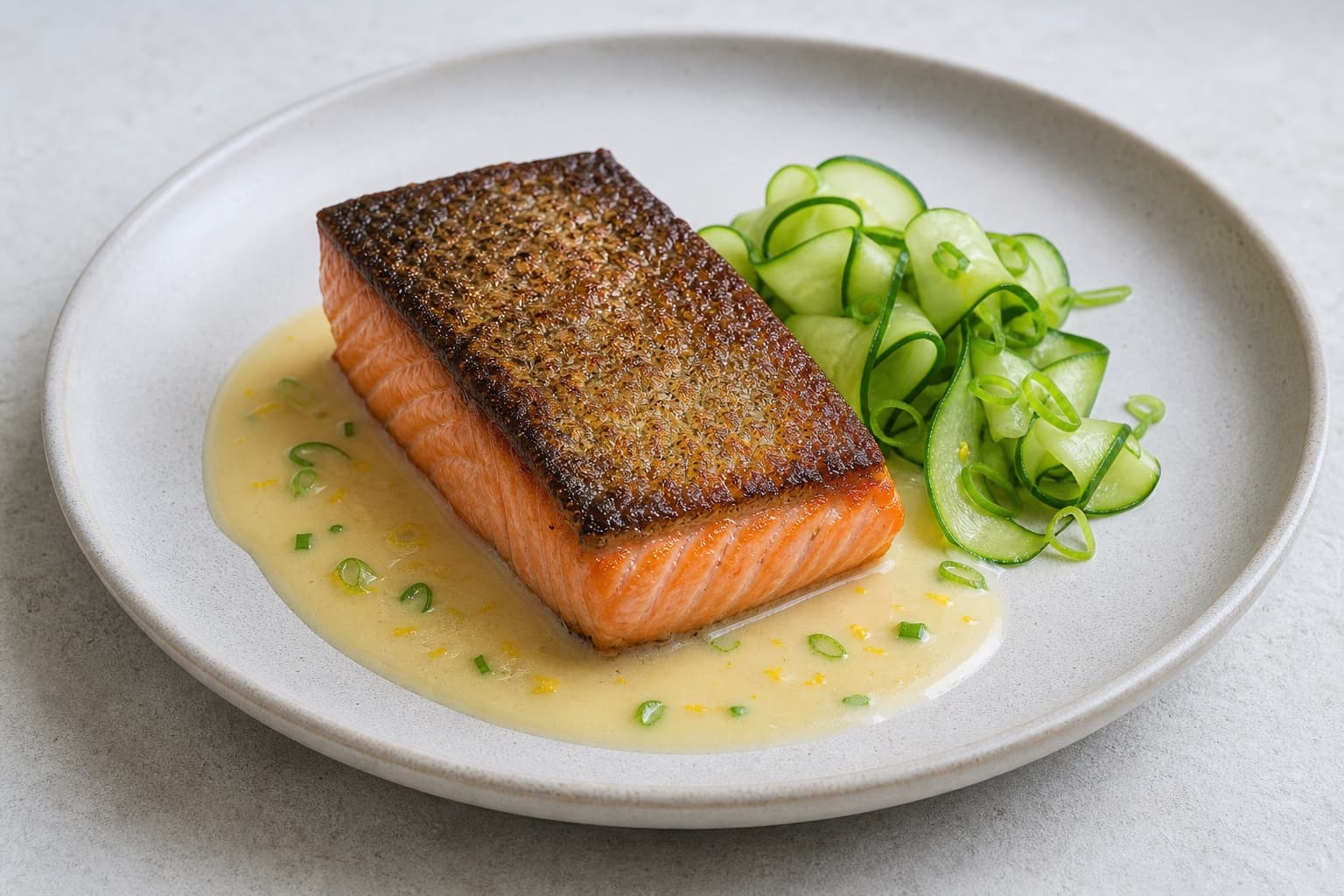 Modern Japanese-inspired · IntermediateCrisp-Skin Salmon with Miso-Lemon ButterBuild evenly crisp skin, stop the centre at a verified safe-but-succulent endpoint, and keep the butter sauce glossy instead of split.