Recipe 14 / 19
ID · Bali-inspired
Crispy-Skin Salmon Sambal Matah
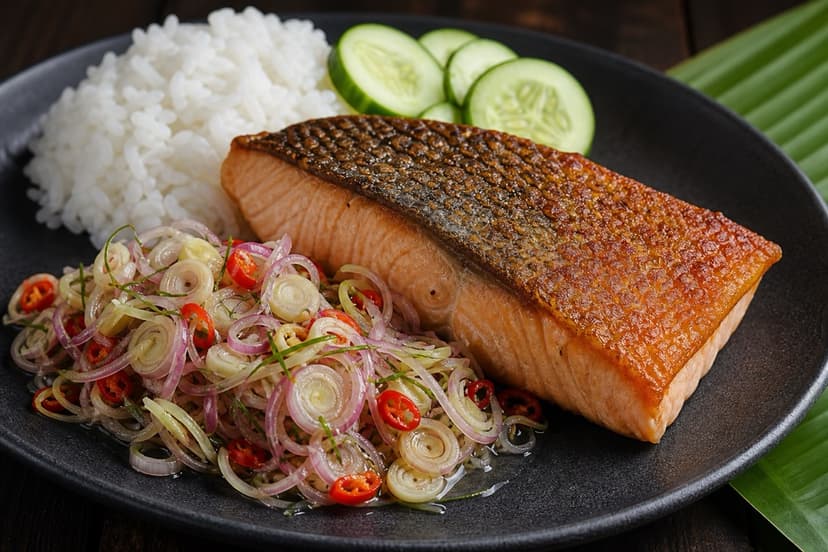
Crisp-skinned salmon with Bali's fresh sliced shallot, chilli, lemongrass, and lime-leaf sambal - a modern pairing built around a traditional raw condiment.
Crisp the skin without drying the fish, then keep bright sambal beside - not over - the crust.
- Place & style
- Bali-inspired modern pairing Indonesian fusion · Main
- Yield
- 4 servings Seafood · spice 3/5
- Time
- 35 min 25 min prep · 10 min cook
- Cook level
- Intermediate under 45 minutes · seafood · salmon · Bali · sambal matah · pescatarian · high protein
Bumbu / flavour foundation
paper-thin shallot, white lemongrass heart, bird's-eye chilli, lime leaf, terasi, coconut oil
Dry skin, firm early pressure, and an undisturbed sear create the crust. Hot - but non-smoking - coconut oil softens the sliced aromatics while lime added later keeps the sambal fresh.
Equipment
- heavy or non-stick frying pan
- fish slice
- heatproof bowl
- sharp knife
- fish-bone tweezers
- instant-read thermometer
Read the visual cue before each step. The clock is guidance; the food decides when you move.
01 · Market sheet
Know what you are buying.
Every ingredient is shown in context, named in English and Bahasa Indonesia, and tied to its job in the dish.Meat or seafoodDaging atau seafood
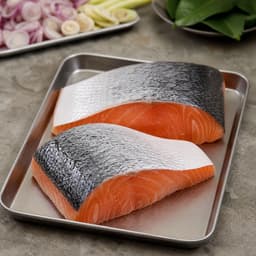
640 g
skin-on salmon fillets
fillet salmon dengan kulit
rich fish with a skin that becomes the main crisp texture
Watch: Remove pin bones and keep raw fish separate from the ready-to-eat sambal.
Dry pantryBahan kering
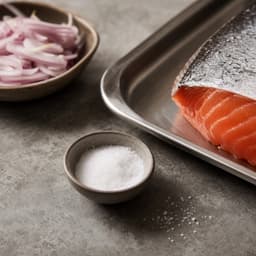
8 g
fine sea salt
garam laut halus
seasons both fish and sliced sambal precisely
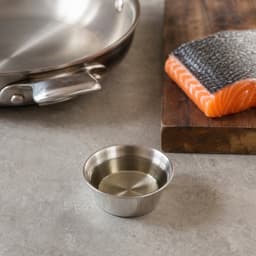
15 ml
neutral high-heat oil
minyak netral tahan panas
conducts even heat under the salmon skin
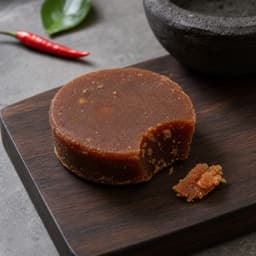
4 g
palm sugar
gula aren
tiny amount rounds chilli and lime without making a sweet relish
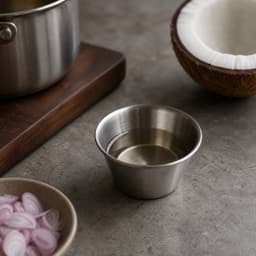
30 g
coconut oil
minyak kelapa
defining Balinese aroma and the hot bloom for raw slices
Watch: Heat only until shimmering, about 150-160°C; smoking oil tastes acrid.
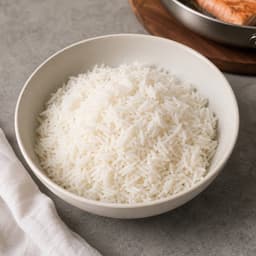
600 g
cooked jasmine rice
nasi putih matang
plain base for the rich fish and aromatic oil
SpicesRempah
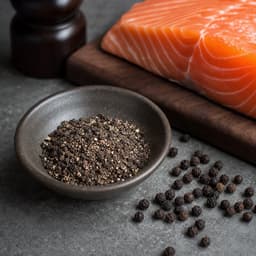
1 g
black pepper
merica hitam
light seasoning on the salmon flesh
Fresh produceSayur & bahan segar
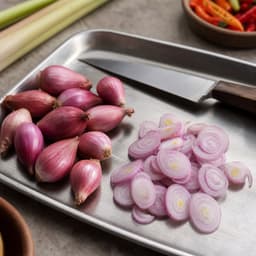
140 g
Asian red shallots
bawang merah
the crisp, sweet sliced body of sambal matah
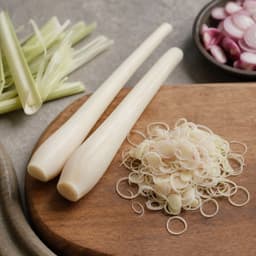
24 g
tender white lemongrass hearts
bagian putih serai yang muda
soft citrus rings that can be eaten raw
Watch: Discard dry outer layers and the green top; thick green rings stay woody.
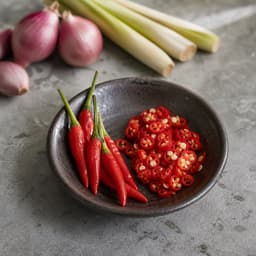
8 g
red bird's-eye chillies
cabai rawit merah
clean sharp heat in fine visible rings
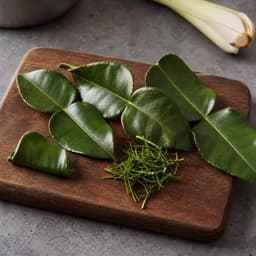
2 leaves
makrut lime leaves
daun jeruk purut
intense citrus perfume in hair-fine shreds
Watch: Remove the tough central vein before shredding.
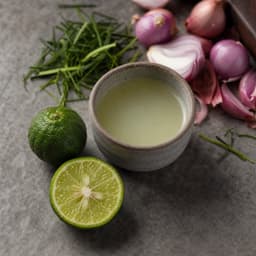
20 g
jeruk limau or lime juice
air jeruk limau
fresh acid added after the oil's initial heat subsides
Watch: Do not add before pouring hot oil; wet citrus can splatter and loses its fresh aroma.
SaucesSaus & bumbu botol
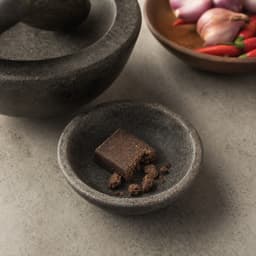
4 g
toasted shrimp paste
terasi bakar
small fermented savoury note behind the fresh aromatics
Watch: Contains crustacean; toast it until fragrant or use a pre-toasted product.
GarnishPelengkap
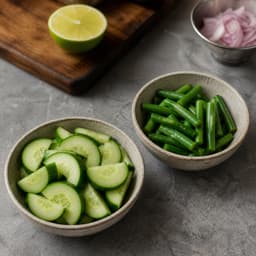
200 g
cucumber or blanched green beans
timun atau buncis rebus
cool fresh contrast beside the salmon
02 · Method
Cook in order. Read the decisive cue.
7 stages · 35 min total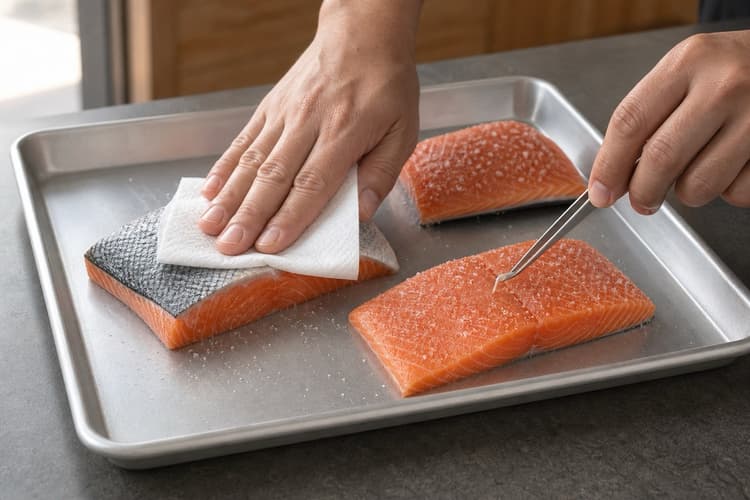
Stage 01
Dry, de-bone, and salt the salmon
Check the skin for scales, pull pin bones, and pat every surface dry. Sprinkle a little measured salt on the skin and leave it skin-up while the sambal is prepared. Moisture will bead on the surface; blot it completely dry again before cooking.
- Move on when
- The skin looks matte and taut with no visible beads of water.
- Common mistake
- Wet skin steams, splatters, and cannot become crisp.
- Recovery
- Turn off the heat and step back. Never add water to hot oil. Let bubbling settle, dry the food completely, reduce the batch size, and restart only when the setup is stable.
Stage 02
Slice the sambal aromatics finely
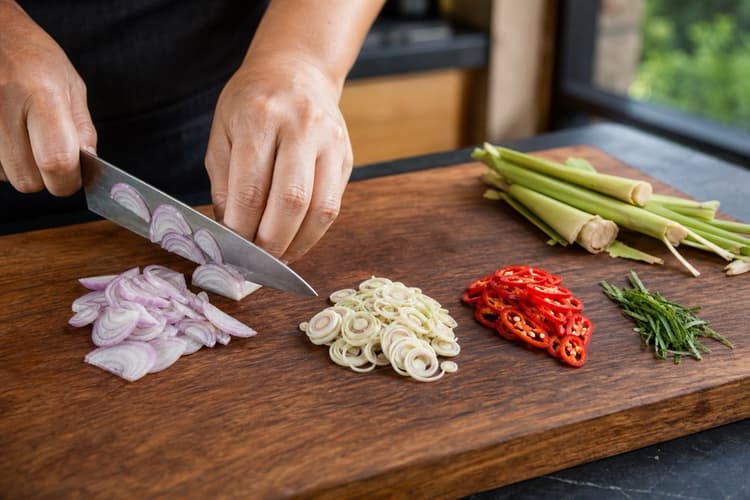
Halve shallots and cut 1-2 mm half-moons. Strip lemongrass to the pale tender heart and slice nearly transparent rings. Slice chilli. Remove the lime-leaf central vein, roll the leaves, and shred them hair-fine. Toast terasi briefly until fragrant.
- Move on when
- Every aromatic is recognisable, fine enough to chew raw, and the lemongrass is white rather than green.
- Common mistake
- Green lemongrass and lime-leaf midribs stay woody no matter how much oil is added.
- Recovery
- Pause before the next step, compare the cue, then correct heat, moisture, or seasoning while the dish is still flexible.
Stage 03
Bloom sambal with hot coconut oil
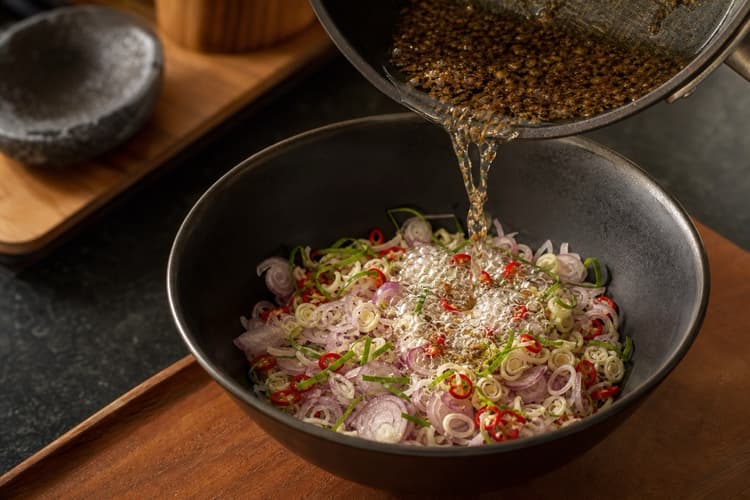
Combine sliced aromatics, crumbled terasi, palm sugar, and the sambal portion of salt. Wearing a glove, squeeze lightly for 30-45 seconds. Heat coconut oil to 150-160°C - shimmering and fragrant, never smoking - then pour it over for a gentle sizzle. Toss and rest 2 minutes.
- Move on when
- Shallot softens slightly yet keeps its shape; glossy slices remain distinct rather than puréed.
- Common mistake
- Smoking oil or burnt terasi makes the whole raw condiment acrid.
- Recovery
- Move the pan off heat, scrape only the unburnt paste into a clean spot, add a small splash of oil or liquid, and restart gently.
Stage 04
Add lime only after the heat subsides
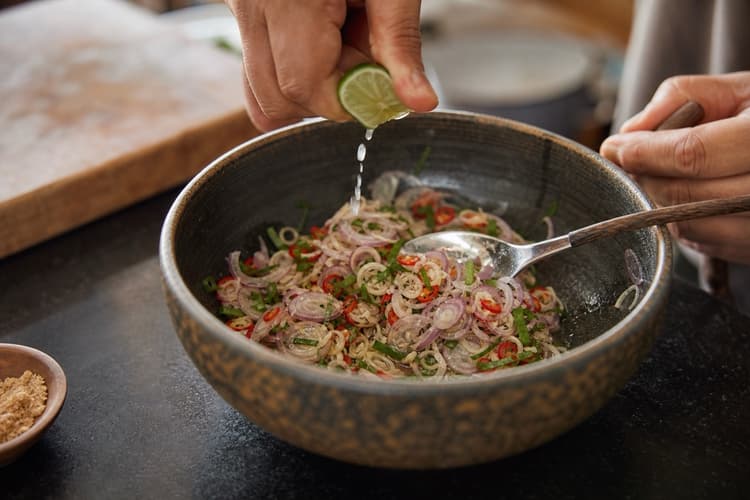
Stir lime juice into the warm sambal only after the initial sizzling stops. Taste for shallot, citrus, salt, savoury terasi, and chilli in that order. Hold at room temperature while the fish cooks; it is not shelf-stable.
- Move on when
- The relish smells first of lemongrass and lime leaf and tastes bright rather than oily.
- Common mistake
- Lime under very hot oil splatters and loses its fresh aroma.
- Recovery
- Turn off the heat and step back. Never add water to hot oil. Let bubbling settle, dry the food completely, reduce the batch size, and restart only when the setup is stable.
Stage 05
Press salmon skin-side down
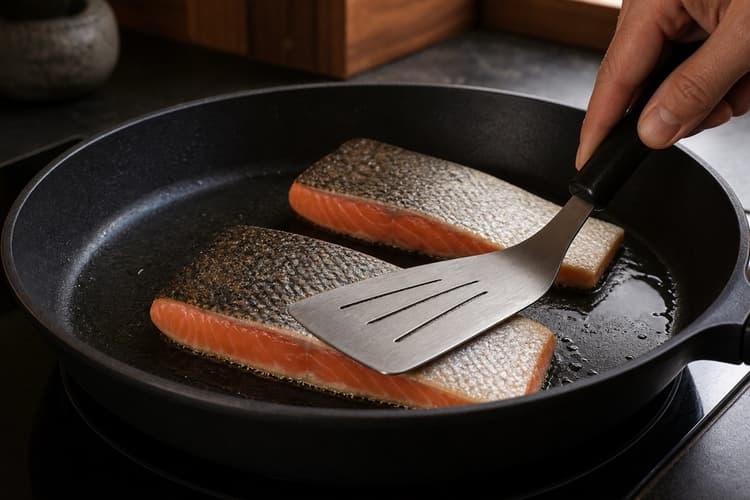
Season the flesh with remaining salt and pepper. Preheat the pan over medium-high for about 2 minutes, add neutral oil, then lay fillets away from your body. Press each flat with a fish slice for 15-20 seconds so the skin cannot buckle; reduce to medium.
- Move on when
- The whole skin stays in contact with the pan and the fillet lies flat without curling.
- Common mistake
- A cold pan or no early pressure leaves pale rubbery patches.
- Recovery
- Pause before the next step, compare the cue, then correct heat, moisture, or seasoning while the dish is still flexible.
Stage 06
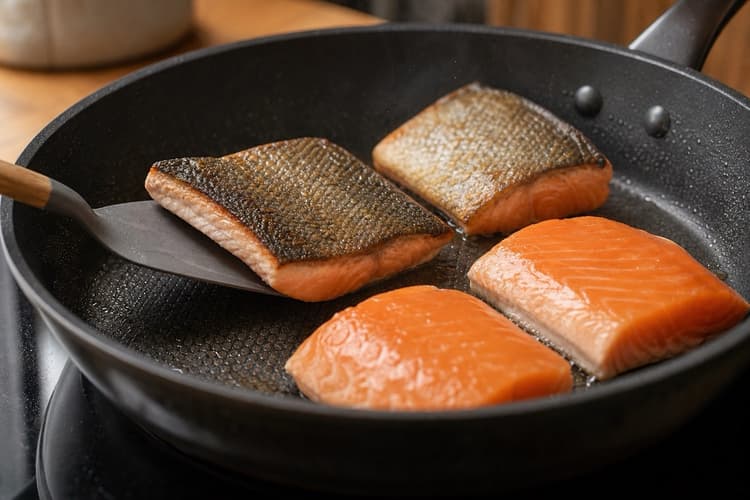
Let the skin release before turning
Cook undisturbed skin-side down for 5-7 minutes in total. Turn only when the skin is deep gold, releases without force, and the opaque cooked band reaches about three-quarters up the side. Flip once and cook the flesh side 1-3 minutes by thickness.
- Move on when
- Skin is evenly deep golden; the thickest centre reaches the conservative 63°C endpoint and separates into moist flakes.
- Common mistake
- Repeated lifting tears skin; aggressive high heat squeezes out white albumin and dries the fish.
- Recovery
- Pause before the next step, compare the cue, then correct heat, moisture, or seasoning while the dish is still flexible.
Stage 07
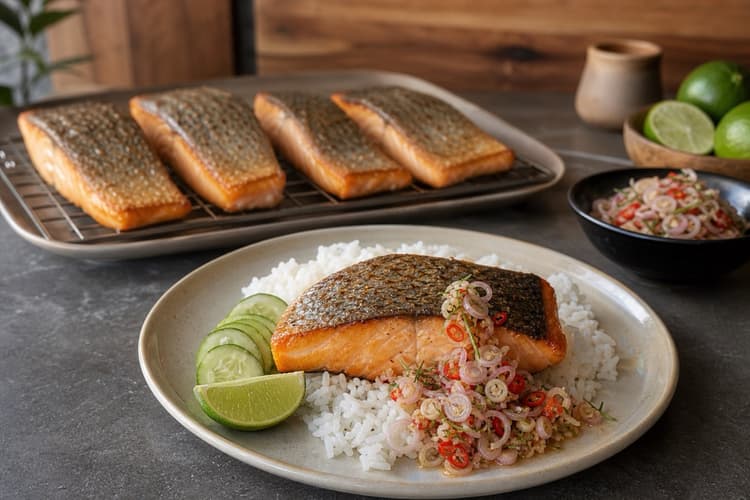
Rest skin-up and plate for crunch
Rest salmon for 2 minutes with skin facing up. Plate beside rice and cucumber with the crust exposed. Spoon sambal against the flesh or beside the fish, and drizzle only a little coconut-lime dressing around it - never blanket the skin.
- Move on when
- The skin stays audibly crisp beside moist flakes and cool, distinct sambal slices.
- Common mistake
- Resting skin-down or covering it with wet sambal traps steam and undoes the sear.
- Recovery
- Do not force the fish. Lower the heat slightly and wait until the skin releases, then slide a thin fish slice underneath. Rest and plate with the skin exposed to preserve what crispness remains.
03 · Source & shop
Where the guidance comes from.
Technique guidance is stable editorial material. Prices, stock, and local availability should be rechecked before a special trip.Melbourne
- Best source: use an Indonesian or broader Asian grocer for skin-on salmon fillets, black pepper, Asian red shallots; buy skin-on salmon fillets, fine sea salt, neutral high-heat oil from a supermarket or butcher if quality is better there.
- Hard-to-find watch: ask for the Bahasa names (fillet salmon dengan kulit, merica hitam, bawang merah) and keep skin-on salmon fillets close to the recipe because it changes the identity of Crispy-Skin Salmon Sambal Matah.
- Acceptable swaps: skin-on salmon fillets: ocean trout, barramundi, snapper, or mackerel; cook by thickness and temperature; Asian red shallots: red onion sliced paper-thin; it will taste stronger.
- Do not swap lightly: skin-on salmon fillets, tender white lemongrass hearts carries the dish cue and should stay close to the recipe.
- Fresh vs packaged: buy Asian red shallots, tender white lemongrass hearts, red bird's-eye chillies fresh or frozen from grocers; packaged fine sea salt, black pepper, neutral high-heat oil is fine when labels are clean and dates are current.
Jakarta
- Best source: pasar stalls are the first stop for fillet salmon dengan kulit, merica hitam, bawang merah; use supermarkets for sealed pantry items, coconut products, noodles, and sauces.
- Hard-to-find watch: check freshness and supplier trust for fillet salmon dengan kulit, merica hitam, bawang merah, especially when the ingredient defines the dish.
- Acceptable swaps: skin-on salmon fillets: ocean trout, barramundi, snapper, or mackerel; cook by thickness and temperature; Asian red shallots: red onion sliced paper-thin; it will taste stronger.
- Do not swap lightly: skin-on salmon fillets, tender white lemongrass hearts carries the Bali-inspired cue for Crispy-Skin Salmon Sambal Matah; change it only after you understand the visual stage.
- Fresh vs packaged: buy herbs and aromatics fresh when possible, but packaged pantry staples are fine if the aroma is clean and the date is current.
Editorial provenance
Super Indo - Salmon Bakar Sambal Matah
Cross-checks the contemporary pairing of cooked salmon with a sliced shallot, chilli, lemongrass, lime-leaf, lime, and hot coconut-oil sambal matah.
Supports: documented salmon and sambal matah pairing, hot-oil sambal assembly, cook fish before topping.
Boundary: This is a modern retail recipe. Sambal matah is Balinese; salmon with sambal matah should be described as a contemporary pairing, not as a traditional Balinese salmon dish.
Reviewed 2026-07-10Four Seasons Resort Bali at Sayan - Wayan Sutariawan's Sambal Matah
Uses a Balinese chef's sambal matah formula to ground the traditional condiment in sliced shallot, lemongrass, bird's-eye chilli, lime leaf, optional grilled shrimp paste, coconut oil, lime, salt, and palm sugar.
Supports: Balinese sambal matah identity, sliced rather than pounded texture, coconut oil and lime finish.
Boundary: This source validates the sambal component and Balinese context, not salmon as a traditional pairing; the app keeps that distinction explicit.
Reviewed 2026-07-10Marine Stewardship Council Australia - How to cook BBQ salmon
Cross-checks the fish technique: thoroughly dry the skin, use a hot oiled pan, start skin-side down, press briefly until flat, cook mostly on the skin, then flip only to finish.
Supports: dry skin before cooking, skin-side-down start, single late flip.
Boundary: MSC's page is salmon technique and sustainability guidance, not sambal matah provenance; exact time still depends on fillet thickness and pan heat.
Reviewed 2026-07-10Indonesia.travel - Sambal Matah
Uses Indonesia's official tourism site to cross-check sambal matah as a Balinese sliced condiment based on shallot, bird's-eye chilli, lemongrass, lime leaf, and hot coconut oil, commonly served with grilled foods and fish.
Supports: Balinese condiment identity, core sliced aromatics, hot coconut-oil dressing.
Boundary: This overview describes the condiment broadly and notes modern variation; it does not establish the app's salmon plate as inherited Balinese tradition.
Reviewed 2026-07-10FoodSafety.gov - Safe Minimum Internal Temperatures
Sets 63°C / 145°F for fish such as salmon, or cooking until the flesh is opaque and separates easily with a fork; Bumbu Lens prefers a clean thermometer for a beginner-facing endpoint.
Supports: 63°C salmon minimum, thermometer verification, opaque and separating fallback cue.
Boundary: Crisp skin and browned edges do not prove that the centre is safe. Measure the thickest part without touching the pan or a bone.
Reviewed 2026-07-10Food Standards Australia New Zealand - Food safety basics
Applies Australian separation and temperature guidance: keep raw seafood and its tools away from the ready-to-eat sambal, refrigerate perishables at 5°C or colder, and serve the freshly cut condiment promptly.
Supports: raw seafood separation, 5°C cold storage, ready-to-eat sambal handling.
Boundary: Hot oil changes aroma and texture but does not make every sliced sambal ingredient shelf-stable; refrigerate leftovers promptly and use conservative storage.
Reviewed 2026-07-10Bumbu Lens generated visual cue reference
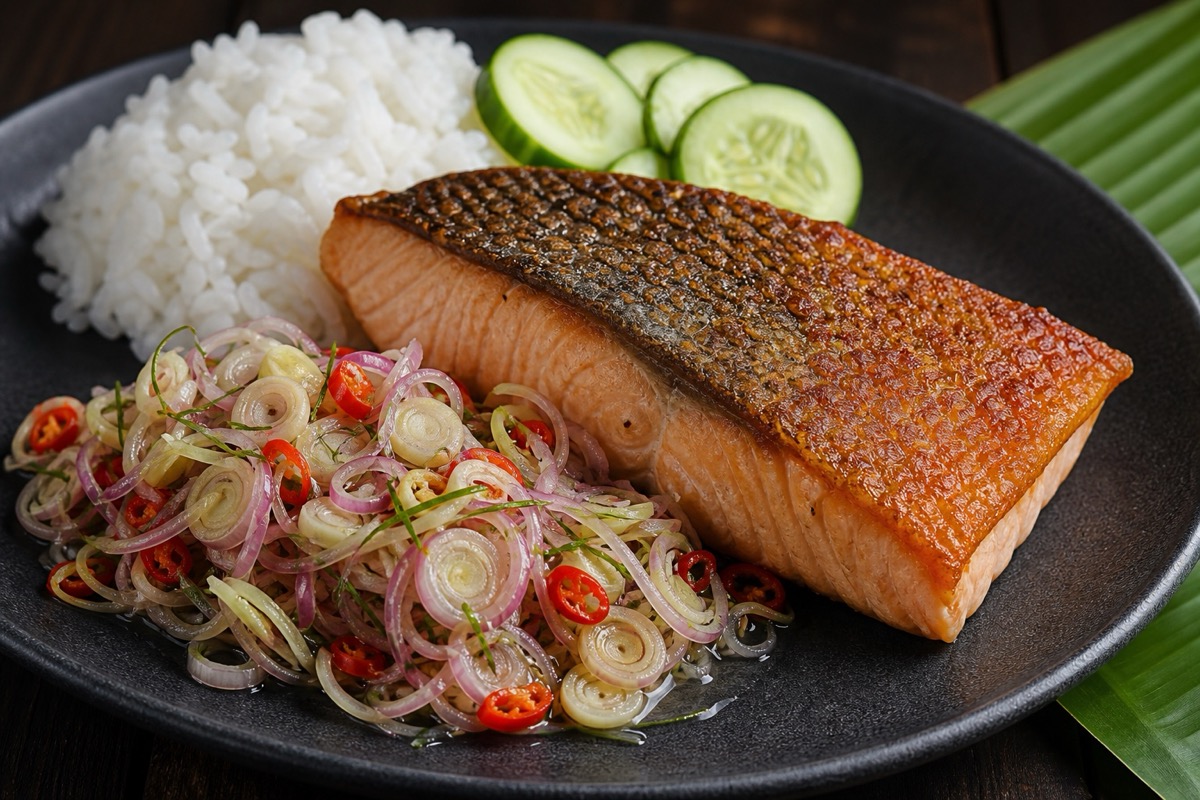
Recorded as a local editorial or generated visual cue asset, not an independent external source.
Supports: finished-dish appearance, image credit boundary.
Boundary: A local or generated asset is visual guidance, not evidence of authenticity, ingredient quantities, timing, safety, or method accuracy.
Reviewed 2026-07-10Bumbu Lens editorial method audit
Reviewed Crispy-Skin Salmon Sambal Matah as an ordered cook flow with visual cues, common mistakes, and recovery notes.
Supports: method sequence, visual checkpoints, mistake and recovery notes.
Boundary: Use this as editorial guidance; run a tested-kitchen pass before publishing nutrition, safety guarantees, or commercial pack quantities.
Reviewed 2026-07-10Bumbu Lens Melbourne/Jakarta sourcing heuristic
Mapped ingredient groups to likely Melbourne grocer, supermarket, butcher, pasar, and Jakarta supermarket paths.
Supports: Melbourne sourcing, Jakarta sourcing, volatile availability boundary.
Boundary: Ingredient availability, price, and store stock change; verify with local grocers before travel, bulk shopping, or holiday cooking.
Reviewed 2026-07-10Your next cook
Kitchen notes
Record the batch size, timing, substitutions, and visual cue you want to remember next time.