Recipe 02 / 19
ID · Indonesia
Nasi Goreng
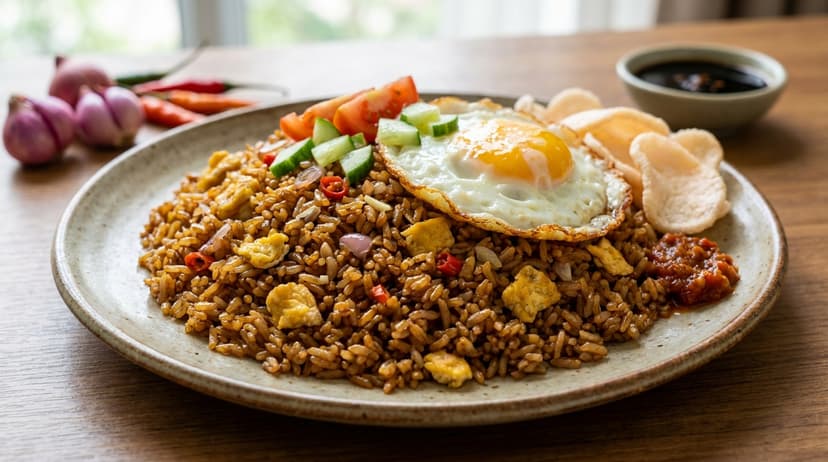
A fast wok dish built around old rice, kecap manis, and enough heat to taste smoky without turning wet.
Get separate grains and kecap gloss instead of sticky rice.
- Place & style
- Indonesia Indonesian · Rice
- Yield
- 2 servings Flexible · spice 2/5
- Time
- 27 min 15 min prep · 12 min cook
- Cook level
- Beginner weeknight · halal optional · 15-minute
Bumbu / flavour foundation
shallot, garlic, chilli, terasi or mushroom umami
Day-old rice and staged sauce keep the wok hot. Kecap goes in late so it caramelises around grains instead of steaming them.
Equipment
- wok or wide frying pan
- spatula
- small bowl
Read the visual cue before each step. The clock is guidance; the food decides when you move.
01 · Market sheet
Know what you are buying.
Every ingredient is shown in context, named in English and Bahasa Indonesia, and tied to its job in the dish.Dry pantryBahan kering
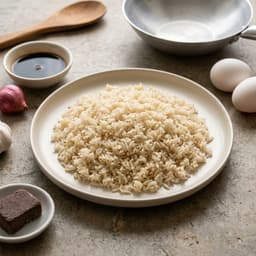
3 cups cooked
day-old rice
nasi sisa semalam
dry grains that fry instead of clump
Watch: Fresh hot rice steams and turns gluey.

2 tbsp
neutral oil
minyak netral
lets the rice fry instead of steam
Fresh produceSayur & bahan segar
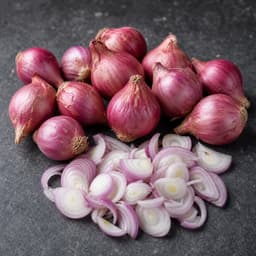
60 g
shallots
bawang merah
sweet aromatic base for the wok
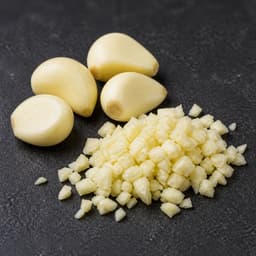
15 g
garlic
bawang putih
savoury aromatic that should smell sweet before rice goes in

1 chilli
red chilli
cabai merah
fresh heat in the aromatic base
SaucesSaus & bumbu botol

2 tbsp
kecap manis
kecap manis
sweet soy glaze and colour
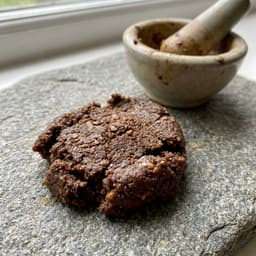
1 tsp
shrimp paste
terasi
deep savoury aroma
ChilledDingin

2 eggs
egg
telur
rich topping and breakfast cue
SpicesRempah

0.5 tsp
white pepper
merica putih
clean pepper heat at the finish
GarnishPelengkap

1 cucumber
cucumber
timun
cool crunch beside the hot rice
02 · Method
Cook in order. Read the decisive cue.
5 stages · 27 min total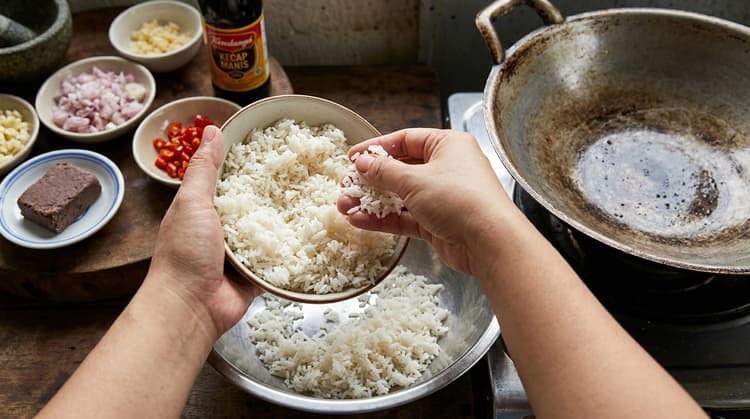
Stage 01
Break up cold rice
Separate day-old rice with your fingers so no cold clumps hit the wok.
- Move on when
- Loose grains before cooking.
- Common mistake
- Fresh hot rice steams and turns sticky.
- Recovery
- Spread the food out, raise heat only after moisture drops, and hold back extra sauce until the pan is frying again.
Stage 02
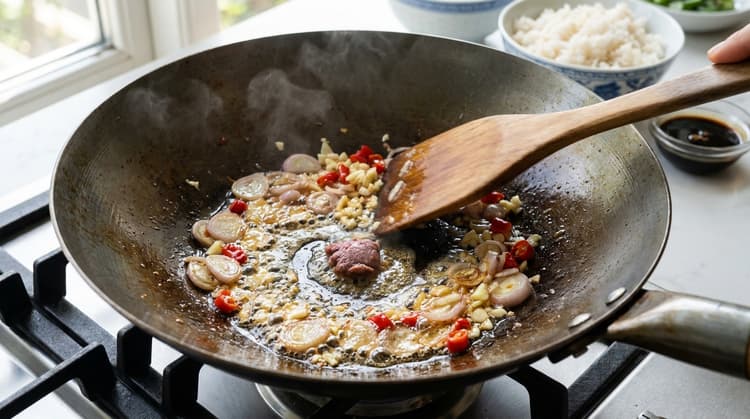
Cook aromatics
Heat 1 tablespoon oil and fry shallot, garlic, chilli, and terasi or vegetarian umami until fragrant. Reserve the remaining oil for the eggs.
- Move on when
- Small bubbles and sweet shallot smell.
- Common mistake
- Burnt garlic makes the whole wok bitter.
- Recovery
- Move the pan off heat, scrape only the unburnt paste into a clean spot, add a small splash of oil or liquid, and restart gently.
Stage 03
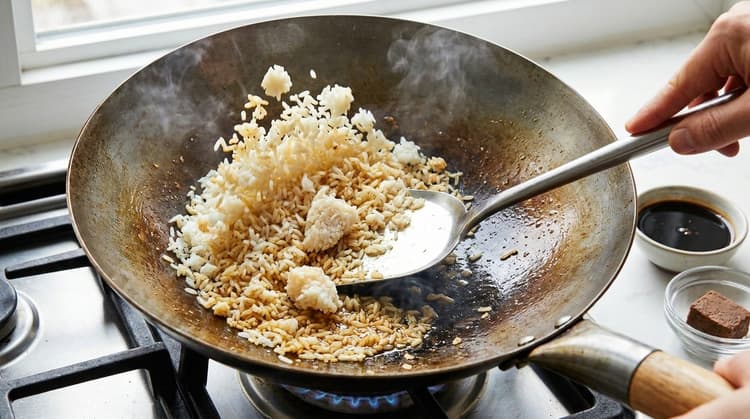
Fry rice hot
Add rice and toss until every grain is hot before sauce goes in.
- Move on when
- Rice jumps freely and white clumps disappear.
- Common mistake
- Sauce added too early cools the pan.
- Recovery
- Pause before the next step, compare the cue, then correct heat, moisture, or seasoning while the dish is still flexible.
Stage 04
Glaze with kecap
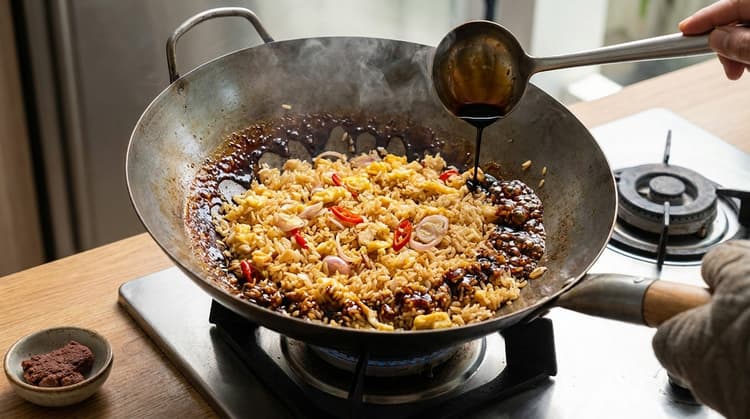
Drizzle kecap around the edge, add white pepper, toss, and stop when grains are lacquered.
- Move on when
- Dark glossy patches, no sauce pool.
- Common mistake
- Too much kecap turns the dish sweet and wet.
- Recovery
- Spread the food out, raise heat only after moisture drops, and hold back extra sauce until the pan is frying again.
Stage 05
Finish with egg
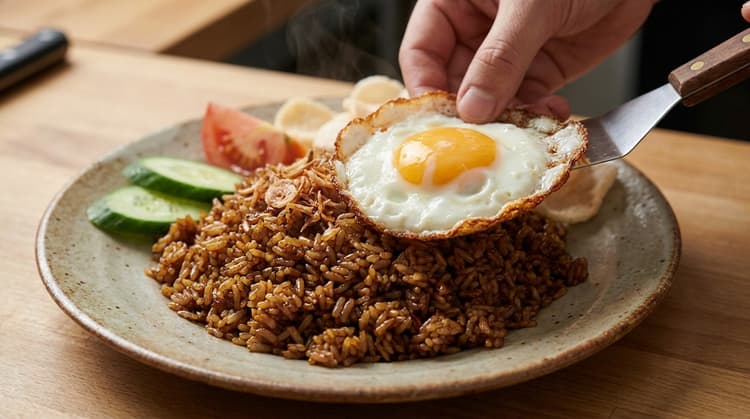
Fry the eggs in the reserved 1 tablespoon oil. Top each portion with an egg and serve sliced cucumber beside the hot rice.
- Move on when
- Crisp-edged egg and separate rice.
- Common mistake
- Covering the plate traps steam and softens the rice.
- Recovery
- Spread the food out, raise heat only after moisture drops, and hold back extra sauce until the pan is frying again.
03 · Source & shop
Where the guidance comes from.
Technique guidance is stable editorial material. Prices, stock, and local availability should be rechecked before a special trip.Melbourne
- Prepare the rice at home: cook jasmine rice ahead, cool it promptly, refrigerate it safely, and break up the cold grains before the wok. Day-old rice is not a product to buy from a grocer.
- Buy kecap manis and terasi from an Indonesian or broader Asian grocer; check the Indonesian label names rather than searching for leftover rice.
- Rice, eggs, cucumber, neutral oil, shallots, garlic, chilli, and white pepper are ordinary supermarket items in Melbourne.
- For a vegetarian plate, replace terasi with the listed miso-and-soy path and keep the same dry-rice and hot-wok cues.
Jakarta
- Use rice cooked at home and chilled safely; nasi sisa semalam describes prepared leftover rice, not something to request from a pasar stall.
- Pasar stalls are useful for shallots, garlic, chilli, cucumber, and eggs. Warung or supermarkets are the practical route for kecap manis, terasi, oil, and white pepper.
- Choose rice that is cold, dry, and easy to separate. If it is still soft or warm, spread it out and chill it before heating the wok.
- Keep sambal and extra chilli at the table when households want different heat levels; do not dilute the whole wok after frying.
Editorial provenance
Bango - Resep Nasi Goreng Spesial
Cross-checks kecap manis, egg, cooked rice, aromatics, garnish, and hot stir-fry sequencing.
Supports: kecap manis role, egg finish, fried rice sequencing.
Boundary: Bumbu Lens narrows the method toward cold-rice separation and terasi depth instead of a fully loaded party version.
Reviewed 2026-07-10Helito / Wikimedia Commons, CC BY-SA 4.0

Used as a finished-dish visual reference only.
Supports: finished-dish appearance, image credit boundary.
Boundary: A finished-dish image does not validate ingredient quantities, timing, safety, or the method sequence.
Reviewed 2026-07-10Bumbu Lens editorial method audit
Reviewed Nasi Goreng as an ordered cook flow with visual cues, common mistakes, and recovery notes.
Supports: method sequence, visual checkpoints, mistake and recovery notes.
Boundary: Use this as editorial guidance; run a tested-kitchen pass before publishing nutrition, safety guarantees, or commercial pack quantities.
Reviewed 2026-07-10Bumbu Lens Melbourne/Jakarta sourcing heuristic
Mapped ingredient groups to likely Melbourne grocer, supermarket, butcher, pasar, and Jakarta supermarket paths.
Supports: Melbourne sourcing, Jakarta sourcing, volatile availability boundary.
Boundary: Ingredient availability, price, and store stock change; verify with local grocers before travel, bulk shopping, or holiday cooking.
Reviewed 2026-07-10Your next cook
Kitchen notes
Record the batch size, timing, substitutions, and visual cue you want to remember next time.