Recipe 25 / 30
KR · Korea / clear meat-broth style
Easy Gomtang
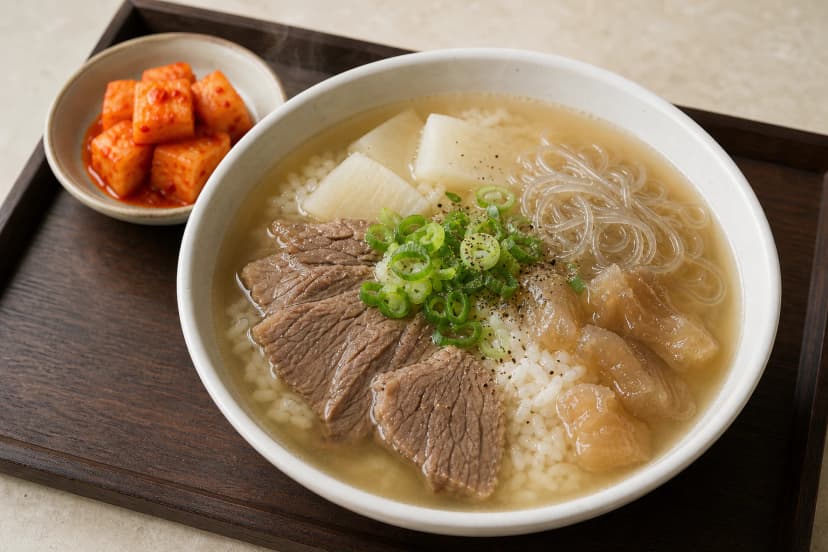
A clear Korean beef soup built from brisket, tendon, radish, and patient heat. The easy path keeps the meat-led identity and toryeom bowl service without turning it into milky seolleongtang.
Build a deep beef broth that stays clear enough to see the rice and sliced meat.
- Place & style
- Korea / clear meat-broth style Korean · Soup
- Yield
- 6 servings Beef · spice 0/5
- Time
- 4 hr 20 min, plus optional soaking or overnight chilling 25 min, plus optional soaking prep · 3 hr 55 min cook
- Cook level
- Patient Korean · gomguk · clear soup · winter · make-ahead · gukbap · toryeom
Bumbu / flavour foundation
beef brisket, tendon, Korean radish, garlic, onion, daepa, restrained seasoning
A blanch and clean-pot reset remove loose proteins before the real extraction. A quiet simmer keeps fat and sediment from emulsifying, while tendon supplies body and toryeom heats each rice bowl without prolonged boiling.
Equipment
- 8-10 L stockpot with lid
- large colander
- fine-mesh skimmer
- fine-mesh sieve lined with clean muslin
- tongs and fine skewer
- fat separator or shallow cooling containers
- six heatproof soup bowls
Read the visual cue before each step. The clock is guidance; the food decides when you move.
01 · Market sheet
Know what you are buying.
Every ingredient is shown in context, named in English and Bahasa Indonesia, and tied to its job in the dish.Meat or seafoodDaging atau seafood
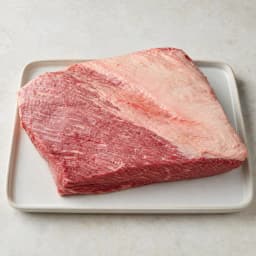
900 g, in one thick piece
beef brisket
sandung lamur sapi
meaty broth base and tender sliced topping
Watch: Use fresh uncured beef; corned brisket will make the broth salty and non-traditional.
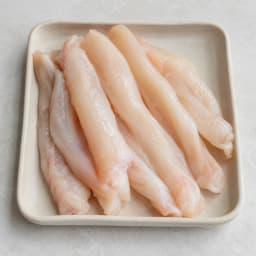
450 g
cleaned beef tendon
urat sapi yang sudah dibersihkan
soft gelatinous contrast and broth body without a bone-heavy emulsion
Watch: Tendon takes longer than brisket; judge each piece separately before slicing.
Dry pantryBahan kering

about 8 L
fresh water, divided
air bersih, dibagi
cold soak, disposable blanch, and measured clear broth

16 g, plus extra at the table
fine salt
garam halus
seasons the strained broth while leaving final adjustment to each diner
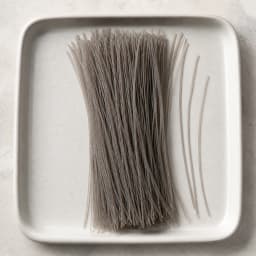
80 g dry
sweet-potato starch noodles, optional
soun ubi jalar Korea, opsional
springy optional noodle layer without clouding the stock
Watch: Check the pack if gluten avoidance is required; seasoning sachets are not used.
Fresh produceSayur & bahan segar
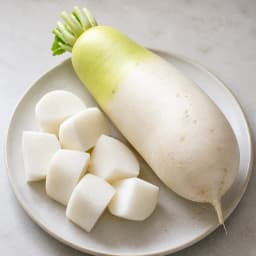
350 g, peeled and cut into 5 cm chunks
Korean radish or daikon
lobak Korea atau daikon
gentle sweetness and clean vegetal depth in the broth
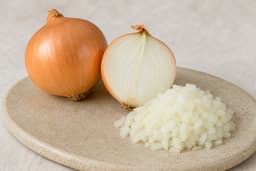
1 medium, about 180 g, quartered
brown onion
bawang bombai
rounded sweetness that is strained from the final broth
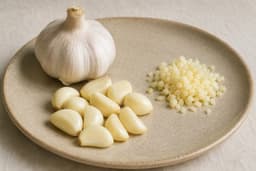
40 g, about 10 cloves, lightly crushed
garlic cloves
siung bawang putih
restrained aromatic warmth through the long simmer
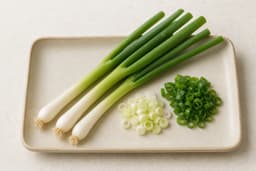
100 g, about 4 standard spring onions
large spring onions or daepa, divided
daun bawang besar, dibagi
whole whites perfume the stock; finely sliced green parts finish each bowl
SaucesSaus & bumbu botol

15 ml
fish sauce
kecap ikan
small final dose of savour without making the broth taste sauced
Watch: Contains fish; soup soy usually contains soy and may contain wheat.
SpicesRempah
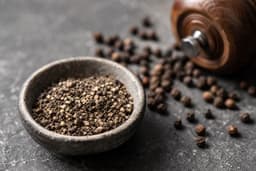
2 g, about 1 tsp
freshly ground black pepper
lada hitam yang baru digiling
warm table seasoning over the finished clear bowl
GarnishPelengkap
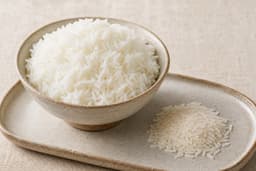
800 g cooked
hot cooked short-grain rice
nasi beras bulir pendek panas
hot prepared base for gomtang-gukbap service
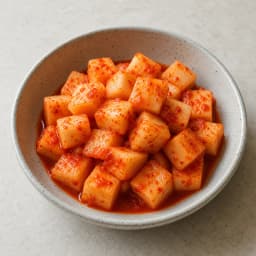
300 g, to serve
prepared kkakdugi radish kimchi
kimchi lobak kkakdugi siap makan
crisp fermented side traditionally paired with the mild beef broth
Watch: Kimchi may contain fish, crustacea, soy, or wheat depending on the recipe; read the exact label.
Calculated estimate · per serving
Nutrition information
1 of 6 bowls; includes the authored rice, noodles, beef, tendon, radish, and broth
- Energy
- 2180 kJ521 kcal
- Protein
- 43.5 g
- Carbohydrate
- 52.4 g
- Sugars
- 3.2 g
- Dietary fibre
- 2.4 g
- Total fat
- 14.8 g
- Saturated fat
- 5.1 g
- Sodium
- 930 mg
How this estimate was calculated
Calculated from the authored edible ingredient weights using representative AFCD Release 3 and USDA FoodData Central profiles, then divided by the recipe yield. Energy follows the FSANZ ingredient-contribution method. Optional serving accompaniments are excluded. The model allocates the edible cooked yield from the authored brisket, tendon, rice, noodles, radish, seasoning, and measured broth across six bowls; discarded scum and skimmed fat are excluded.
Calculated estimate only, not a laboratory result or personalised dietary advice. Actual values vary with brands, produce, meat trim, substitutions, final serving size, and how much cooking or rendered oil is left in the pan or skimmed. Check packaged labels for allergens and sodium; consult an accredited practising dietitian or clinician for medical dietary needs. Beef trim, collagen extraction, how aggressively the chilled stock is de-fatted, broth reduction, and table salt or kimchi materially change the finished bowl.
Reference data: Australian Food Composition Database · FSANZ calculation method · USDA FoodData Central · calculated 2026-07-15
02 · Method
Cook in order. Read the decisive cue.
6 stages · 4 hr 20 min, plus optional soaking or overnight chilling total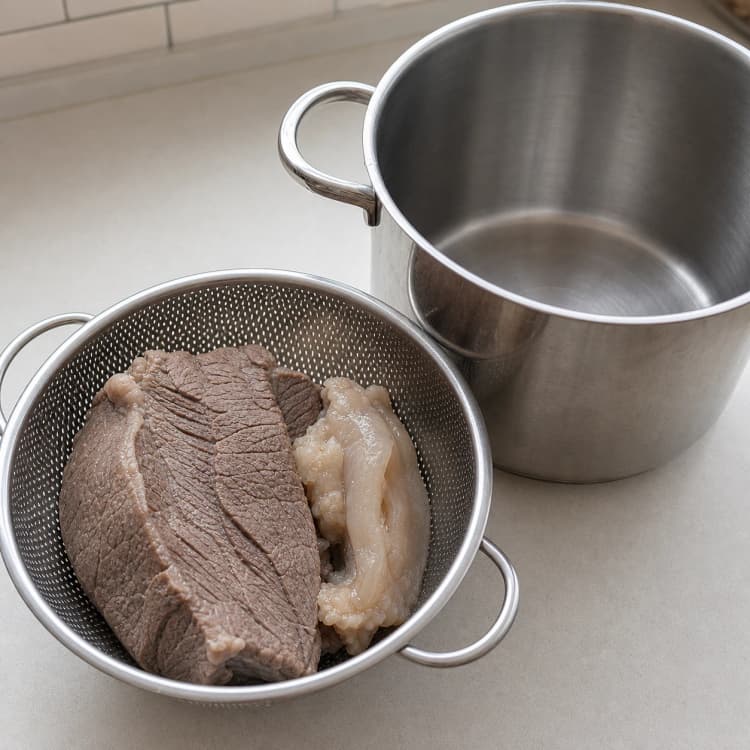
Stage 01
Soak, blanch, and reset the pot
Trim only thick external fat from the brisket and tendon. For the clearest result, cover both with cold water and refrigerate for 1 hour, then drain; skip the soak when time is short. Cover in the stockpot with about 2.5 L fresh water, bring to a boil, and blanch uncovered for 10 minutes. Drain, rinse meat under cool running water, scrub away clinging foam, and wash the pot with hot soapy water. Treat the blanched meat as not yet safely cooked.
- Move on when
- Beef surfaces are clean grey-brown with no beige foam or dark clots, and the pot has no residue.
- Common mistake
- Reusing blanch water or a dirty pot defeats the clear-broth reset.
- Recovery
- Pause before the next step, compare the cue, then correct heat, moisture, or seasoning while the dish is still flexible.
Stage 02
Start the fresh meat broth
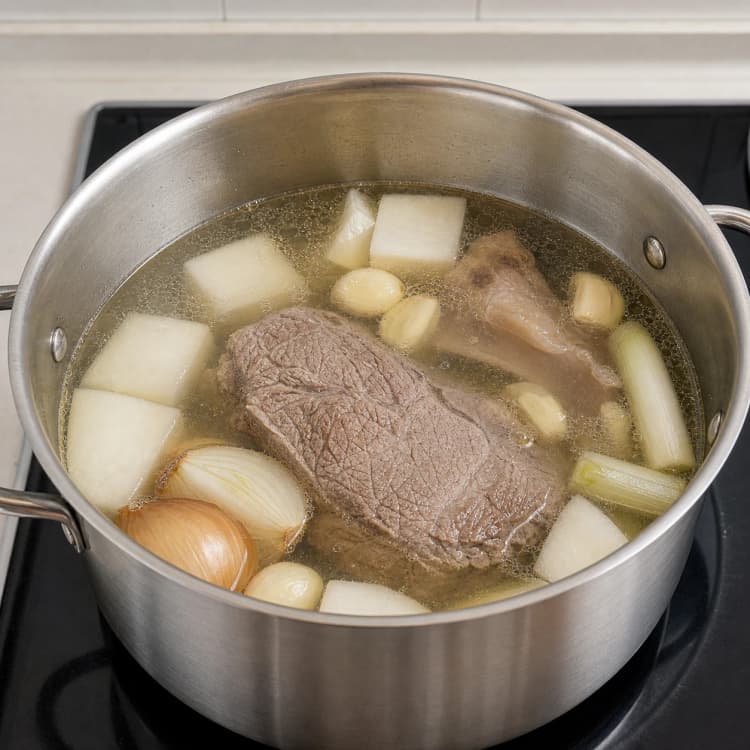
Return the clean brisket and tendon to the washed pot. Add the prepared radish, onion, garlic, and the white/light-green lengths from the spring onions; reserve dark green slices for serving. Add 4.5 L fresh water. Bring just to a boil over medium-high, skimming repeatedly, then immediately reduce the heat.
- Move on when
- The liquid is light amber with meat visible below it and only a few clean fat glints.
- Common mistake
- Walking away during the first boil lets foam break up and circulate through the stock.
- Recovery
- Lower the heat immediately, skim or stir gently, and continue at a small simmer until the surface calms.
Stage 03
Hold a quiet simmer and test each cut
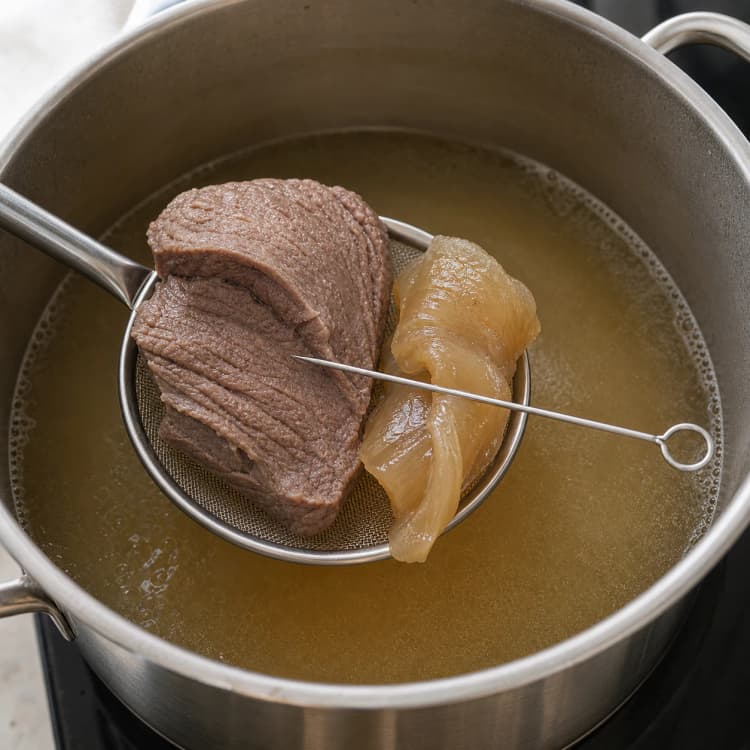
Partly cover and maintain 88-95°C: small edge bubbles and an occasional centre bubble, never a rolling boil. Skim during the first hour. Begin testing brisket at 1 hour 45 minutes and tendon at 2 hours 15 minutes. Remove each only when a skewer enters with little resistance; tendon should bend easily and look translucent. Chill the pieces just long enough to slice neatly. Continue the broth with the aromatics until the final cut is tender.
- Move on when
- Broth remains clear; tender brisket slices without crumbling and tendon is supple rather than rubbery.
- Common mistake
- One timer for both cuts either dries brisket or leaves tendon tough.
- Recovery
- Lower to a gentle simmer and give it more time; texture fixes happen slowly, not with harder heat.
Stage 04
Strain, de-fat, and season lightly
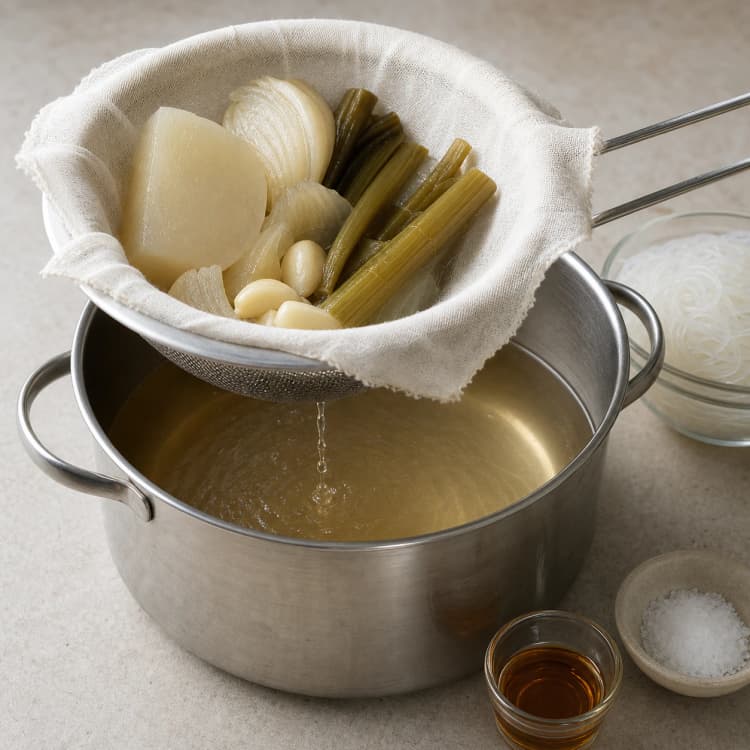
Strain through a lined fine sieve without pressing the spent vegetables. For same-day service, rest 10 minutes and skim surface fat or use a separator. For the cleanest make-ahead bowl, cool broth in shallow containers from 60°C to 21°C within 2 hours and then to 5°C within another 4 hours; refrigerate and lift off solid fat. Reheat to a boil, add the fish sauce and 12 g of the salt, then adjust cautiously with the remaining salt. Soak dangmyeon according to its pack and cook it in the boiling broth only until tender.
- Move on when
- The hot broth is clear golden, full-bodied but not greasy, and mildly seasoned before table salt.
- Common mistake
- Pressing vegetables clouds the stock; leaving a deep hot pot to cool slowly is unsafe.
- Recovery
- Stop and discard the unsafe ingredient. Restart with a prepared edible version from a trusted food supplier.
Stage 05
Slice and warm each bowl by toryeom
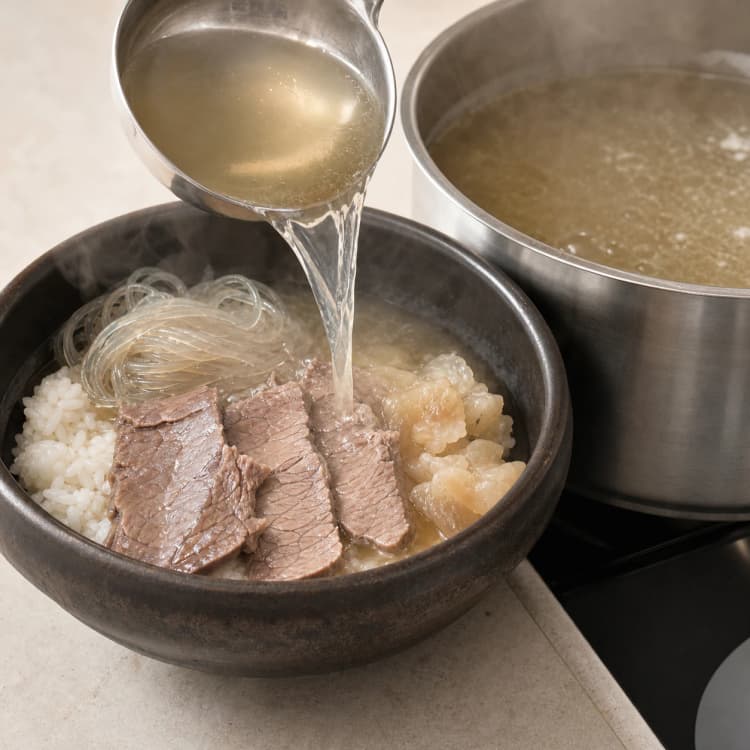
Slice brisket across the grain and tendon into bite-size pieces. Put hot cooked rice, noodles if used, brisket, and tendon into each heatproof bowl. Keep broth at a full boil. Ladle broth over one bowl, hold the solids back with the ladle, and pour broth into the pot; repeat once, then fill the bowl with final boiling broth. Repeat bowl by bowl.
- Move on when
- Rice and meat are steaming hot while the stock still shows each grain and slice clearly.
- Common mistake
- Leaving rice to boil in the main pot releases starch and clouds every serving.
- Recovery
- Lower the heat immediately, skim or stir gently, and continue at a small simmer until the surface calms.
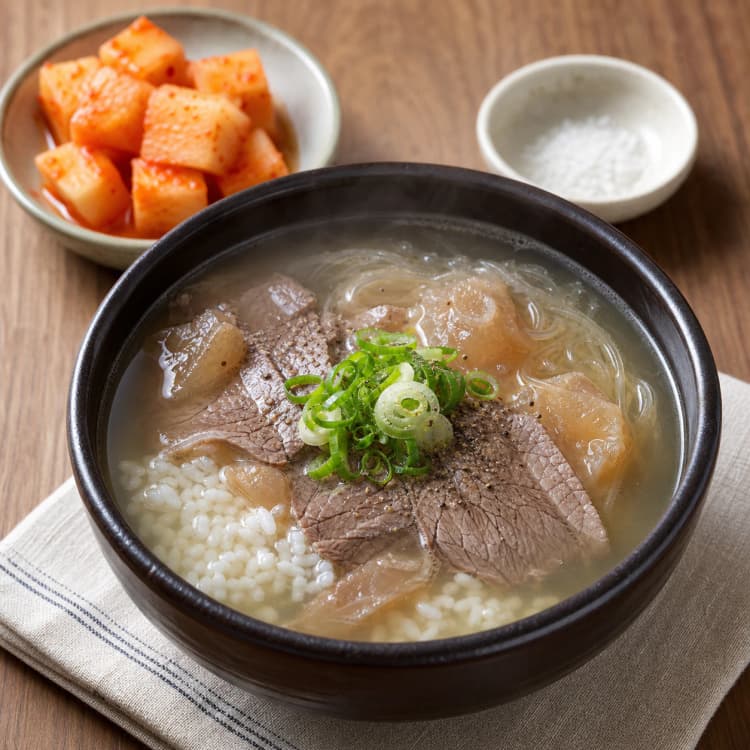
Stage 06
Finish hot and store safely
Top with the reserved spring-onion greens and black pepper. Serve immediately with prepared kkakdugi and extra salt at the table. Keep serving broth at or above 60°C. Cool leftovers by the FSANZ two-stage limit in shallow containers, refrigerate below 5°C for up to 4 days, and reheat rapidly until steaming; avoid repeated cooling and reheating.
- Move on when
- The bowl is piping hot, clear, clean-edged, and finished with bright green onion beside crisp kimchi.
- Common mistake
- Letting a large stockpot drift through 5-60°C for hours makes a make-ahead soup unsafe.
- Recovery
- Stop and discard the unsafe ingredient. Restart with a prepared edible version from a trusted food supplier.
03 · Source & shop
Where the guidance comes from.
Technique guidance is stable editorial material. Prices, stock, and local availability should be rechecked before a special trip.Melbourne
- Start with a Korean, Chinese, or Vietnamese butcher for fresh beef tendon and an intact brisket piece. A mainstream butcher or supermarket can cover brisket; use the all-brisket variant when tendon would require a second trip.
- KT Mart at 289 Elizabeth Street and Tokyo Hometown at 440 Elizabeth Street are documented CBD Korean-grocery routes for dangmyeon, kkakdugi, Korean radish, and Korean-label seasonings. Their directory pages confirm locations, not live ingredient stock.
- Daikon, onion, garlic, spring onion, rice, salt, black pepper, and fish sauce are ordinarily available from Melbourne supermarkets or Asian grocers. Compare exact kimchi labels for fish, crustacea, soy, and wheat.
- Keep beef and refrigerated kimchi cold on the trip home. Confirm tendon and Korean radish before travelling because cut and produce availability vary by day.
Jakarta
- Ask a trusted pasar or supermarket butcher for sandung lamur and cleaned urat sapi. Buy from a counter with fast turnover and reliable refrigeration.
- Korean supermarkets and broader Asian grocers are the practical route for dangmyeon, kkakdugi, and Korean-labelled seasonings; ordinary daikon is an acceptable radish path.
- Pasar produce covers onion, garlic, spring onion, and radish; rice, salt, pepper, and fish sauce need no specialist trip.
- Marketplace listings are discovery leads only. Confirm seller, delivery temperature, pack date, allergens, and current availability before ordering chilled beef or kimchi.
Editorial provenance
Maangchi - Gomtang (Korean beef soup)
Cross-checks the long, clear beef-and-tendon broth, repeated skimming, sliced brisket and tendon, rice, noodles, radish, and table seasoning used in a home-scale gomtang bowl.
Supports: Korean gomtang identity, clear long-simmered beef broth, rice, beef, radish, and scallion service.
Boundary: Gomtang names a family of Korean beef soups with regional and household variation. This streamlined brisket-and-tendon version does not claim to reproduce every bone, offal, or restaurant stock formula.
Reviewed 2026-07-15Generated reference image · not verified cook evidence
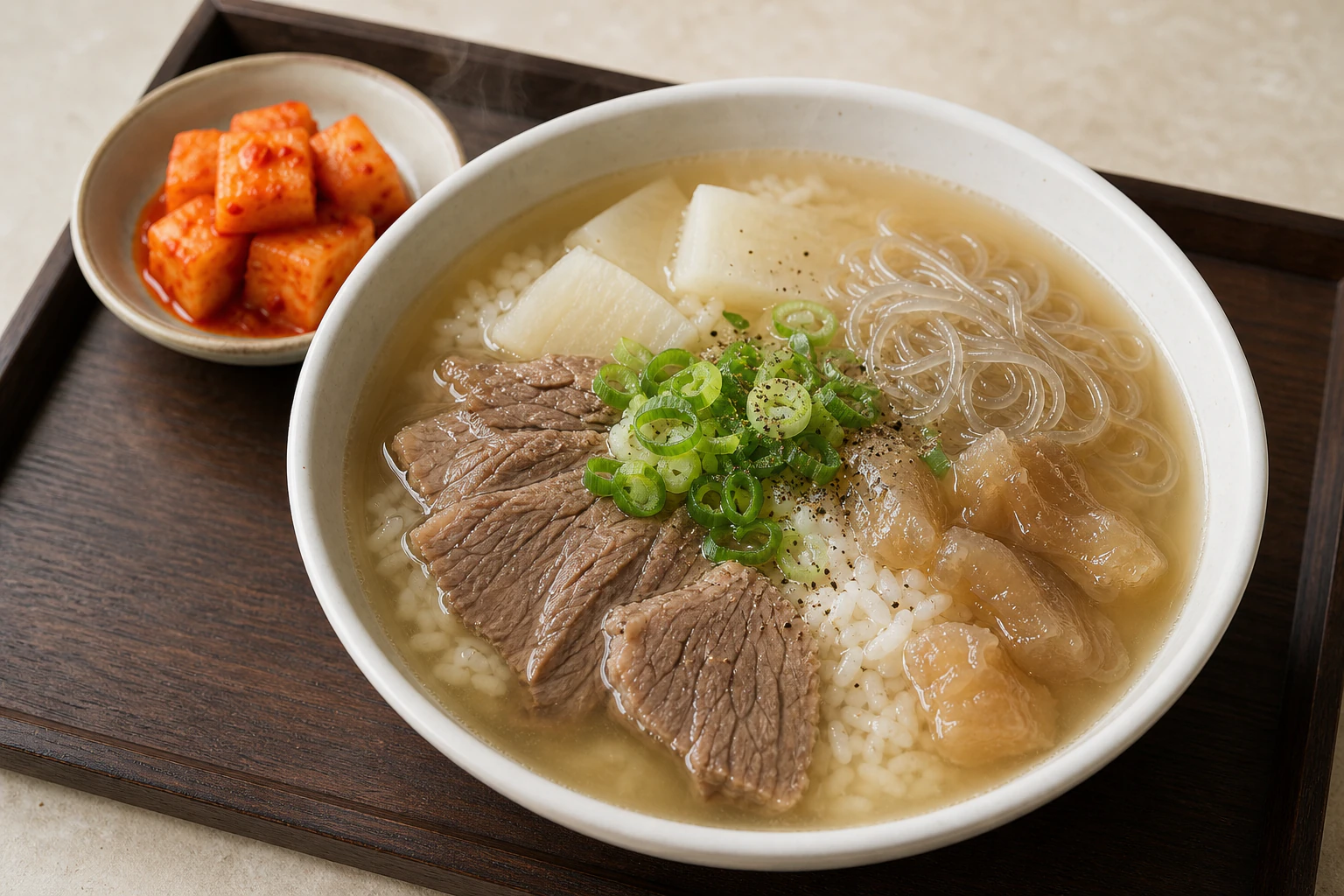
Recorded as a local editorial or generated visual cue asset, not an independent external source.
Supports: finished-dish appearance, image credit boundary.
Boundary: A local or generated asset is visual guidance, not evidence of authenticity, ingredient quantities, timing, safety, or method accuracy.
Reviewed 2026-07-15Bumbu Lens editorial method audit
Reviewed Easy Gomtang as an ordered cook flow with visual cues, common mistakes, and recovery notes.
Supports: method sequence, visual checkpoints, mistake and recovery notes.
Boundary: Use this as editorial guidance; run a tested-kitchen pass before publishing nutrition, safety guarantees, or commercial pack quantities.
Reviewed 2026-07-15Bumbu Lens Melbourne/Jakarta sourcing heuristic
Mapped ingredient groups to likely Melbourne grocer, supermarket, butcher, pasar, and Jakarta supermarket paths.
Supports: Melbourne sourcing, Jakarta sourcing, volatile availability boundary.
Boundary: Ingredient availability, price, and store stock change; verify with local grocers before travel, bulk shopping, or holiday cooking.
Reviewed 2026-07-15Food Standards Australia New Zealand - Cooling and reheating food
Applies two-stage cooling to the make-ahead broth: cool from 60°C to 21°C within two hours and from 21°C to 5°C within another four hours, using shallow containers before rapid reheating.
Supports: two-stage broth cooling, shallow-container storage, rapid reheating.
Boundary: A full stockpot cools too slowly as one mass. Divide and measure the broth rather than treating overnight refrigeration as automatically safe.
Reviewed 2026-07-15Your next cook
Kitchen notes
Record the batch size, timing, substitutions, and visual cue you want to remember next time.