Recipe 18 / 19
JP · Japan / composed pork-bone ramen
Tonkotsu Shoyu Ramen
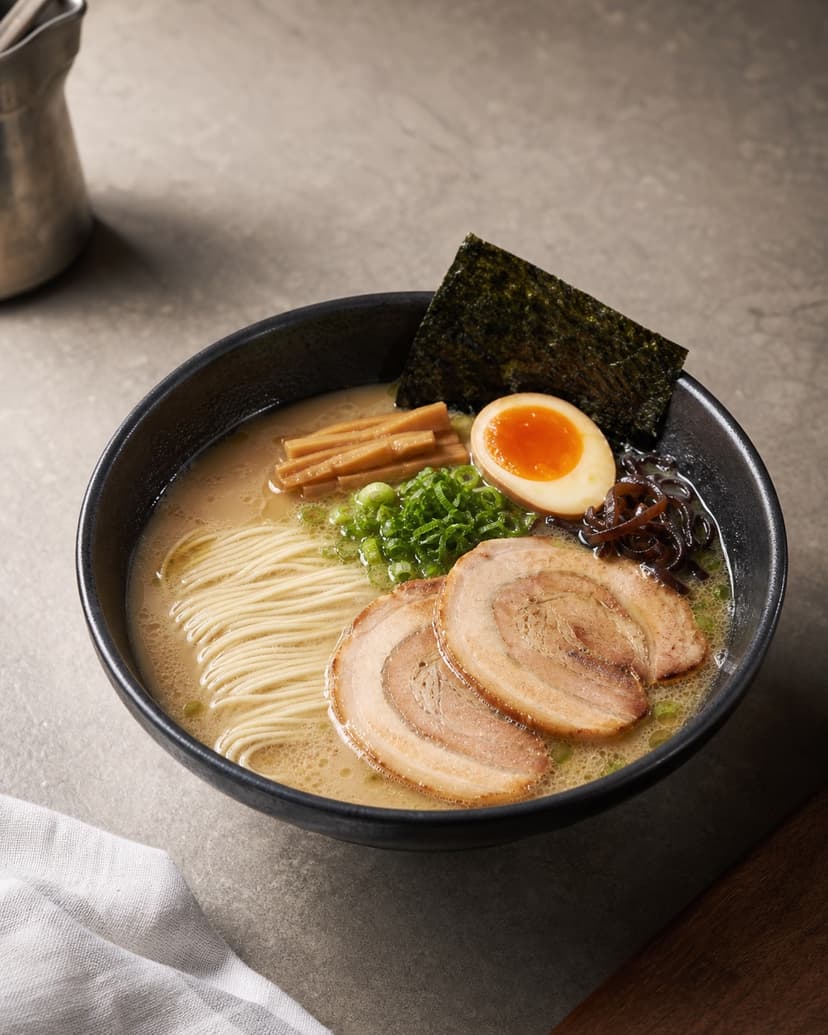
A two-day Japanese ramen masterclass built as separate, measurable systems: vigorously emulsified pork-bone paitan, concentrated shoyu tare, scallion aroma oil, rolled chashu, ajitama, fresh alkaline noodles, and a final one-minute bowl assembly.
Build an opaque ivory broth that tastes like pork - not dairy - and assemble six balanced bowls before the noodles soften.
- Place & style
- Japan / composed tonkotsu-shoyu style Japanese · Noodles
- Yield
- 6 generous bowls Pork · spice 0/5
- Time
- 14 hr 30 min + overnight soaking and chilling 2 hr 30 min prep · 12 hr cook
- Cook level
- Patient Japanese · ramen · tonkotsu ramen · shoyu ramen · paitan · pork bone broth · chashu · ajitama · two-day cook · freezer-friendly broth
Bumbu / flavour foundation
pork-bone paitan, shoyu tare, scallion aroma oil, rolled chashu, ajitama
Blanching and scrubbing remove blood and grey residue; a true rolling boil then disperses collagen and pork fat into an opaque paitan. Tare controls salt one bowl at a time, aroma oil carries fragrance, and cold-sliced chashu plus fully staged toppings protect the final sixty-second assembly.
Equipment
- 10-12 L heavy stockpot
- second large noodle pot
- snug covered chashu pot
- medium-fine strainer
- immersion blender
- probe thermometer
- six heatproof ramen bowls
Read the visual cue before each step. The clock is guidance; the food decides when you move.
01 · Market sheet
Know what you are buying.
Every ingredient is shown in context, named in English and Bahasa Indonesia, and tied to its job in the dish.Meat or seafoodDaging atau seafood
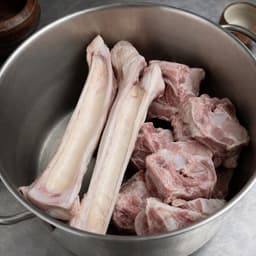
1.5 kg + 1.5 kg
pork neck/back bones plus split femur bones
tulang leher/punggung babi dan tulang paha babi yang dibelah
meaty collagen and split marrow structure for the emulsified paitan
Watch: Contains pork. Never attempt to split dense bones at home with an ordinary knife.
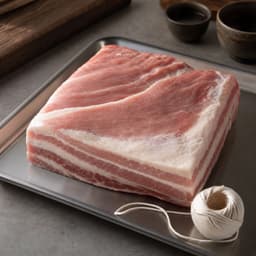
900 g
skinless pork belly slab
lembar perut babi tanpa kulit
rolls into a cold-sliceable chashu cylinder with alternating meat and fat
Watch: Contains pork; chill fully in braising liquid before slicing.
Dry pantryBahan kering
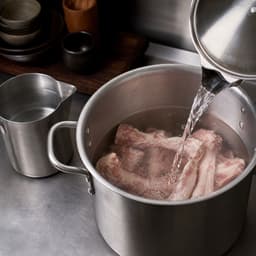
4.85 L + as-needed boiling top-ups
fresh water, divided
air bersih, dibagi
4.5 L starts the broth, boiling top-ups keep bones covered, and measured portions support chashu and egg marinades
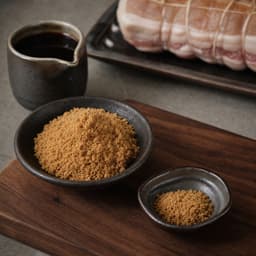
24 g
brown sugar, divided
gula cokelat, dibagi
12 g balances tare and 12 g rounds the chashu braise
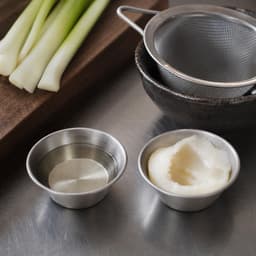
100 ml
neutral oil or rendered pork lard
minyak netral atau lemak babi cair
carries light-gold scallion aroma into every bowl
Watch: Refrigerate the strained aromatic oil and use within 4 days or freeze in portions.
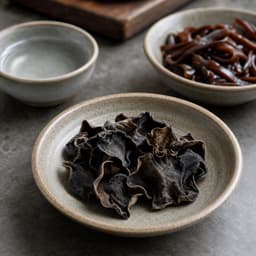
12 g
dried kikurage wood-ear mushrooms
jamur kuping kikurage kering
restrained crisp contrast after soaking, trimming, and blanching
Watch: Soak in the refrigerator, blanch briefly, and never eat dried mushrooms without rehydrating and cooking.
Fresh produceSayur & bahan segar
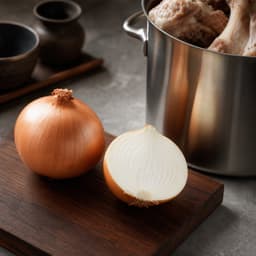
200 g
yellow onion
bawang bombai kuning
late-hour sweetness without muddying the long pork extraction
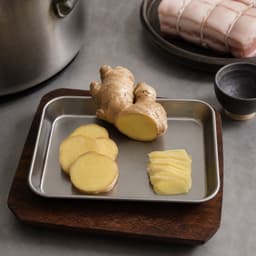
50 g
fresh ginger, divided
jahe segar, dibagi
30 g perfumes the broth's final hour and 20 g seasons the chashu braise
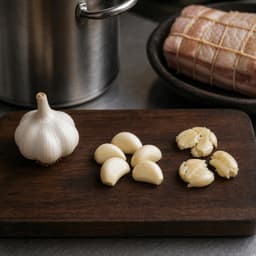
55 g
garlic, divided
bawang putih, dibagi
40 g enters the broth late and three crushed cloves season the chashu
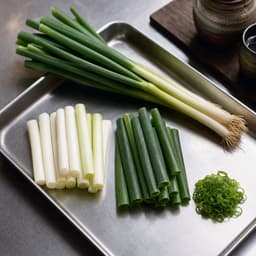
150 g
scallions, whites and greens divided
daun bawang, bagian putih dan hijau dibagi
whites perfume aroma oil, green tops braise with chashu, and fine fresh slices finish each bowl
SaucesSaus & bumbu botol
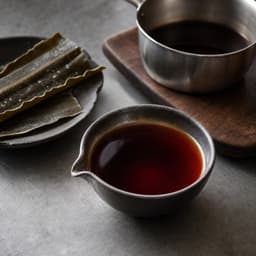
360 ml
Japanese koikuchi soy sauce, divided
shoyu koikuchi Jepang, dibagi
135 ml in tare, 125 ml in chashu, and 100 ml in ajitama marinade
Watch: Contains soy and commonly wheat.
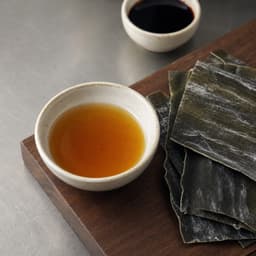
45 ml
Japanese usukuchi soy sauce
shoyu usukuchi Jepang
lighter-coloured salty soy component in the tare
Watch: Contains soy and commonly wheat; usukuchi is usually saltier, not lower-sodium.
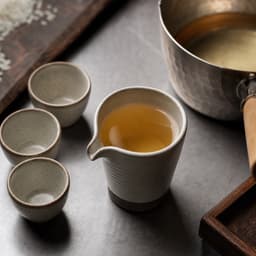
245 ml
hon-mirin, divided
hon-mirin, dibagi
20 ml rounds the tare, 125 ml sweetens chashu, and 100 ml seasons ajitama
Watch: Contains alcohol; use a labelled alcohol-free mirin-style seasoning when required.
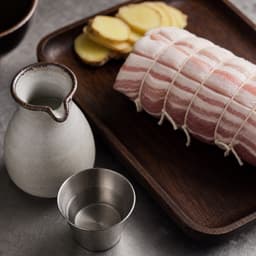
76 ml
sake, divided
sake, dibagi
16 ml in tare and 60 ml in the pork belly braise
Watch: Contains alcohol.
SpicesRempah
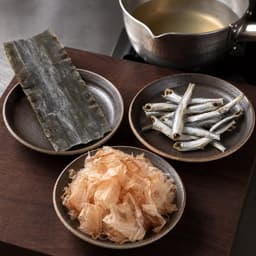
6 g + 6 g + 6 g
kombu, cleaned niboshi, and katsuobushi
kombu, niboshi yang dibersihkan, dan katsuobushi
cold-steeped marine umami in the concentrated shoyu tare
Watch: Contains fish; remove niboshi heads and dark guts to reduce bitterness.
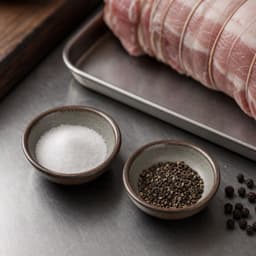
5 g + 1 g
fine salt and black pepper
garam halus dan lada hitam
measured direct seasoning on the chashu before searing
ChilledDingin
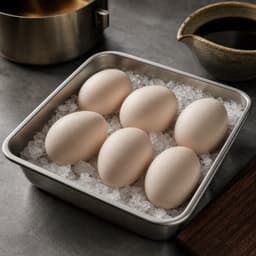
6 eggs
large refrigerated eggs
telur ayam besar dingin
seven-minute ajitama with set whites and custardy centres
Watch: Contains egg. Use pasteurised eggs or cook yolks firm for pregnant, elderly, immunocompromised, or very young diners.
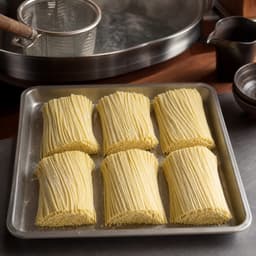
780 g
fresh straight alkaline ramen noodles
mi ramen alkali segar lurus
six fast-cooking portions that dilute and carry the seasoned broth
Watch: Contains wheat; buy six 130 g portions and follow the exact package cook time.
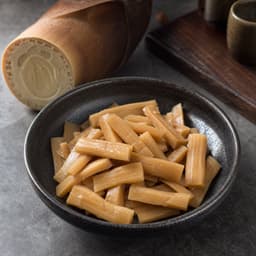
120 g
seasoned menma
menma berbumbu
fermented bamboo-shoot savour and crunch
Watch: Packaged menma may contain soy and wheat; check the label.
GarnishPelengkap
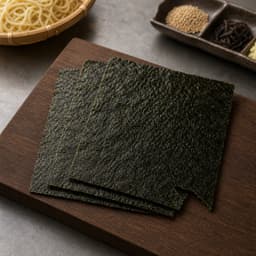
3 sheets
nori sheets
lembar nori
dry ocean aroma placed last so it remains structured
02 · Method
Cook in order. Read the decisive cue.
8 stages · 14 hr 30 min + overnight soaking and chilling total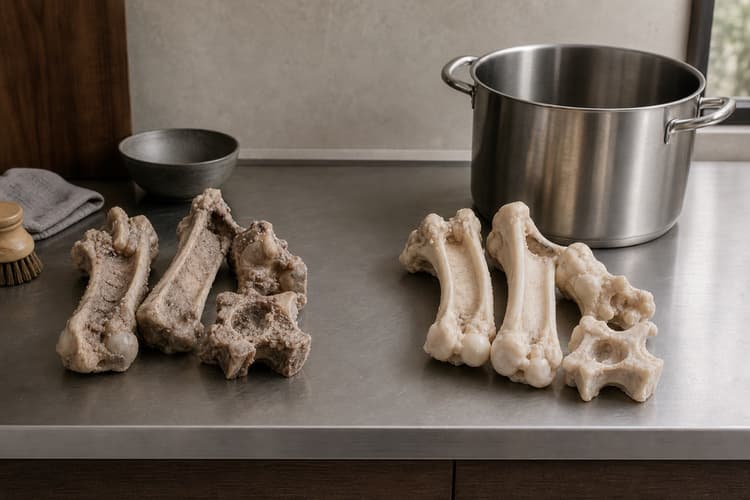
Stage 01
Cold-soak, blanch, and scrub every bone
Refrigerate the pork bones under cold water for 6-12 hours, changing the water twice; never soak on the counter. Cover with fresh water, boil hard for 15-20 minutes until the heavy grey foam subsides, drain, and discard that water. Under running water, scrub each bone and pick dark clots from every crevice. Wash the stockpot before the real broth begins. At the same time, refrigerate the tare soy, mirin, sake, kombu, and cleaned niboshi to cold-steep overnight.
- Move on when
- The final soak water is only faintly pink and every blanched bone surface is pale with no dark blood deposits or grey film.
- Common mistake
- Room-temperature soaking is unsafe, while keeping the blanch water or merely rinsing the outside makes stale, grey broth.
- Recovery
- Stop and discard the unsafe ingredient. Restart with a prepared edible version from a trusted food supplier.
Stage 02
Roll, sear, and begin the chashu
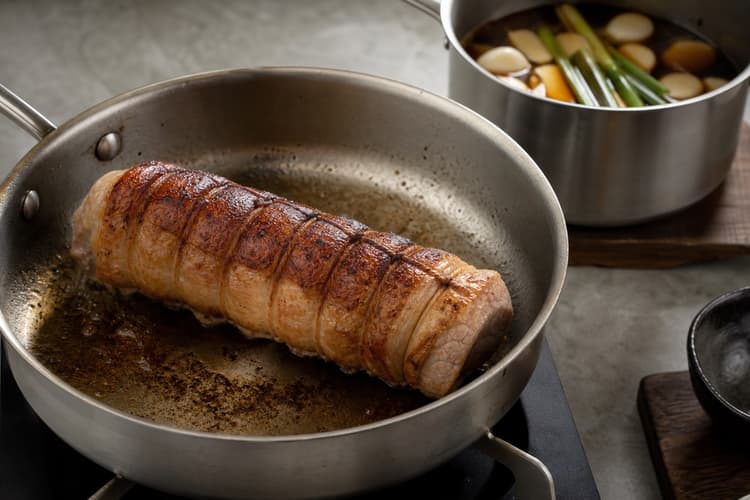
Roll the skinless pork belly tightly with the fat facing out and tie every 2-3 cm. Season with the measured salt and pepper, then sear every face until deep gold. Add 125 ml koikuchi, 125 ml mirin, 250 ml water, 60 ml sake, 12 g sugar, 20 g ginger, three crushed garlic cloves, and two scallion green tops. Bring to a boil, cover, and braise at 110°C for about 3 hours, turning hourly, until 90-93°C and probe-tender. Cool in its liquid and refrigerate overnight before slicing.
- Move on when
- The tied cylinder stays intact, feels tender to a probe at 90-93°C, and later cuts cold into clean spirals with a glossy brown edge.
- Common mistake
- Loose tying produces an uneven roll; slicing warm chashu tears the soft belly instead of making intact rounds.
- Recovery
- Pause before the next step, compare the cue, then correct heat, moisture, or seasoning while the dish is still flexible.
Stage 03
Drive the paitan with a controlled rolling boil
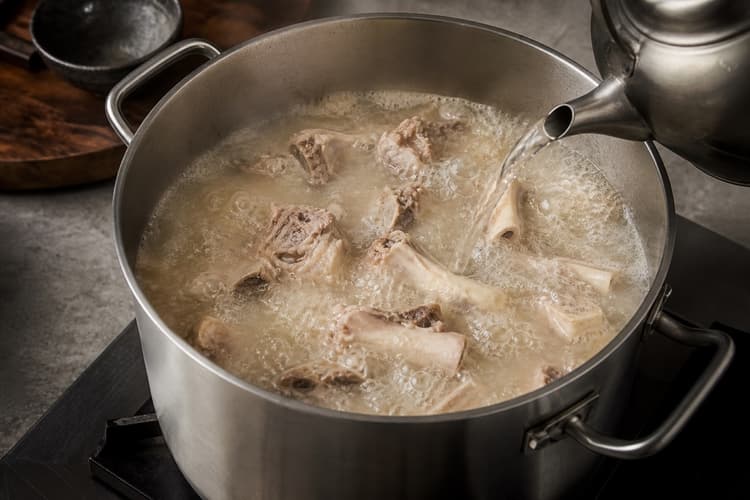
Return clean bones with 4.5 L fresh water. Boil vigorously but controllably, uncovered or partly uncovered, so the bones circulate. Stir from the bottom every 30-45 minutes and add only boiling water to keep bones covered by 2-3 cm. Never leave the pot unattended. Add onion, 30 g ginger, and 40 g garlic only for the final hour so they stay sweet rather than muddy or bitter.
- Move on when
- Constant turbulence moves the bones and the liquid changes progressively from clear to opaque ivory without dairy.
- Common mistake
- A quiet simmer makes clearer, thinner stock; letting exposed bones dry or the base scorch creates harsh flavour.
- Recovery
- Reduce uncovered and season in small rounds, checking the visual cue before adding more salt, sugar, or sauce.
Stage 04
Finish shoyu tare and scallion aroma oil
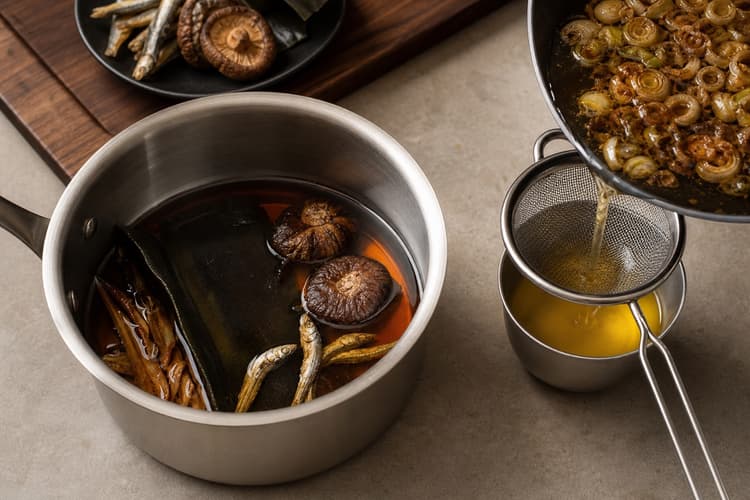
Heat the cold-steeped tare to 71°C and hold 10 minutes. Remove kombu, raise to 82°C for 15 minutes, add katsuobushi for the final 5 minutes, dissolve 12 g sugar, and strain without boiling hard. Separately cook 50 g scallion whites in 100 ml neutral oil or lard over medium-low for 10-15 minutes until light gold; cool and strain.
- Move on when
- Tare smells rounded rather than alcoholic or bitter, while the clear aroma oil is light gold with no dark scallion flecks.
- Common mistake
- Boiling kombu makes tare slimy or bitter, and burnt scallion oil cannot be repaired.
- Recovery
- Lower the heat immediately, skim or stir gently, and continue at a small simmer until the surface calms.
Stage 05
Strain, standardise, and re-emulsify the broth
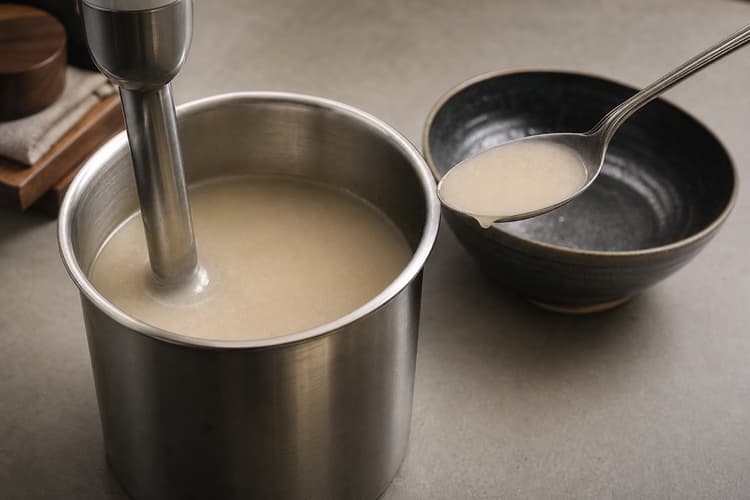
Strain the broth through a medium-fine strainer and press only enough to release liquid, not grit. Measure it: reduce or add boiling water to exactly 2.2 L, enough for calibration, six 320 ml bowls, and normal transfer loss. Return to a strong boil and immersion-blend directly in the tall open pot for 2-3 minutes. Never seal boiling stock in a countertop blender.
- Move on when
- The finished broth is smooth opaque ivory, lightly coats a spoon, has no separate greasy slick, and sets into a firm collagen gel when chilled.
- Common mistake
- An unknown final volume makes every tare ratio unreliable; a sealed blender can eject dangerously hot stock.
- Recovery
- Pause before the next step, compare the cue, then correct heat, moisture, or seasoning while the dish is still flexible.
Stage 06
Cook ajitama and stage every topping
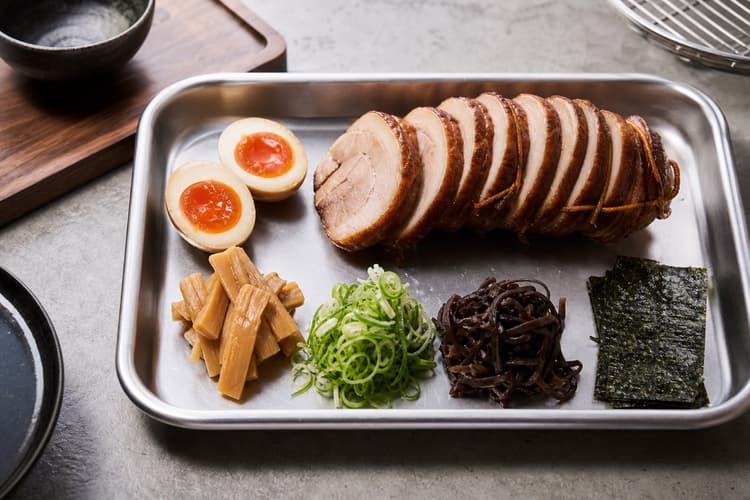
Lower cold eggs into already boiling water, stir gently during the first minute, and boil exactly 7 minutes. Ice for 15 minutes, peel, then marinate 4-6 hours in 100 ml koikuchi, 100 ml mirin, and 100 ml water. Soak kikurage in the refrigerator, trim and blanch it; portion menma, halve nori, slice scallions, and cut the fully cold chashu before warming only the needed slices.
- Move on when
- Egg whites are fully set around custardy amber yolks; chashu rounds are intact and every cold topping has its own measured service container.
- Common mistake
- Overnight quick-brining makes eggs rubbery and salty, while last-minute topping prep guarantees overcooked noodles.
- Recovery
- Pause before the next step, compare the cue, then correct heat, moisture, or seasoning while the dish is still flexible.
Stage 07
Calibrate tare and stage hot bowls
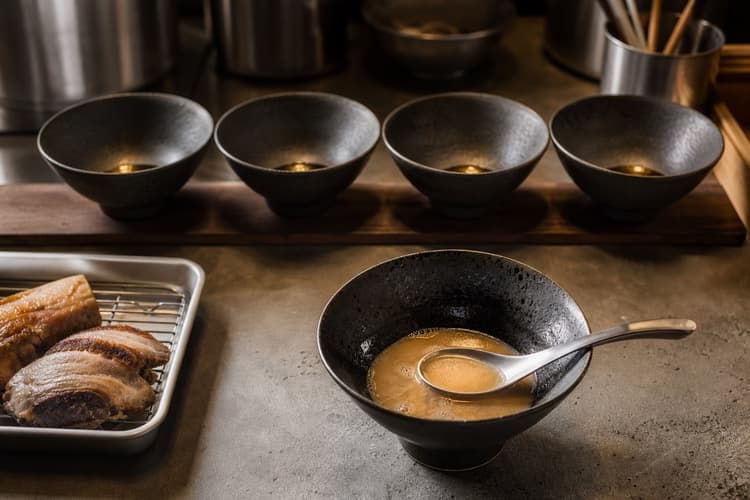
Test 15 ml tare with 160 ml boiling broth. Because soy brands vary, use 25 ml tare in a full bowl if the sample is salty, or increase in 5 ml steps if flat. Bring the main broth to a rolling boil and re-blend if separated. Warm all bowls with boiling water, then drain and dry them. Measure each bowl's tare, aroma oil, broth, noodles, and toppings before noodle water is used.
- Move on when
- The test broth tastes slightly more seasoned than standalone soup because 130 g noodles will soften the salinity.
- Common mistake
- Seasoning the whole stockpot removes control and makes one salty batch impossible to correct.
- Recovery
- Pause before the next step, compare the cue, then correct heat, moisture, or seasoning while the dish is still flexible.
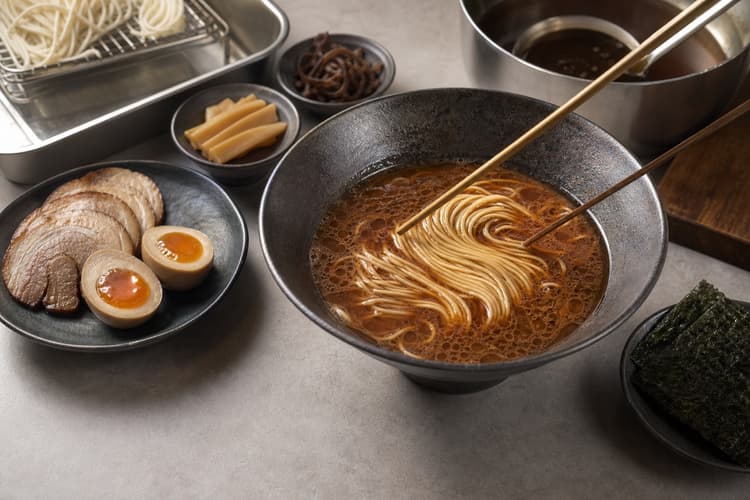
Stage 08
Cook noodles and assemble each bowl in sixty seconds
Into each dry warm bowl add 30 ml calibrated tare and 10 ml aroma oil. Cook one 130 g fresh noodle portion in abundant unsalted boiling water for its package time, usually 60-120 seconds; agitate immediately and drain aggressively. Pour 320 ml boiling broth into the seasonings and whisk once, add noodles, fold them into parallel lines, then place 2-3 chashu slices, one halved egg, 20 g menma, kikurage, scallion, and half a nori sheet without hiding all the broth. Serve immediately.
- Move on when
- Springy strands remain separate, broth is visible around a clean noodle fold, and the hot bowl reaches the diner within one minute of draining.
- Common mistake
- Cooking noodles before the bowl is ready, rinsing them, or letting them wait creates a soft clumped bowl no garnish can rescue.
- Recovery
- Pause before the next step, compare the cue, then correct heat, moisture, or seasoning while the dish is still flexible.
03 · Source & shop
Where the guidance comes from.
Technique guidance is stable editorial material. Prices, stock, and local availability should be rechecked before a special trip.Melbourne
- Best source: start at a Japanese grocer for pork neck/back bones plus split femur bones, yellow onion, fresh ginger, divided; buy pork neck/back bones plus split femur bones, fresh water, divided, brown sugar, divided from a high-turnover Melbourne supermarket, butcher, poultry shop, or fishmonger.
- Japanese pantry watch: compare exact labels for fresh water, divided, Japanese koikuchi soy sauce, divided, Japanese usukuchi soy sauce; protect pork neck/back bones plus split femur bones because it changes the identity or technique of Tonkotsu Shoyu Ramen.
- Acceptable swaps: keep the ingredient list simple before changing the bumbu balance.
- Allergen check: pork, soy, wheat, fish, egg, alcohol in mirin and sake; read every sauce, stock, crumb, and packaged Japanese ingredient rather than relying on the category name.
- Fresh vs packaged: buy yellow onion, fresh ginger, divided, garlic, divided fresh or properly chilled; packaged fresh water, divided, Japanese koikuchi soy sauce, divided, Japanese usukuchi soy sauce is useful when the seal and use-by date are sound.
Jakarta
- Best source: use a Japanese supermarket or trusted online grocer for tulang leher/punggung babi dan tulang paha babi yang dibelah, bawang bombai kuning, jahe segar, dibagi; buy pork neck/back bones plus split femur bones, fresh water, divided, brown sugar, divided from high-turnover Jakarta fresh suppliers.
- Japanese pantry watch: compare labels for fresh water, divided, Japanese koikuchi soy sauce, divided, Japanese usukuchi soy sauce; imported specialist items should remain cold, sealed, and within date.
- Acceptable swaps: keep the ingredient list simple before changing the bumbu balance.
- Allergen check: pork, soy, wheat, fish, egg, alcohol in mirin and sake; verify packaged products and pork, halal, or alcohol requirements for the exact brands you choose.
- Fresh vs packaged: use well-chilled proteins and clean produce or eggs; packaged fresh water, divided, Japanese koikuchi soy sauce, divided, Japanese usukuchi soy sauce is fine when dates and refrigeration are reliable.
Editorial provenance
Just One Cookbook - Easy Tonkotsu Ramen
Cross-checks a home-scale bowl built as separate components: cleaned pork bones and skin, emulsified tonkotsu broth, dashi, shoyu tare, freshly cooked noodles, chashu, ramen egg, menma, scallion, nori, and kikurage.
Supports: multi-component ramen architecture, pork-bone emulsion and shoyu tare, bowl-by-bowl noodle and topping assembly.
Boundary: This is a modern pressure-cooker home adaptation, not a ramen-shop production standard. Bumbu Lens may use a longer stockpot route, but must preserve the separation of broth, tare, aroma oil, noodles, and toppings rather than presenting one fixed formula as canonical.
Reviewed 2026-07-10Government of Japan - Scientifically Breaking Down What Makes Japanese Ramen So Delicious
Uses an official interview with a Kyushu Sangyo University tonkotsu researcher to distinguish broth from seasoning: high-heat pork-bone boiling creates a cloudy fat-and-liquid emulsion, while shoyu names the soy-based tare added separately to the bowl.
Supports: tonkotsu broth versus shoyu tare distinction, high-heat emulsification, tare-first bowl architecture.
Boundary: The researcher stresses that bones, extraction, scum handling, noodles, tare, and ratios vary by shop. The app's formula is one teachable home composition, not a universal restaurant standard.
Reviewed 2026-07-10Shin-Yokohama Ramen Museum - Hakata Ramen
Uses the specialist museum's regional guide to cross-check vigorous long boiling of mainly pork bones, opaque broth, low-hydration fine straight noodles, and restrained toppings such as scallion, chashu, kikurage, and nori.
Supports: Kyushu and Hakata tonkotsu context, hard-boiled pork-bone broth, fine noodles and restrained toppings.
Boundary: Bumbu Lens's title describes a tonkotsu broth seasoned with shoyu tare; it should not imply that this exact topping set or tare is the singular canonical Hakata bowl. Kurume, Hakata, Nagahama, and modern shop styles differ.
Reviewed 2026-07-10FoodSafety.gov - Safe Minimum Internal Temperatures
Applies 63°C / 145°F plus a three-minute rest to intact pork chashu, 71°C / 160°F to ground pork, 71°C / 160°F to egg dishes, 74°C / 165°F to leftovers, and a thermometer rather than colour as the safety control.
Supports: pork safety targets, egg and leftover safety targets, thermometer verification.
Boundary: A jammy ramen egg is intentionally less cooked than a firm-yolk government endpoint and therefore carries residual risk. Use pasteurised eggs or a fully cooked egg for vulnerable diners, and do not treat marinade as a kill step.
Reviewed 2026-07-10Food Standards Australia New Zealand - Cooling and reheating food
Applies two-stage cooling to broth, tare, chashu, and eggs: 60°C to 21°C within two hours, then 21°C to 5°C within four hours, using shallow portions, ice baths, airflow, and a clean probe; reheat rapidly rather than in a holding appliance.
Supports: two-stage stock cooling, shallow-container and ice-bath controls, rapid reheating.
Boundary: A full ramen stockpot will cool too slowly if placed intact in a home refrigerator. Divide, measure, label, and chill components separately; this guidance does not validate the recipe's claimed storage life.
Reviewed 2026-07-10Bumbu Lens generated visual cue reference
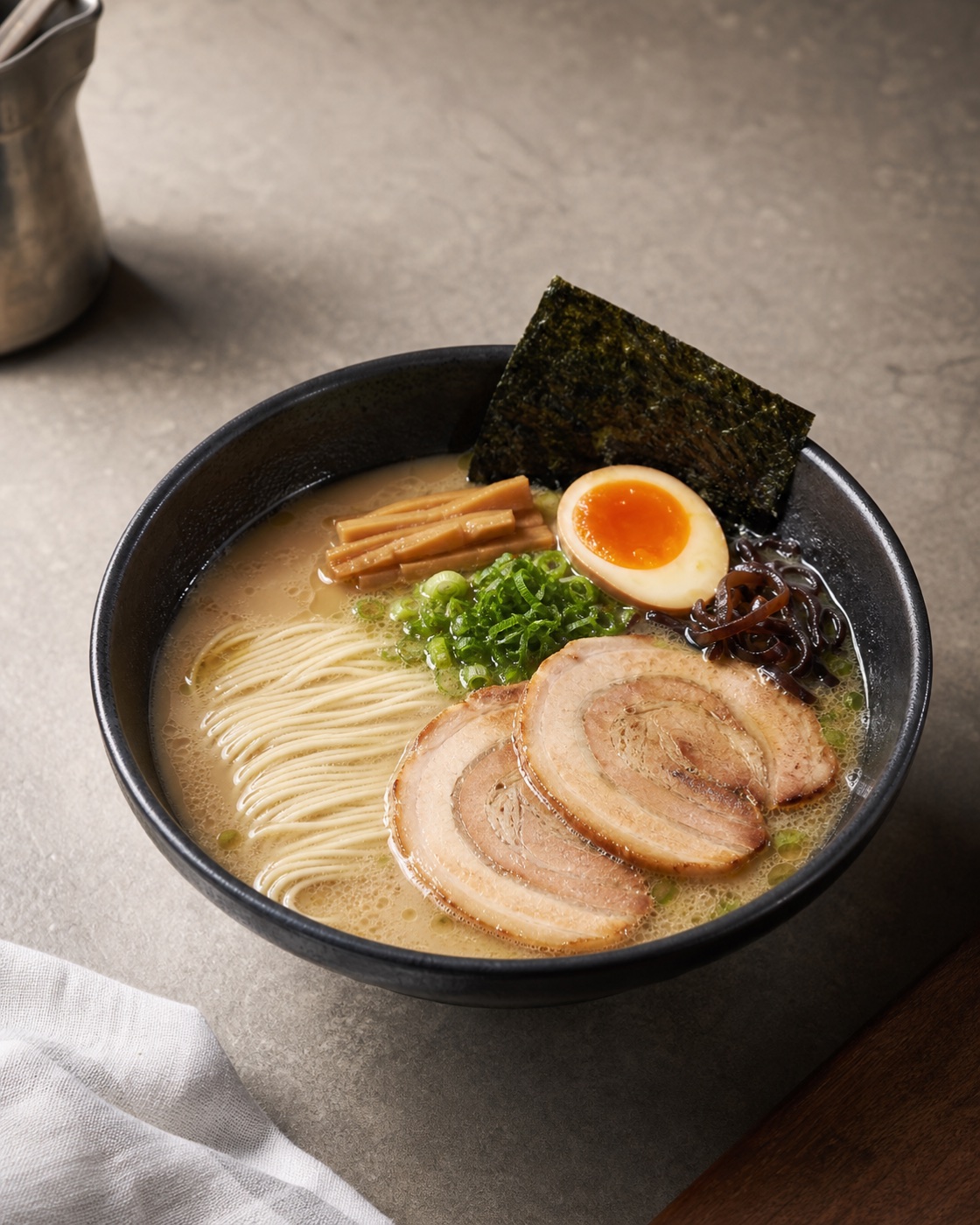
Recorded as a local editorial or generated visual cue asset, not an independent external source.
Supports: finished-dish appearance, image credit boundary.
Boundary: A local or generated asset is visual guidance, not evidence of authenticity, ingredient quantities, timing, safety, or method accuracy.
Reviewed 2026-07-10Bumbu Lens editorial method audit
Reviewed Tonkotsu Shoyu Ramen as an ordered cook flow with visual cues, common mistakes, and recovery notes.
Supports: method sequence, visual checkpoints, mistake and recovery notes.
Boundary: Use this as editorial guidance; run a tested-kitchen pass before publishing nutrition, safety guarantees, or commercial pack quantities.
Reviewed 2026-07-10Bumbu Lens Melbourne/Jakarta sourcing heuristic
Mapped ingredient groups to likely Melbourne grocer, supermarket, butcher, pasar, and Jakarta supermarket paths.
Supports: Melbourne sourcing, Jakarta sourcing, volatile availability boundary.
Boundary: Ingredient availability, price, and store stock change; verify with local grocers before travel, bulk shopping, or holiday cooking.
Reviewed 2026-07-10Your next cook
Kitchen notes
Record the batch size, timing, substitutions, and visual cue you want to remember next time.