Recipe 15 / 19
GB · Britain / modern restaurant tradition
Beef Wellington
A centre-cut beef tenderloin wrapped in dry mushroom duxelles, prosciutto, a paper-thin spinach-chive crêpe, and crisp all-butter puff pastry. This masterclass transparently uses both modern moisture barriers for a reliable, sharply layered result.
Synchronise a crisp pastry shell with safely rested, evenly pink beef and thin, distinct moisture-barrier layers.
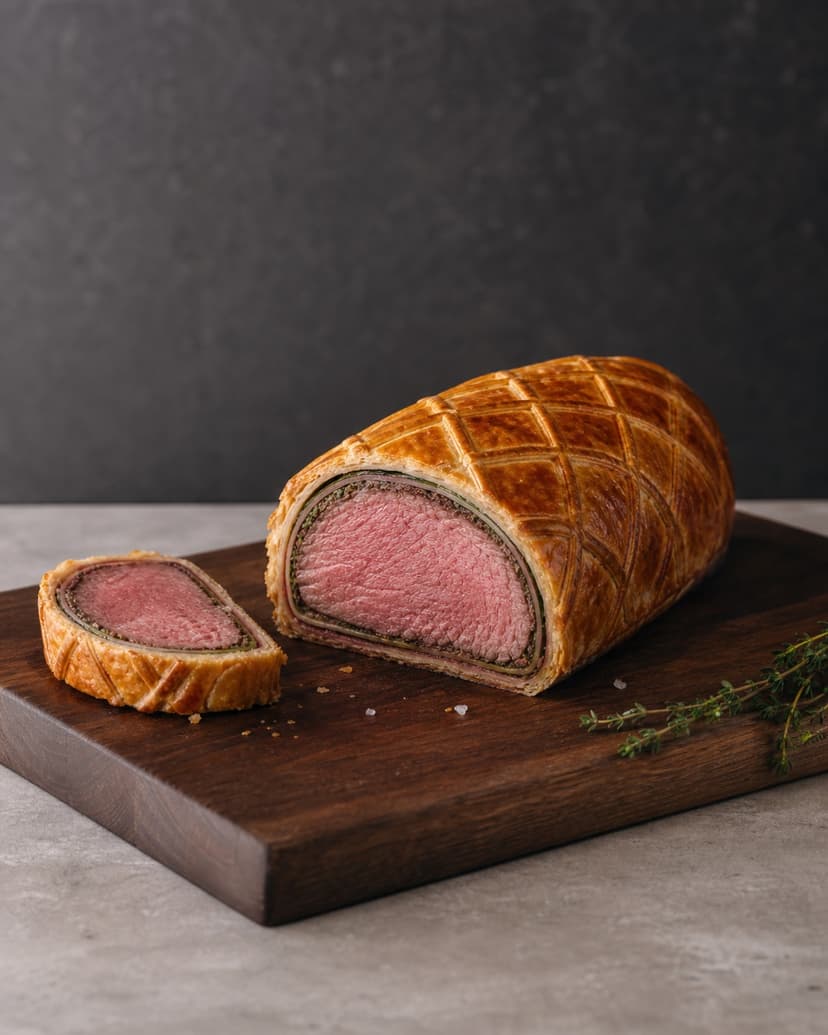
- Place & style
- Britain / modern fine-dining tradition British · Main
- Yield
- 6 servings Beef · spice 0/5
- Time
- 3 hr 45 min 1 hr 30 min prep · 1 hr cook
- Cook level
- Patient British · beef fillet · beef tenderloin · Wellington · duxelles · spinach chive crepe · prosciutto · puff pastry · special occasion · make-ahead components · temperature guided
Bumbu / flavour foundation
dry mushroom duxelles, Dijon, prosciutto, spinach-chive crêpe, all-butter puff pastry
The mushrooms are cooked completely dry, every filling is chilled before wrapping, and the prosciutto plus paper-thin crêpe form a deliberately modern dual moisture barrier. A hot tray sets the pastry base while a horizontal probe - not colour or time alone - controls the beef.
Equipment
- digital scales
- food processor or very sharp knife
- 28-30 cm wide skillet
- 24 cm non-stick crêpe pan
- medium saucepan and fine sieve
- butcher’s twine and cling film
- rolling pin and pastry brush
- heavy rimmed oven tray and wire rack
- oven-safe leave-in probe thermometer
- long serrated knife
Read the visual cue before each step. The clock is guidance; the food decides when you move.
01 · Market sheet
Know what you are buying.
Every ingredient is shown in context, named in English and Bahasa Indonesia, and tied to its job in the dish.Meat or seafoodDaging atau seafood
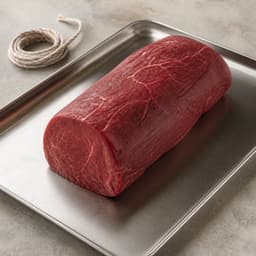
1 kg
centre-cut beef tenderloin
has dalam sapi bagian tengah
even 24-26 cm centrepiece that cooks uniformly inside the pastry
Watch: Remove every strip of silver skin and fold or trim a taper before tying; an uneven log cannot cook evenly.
Dry pantryBahan kering
16 g
fine sea salt
garam laut halus
seasons beef, duxelles, crêpes, and the reduced jus in measured stages
Watch: Prosciutto and reduced stock are salty; keep the measured allocations instead of seasoning every layer freely.
40 ml
neutral high-heat oil
minyak netral tahan panas
supports the rapid beef sear, dry mushroom cook, and thin crêpes
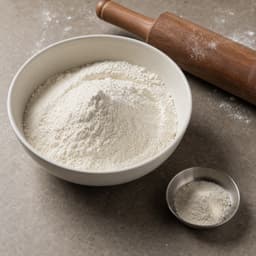
95 g
plain flour, divided
tepung terigu serbaguna, dibagi
80 g structures the crêpes and 15 g prevents pastry sticking while rolling
Watch: Contains wheat and gluten.

10 ml
water for egg wash
air untuk olesan telur
loosens yolk so two very thin coats spread evenly

500 ml
rich unsalted beef stock
kaldu sapi pekat tanpa garam
gelatinous body for a naturally glossy Madeira jus
Watch: Use unsalted stock because reducing 500 ml concentrates every gram of salt.
SpicesRempah
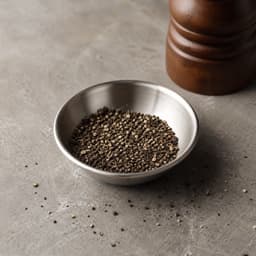
3 g
freshly ground black pepper
lada hitam yang baru digiling
restrained heat on the beef and mushroom layer
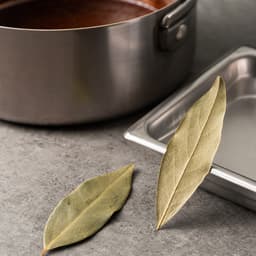
1 leaf
bay leaf
daun bay
quiet savoury perfume in the jus
Watch: This is European bay leaf, not daun salam.
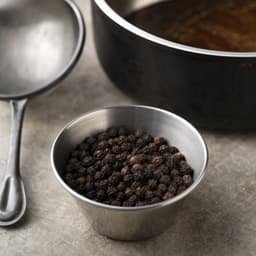
6 peppercorns
black peppercorns
butiran lada hitam
gentle whole-spice infusion in the jus
SaucesSaus & bumbu botol
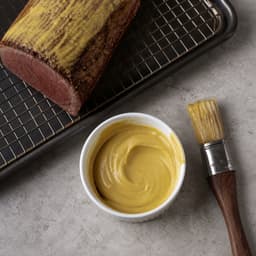
35 g
Dijon mustard
mustard Dijon
sharp, thin coating brushed onto the warm seared beef
Watch: Contains mustard; brush a thin film rather than a wet paste.

230 ml
Madeira wine
anggur Madeira
nutty fortified-wine depth divided between duxelles and jus
Watch: Contains alcohol and commonly sulphites; cooking reduces but does not guarantee zero alcohol.

150 ml
dry red wine
anggur merah kering
fruit, acidity, and reduction depth in the jus
Watch: Contains alcohol and commonly sulphites.

5 ml
red-wine vinegar
cuka anggur merah
small final lift that keeps the reduced jus from tasting heavy
Fresh produceSayur & bahan segar
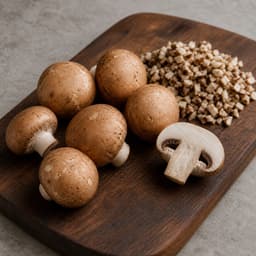
450 g
Swiss brown or cremini mushrooms
jamur Swiss brown atau cremini
earthy body for the concentrated duxelles
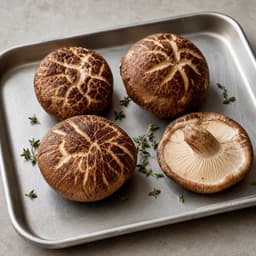
150 g
fresh shiitake caps
tudung jamur shiitake segar
deep savoury mushroom flavour without a thick duxelles layer
Watch: Remove tough stems; pulse to distinct 2-4 mm pieces and never to a wet purée.
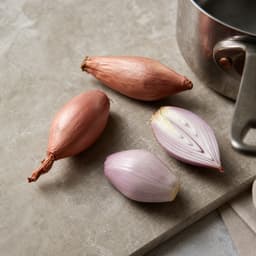
140 g
shallots
bawang merah
sweet aromatic base divided between duxelles and Madeira jus
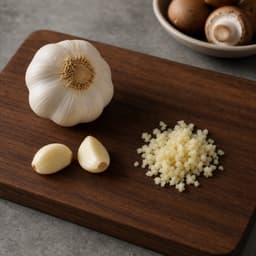
10 g
garlic
bawang putih
small savoury accent in the mushroom duxelles
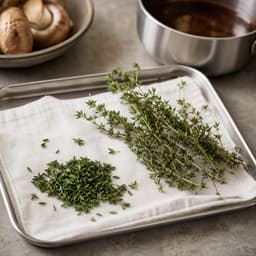
6 g
fresh thyme leaves and sprig
daun dan tangkai thyme segar
herbal bridge between duxelles and jus
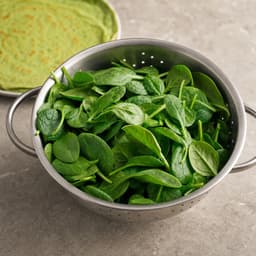
50 g
baby spinach
bayam muda
green colour and a flexible crêpe moisture barrier
Watch: Blanch briefly and squeeze completely dry; hidden water defeats the barrier.
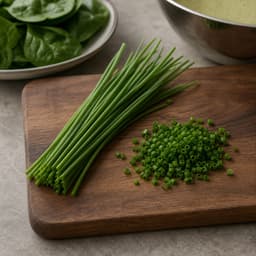
10 g
fresh chives
kucai halus segar
fine allium perfume through the green crêpe
ChilledDingin
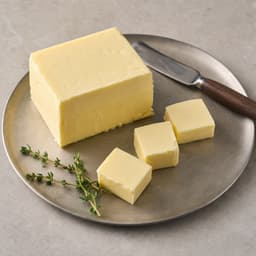
65 g
unsalted butter
mentega tawar
rounds the duxelles, enriches crêpes, and finishes the glossy jus
Watch: Contains milk; keep the 20 g finishing butter cold so the jus emulsifies instead of becoming greasy.
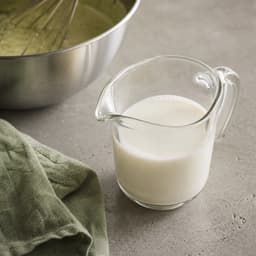
180 ml
whole milk
susu sapi full cream
thins the spinach crêpe batter into flexible paper-thin sheets
Watch: Contains milk.

1 egg
large whole egg
telur ayam ukuran besar
binds the spinach-chive crêpes
Watch: Contains egg.
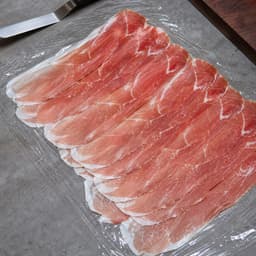
150 g
thinly sliced prosciutto
prosciutto iris sangat tipis
salty inner wrap and first part of the modern dual moisture barrier
Watch: Contains pork; overlap slices only 1 cm so the layer stays thin rather than rubbery.
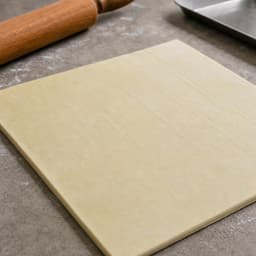
500 g
all-butter puff pastry
pastri puff berbahan mentega
laminated outer shell that must stay cold and bake crisp
Watch: Contains wheat, gluten, and milk; thaw in the refrigerator and never let it become greasy or soft.

2 yolks
egg yolks
kuning telur
two thin washes for an even lacquered pastry surface
Watch: Contains egg; thick pooled wash can glue pastry layers shut.
GarnishPelengkap
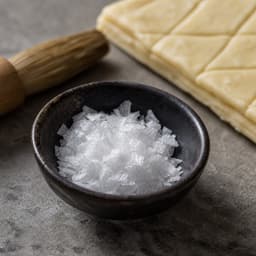
2 g
flaky salt, optional
garam serpih, opsional
restrained final texture on the pastry
02 · Method
Cook in order. Read the decisive cue.
8 stages · 3 hr 45 min total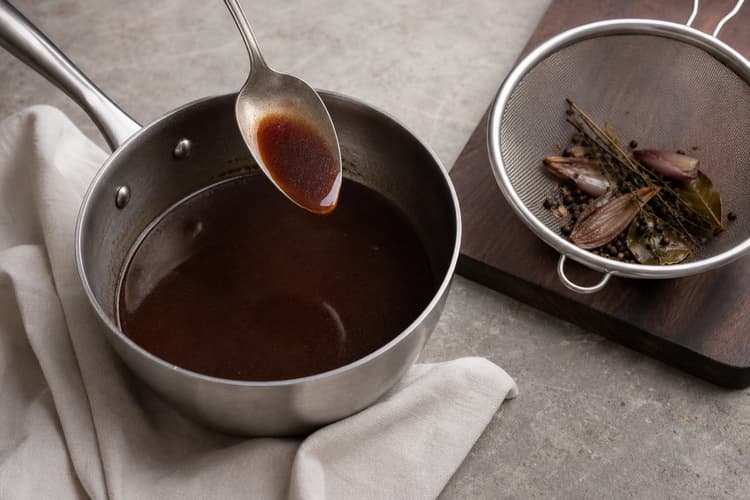
Stage 01
Reduce the Madeira jus first
Soften 60 g shallot in 15 g butter for 5 minutes without browning. Add 200 ml Madeira, 150 ml red wine, 2 g thyme, bay, and six peppercorns; boil until about 100 ml remains. Add 500 ml unsalted beef stock and simmer to 250 ml. Strain, add vinegar, then whisk in 20 g cold butter off heat. Use at most 1 g of the measured salt after reduction.
- Move on when
- The strained jus lightly coats a spoon, shines without grease, and tastes concentrated but not salty.
- Common mistake
- Salting before reduction or boiling after the cold butter can make the jus harsh, greasy, or split.
- Recovery
- Lower the heat immediately, skim or stir gently, and continue at a small simmer until the surface calms.
Stage 02
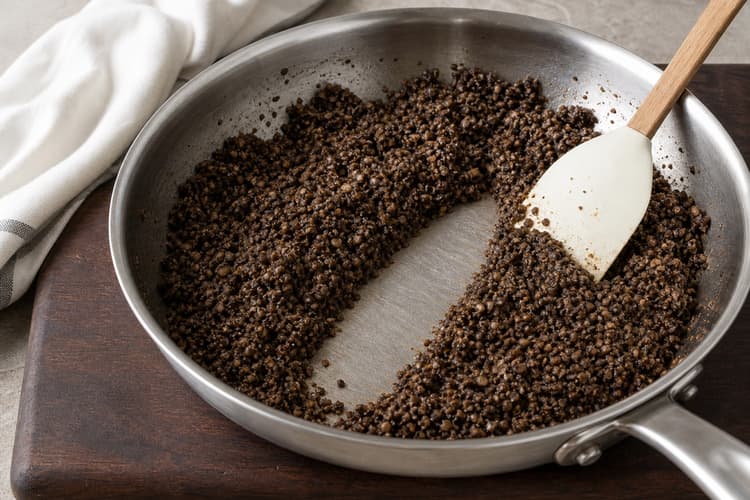
Cook the duxelles completely dry
Pulse cremini and stemmed shiitake to distinct 2-4 mm pieces, never a purée. Heat 20 g butter with 15 ml oil in the widest skillet; soften 80 g shallot for 3 minutes, add garlic and 4 g thyme for 30 seconds, then mushrooms, 4 g salt, and 1 g pepper. Cook medium-high for 15-25 minutes. Add 30 ml Madeira only when nearly dry and evaporate it fully; spread on a cold tray.
- Move on when
- Dark concentrated paste holds its shape, no watery steam remains, and a spatula trench exposes a dry pan for five seconds.
- Common mistake
- A crowded pan or wet mushroom purée soaks the pastry; divide it between two pans and keep cooking until the dry-trail cue appears.
- Recovery
- Spread the food out, raise heat only after moisture drops, and hold back extra sauce until the pan is frying again.
Stage 03
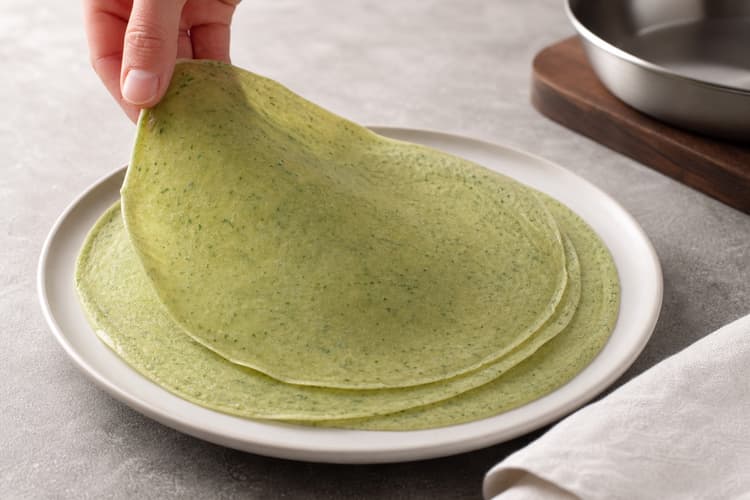
Make paper-thin green crêpes
Blanch spinach for 20 seconds, chill it, then squeeze it completely dry. Blend with 80 g flour, 180 ml milk, one whole egg, 10 g melted butter, 2 g salt, and chives; rest 15 minutes. Use the remaining 5 ml oil to cook three very thin 24 cm crêpes over medium-low heat. Cool each one flat before stacking.
- Move on when
- Pale-green sheets are flexible, dry to the touch, almost translucent at the edge, and show little or no browning.
- Common mistake
- A thick or damp crêpe becomes another wet dough layer; cook damp sheets 15-20 seconds more or replace a thick one with a thinner crêpe.
- Recovery
- Spread the food out, raise heat only after moisture drops, and hold back extra sauce until the pan is frying again.
Stage 04
Shape, sear, mustard, and chill
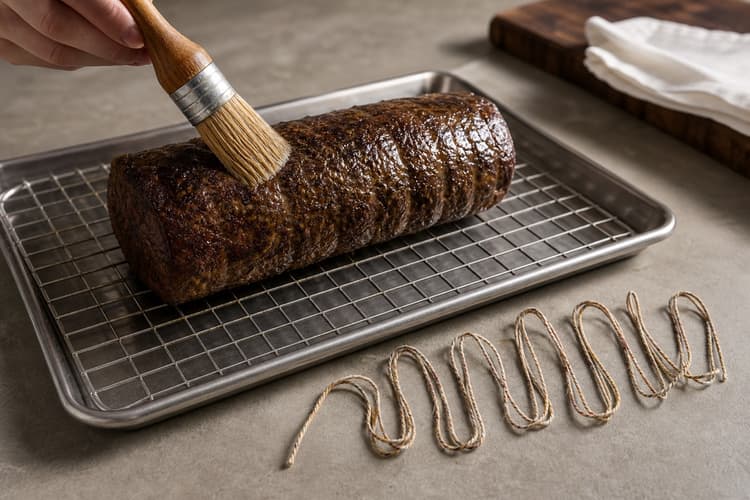
Remove every strip of silver skin, fold a thin tail under if needed, and tie the tenderloin every 3 cm into an even 7-8 cm cylinder. Pat dry; apply 9 g salt and 2 g pepper. Heat the skillet very hot, add 20 ml oil, and roll the beef continuously to brown all faces and ends in 2½-3½ minutes total. Remove twine, brush with 35 g Dijon while warm, rack, then refrigerate uncovered about 20 minutes until cold.
- Move on when
- The beef is straight and evenly dark brown outside, still essentially raw in the centre, with only a thin glossy mustard film.
- Common mistake
- Slow searing creates a thick grey band; stop, chill immediately, and begin checking the probe earlier during baking because overcooking cannot be reversed.
- Recovery
- Pause before the next step, compare the cue, then correct heat, moisture, or seasoning while the dish is still flexible.
Stage 05
Roll the modern dual barrier
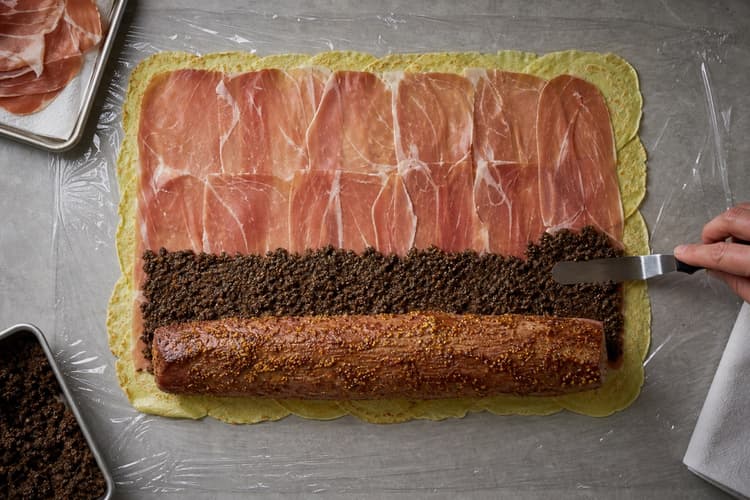
Overlap cold crêpes on cling film into a rectangle just longer than the beef. Cover them with prosciutto, overlapping slices only 1 cm and leaving no gaps. Spread cold duxelles in a uniform 3 mm layer. Place cold beef at the near edge, use the film to roll tightly, and twist the ends until the log is straight. Chill 45 minutes.
- Move on when
- A cold, firm, gap-free cylinder has no exposed beef, air pockets, mushroom bulges, or loose ends.
- Common mistake
- This prosciutto-plus-crêpe build is deliberately modern, not the only authentic method; making either barrier thick causes slippage and raw-looking layers.
- Recovery
- Pause before the next step, compare the cue, then correct heat, moisture, or seasoning while the dish is still flexible.
Stage 06
Wrap cold pastry and chill again
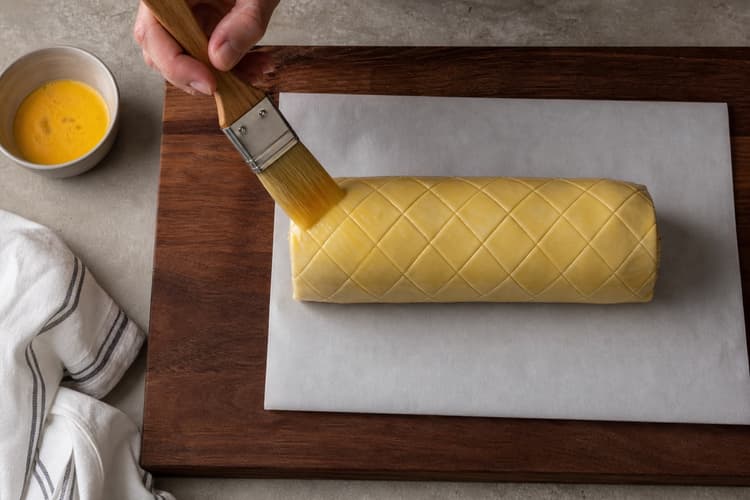
Roll 500 g cold puff pastry with the remaining 15 g flour to a 3-4 mm rectangle, about 35 × 40 cm. Unwrap the inner cylinder, cover it without stretching pastry, keep only a 2 cm seam, and trim bulky ends. Place seam-down. Mix yolks with 10 ml water; brush one thin coat, score without cutting through, and chill uncovered 30 minutes. Apply a second thin wash just before baking and add optional flaky salt.
- Move on when
- The pastry is cold and firm, lies smoothly against the cylinder, and has a neat underside seam with no thick folded ends.
- Common mistake
- Warm pastry loses lamination and thick seams remain raw; patch tears thinly, trim double layers, and rechill until completely firm.
- Recovery
- Reduce uncovered and season in small rounds, checking the visual cue before adding more salt, sugar, or sauce.
Stage 07
Probe and bake on a hot tray
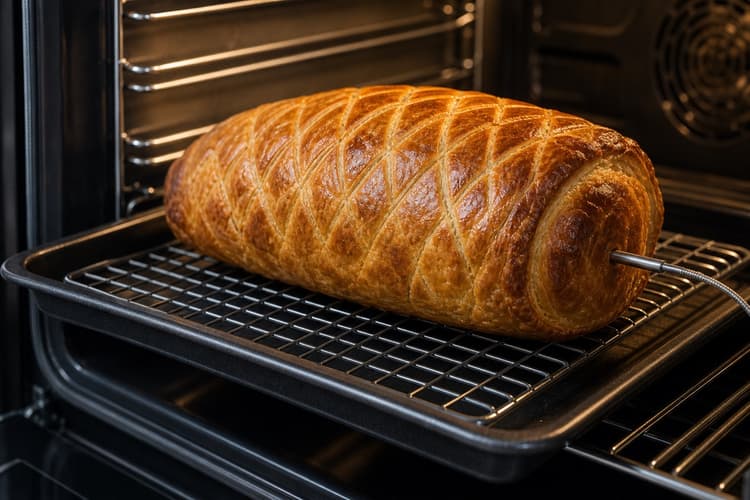
Heat the oven and heavy tray for at least 30 minutes to 210°C conventional or 200°C fan. Insert an oven-safe probe horizontally through one short end until its tip reaches the exact beef centre. Put the chilled Wellington on parchment on the hot tray and bake 35-45 minutes until deep gold and 57°C internally.
- Move on when
- Pastry is deeply and evenly golden with a crisp base while the centred probe - not the timer - reads 57°C.
- Common mistake
- If pastry browns early, tent only the top and reduce to 180°C until 57°C; if beef is nearly ready but pastry is pale, use 220°C fan for 2-4 watched minutes.
- Recovery
- Pause before the next step, compare the cue, then correct heat, moisture, or seasoning while the dish is still flexible.
Stage 08
Rest to 63°C, carve, and sauce beside
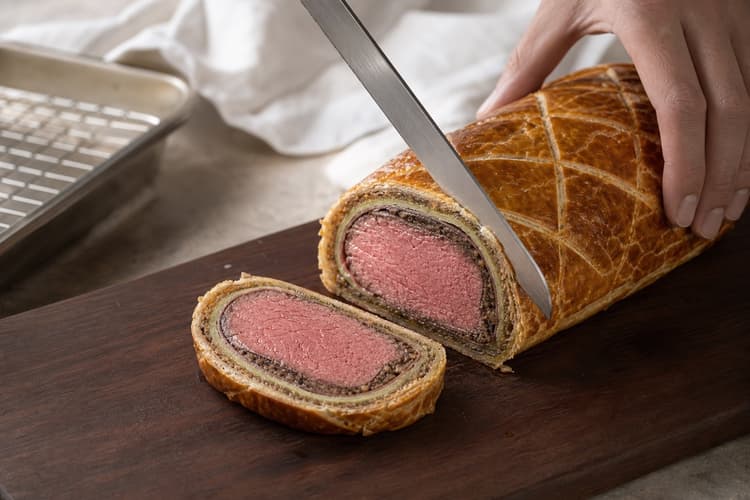
Move the Wellington to a wire rack and rest uncovered for 12-15 minutes. Confirm carryover reaches at least 63°C and remains there for the required three-minute safety rest. Carve 3 cm slices with gentle serrated strokes, wiping the blade each time. Spoon warm jus around or beside each slice, never over the pastry.
- Move on when
- The slice shows even pink beef, thin distinct mushroom, ham, and green crêpe layers, a dry crisp base, and almost no juice on the board.
- Common mistake
- Carving early makes the layers slide and floods the pastry; if the centre stays below 63°C, return the whole Wellington to a 180°C oven until safe, then rest three minutes.
- Recovery
- Pause before the next step, compare the cue, then correct heat, moisture, or seasoning while the dish is still flexible.
03 · Source & shop
Where the guidance comes from.
Technique guidance is stable editorial material. Prices, stock, and local availability should be rechecked before a special trip.Melbourne
- Best source: ask a high-turnover Melbourne butcher for centre-cut beef tenderloin, fine sea salt, neutral high-heat oil; Queen Victoria Market, South Melbourne Market, and premium supermarket counters are practical starting points.
- Specialty watch: buy centre-cut beef tenderloin, fine sea salt, freshly ground black pepper from a produce market, delicatessen, specialty grocer, or bottle shop, then protect centre-cut beef tenderloin because it controls the geometry or moisture balance of Beef Wellington.
- Acceptable swaps: centre-cut beef tenderloin: two evenly sized 450-500 g centre-cut fillets, wrapped and baked separately; Swiss brown or cremini mushrooms: firm button mushrooms, cooked to the same completely dry cue.
- Allergen and dietary check: wheat, gluten, egg, milk, mustard, sulphites, pork; confirm pastry, mustard, charcuterie, stock, and wine labels, and use the stated pork-free or alcohol-free path when required.
- Fresh vs packaged: buy Swiss brown or cremini mushrooms, fresh shiitake caps, shallots fresh and cold; packaged fine sea salt, freshly ground black pepper, neutral high-heat oil is useful only when the pastry is all-butter, the stock is not heavily salted, and seals and dates are sound.
Jakarta
- Best source: ask a trusted Jakarta premium butcher for has dalam sapi bagian tengah, garam laut halus, lada hitam yang baru digiling in an even centre-cut cylinder; use premium supermarkets or imported-food retailers for chilled pastry and delicatessen ingredients.
- Specialty watch: Madeira, Dijon, prosciutto, all-butter puff pastry, European bay, and fresh thyme can vary by importer; buy them before committing to the cook.
- Acceptable swaps: centre-cut beef tenderloin: two evenly sized 450-500 g centre-cut fillets, wrapped and baked separately; Swiss brown or cremini mushrooms: firm button mushrooms, cooked to the same completely dry cue.
- Allergen and dietary check: wheat, gluten, egg, milk, mustard, sulphites, pork; verify pork and alcohol requirements before shopping because this masterclass version includes both.
- Fresh vs packaged: use cold high-turnover beef, mushrooms, eggs, milk, and pastry; an insulated bag matters in Jakarta heat.
Editorial provenance
Gordon Ramsay - Beef Wellington
Cross-checks fast all-over searing, cooking mushroom duxelles until its released moisture has evaporated, overlapping cured ham, tight cling-film shaping, staged chilling, puff-pastry wrapping, egg wash, baking, resting, and carving.
Supports: dry mushroom duxelles, prosciutto moisture barrier and tight cylinder, chill, bake, rest, and carve sequence.
Boundary: This chef version uses cured ham but no crepe. Bumbu Lens's prosciutto plus spinach-chive crepe is a deliberate two-barrier synthesis from valid Wellington methods, not a uniquely canonical formula.
Reviewed 2026-07-10Great British Chefs - Graham Campbell's Beef Wellington
Cross-checks a thin crepe-style moisture barrier, a mushroom-shallot-garlic duxelles reduced until nearly dry, complete cooling before assembly, mustard, puff pastry, seam-side-down sealing, and egg wash.
Supports: crepe moisture barrier, dry and fully cooled duxelles, neat pastry seam and egg wash.
Boundary: This chef's method uses crepes but no prosciutto. It validates the crepe barrier as an alternative Wellington construction, not the claim that every classic Wellington must contain both barriers.
Reviewed 2026-07-10Great British Chefs - Beef Wellington with Stilton and chestnut duxelles
Cross-checks even tying and searing, thoroughly evaporated duxelles, overlapping prosciutto, ballotine-style tightening, chilling, pastry lattice, a centre-entering probe, carryover monitoring, resting, and clean 3 cm slices.
Supports: uniform tenderloin cylinder, probe-guided bake and carryover, rested clean cross-section.
Boundary: This is a Stilton-and-chestnut variation. Its chef-selected 55-57°C final medium-rare target is a quality target below the conservative government safety chart and should not be presented as a universal safety guarantee.
Reviewed 2026-07-10Le Cordon Bleu London - The Art of Making a Beef Wellington
Uses a culinary school's course description to cross-check Beef Wellington as a British classic taught through duxelles, a protective mousse, pastry, Madeira sauce, precision, and guided assembly.
Supports: British-classic context, duxelles and moisture-control layer, Madeira sauce pairing.
Boundary: Le Cordon Bleu explicitly says the dish's origins are shrouded in rumour. The page is a course overview rather than a gram-tested public recipe, so it must not be used to assert a settled invention story or exact quantities.
Reviewed 2026-07-10FoodSafety.gov - Safe Minimum Internal Temperatures
Applies the conservative whole-cut beef minimum of 63°C / 145°F followed by a three-minute rest and requires a clean thermometer in the centre rather than relying on pastry colour or beef colour.
Supports: 63°C whole-cut beef minimum, three-minute rest, centre-probe verification.
Boundary: Many restaurant Wellington recipes target lower medium-rare temperatures. Bumbu Lens must distinguish that culinary preference from government safety guidance, especially for pregnant, older, immunocompromised, or otherwise vulnerable diners.
Reviewed 2026-07-10Bumbu Lens generated visual cue reference
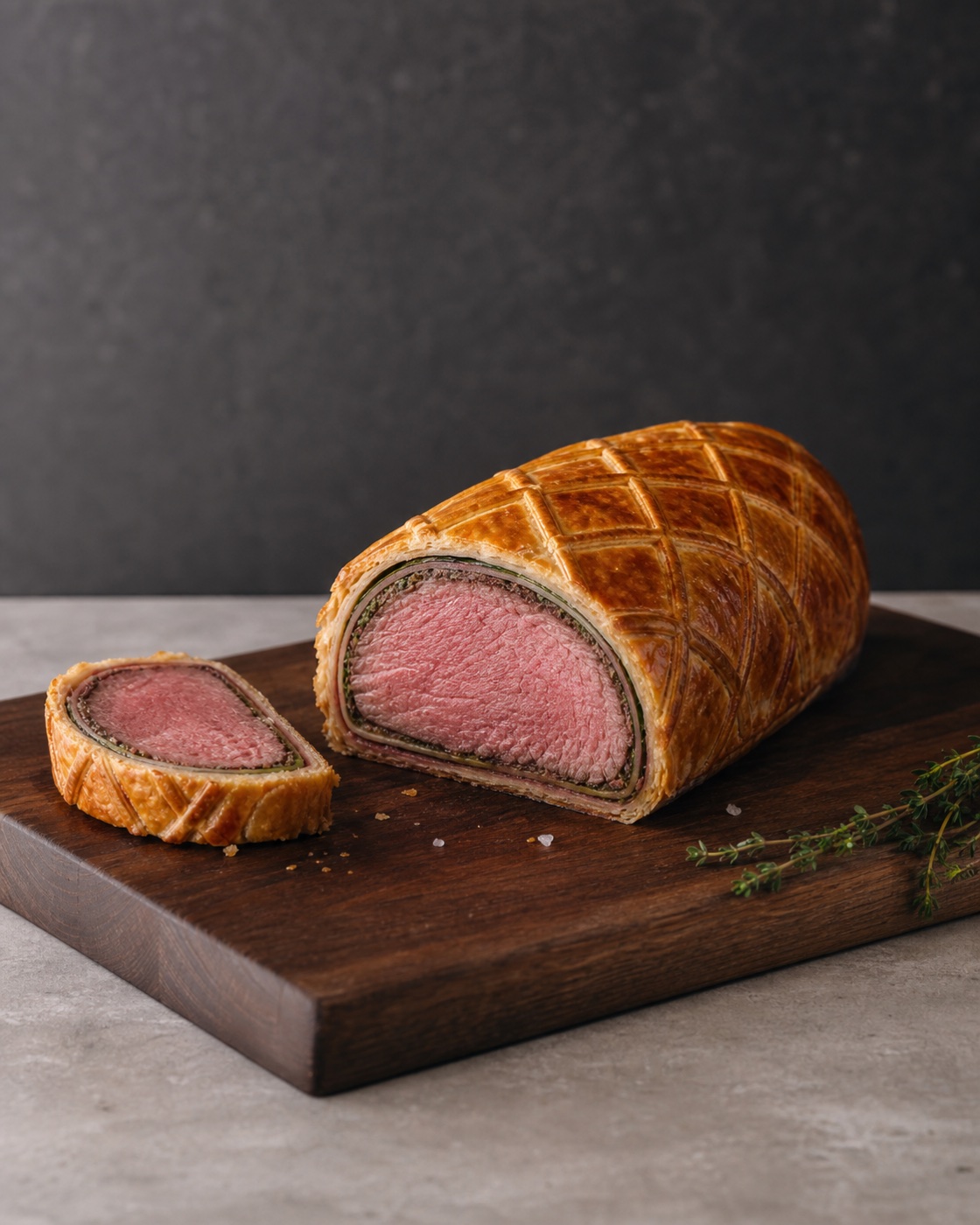
Recorded as a local editorial or generated visual cue asset, not an independent external source.
Supports: finished-dish appearance, image credit boundary.
Boundary: A local or generated asset is visual guidance, not evidence of authenticity, ingredient quantities, timing, safety, or method accuracy.
Reviewed 2026-07-10Bumbu Lens editorial method audit
Reviewed Beef Wellington as an ordered cook flow with visual cues, common mistakes, and recovery notes.
Supports: method sequence, visual checkpoints, mistake and recovery notes.
Boundary: Use this as editorial guidance; run a tested-kitchen pass before publishing nutrition, safety guarantees, or commercial pack quantities.
Reviewed 2026-07-10Bumbu Lens Melbourne/Jakarta sourcing heuristic
Mapped ingredient groups to likely Melbourne grocer, supermarket, butcher, pasar, and Jakarta supermarket paths.
Supports: Melbourne sourcing, Jakarta sourcing, volatile availability boundary.
Boundary: Ingredient availability, price, and store stock change; verify with local grocers before travel, bulk shopping, or holiday cooking.
Reviewed 2026-07-10Your next cook
Kitchen notes
Record the batch size, timing, substitutions, and visual cue you want to remember next time.